Bhishma’s redemption on Ratha Saptami occupies a distinctive place in the Mahabharata’s moral landscape, where duty, remorse, and spiritual illumination converge. Revered as the grandsire of the Kuru dynasty, Bhishma stands as an exemplar of steadfast dharma, yet the epic also records the costs of decisions deferred and actions not taken. The alignment of Ratha Saptami—an auspicious day in the Magha month celebrating Surya’s chariot—with Bhishma’s final contemplations offers a profound meditation on ethical clarity, legacy, and inner reconciliation.
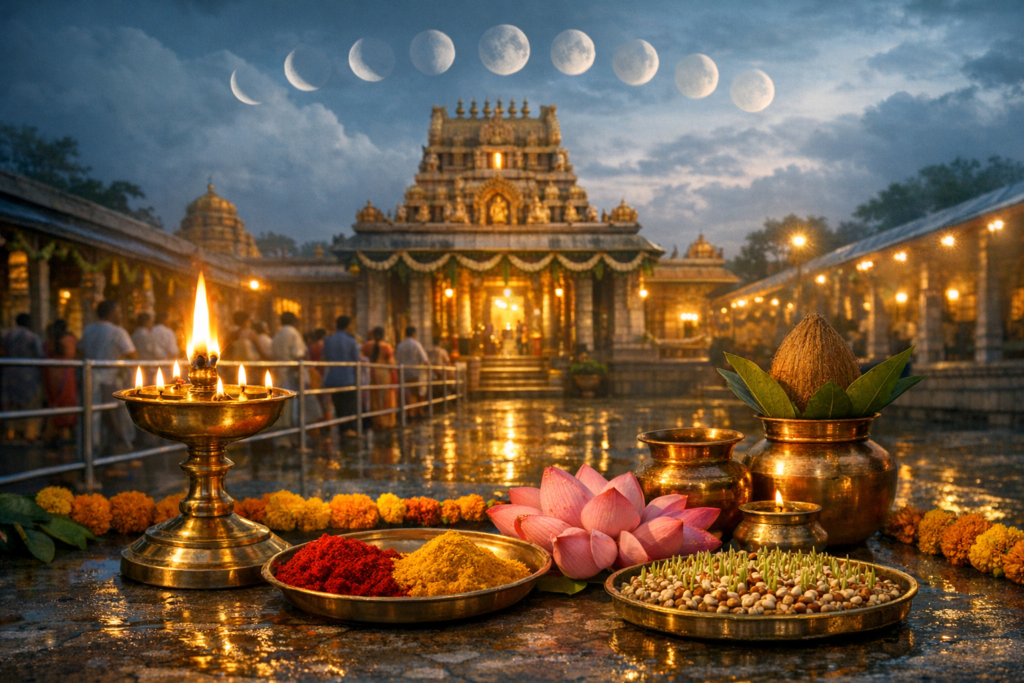
On the battlefield of Kurukshetra during the Kurukshetra War, Bhishma fell upon a bed of arrows and, endowed with icchā-mṛityu (the boon to choose his moment of death), resolved to await Uttarayana, the northward journey of the sun. Ratha Saptami, dedicated to Surya, symbolizes renewal, right orientation, and the disciplined movement of cosmic order. In this frame, Bhishma’s vigil embodies a conscious turning toward light—an ethical and spiritual reorientation that resonates deeply across Sanatan Dharma and the broader dharmic traditions.
Tradition remembers Bhishma not only for valor and restraint but also for the gravity with which he confronted the consequences of moral silence. Interpretations often revisit episodes such as the humiliation of Draupadi and the earlier tragedy of Amba to illustrate the complexities of dharma when familial loyalty, social order, and justice collide. In these reflections, redemption is not a denial of the past but an acknowledgment that dharma requires vigilance, courage, and the humility to course-correct.
During his final days, Bhishma instructed Yudhishthira in the Shanti Parva and Anushasana Parva, delivering teachings on statecraft, ethics, self-mastery, and social harmony. The revered recitation of the Vishnu Sahasranama from his bed of arrows further underscores a movement from martial prowess to contemplative wisdom. Many observances connect Ratha Saptami’s solar symbolism with the following day, Bhishma Ashtami, when devotees offer tarpana in his memory—framing his passing as a culmination of insight, forgiveness, and service to the moral order.
For contemporary readers, Ratha Saptami becomes an entry point to live the Mahabharata’s lessons with clarity and compassion. The festival’s Surya worship and the season of Uttarayana invite reflection on alignment—of intention with action, and of principle with practice. These themes find affinity across dharmic traditions: the emphasis on dharma (or dhamma) in Hinduism and Buddhism, disciplined non-harm and accountability in Jainism, and seva and humility in Sikhism. The shared quest for truth and responsibility affirms unity-in-diversity at the heart of India’s civilizational wisdom.
Practical observances on Ratha Saptami and Bhishma Ashtami can include offering arghya to Surya at sunrise, reading selected passages from Shanti Parva and Anushasana Parva, and engaging in acts of seva and reconciliation. Families and communities may study the ethical dilemmas Bhishma navigated—duty versus neutrality, loyalty versus justice—and translate those insights into everyday choices at work, home, and public life. In doing so, the Mahabharata’s teaching becomes a living guide: measured, compassionate, and oriented to the common good.
Ultimately, Bhishma’s redemption does not rest in his final breath but in the wisdom he transmitted when it mattered most. Ratha Saptami, with its celebration of Surya’s steady chariot, invites an internal turning toward light: disciplined thought, ethical action, and a legacy anchored in dharma. In honoring Bhishma’s journey, the festival encourages a collective commitment to truth, restraint, and harmony—principles that strengthen the unity of the dharmic family.
Inspired by this post on Hindu Blog.