-
Beyond the Furrow: Peahen’s Egg Legends and Sita’s Birth Symbolism in Folk Ramayanas

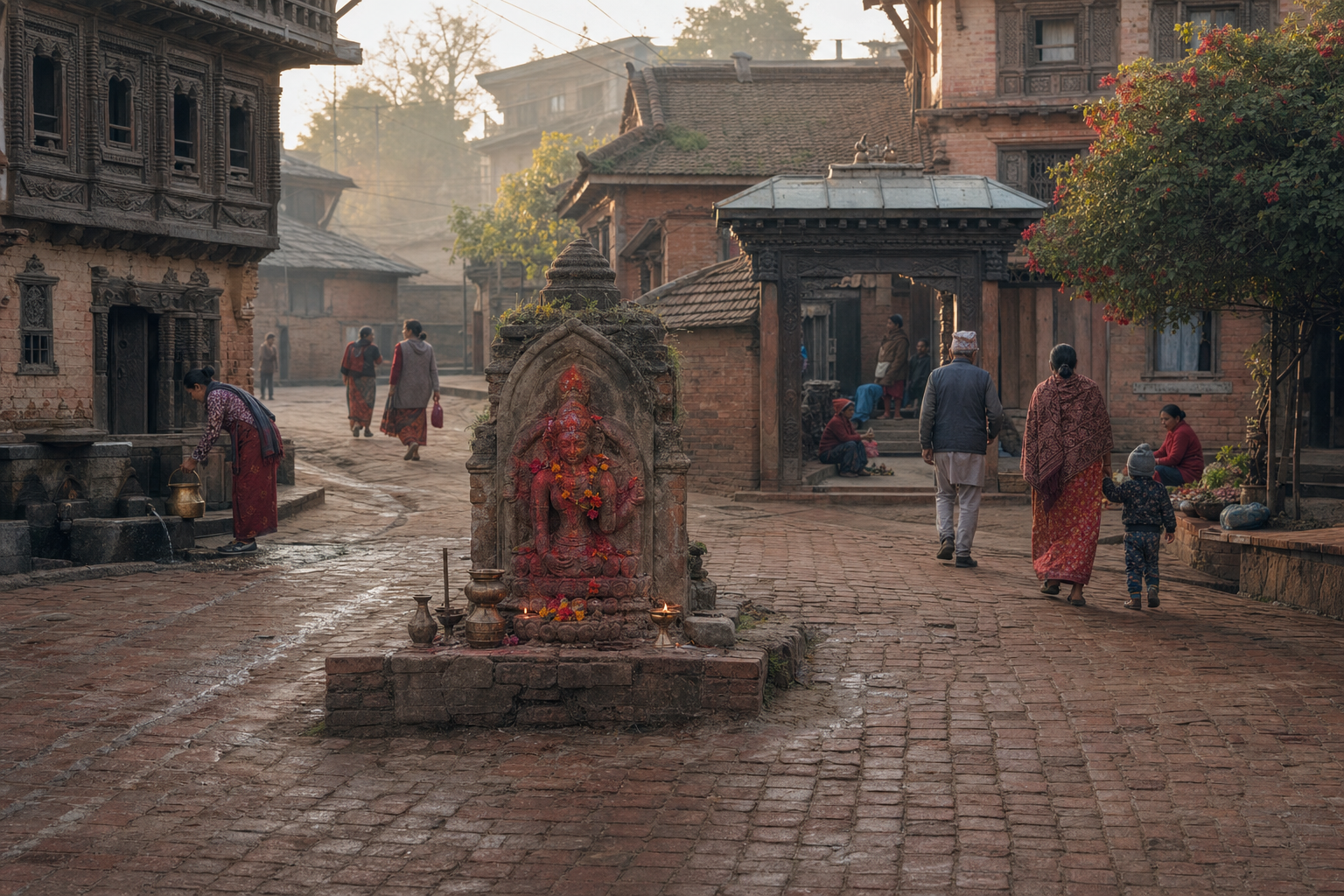
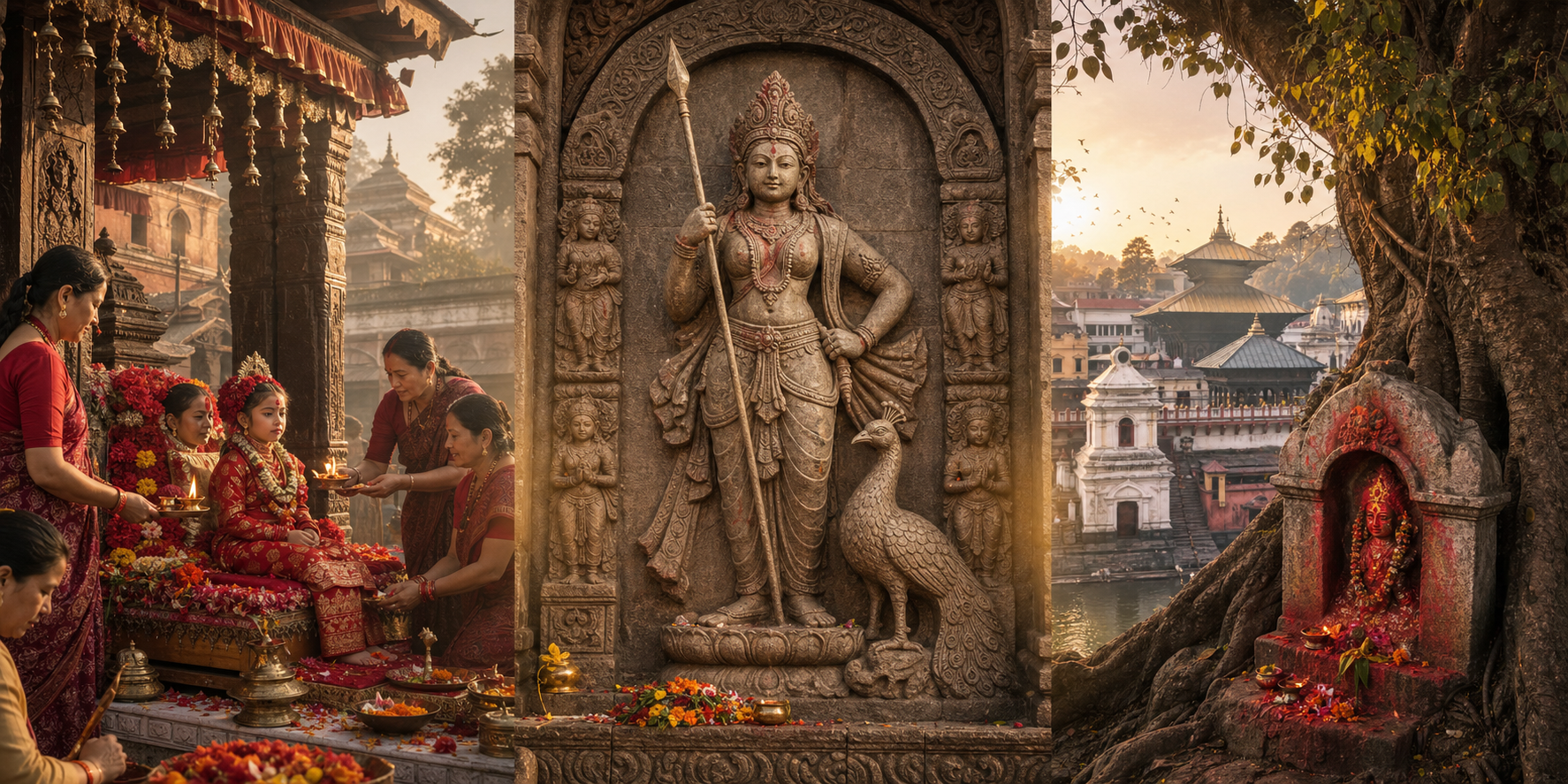
Hindu folk Ramayanas preserve Sita’s sanctity through imaginative origin stories that complement the canonical Valmiki account. A striking variant presents Sita as arising from a peahen’s egg, recasting her as andaja while affirming her core identity as ayonija. The peahen symbolizes guardianship, beauty, and monsoon renewal, while the egg evokes the cosmic Hiranyagarbha—both intensifying the…
-
March 6, 2026 Panchang: Krishna Paksha Tritiya–Chaturthi, Auspicious Muhurtas, Nakshatra, Rashi

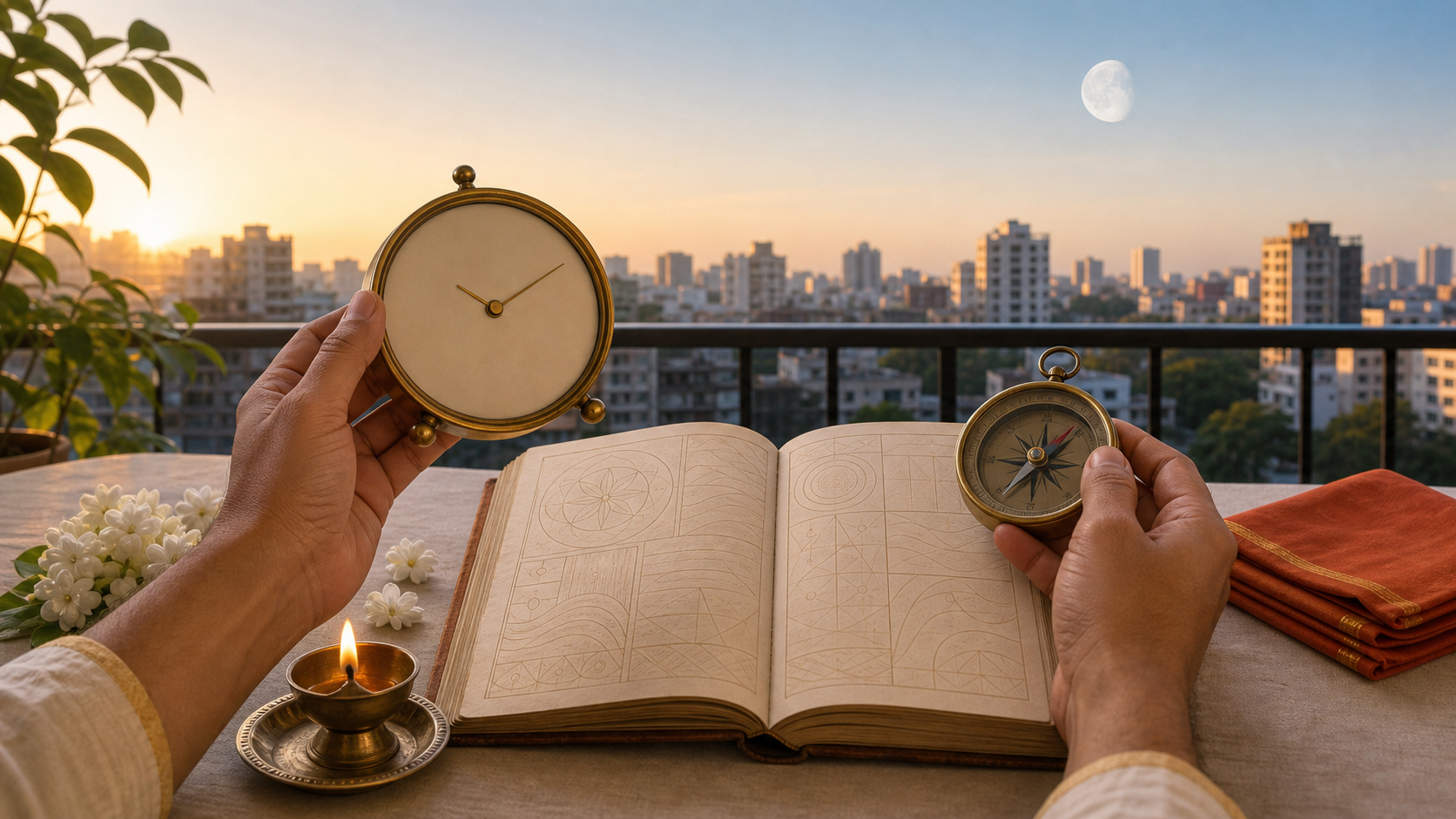
Friday, March 6, 2026 spans two tithis in the Hindu Panchang: Krishna Paksha Tritiya until 5:15 PM, followed by Krishna Paksha Chaturthi. This transition shapes daily ritual planning, including Sankashti Chaturthi observance after local moonrise. The guide explains what a tithi is, why civil dates can hold two tithis, and how to select Shubh Muhurtas…
-
Bedi (Beri) Lakshmi in Bengal: Sacred Grain Altars and the Living Symbolism of Prosperity

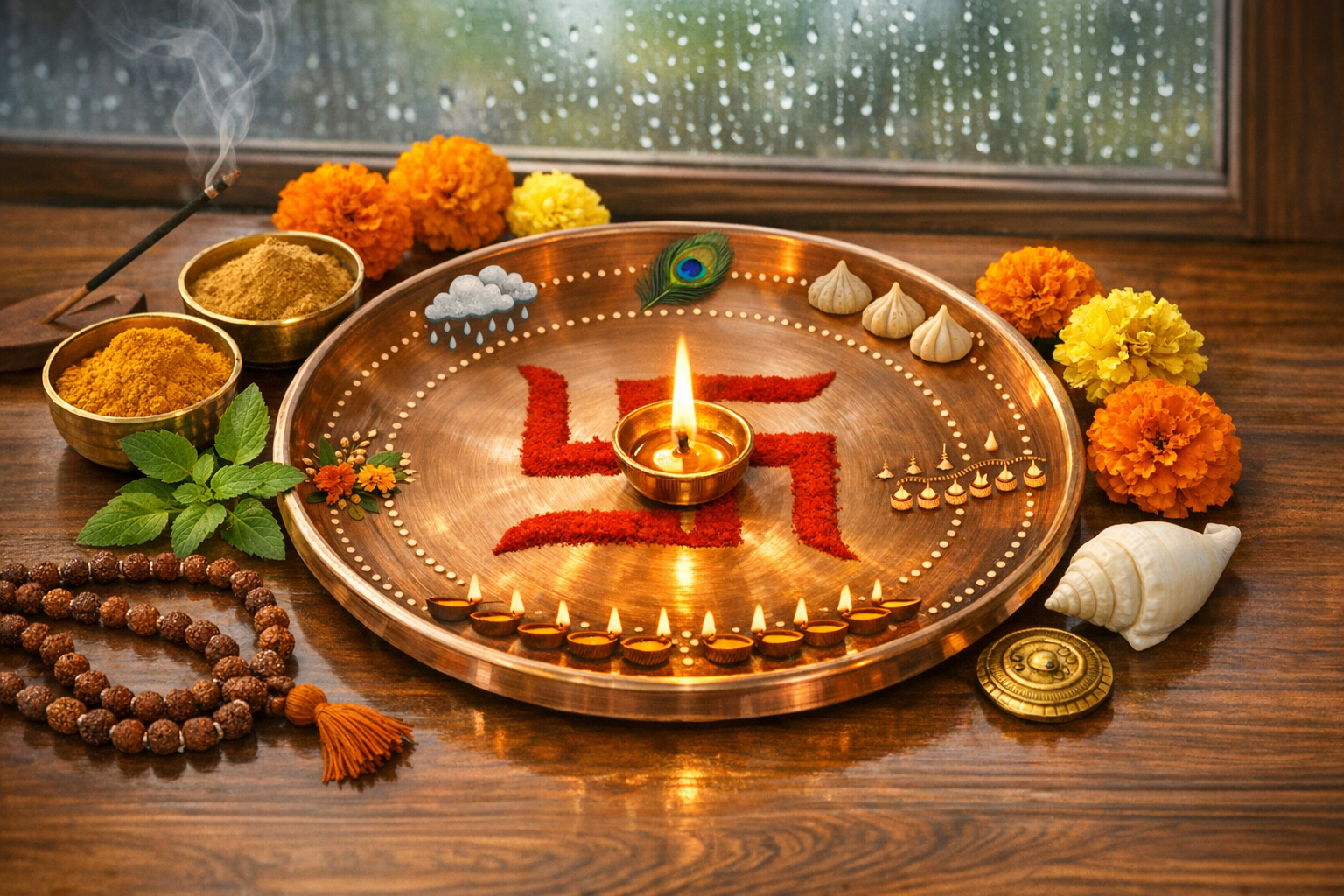
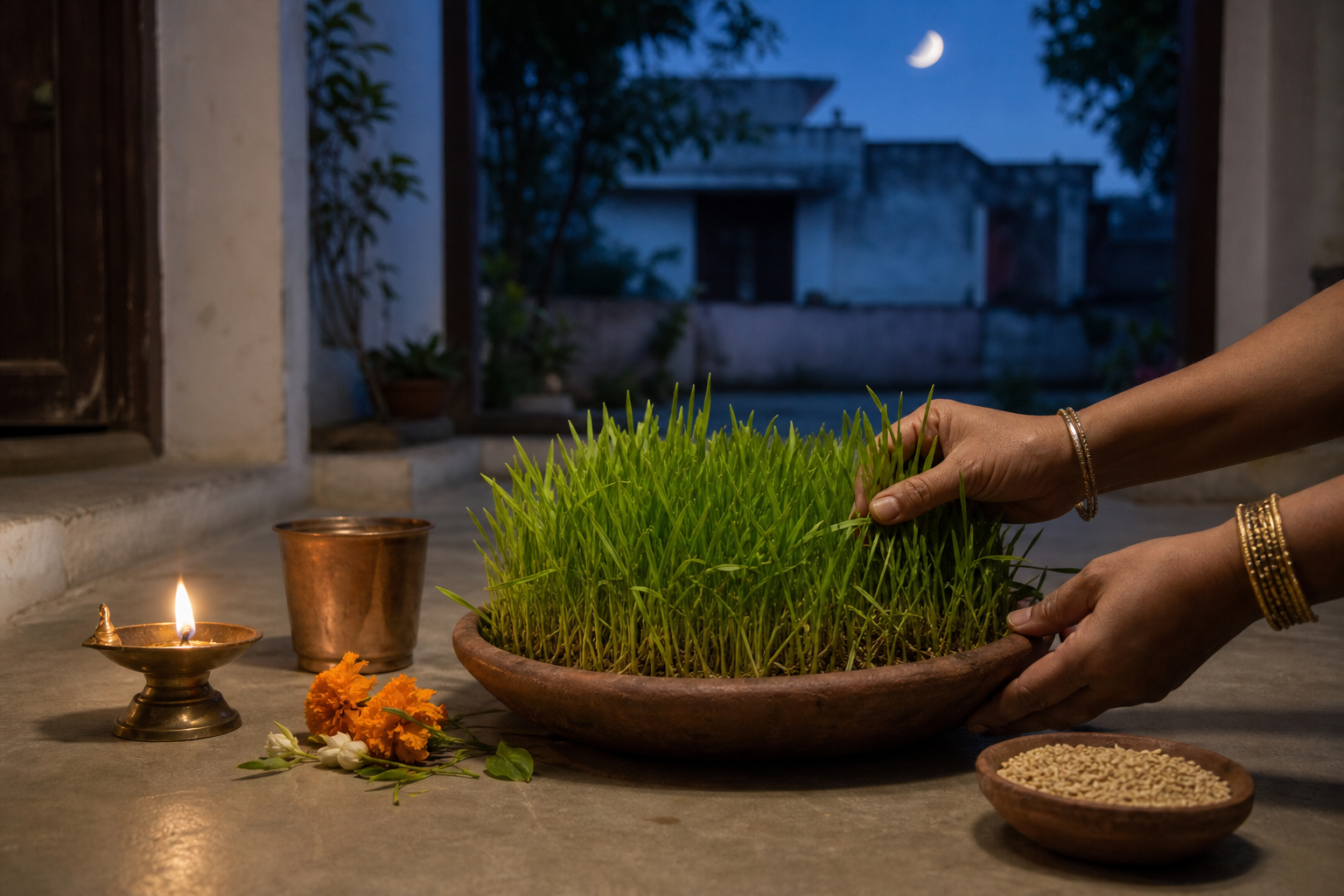
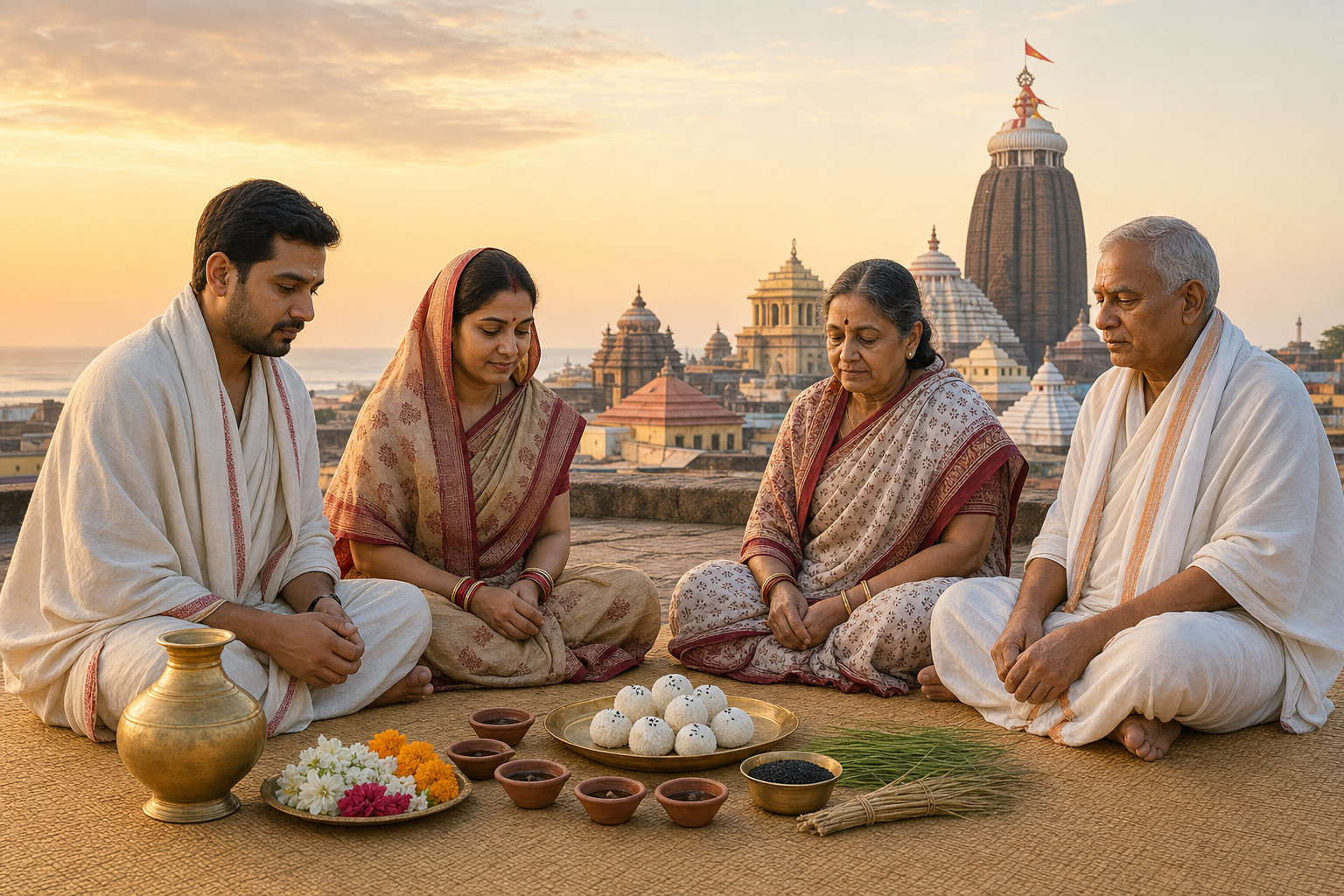
Bedi (Beri) Lakshmi is a distinctive Bengali household rite in which Goddess Lakshmi is invoked through a grain-filled altar and a carefully sanctified boundary. The practice centers prosperity in living seed, uniting ecology, economy, and devotion within the domestic sphere. Marked especially on Kojagari Purnima, it employs rice-paste alpana, paddy, turmeric, and lamp to translate…
-
March 5, 2026 Panchang: Krishna Paksha Dwitiya→Tritiya, Good Time (Muhurat), Nakshatra & Rashi

On Thursday, March 5, 2026, Krishna Paksha Dwitiya prevails until 4:28 PM, after which Krishna Paksha Tritiya begins, according to most regional Hindu Panchang computations. The day aligns with Guruvara (Thursday), emphasizing learning, counsel, and ethical leadership. Readers can identify Good Time (Shubh Muhurat) using Abhijit around local solar noon and positive Choghadiya blocks, while…
-
March 4, 2026 Panchang: Pratipada to Dwitiya Timings, Shubh Muhurat, Rituals, Guidance

Wednesday, March 4, 2026 features Krishna Paksha Pratipada until 4:15 PM in most regions, after which the day moves to Krishna Paksha Dwitiya. The analysis explains tithi in astronomical terms, outlines how regional Panchang conventions and local sunrise/sunset shape muhurta windows, and clarifies why timings vary by location. Practical guidance highlights Abhijit Muhurat for auspicious…
-
Echoes of the Vedas in Native American Lifeways: A Scholarly, Empathic Comparison

A careful comparative analysis reveals functional resonances between Vedic culture and Native American lifeways without claiming direct historical links. Drawing on the testimony of Felicity O’rourke (Anishnaabi), the discussion shows how ancestral teachings often survived as lived lifestyle under the pressures of boarding school assimilation. Parallels emerge around sacred fire and smoke, ritual sound, directional…
-
Chamunda’s Fiery Crown: Transformative Agni, Shakta Iconography, and Inner Alchemy

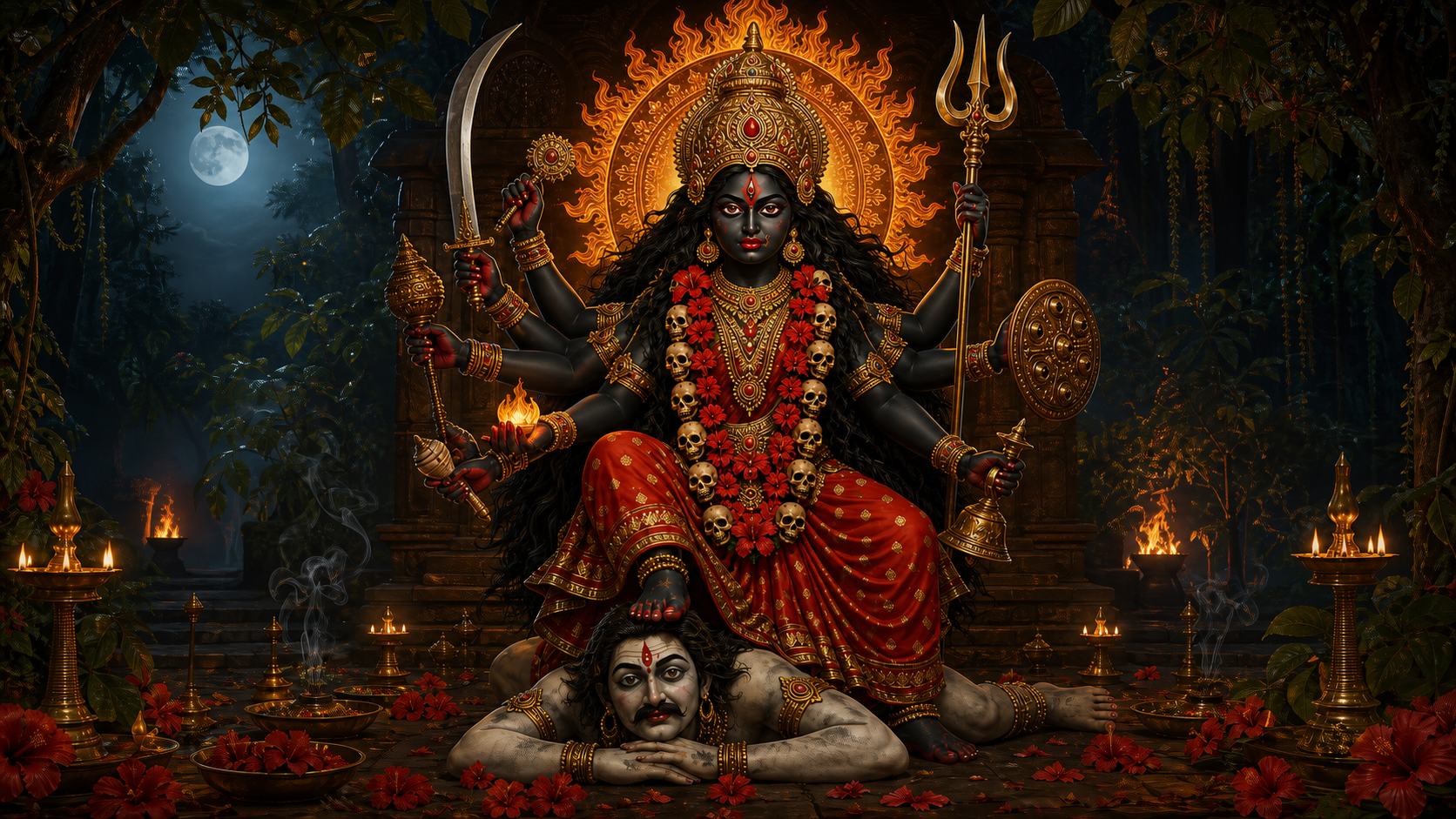
Chamunda’s crown of flame—jvālāmukuṭa—presents a precise theological statement: power governed by wisdom. Rooted in the Devi Mahatmya, this Shakta iconography aligns with Vedic and Yogic accounts of purificatory fire (Agni, jñānāgni), showing how disciplined luminosity transforms fear and anger into moral clarity. The cremation-ground setting, skull garland, and pañchamuṇḍi āsana frame the flame as sovereignty…
-
Sri Nilobha Bhaktavar: Timeless Bhakti and Seva Lessons for Family Dharma and Community

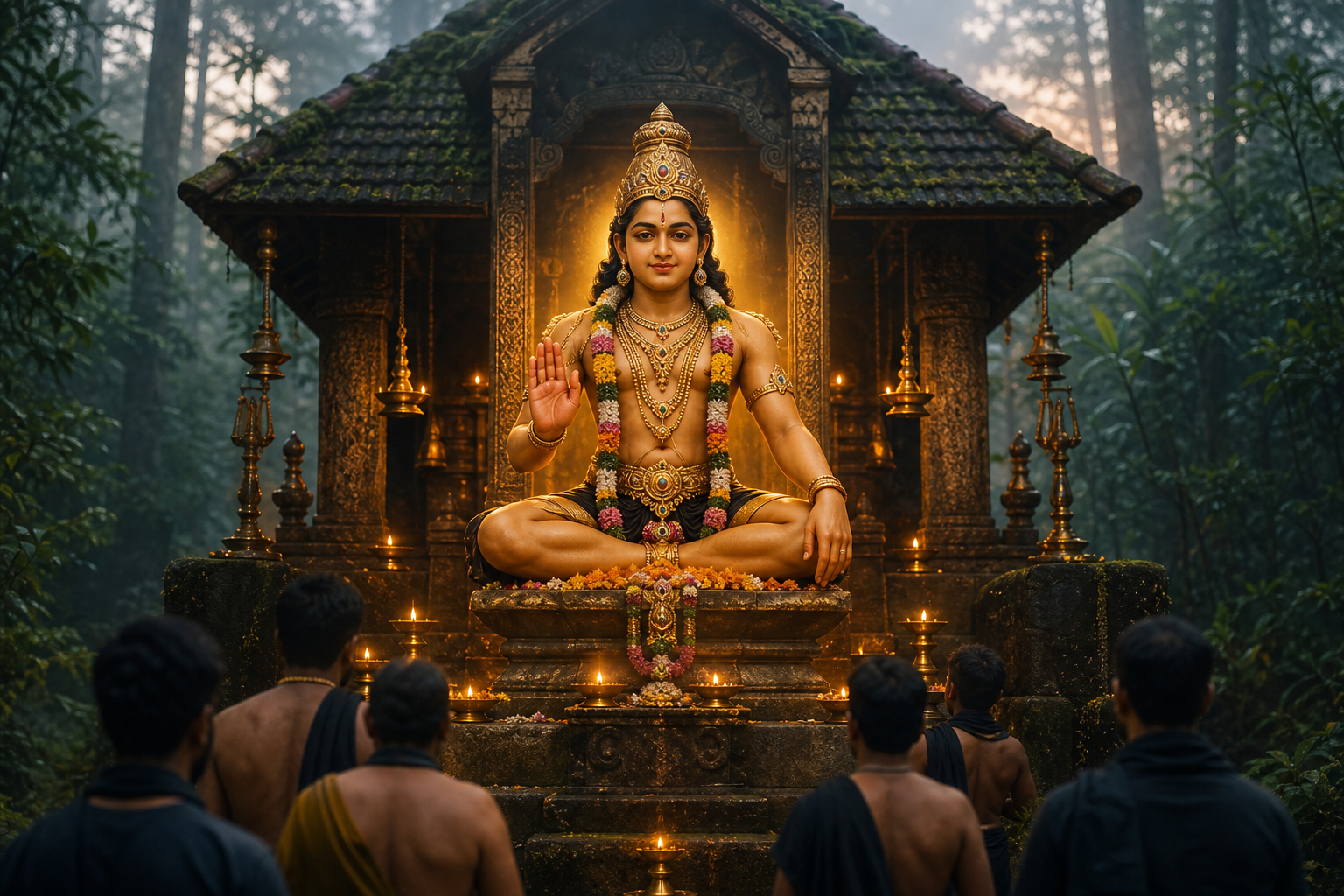
Set in the prosperous city of Pimbalam, the account of Sri Nilobha Bhaktavar (also known as Niloba) presents a rigorous, household-centered model of bhakti to Srimannarayana. The narrative highlights disciplined generosity: serving the servant and visiting devotees first, then partaking last, thereby transforming the kitchen into a sanctum of seva and anna-dana. Read theologically and…
-
Varuda Rasipalan 2026–2027 (Parabhava): Deep-Dive Puthandu Predictions, Rituals & Auspicious Windows

Puthandu 2026 (Chithirai 1) inaugurates the Parabhava Nama Varsha on 14 April 2026, aligning the Tamil solar New Year with a wider Indic cycle that also frames Vishu and Vaisakhi. This long-form Varuda Rasipalan explains the Tamil calendar’s sidereal basis, outlines the year’s key transits—Shani in Meena and Guru’s move from Mithuna to exalted Karka—and…
-
Nakshatra Phalam 2026–2027: Definitive Predictions for 27 Birth Stars in Sri Parabhava Samvatsaram

This definitive Nakshatra Phalam 2026–2027 guide synthesizes Kandaya Phalam and major transits for Sri Parabhava nama samvatsaram to offer clear, practical direction for all 27 birth stars. It explains how to read annual predictions by janma nakshatra, outlines the year’s planetary context (Jupiter exalted in Cancer, Saturn in Pisces, and the Rahu–Ketu shift), and provides…
-
Vishu 2026 Malayalam New Year: Exact Date, Kani Rituals, Kaineettam, and Cultural Insights

Vishu 2026 in Kerala falls on Wednesday, 15 April 2026, aligning with the first day of Medam in the Malayalam Panchang and the Sun’s ingress into sidereal Aries (Mesha Sankranti). The date follows Kerala’s sunrise rule: because Sankranti occurs after sunset on 14 April, the observance shifts to the next dawn. The festival’s centerpiece is…
-
March 2, 2026 Panchang Guide: Shukla Chaturdashi to Purnima, Auspicious Times, Nakshatra & Rashi

Monday, March 2, 2026 features Shukla Paksha Chaturdashi until 17:18 (5:18 PM), followed by Purnima tithi beginning that evening and continuing until 04:33 (often into March 3, depending on location). This Panchang guide clarifies how tithis work, why timings vary by city, and how to align practice with auspicious windows like Brahma Muhurta and Abhijit…
-
March 1, 2026 Panchang Guide: Auspicious Timings, Ravi Pradosh, Nakshatra and Rashi

Sunday, 1 March 2026 (IST) features Shukla Paksha Trayodashi until about 18:30, after which Shukla Paksha Chaturdashi continues through the night. The day likely hosts Ravi Pradosh where Trayodashi overlaps the local Pradosh Kaal, guiding Shiva puja and evening observances. This guide explains how to compute Rahu Kaal, Gulika Kaal, Yamaganda, and Abhijit Muhurta using…
-
February 28, 2026 Panchang: Shukla Dwadashi to Trayodashi, Auspicious Times, Nakshatra, Rashi Guide

Saturday, February 28, 2026 carries Shukla Paksha Dwadashi until 8:04 PM, then transitions to Shukla Paksha Trayodashi. This Panchang guidance explains what that means for vratas, temple routines, and daily worship across regions. It outlines technical tithi foundations (12° lunar elongation per tithi) and shows how to compute location-specific auspicious windows using Brahma Muhurta, Abhijit…
-
Child Kali on Maa Sarada’s Lap: Decoding Ramakrishna’s Vision of Fierce Grace and Love

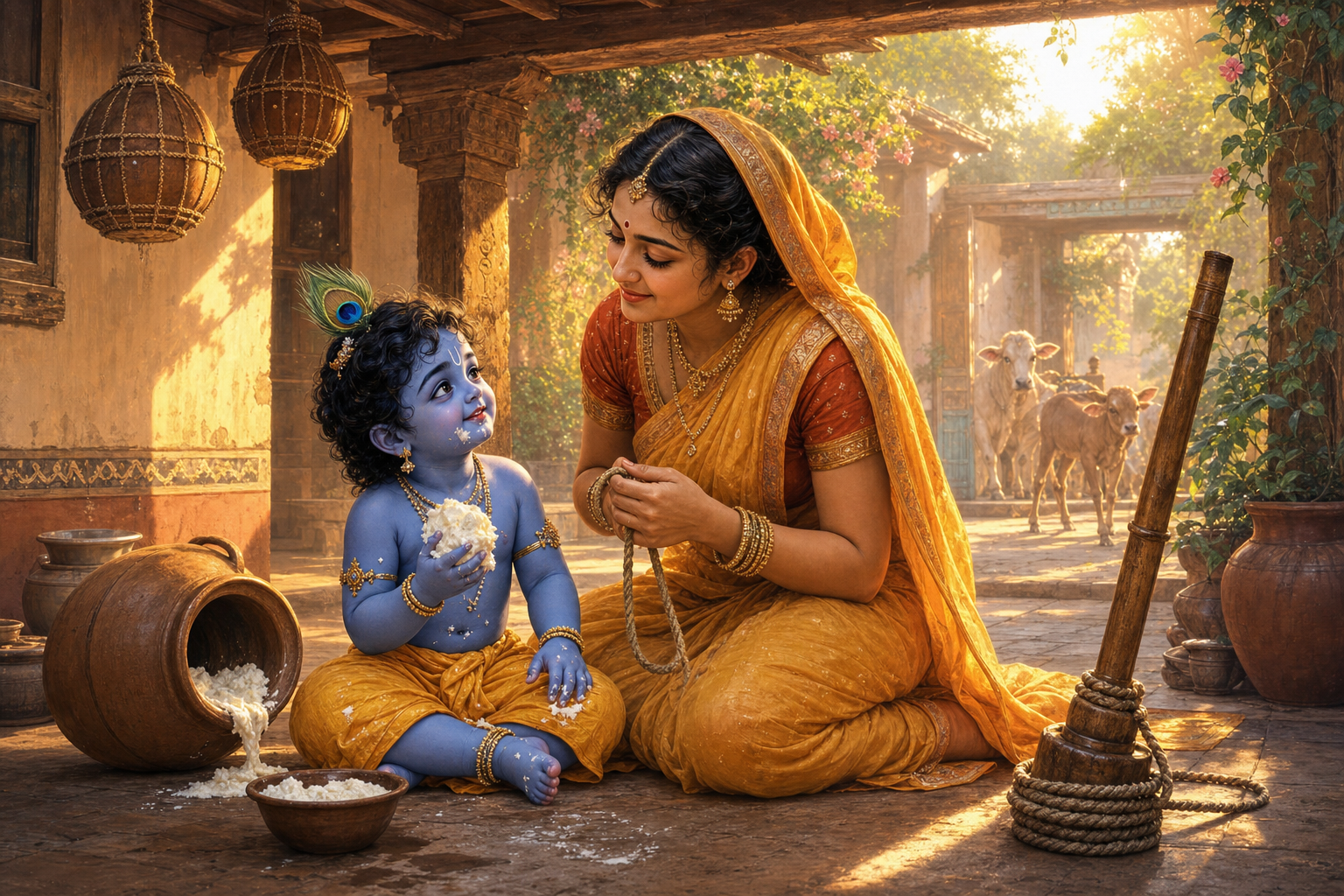
This essay decodes a powerful Hindu symbol: Child Goddess Kali seated on the lap of Maa Sharda as Sri Ramakrishna brings food. It situates the scene within Sanatana Dharma, Shakta Tantra, and Bengal’s devotional culture, showing how fierceness softens into maternal grace through seva. Drawing on Ramakrishna’s life—especially the Shodashi Puja to Sarada Devi—it interprets…
-
Puthandu 2026 on April 14: Chithirai 1 Mesha Sankranti, Rituals, and Parabhava Samvatsara

Puthandu 2026 (Varusha Pirappu/Chithirai Vishu) falls on 14 April, coinciding with Mesha Sankranti—the Sun’s sidereal ingress into Mesha Rashi (Aries)—and inaugurates Parabhava Nama Samvatsaram. The article explains the Tamil Sauramana (solar) calendar’s reliance on the sidereal zodiac, why the New Year clusters around mid-April, and how local panchangams use the precise Sankranti moment to guide…
-
Puthandu 2026: Definitive Guide to Varusha Pirappu, Chithirai Vishu, Mesha Sankranti & Parabhava

Puthandu 2026 (Varusha Pirappu), also known as Chithirai Vishu or Chithirai 1, falls on 14 April and is anchored in Mesha Sankramana—the Sun’s ingress into sidereal Aries. The festival inaugurates the samvatsara year Parabhava and unites astronomical exactitude with Tamil ritual life, from kani arrangements and maanga pachadi to temple abhishekam and panchanga pāṭhanam. This…
-
February 27, 2026 Panchang: Auspicious Shukla Paksha Ekadashi Timing, Rituals, Nakshatra & Rashi

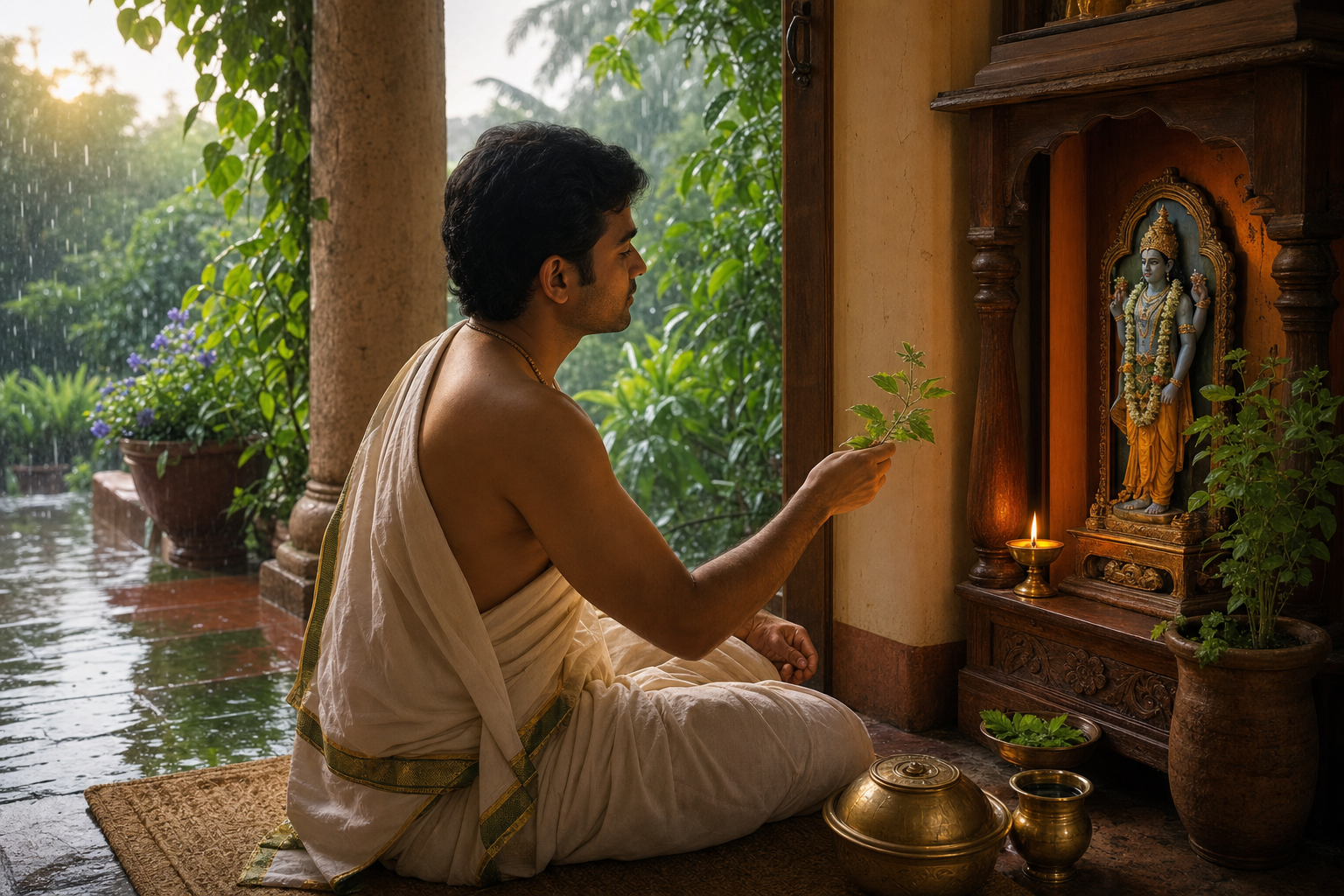
Friday, February 27, 2026 marks Shukla Paksha Ekadashi in most Indian regions, beginning at 12:06 AM IST and prevailing at sunrise—making it the principal day for Ekadashi vrata. Commonly known as Amalaki Ekadashi, the observance emphasizes sattva, Tulasi and āmalakī offerings, and Vishnu-centered worship. The post explains how tithi is computed in the Panchang, why…
-
Decoding the Karaga: Draupadi’s Living Shakti, Symbolism, and Community Unity in South India

The Karaga festival venerates Draupadi Amman as living Shakti through a sophisticated Shakta ritual centered on a sanctified earthen pot crowned with jasmine and neem. Anchored in Bengaluru’s Sri Dharmaraya Swamy Temple and observed across South India, it integrates vows, purity codes, and processional choreography to transform urban space into a sacred field. The martial…