

If you remember an elder chewing neem at dawn, you may wonder whether restoring the datun means giving up your toothbrush, toothpaste, or dentist. It does not. You can preserve the Hindu discipline of dantadhavana while using the parts of modern oral care that protect teeth and gums.
The key is to separate the enduring practice from any one implement. Dantadhavana gives your morning an order: clean the mouth carefully, treat the body with respect, avoid burdening other people or the environment, and then approach prayer, study, or work with greater composure.
Dantadhavana is a discipline, not a single implement
Dantadhavana literally means cleansing the teeth. Hindu practice places it within saucha, or purity, and dinacharya, the ordered daily routine. Its traditional place before japa, worship, study, and household rites makes an important point: care of the body is part of spiritual readiness, not a distraction from it.
Dharmashastra, the Grihya Sutras, the Smritis, and household ritual traditions give morning purification a definite place in disciplined life. The Charaka Samhita and Sushruta Samhita situate oral cleaning beside tongue scraping, liquid holding or swishing, and other elements of daily care. In that framework, the mouth affects more than appearance. Its condition influences breath, comfort, appetite, and your ability to begin the day without distraction.
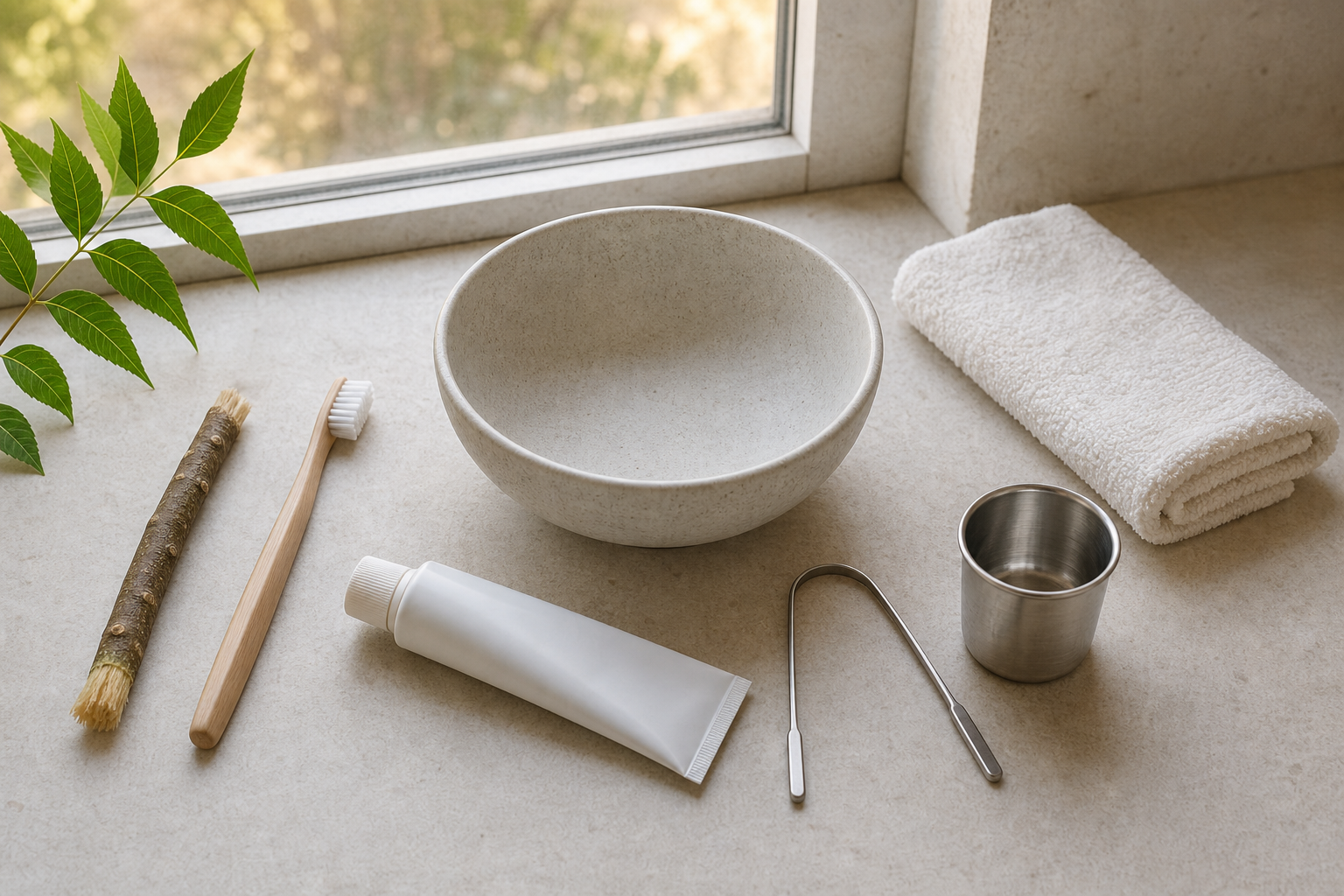
A datun, or danta-kashtha, is one traditional means of performing dantadhavana. It is not the whole meaning of the practice. If a soft toothbrush is safer for your teeth, using it attentively can preserve the discipline’s central purposes. Tradition resides in the regularity, gentleness, cleanliness, restraint, and intention as much as in the material held in your hand.
This understanding also explains a wider dharmic pattern. Buddhist Vinaya traditions include the tooth stick, or dantakaṭṭha, in monastic discipline. Jain conduct joins cleanliness to non-violence and careful handling. Sikh discipline treats personal hygiene as preparation for Nitnem and seva. The forms differ, but all refuse the false choice between bodily care and spiritual life.
Use a morning sequence that protects the mouth

A crowded routine often fails because every traditional practice gets added at once. That can lead to excessive rubbing rather than better care. Begin with one dependable cleaning method, then add only the adjuncts that serve a clear purpose.
- Wash your hands and inspect the implements. Your brush, scraper, cup, and any datun should be clean. A twig with dirt, decay, sharp splinters, or uncertain botanical identity does not become suitable merely because it is natural.
- Perform the main tooth cleaning gently. The prudent modern foundation is a soft-bristled brush with fluoride toothpaste twice daily. In the morning, guide the bristles carefully along the teeth and gum margins rather than scrubbing with force. The second brushing belongs later in the day; a sacred morning routine does not make it unnecessary.
- If you use a datun, prepare the fibers before they touch the gums. Chew one end until it forms a soft, brush-like cluster. Sweep the surfaces and gum margins with controlled, mainly vertical movements. Do not use a pointed end, a harsh sap, or a frayed mass that scratches tissue. A datun should feel firm enough to clean but not sharp or punishing.
- Rinse without polluting the space. Spit discreetly, away from shrines, paths, shared washing areas, and water sources. Place the used twig in an appropriate clean-waste or compost stream where local conditions permit. Biodegradable material still needs considerate disposal.
- Clean the tongue with a dedicated scraper. Use a smooth implement and light pressure. Copper, silver, and other non-reactive metals have traditional precedent, but an expensive metal is not what makes the practice sound. Smooth edges, cleanliness, and gentle handling matter more. Rinse the scraper after use.
- Add a mild rinse if it helps. Warm water can complete the routine. Gandusha and kavala refer to related practices of holding or moving oil or a suitable decoction in the mouth. Treat them as optional adjuncts, not as replacements for cleaning the teeth and spaces between them.
- Move deliberately into the next duty. Wash the implements, clean the area, and proceed to prayer, meditation, study, or work. This transition is where ordinary hygiene becomes dinacharya: the act is complete, the space is orderly, and the mind is not carrying the disorder forward.
Regular interdental cleaning with floss or an interdental brush addresses places that neither a twig nor an ordinary toothbrush reaches well. Routine dental examinations add another layer: they can identify disease or damage that no amount of mindful technique can reliably assess at home. The most defensible synthesis is therefore gentle traditional practice alongside fluoride brushing, interdental care, and professional assessment.
Choose each tool by the job it actually does
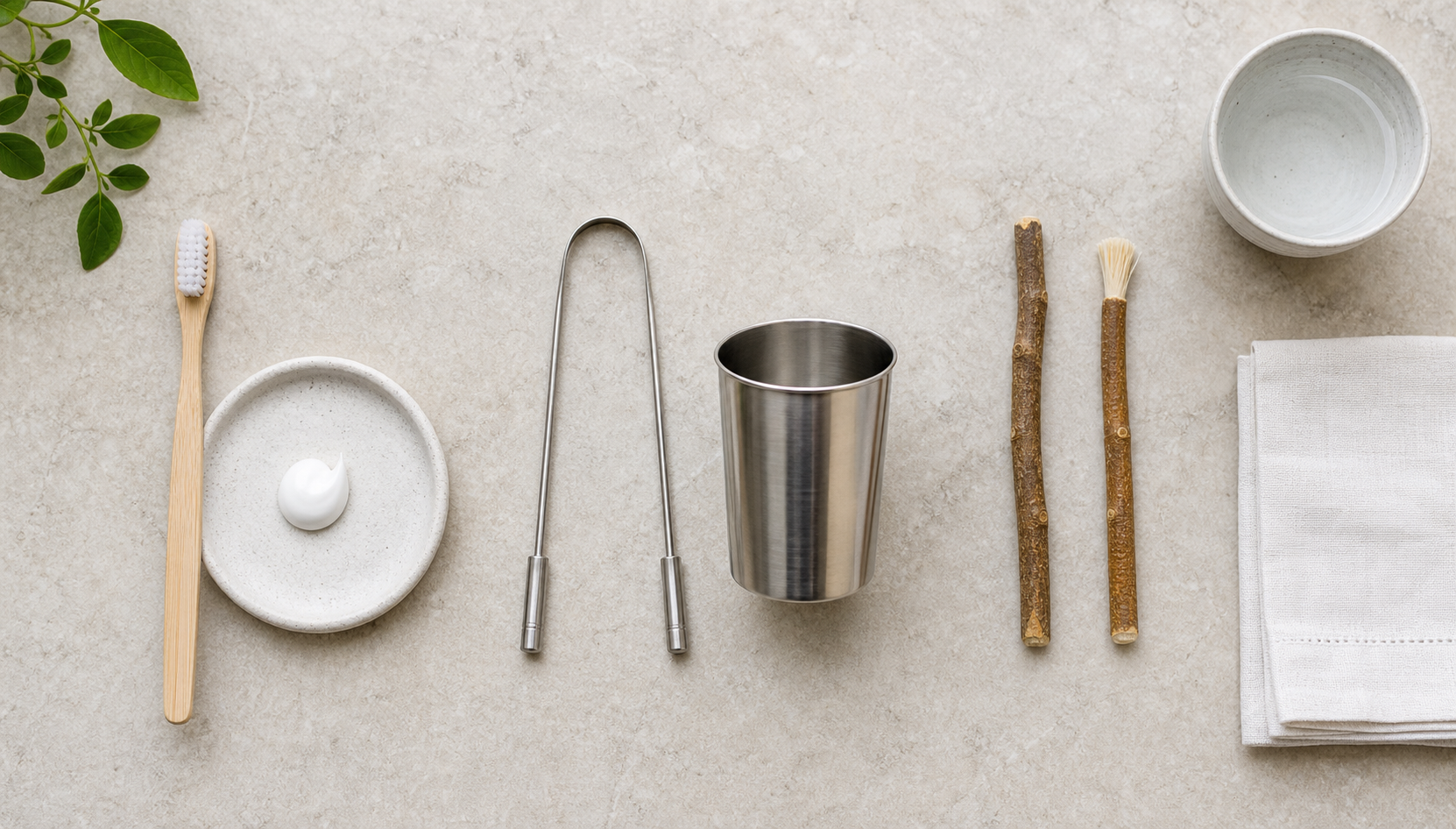
The useful question is not whether a tool is ancient or modern. Ask what it cleans, what it cannot do, and whether your mouth tolerates it.
| Practice | Main role | How to use it sensibly | Important limit |
|---|---|---|---|
| Soft brush and fluoride toothpaste | Routine cleaning of teeth and gum margins, with fluoride protection | Use gentle pressure twice daily and choose very soft bristles when sensitivity or gum problems require them | It does not reliably clean every interdental space |
| Fresh datun | Traditional mechanical cleansing with a fibrous twig | Use a correctly identified, clean, fresh twig; soften one end and sweep gently | Plant sap, rough fibers, and excessive force can irritate the mouth |
| Dantamanjana, or herbal tooth powder | A traditional powdered cleansing preparation | Assess the texture, ingredients, and your tolerance before regular use | A strongly flavored or coarse preparation is not automatically more effective |
| Tongue scraper | Removal of tongue coating and support for fresher breath | Use a smooth, dedicated scraper with light, consistent movements | It does not remove plaque from teeth or between them |
| Gandusha or kavala | Optional oil or decoction holding and swishing | Use a suitable liquid without replacing the main cleaning routine | It is an adjunct, not a treatment for cavities or gum disease |
| Floss or interdental brush | Cleaning between teeth | Select the method appropriate to the spaces between your teeth and any dental work | It complements rather than replaces brushing |
Traditional datun choices include neem (Azadirachta indica), khadira (Acacia catechu), pilu (Salvadora persica), babul (Vachellia nilotica), and karanja (Pongamia pinnata). Their astringent, bitter, or mildly pungent qualities helped determine their use. These named plants are examples, not permission to chew an unidentified branch. Correct identity, freshness, cleanliness, and personal tolerance come first.
Herbal tooth powders have included neem material, triphala, clove, and rock salt in differing combinations. That variety is precisely why the label “herbal” tells you too little. Check what is actually in the powder. If it stings, feels rough, worsens sensitivity, or leaves the gums sore, stop using it. Intensity is not evidence of purification.
The same restraint applies to oil-based swishing. It may improve plaque and halitosis indices, and some people value its slow, settling rhythm. That makes it a possible adjunct. It does not supply fluoride, clean every interdental surface, diagnose disease, or remove the need for professional care.
You also do not need to perform every option in the same sitting. A forceful datun, a strongly textured powder, vigorous brushing, tongue scraping, and prolonged swishing stacked together can turn a calm discipline into needless irritation. Choose one main method for the teeth. Add tongue cleaning or a rinse only when it contributes something distinct.
Know when gentleness requires changing the routine

Sacred cleanliness is not aggressive cleanliness. The mouth contains hard tooth surfaces and delicate living tissue, so “more pressure” is a poor measure of devotion or effectiveness. Pain, abrasion, and inflammation are reasons to adjust the practice, not obstacles to overcome through willpower.
- If you have sensitive gums or enamel erosion: favor very soft implements and obtain advice from a dental professional before adding a twig or textured powder.
- If you have active periodontal disease: do not improvise a treatment from datun, salt, clove, oil, or triphala. Follow the cleaning method recommended for your condition.
- If a botanical causes burning, swelling, itching, or another suspected allergic response: stop using it. A plant’s traditional use does not guarantee that it is suitable for you.
- If a twig splinters or its sap feels harsh: discard it. Do not try to finish it out of thrift or ritual obligation.
- If scraping produces pain or bleeding: reduce pressure or stop. The aim is to lift coating gently, not to scour the tongue.
- If pain, swelling, persistent bleeding, loose teeth, or a mouth lesion is present: arrange a dental assessment. Changing the flavor of the powder or the species of twig is not an adequate response.
Personalization is consistent with Ayurveda’s attention to constitution and context. It is not a concession to modernity. A practice that ignores the actual state of your gums, teeth, allergies, and medical needs has already lost the attentive quality that dantadhavana is meant to cultivate.
Environmental courtesy deserves the same seriousness. Do not leave chewed fibers where another person must handle them. Do not spit into a water source or beside a sacred space. Clean the basin and tools after use. These small acts make saucha social: your purification should not create impurity or inconvenience for someone else.
Key takeaways
- Dantadhavana is the disciplined cleansing of the mouth within saucha and dinacharya; it is broader than the use of a datun.
- A soft-bristled brush with fluoride toothpaste twice daily, regular interdental cleaning, and dental examinations provide the prudent modern foundation.
- If you use a datun, choose a fresh, correctly identified plant, soften the fibers, and work gently along the teeth and gum margins.
- Tongue scraping, herbal powders, gandusha, and kavala are optional practices with distinct purposes. None replaces brushing, interdental care, or necessary treatment.
- Soreness, burning, bleeding, or worsening sensitivity means the method needs adjustment. Persistent symptoms warrant professional assessment.
- Discreet rinsing, clean implements, and responsible disposal are part of the dharmic practice, not housekeeping added afterward.
Tomorrow morning, begin with the smallest complete routine: clean hands, one safe method for the teeth, a gentle tongue cleaning if it suits you, responsible rinsing, and then your prayer or study. Let steadiness deepen the practice. You can honor an old discipline without making your mouth bear the cost of proving that it is old.
References
