
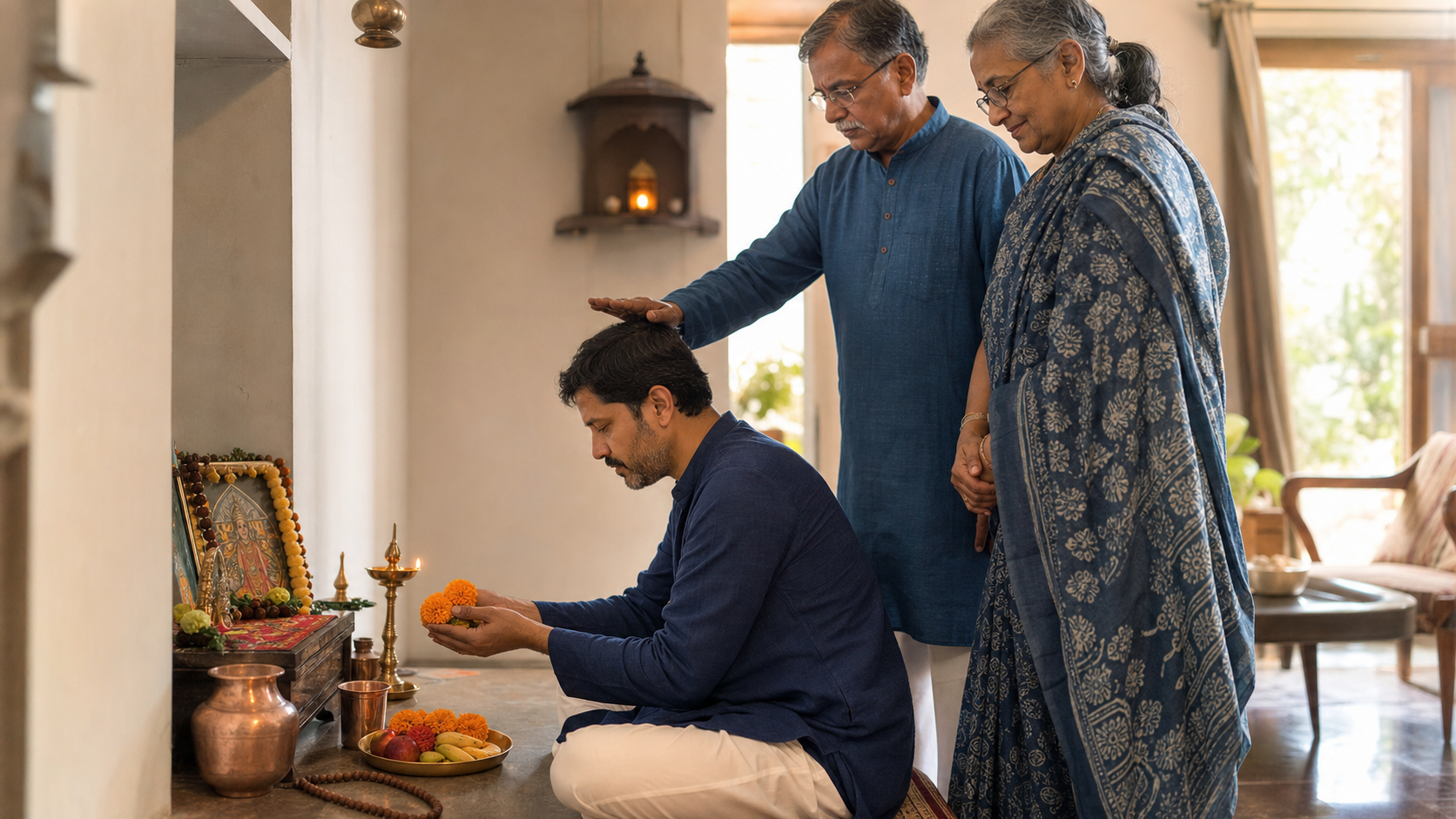
If your family has always celebrated your birthday on its Gregorian date, learning about janma tithi creates an immediate practical question: must you move the whole celebration? You do not. Keep the civil date for greetings, leave, school, and a convenient family gathering. Treat the janma tithi as the ritual birthday: the period for sankalpa, puja, japa, dana, reflection, and blessings.
The important work is not planning a more elaborate party. It is identifying the correct lunar day, recording it without ambiguity, and placing a few meaningful practices inside its local time window.
Why your birth tithi does not stay on one civil date

A Gregorian date changes at midnight. A tithi changes when the angular separation between the Sun and Moon increases by another 12 degrees. It is therefore an astronomical division rather than a fixed 24-hour day. A tithi may begin in the morning, afternoon, evening, or during the night, and it can end just as independently of the civil clock.
There are 30 tithis in a lunar month. Shukla Paksha covers the waxing half, from Pratipada through Purnima. Krishna Paksha covers the waning half, from Pratipada through Amavasya. The paksha is essential information: Shukla Ashtami and Krishna Ashtami are different lunar days even though both are called Ashtami.
This is why the Gregorian anniversary of your birth will not reliably reproduce the Sun-Moon relationship present when you were born. The same calendar logic places Rama Navami on Chaitra Shukla Navami and Krishna Janmashtami on Bhadrapada Krishna Ashtami rather than on permanent civil dates. A household that observes janma tithi is applying that Dharmic understanding of time to personal life.
Within the Vedic worldview, the recurring tithi offers an appropriate moment for sankalpa and spiritual renewal. That is a traditional and metaphysical understanding, not proof that a particular lunar angle produces a measurable biological effect. Evidence for strong human biological effects from lunar cycles remains mixed and modest. You do not need to exaggerate the science to value a precise astronomical marker that turns a birthday toward gratitude, discipline, family continuity, and seva.
Find the tithi once, then create a record your family can reuse
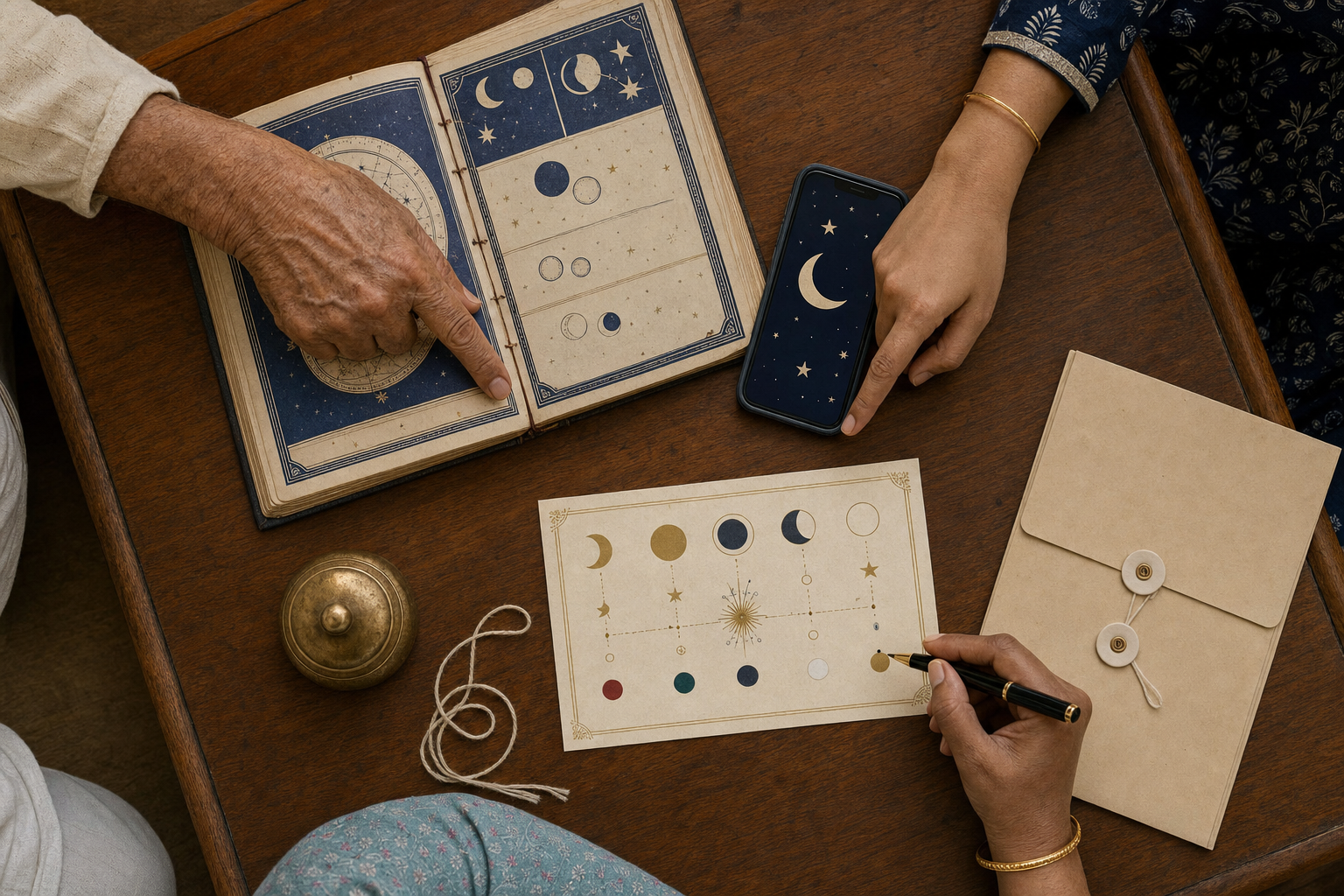
A reliable result requires two separate calculations. First, identify the lunar conditions at birth. Then, for each birthday, find when that tithi occurs at the place where you will observe it. A generic annual calendar or an unverified online date is not enough because tithi boundaries depend on location and time zone.
- Collect the birth details. Use the civil date, the most accurate available birth time, and the birthplace. A small difference in time matters when birth occurred near a tithi boundary.
- Ask for the complete lunar identification. Have an authentic Panchang calculation or a knowledgeable priest determine the tithi prevailing at the actual time of birth. Record the lunar month, Shukla or Krishna Paksha, the tithi name, and the janma nakshatra as a separate item.
- Choose your family rule. For a personal observance, the tithi at janma-kala, the actual birth time, is a strong standard when that time is known. When it is not known, the tithi prevailing at sunrise on the civil birth date is a practical traditional rule. Both approaches are in use; consistency matters more than changing methods each year to obtain a preferred date.
- Calculate the annual local window. Each year, look up the beginning and ending times of the same month, paksha, and tithi for the place where the observance will occur. Do not copy timings from a Panchang prepared for a different city or time zone.
- Check unusual cases rather than guessing. A kshaya tithi passes without prevailing at sunrise, so it can appear to be missing from a sunrise-based calendar. A vriddhi tithi spans two sunrises, so it can appear twice. Ask a priest familiar with your regional convention to apply the appropriate rule, and write down the decision for future years.
Your permanent family record should read in an unambiguous order: calendar convention, lunar month, paksha, tithi, whether the result is based on birth time or sunrise, janma nakshatra, birth time, and birthplace. For the annual entry, add the local start and end of the tithi. Saving only the tithi name invites mistakes later.
Month names can create a second layer of confusion. Amanta calendars end the month at Amavasya, while Purnimanta calendars end it at Purnima. The underlying tithi is still determined by the same Sun-Moon geometry, but the associated month name may be presented differently in regional almanacs. Record which convention your family follows, along with the paksha, so a future priest or relative can understand the entry correctly.
Give tithi, nakshatra, and the civil date different jobs

Families sometimes receive two answers for the Dharmic birthday: one based on tithi and another based on janma nakshatra. This is not necessarily a contradiction. The two markers describe different relationships in the birth sky and can support complementary practices.
| Calendar marker | What it records | A coherent role in the birthday |
|---|---|---|
| Janma tithi | The angular relationship between the Sun and Moon at birth, expressed through lunar month, paksha, and tithi | Personal sankalpa, household puja, japa, dana, and the primary ritual birthday |
| Janma nakshatra | The Moon’s position in one of 27 lunar mansions, each spanning 13 degrees and 20 minutes | Ayush Homa and other longevity-oriented rites in lineages that schedule them by birth star |
| Gregorian date | The recurring civil calendar date | Greetings, work or school arrangements, travel, and a convenient social celebration |
If your tithi and nakshatra fall on different days, you do not have to choose one and reject the other. Perform the household observance on the janma tithi, and arrange a nakshatra-based rite according to your lineage or priest’s practice. If relatives can gather only on a weekend, hold the meal then. The spiritual observance should not become dependent on the availability of a banquet hall, a school holiday, or every guest.
This division also avoids an unnecessary argument over which birthday is the real one. The dates answer different needs. The civil date identifies you in public life; the janma tithi locates the personal observance within Dharmic sacred time; the janma nakshatra supplies another traditional basis for particular rites.
Build the observance around sankalpa, not spectacle
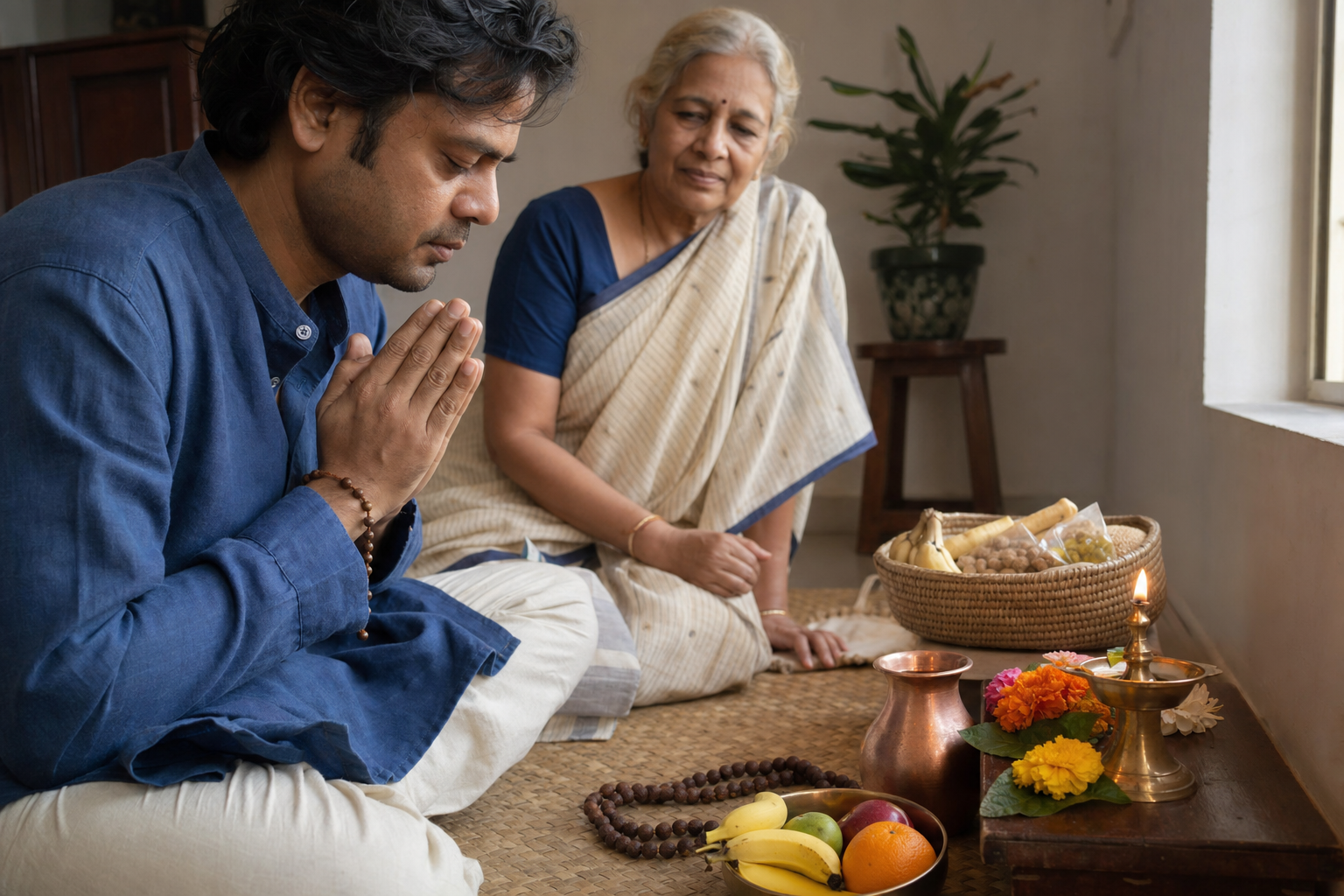
A complete observance can be simple. The central question is whether you used the tithi consciously, not whether you purchased elaborate materials. Place the core practices within the actual tithi window whenever possible.
- Prepare the space. Clean the household shrine, arrange a deepa, water, flowers or seasonal fruit, and decide beforehand what dana or seva you will perform.
- Begin with snana and a calm transition. Bathe, wear clean clothes, and step away from hurried social activity before approaching the shrine.
- State the sankalpa aloud. Include your name, the tithi and paksha, janma nakshatra if known, and family identifiers such as gotra only when they are known and customary. Do not invent missing details. A plain-language intention may dedicate the worship to gratitude, purity of mind, Dharmic conduct, and the welfare of all.
- Perform japa and dhyana. Use your initiated or customary ishta-mantra. Where appropriate to your practice, recite the Mahamrityunjaya mantra, followed by a period of quiet meditation.
- Offer and share sattvika food. Seasonal fruit and a simple sattvika meal are sufficient. The food should support the tone of the observance rather than turn preparation into strain.
- Seek blessings. Offer pranam and receive blessings from parents, elders, teachers, and the family deity. When distance prevents an in-person visit, speak with the elder during the tithi window if possible.
- Complete the observance through dana or seva. Anna-dana, helping a person in need, gopaseva, or feeding birds and other beings directs the birthday beyond the self. Choose an act you can actually complete rather than making a vague promise for later.
If you have access to a temple and priest, the fuller options include Ayush Homa, recitation of Ayushya Suktam, or a Satyanarayana puja. Follow your sampradaya and local practice when choosing among them. More ritual is not automatically more meaningful; accuracy, attention, and ethical conduct matter more than display.
Let the rest of the day support the sankalpa. Sattvika ahara, friendly and restrained speech, and greater self-control make the observance visible in conduct. These disciplines need not become a test imposed on guests. They are ways for you to reduce distraction and notice whether another year of life is producing greater steadiness, gratitude, and responsibility.
How to explain the practice without overstating science
If a relative asks whether a tithi birthday is scientific, separate three claims. The astronomical claim is straightforward: tithi is calculated from observable Sun-Moon geometry. The spiritual claim belongs to the Vedic understanding of sacred time and sankalpa. The personal value lies in what the observance trains you to do: pause, remember your obligations, honour those who sustained you, and convert celebration into generosity. Keeping those claims distinct is both honest and fully compatible with reverence.
Key takeaways for real-world scheduling
- Use the janma tithi for the ritual birthday and the Gregorian date for civil and social convenience.
- When an accurate birth time is available, identify the tithi prevailing at that time. When it is unavailable, use a consistent sunrise-based rule accepted in your family or region.
- Record the lunar month, paksha, tithi, calendar convention, calculation rule, janma nakshatra, birth time, and birthplace. The tithi name alone is incomplete.
- Recalculate the annual tithi window for the location where you will observe it, especially after moving or travelling across time zones.
- Tithi and nakshatra are complementary. Household puja and dana may follow the tithi while an Ayush Homa follows the birth star according to lineage.
- When work, school, or distance prevents a full gathering, perform the sankalpa and core practice during the tithi, then hold the communal meal on a convenient adjacent day.
- In a kshaya or vriddhi case, consult an authentic local Panchang or knowledgeable priest instead of choosing whichever civil date is easier.
For a diaspora family, the most common avoidable error is using timings calculated for the birthplace or for Bharat after the person has moved elsewhere. The natal tithi still comes from the original birth details, but the annual observance window must be found for the current location. If travel crosses time zones during the tithi, settle the plan with a location-specific calculation before the journey.
Before the next birthday, do one durable thing: obtain a reliable janma-tithi calculation and place the complete record where your family keeps important dates. Once that foundation is correct, begin with deepa, sankalpa, japa, blessings, and one completed act of dana. The social celebration can remain flexible; the Dharmic centre of the day will no longer be accidental.
References
