Understanding contemporary Dravidian discourse requires close attention to the intertwined history, mythology, and cultural memory of the ancient Tamil country. In this field, one of the most persistent and emotionally resonant narratives is that of a lost southern landvariously called Lemuria, Kumari Nadu, or Kumarikandamonce attached to present-day Kanyakumari and later submerged by the sea. This account functions as a powerful civilizational motif, shaping identity and pride for many, even as historians and scientists continue to examine the claim through the lenses of textual criticism, archaeology, linguistics, and earth sciences.
According to this narrative, the submergence of the southern landmass triggered a northward migration of Tamils who, after an initial phase, spread further across the subcontinent, including regions corresponding to present-day Pakistan and Afghanistan. A frequently cited linguistic echo of this movement is the Dravidian language Brahui, spoken today in parts of Pakistan and Afghanistan. Within this framework, some versions further propose that subsequent Indo-Aryan movements displaced earlier Tamil populations from northern India while Tamil regions south of the Vindhyas remained comparatively insulated.
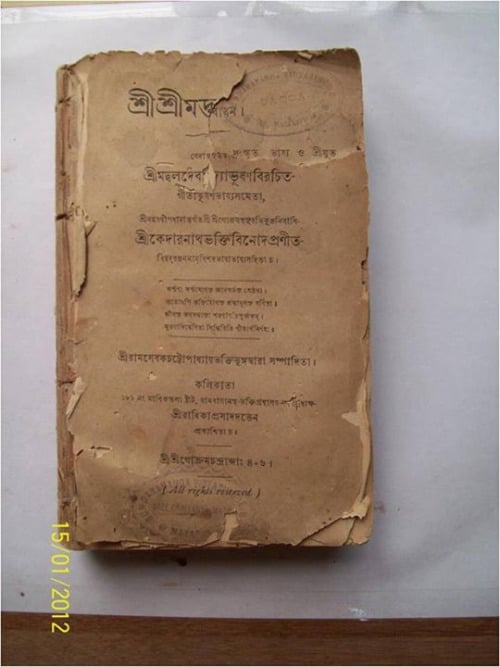
In textual terms, references to inundation and territorial loss are often located in classical Tamil sources such as Kalittogai and Silappadikkaram, alongside the broader Sangam-era tradition. A strand of the tradition centers the Ahapporul or Kalaviyalattributed to Iraiyanaar (Lord Shiva) in the literary memoryand an influential commentary ascribed to Nakkeerar. However, scholarly debate remains active on both authorship and chronology. A. V. Subrahmanya Iyer (The Story of Tamil Research, 1959) challenged the traditional ascription to Nakkeerar, while dating proposals range widelyfrom the 8th century to the 13th century CEwith later compromises often situating the commentary in the 10th–11th centuries CE. Such variance underscores the care required when deriving deep-time historical claims from literary traditions whose textual histories are themselves complex.
Chronology is central. The earliest secure epigraphic attestations of Tamil (Tamil-Brahmi) appear from roughly the 3rd century BCE, and the extant Sangam corpus coalesced centuries later. While poetic motifs of deluge and loss are culturally and philosophically rich, they do not, by themselves, constitute material evidence for a continent-scale landmass vanishing within the last 6,000–15,000 years. This time window is nevertheless cited in some modern retellings (for example, K. K. Pillai, A Social History of the Tamils, 1969), often without clear methodological justification for the specific dates.
The modern scientific history of “Lemuria” also bears recalling. The term originated in 19th-century biogeography (Philip Sclater, 1864) as a hypothesis to explain the distribution of lemur fossils and related faunas. With the rise of plate tectonics and the deeper-time narrative of Gondwana’s breakup, that hypothesis lost traction. India’s separation from Madagascar and subsequent northward drift are now placed in the Mesozoic era, tens of millions of years before humans. While geoscience has identified intriguing microcontinental fragments in the Indian Oceansuch as Mauritia, detected via ancient zircons beneath young lavas near Mauritiusthese are not Holocene or late Pleistocene landmasses contiguous with Tamil Nadu.
Sea-level history does matter to Tamil coastal archaeology. During the Last Glacial Maximum (~20,000 years ago), global sea levels were approximately 120 meters lower, exposing broader continental shelves around peninsular India. As sea levels rose during the Holocene, shorelines transgressed inland, reshaping estuaries, lagoons, and barrier systems from Kanyakumari to the Gulf of Mannar and the Palk Strait. These dynamics plausibly account for local submergence events, coastal site loss, and the migration of littoral populations, all without requiring the disappearance of a continent-sized landmass.
Underwater and nearshore investigations along Tamil Nadu’s coastsuch as those off Poompuharhave recovered cultural materials on now-submerged or reworked seabeds. These finds enrich the maritime history of the region, attesting to vibrant coastal settlements, trade, and craft traditions across millennia. Yet the distributed, modest-scale signatures revealed so far align more closely with incremental sea-level rise, sedimentary reworking, and episodic storm or tsunami impacts than with the sudden collapse of a continental platform in recent prehistory.
Some public confusion stems from terminology. In primate taxonomy, lemurs are strepsirrhines primarily endemic to Madagascar, historically grouped under Lemuroidea in older classifications. Their name’s phonetic similarity to “Lemuria” has periodically encouraged unwarranted connections between zoological labels and civilizational geography. Biogeographers and anthropologists caution against conflating a 19th-century faunal dispersal hypothesis with claims about lost human homelands in the Holocene.
The Brahui language warrants a careful, evidence-led discussion. Brahui is Dravidian, yet heavily influenced lexically by Iranian and Indo-Aryan neighbors. Two broad scenarios are debated: an ancient, more northerly Dravidian presence with later language shift in surrounding populations; or a relatively recent (medieval) migration of a Dravidian-speaking community from central or eastern regions into Balochistan. Toponymic layers, substratal traces, and historical documentation are currently insufficient to settle the issue definitively, though many linguists lean toward a later migration given the absence of deep Dravidian hydronyms and the strong overlay of recent loanwords. Either way, the Brahui case is not, on present evidence, a secure proxy for a mass, pan-Indian dispersal of Tamils from a submerged southern continent.
Parallel debates orbit the older “Aryan invasion theory.” Mainstream scholarship has progressively reframed this as a complex, multi-phase Indo-Aryan migration and cultural formation during the second millennium BCE, visible in linguistic phylogenies and increasingly in population genetics (for example, steppe-related ancestry signals detected in large-scale South Asian datasets). Even within this evolving picture, migration is not a one-way civilizational judgment. The subcontinent’s cultural tapestry, from the Tamil south to the Himalayan north, is the product of multiple, overlapping streamsindigenous developments, interregional exchanges, and diasporic flows over deep time. For dharmic communitiesHindu, Buddhist, Jain, and Sikh alikeemphasizing complementarity over hierarchy or division aligns more closely with lived civilizational experience.

Method matters. Robust historical reconstruction integrates material culture, stratigraphy, palaeo-shoreline mapping, radiocarbon and OSL dating, palaeobotany, palaeoclimate, epigraphy, numismatics, and critical textual hermeneutics. Linguistics contributes with the comparative method, sound-law regularities, contact linguistics, and dialect geography. Geosciences add plate-tectonic reconstructions, bathymetry, seismic profiles, and sediment cores. A claim as expansive as a submerged subcontinental homeland during the last 15,000 years would be expected to leave multiple, convergent empirical signatures across these domains; such signatures have not been established to date.
Within Tamil literary studies, reconstructing intellectual lineages also benefits from disciplined chronology. The contested attribution of the Ahapporul commentaryvariously placed from the 8th to the 13th centuries CE, with interim proposals in the 10th–11th centuriesillustrates how unresolved dating can ripple into broader historical claims. Establishing relative and absolute chronologies for commentarial traditions, redactions, and manuscript families strengthens, rather than weakens, the civilizational narrative by clarifying what is securely known and what remains interpretive.
Flood narratives and motifs of cyclical dissolution are common across cultures, including dharmic literature (for example, the Matsya narrative) and classical Tamil poetry. Read as mythic memory and philosophical allegory, they convey moral guidance, cosmological rhythm, and ecological humility. In this register, the Tamil tradition stands shoulder to shoulder with the wider civilizational sphere, expressing insights that resonate with Hindu, Buddhist, Jain, and Sikh reflections on impermanence, dharma, and ethical action. Myth need not become partisan pseudohistory; it can instead serve as a shared wellspring of meaning and unity.
Discourse benefits when gatekeeping and ad hominem are set aside in favor of transparent reasoning. A frequently cited anecdote in public conversationswhere confusion arises between Lemuria and Lemuroideareminds scholars and enthusiasts alike to separate zoological terminology from cultural geography and to welcome interdisciplinary clarifications without rancor. Healthy debate, open access to sources, and collaborative inquiry advance knowledge while honoring the dignity of all communities involved.
The tangible historical achievements of Tamilakam are extraordinary on their own terms. Early historic trade with the Mediterranean world is attested by finds at Arikamedu; sophisticated hydrological engineering is exemplified by the Kallanai (Grand Anicut); the Chola maritime network linked the Indian Ocean littorals; and the literary splendor of the Sangam corpus continues to inspire. These accomplishments do not require the scaffolding of a vanished continent. They stand as enduring testaments to creativity, learning, and statecraft within the broader civilizational family.
A constructive research agenda can move the conversation forward. On the coastal front, high-resolution bathymetry, shallow seismic imaging, sediment coring, and microfossil analyses can refine palaeo-shoreline reconstructions from Kanyakumari through the Gulf of Mannar and into the Palk Strait. Archaeologically, systematic underwater surveys, controlled excavations, and precise dating at candidate sites (including nearshore platforms) can better calibrate Holocene settlement dynamics. In linguistics, deeper toponymic and substratal studiespaired with computational phylogeneticsmay clarify the time depth and dispersal of Dravidian branches, including the status of Brahui.
Unity across dharmic traditions is best served by balancing pride in regional heritage with intellectual humility and methodological rigor. When narratives about Lemuria or Kumarikandam are approached as layered cultural memory rather than as hard geological history, dialogue becomes more spacious: historians can honor the beauty of Tamil mythic imagination; geologists can explain plate tectonics and sea-level change; linguists can parse the complexities of language contact and shift. Each discipline contributes without negating the others.
In sum, the Kumarikandam/Lemuria motif reveals how identity, literature, and landscape co-produce meaning in South Asia. Current archaeological, linguistic, and geoscientific evidence does not substantiate a Holocene-scale, continent-sized landmass attached to Kanyakumari. What the evidence does support is a rich coastal history shaped by Holocene sea-level rise, robust maritime exchange, and a literary tradition that thoughtfully encodes loss, resilience, and renewal. Embracing this integrative, evidence-based view strengthens a shared civilizational ethosone in which Tamil heritage, and the wider dharmic family, thrive together.
For readers seeking foundational studies, classics such as K. A. Nilakanta Sastri on South Indian history, Iravatham Mahadevan on Tamil-Brahmi inscriptions, and R. Champakalakshmi on early medieval South Indian society provide durable frameworks. Complementary advances in Quaternary sea-level research and population genetics continue to refine regional chronologies. Engaging these sources with an open, collaborative spirit transforms a polarizing debate into a collective quest for understandingworthy of the depth and dignity of Tamilakam and its place in the civilizational whole.
Inspired by this post on Dharma Dispatch.