

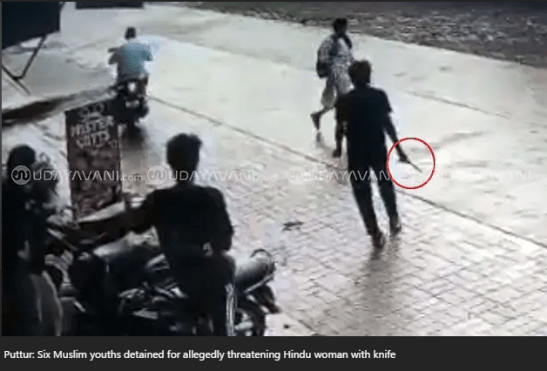
A reported knife-threat incident in Puttur, Karnataka, has drawn public attention after a Hindu woman alleged that she was pursued and threatened by six youths identified in the initial report as Muslim. According to the available account, police detained the six youths for questioning, registered a counter case, and began an investigation into the competing claims. At this stage, the matter remains an allegation under inquiry, not a judicial finding of guilt.
The case requires careful language because it sits at the intersection of personal safety, women’s security, communal sensitivity, and due process. A woman’s complaint of being threatened with a knife must be treated with seriousness. At the same time, the detention of suspects does not by itself establish culpability. In a constitutional legal framework, facts must be tested through evidence, police procedure, and eventually judicial scrutiny if charges are filed.
Puttur, located in Karnataka’s Dakshina Kannada region, is not merely a geographical setting in this report. Coastal Karnataka has often been discussed in relation to community tensions, political mobilization, and questions of public order. That wider background makes precision even more important. A local criminal complaint can quickly become a larger social narrative when the religious identities of those involved are foregrounded before the investigation is complete.
The central claim, as reported, is that the woman faced pursuit and a knife threat. If proven, such conduct would raise serious concerns about intimidation, public safety, and the vulnerability of women moving through ordinary public spaces. The everyday fear created by alleged pursuit is not abstract. Families understand it immediately because roads, markets, bus stands, and neighborhood lanes are the spaces where civic trust is either protected or weakened.
The reported police response has two significant elements: detention of six youths and registration of a counter case. Detention generally allows police to question individuals and examine immediate facts. A counter case, however, indicates that the incident may involve competing versions of events. This makes the evidentiary process especially important, because investigators must determine whether the original complaint, the counter complaint, or parts of both are supported by verifiable material.
A responsible investigation would typically examine the woman’s statement, the statements of the detained youths, any available eyewitness accounts, nearby CCTV footage, mobile phone location data, call records where legally relevant, and whether any weapon was recovered. Medical or psychological impact may also be documented where applicable. The strength of the case should ultimately depend on such material, not on rumor, political pressure, or communal assumptions.
The religious identities mentioned in the report are socially sensitive. They may be relevant to public perception, but they should not replace the legal question: what happened, who did what, what evidence supports it, and what law applies? Hindu-Muslim relations in any locality are best protected when wrongdoing is treated as individual wrongdoing and when entire communities are not made answerable for the alleged conduct of a few persons.
For a blog committed to unity among dharmic traditions, the ethical response is neither denial nor provocation. The dharmic lens values truth, restraint, justice, and protection of the vulnerable. In practical terms, that means supporting a fair investigation, standing with any person who faces intimidation, and resisting language that turns an unresolved criminal allegation into collective hostility.
Women’s safety must remain central. Whether in Puttur or any other town, a woman who reports being chased or threatened should have access to prompt police protection, respectful statement-taking, and a process that does not dismiss her fear. Public institutions earn trust when complainants are heard without prejudice and suspects are examined without prejudgment. Both principles are necessary; neither weakens the other.
The counter case also deserves procedural attention. Counter complaints in tense situations can sometimes reflect genuine grievance, misunderstanding, escalation, or strategic legal positioning. Because all of these possibilities exist, the police must separate emotion from evidence. The credibility of the final outcome will depend on whether investigators can reconstruct a reliable timeline and explain why particular claims were accepted or rejected.
Public communication by authorities matters in such cases. When police provide timely, factual, and limited updates, rumor has less space to grow. When information is vague, communities often fill the gap with speculation. A clear statement on the status of the complaint, the counter case, the sections invoked, and the next procedural steps can reduce anxiety while preserving the integrity of the investigation.
Media coverage also carries responsibility. Phrases such as “alleged,” “reportedly,” “detained,” and “under investigation” are not mere technicalities. They protect the legal process and prevent the public from treating suspicion as conviction. In sensitive cases involving Hindu and Muslim citizens, careful reporting is a public service because it keeps attention on evidence rather than identity.

The incident also highlights the importance of community-level calm. Local elders, civil society members, religious leaders, and elected representatives can either reduce tension or inflame it. The wiser path is to ask residents to cooperate with police, avoid forwarding unverified claims, and refuse retaliatory rhetoric. Justice is not served when a criminal inquiry becomes a pretext for social division.
There is a practical lesson here for law and society. Public safety is strongest when citizens trust that police will act quickly, courts will evaluate evidence fairly, and communities will not protect wrongdoers merely because they share identity markers. That standard must apply consistently, whether the accused belong to a majority community, a minority community, or any other social group.
From a constitutional perspective, India’s framework demands both protection and restraint. The state must protect citizens from threats, intimidation, and violence. It must also protect individuals from mob judgment and collective blame. The Puttur case, therefore, should be followed through the discipline of due process: complaint, investigation, evidence, legal action, and judicial review where required.
The emotional dimension should not be ignored. In small towns, allegations of pursuit and threat can unsettle families far beyond the immediate parties. Parents worry about daughters returning home safely, young people worry about being stereotyped, and communities worry about being dragged into conflict. These fears are real, but they must be guided toward lawful resolution rather than reactive hostility.
The most constructive position is therefore balanced and firm: the woman’s allegation must be investigated seriously; the detained youths must receive due process; the counter case must be examined on its merits; and the public must avoid communal generalization. This approach does not dilute concern for Hindu safety or women’s dignity. It strengthens both by insisting that justice be evidence-based and socially responsible.
As the probe continues, the public interest lies in transparency, lawful policing, and peace in Puttur. The final facts should emerge from the investigation, not from online speculation or partisan interpretation. Until then, the case should be understood as a serious allegation under active inquiry, one that calls for vigilance, compassion, and civic restraint.
Inspired by this post on Struggle for Hindu Existence.

Puttur, located in Karnataka’s Dakshina Kannada region, is not merely a geographical setting in this report. Coastal Karnataka has often been discussed in relation to community tensions, political mobilization, and questions of public order. That wider background makes precision even more important. A local criminal complaint can quickly become a larger social narrative when the religious identities of those involved are foregrounded before the investigation is complete.
The central claim, as reported, is that the woman faced pursuit and a knife threat. If proven, such conduct would raise serious concerns about intimidation, public safety, and the vulnerability of women moving through ordinary public spaces. The everyday fear created by alleged pursuit is not abstract. Families understand it immediately because roads, markets, bus stands, and neighborhood lanes are the spaces where civic trust is either protected or weakened.
The reported police response has two significant elements: detention of six youths and registration of a counter case. Detention generally allows police to question individuals and examine immediate facts. A counter case, however, indicates that the incident may involve competing versions of events. This makes the evidentiary process especially important, because investigators must determine whether the original complaint, the counter complaint, or parts of both are supported by verifiable material.
A responsible investigation would typically examine the woman’s statement, the statements of the detained youths, any available eyewitness accounts, nearby CCTV footage, mobile phone location data, call records where legally relevant, and whether any weapon was recovered. Medical or psychological impact may also be documented where applicable. The strength of the case should ultimately depend on such material, not on rumor, political pressure, or communal assumptions.
The religious identities mentioned in the report are socially sensitive. They may be relevant to public perception, but they should not replace the legal question: what happened, who did what, what evidence supports it, and what law applies? Hindu-Muslim relations in any locality are best protected when wrongdoing is treated as individual wrongdoing and when entire communities are not made answerable for the alleged conduct of a few persons.
For a blog committed to unity among dharmic traditions, the ethical response is neither denial nor provocation. The dharmic lens values truth, restraint, justice, and protection of the vulnerable. In practical terms, that means supporting a fair investigation, standing with any person who faces intimidation, and resisting language that turns an unresolved criminal allegation into collective hostility.
Women’s safety must remain central. Whether in Puttur or any other town, a woman who reports being chased or threatened should have access to prompt police protection, respectful statement-taking, and a process that does not dismiss her fear. Public institutions earn trust when complainants are heard without prejudice and suspects are examined without prejudgment. Both principles are necessary; neither weakens the other.
The counter case also deserves procedural attention. Counter complaints in tense situations can sometimes reflect genuine grievance, misunderstanding, escalation, or strategic legal positioning. Because all of these possibilities exist, the police must separate emotion from evidence. The credibility of the final outcome will depend on whether investigators can reconstruct a reliable timeline and explain why particular claims were accepted or rejected.
Public communication by authorities matters in such cases. When police provide timely, factual, and limited updates, rumor has less space to grow. When information is vague, communities often fill the gap with speculation. A clear statement on the status of the complaint, the counter case, the sections invoked, and the next procedural steps can reduce anxiety while preserving the integrity of the investigation.
Media coverage also carries responsibility. Phrases such as “alleged,” “reportedly,” “detained,” and “under investigation” are not mere technicalities. They protect the legal process and prevent the public from treating suspicion as conviction. In sensitive cases involving Hindu and Muslim citizens, careful reporting is a public service because it keeps attention on evidence rather than identity.
The incident also highlights the importance of community-level calm. Local elders, civil society members, religious leaders, and elected representatives can either reduce tension or inflame it. The wiser path is to ask residents to cooperate with police, avoid forwarding unverified claims, and refuse retaliatory rhetoric. Justice is not served when a criminal inquiry becomes a pretext for social division.
There is a practical lesson here for law and society. Public safety is strongest when citizens trust that police will act quickly, courts will evaluate evidence fairly, and communities will not protect wrongdoers merely because they share identity markers. That standard must apply consistently, whether the accused belong to a majority community, a minority community, or any other social group.
From a constitutional perspective, India’s framework demands both protection and restraint. The state must protect citizens from threats, intimidation, and violence. It must also protect individuals from mob judgment and collective blame. The Puttur case, therefore, should be followed through the discipline of due process: complaint, investigation, evidence, legal action, and judicial review where required.
The emotional dimension should not be ignored. In small towns, allegations of pursuit and threat can unsettle families far beyond the immediate parties. Parents worry about daughters returning home safely, young people worry about being stereotyped, and communities worry about being dragged into conflict. These fears are real, but they must be guided toward lawful resolution rather than reactive hostility.
The most constructive position is therefore balanced and firm: the woman’s allegation must be investigated seriously; the detained youths must receive due process; the counter case must be examined on its merits; and the public must avoid communal generalization. This approach does not dilute concern for Hindu safety or women’s dignity. It strengthens both by insisting that justice be evidence-based and socially responsible.
As the probe continues, the public interest lies in transparency, lawful policing, and peace in Puttur. The final facts should emerge from the investigation, not from online speculation or partisan interpretation. Until then, the case should be understood as a serious allegation under active inquiry, one that calls for vigilance, compassion, and civic restraint.
Inspired by this post on Struggle for Hindu Existence.