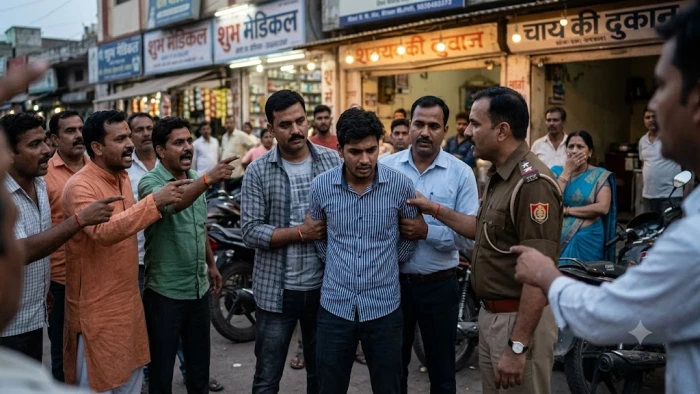
On November 6, 2025, in Fatehpur, Uttar Pradesh, a tense standoff emerged when a group of Hindu women attempted to perform puja at a mausoleum that some local residents regard as a former Hindu temple site. Police intervened to maintain law and order, and brief confrontations followed, reflecting heightened emotions around a contested religious space.
While the historical status of the site remains disputed, the episode underscores an urgent need to address contested heritage through established legal mechanismssuch as court-monitored archaeological surveys, transparent documentation, and orderly procedureswhile simultaneously safeguarding freedom of worship and public safety.
Local reporting indicates that access restrictions at the mausoleum intensified public frustration, leading to protests and a temporary face-off with security personnel. The situation illustrates how sensitive heritage claims can escalate quickly when communication is unclear and community expectations are not proactively managed.
From the perspective of interfaith relations and constitutional governance in India, such disputes require careful facilitation to prevent polarization. Upholding rights to peaceful religious practice, ensuring impartial administration, and adhering to due process are essential to maintaining social cohesion and trust in public institutions.
Shared dharmic values across Hinduism, Buddhism, Jainism, and Sikhismahimsa, karuna, daya, and sarbat da bhalaoffer a unifying foundation for de-escalation. Centering these principles can transform moments of tension into opportunities for dialogue, mutual respect, and Religious coexistence.
A constructive path forward may include time-bound heritage assessments by expert bodies; mediated community consultations that include women’s groups and youth representatives; clear, regular communication by the district administration; and confidence-building measures, such as jointly observed moments of silence or prayers for peace near the disputed site.
Until judicial or heritage authorities reach evidence-based conclusions, interim protocolsdeveloped collaboratively by civic leaders and local committeescan guide observances and processions to reduce friction. Such protocols help balance the right to worship, the preservation of heritage, and the imperative of public order.
The Fatehpur incident serves as a reminder that sustainable harmony rests on patience, evidence, and empathy. Prioritizing women’s safety, protecting cultural heritage, and advancing Hindu-Muslim relations through dialogue can together uphold constitutional values and dharmic ethics while preventing future flashpoints.
Inspired by this post on Struggle for Hindu Existence.