
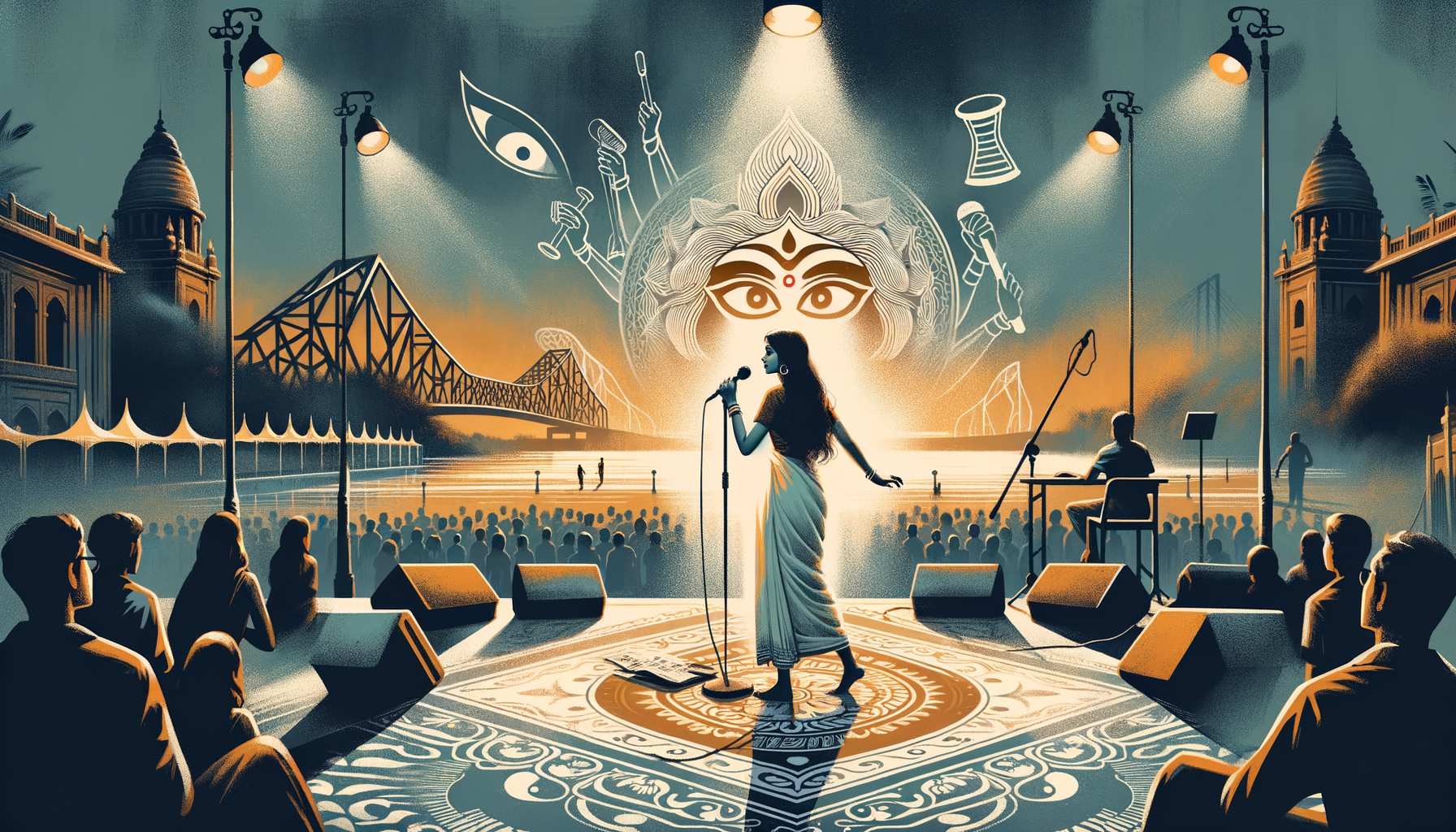
An incident in West Bengal has reignited a critical conversation on artistic freedom, religious pluralism, and performer safety in India’s public spaces. Popular Bengali singer Lagnajita Chakraborty alleged that she was threatened and nearly assaulted by Trinamool Congress (TMC) leader Mehboob Malik while performing in Bhagwanpur, East Midnapur. The confrontation reportedly began when she sang the devotional song ‘Jago Ma’ from the film Devi Chowdhurani, after which Malik rushed the stage and shouted, “Anek jagoma hoye chhe, ebar ek tu secular ga.”
According to India Today reporting, Malikidentified as a co-organizer of the event at South Point Public Schoolwas arrested following a police complaint. The development drew immediate political attention, with the Bharatiya Janata Party (BJP) criticizing the alleged interference in artistic expression and raising concerns about women’s safety in West Bengal. The matter is now within the purview of the legal process, which is the appropriate avenue for establishing facts and ensuring accountability.
India’s constitutional framework protects both freedom of expression and freedom of worship. Devotional music such as ‘Jago Ma’ occupies a longstanding place in the cultural life of Bengal, particularly in the context of Durga Puja and allied traditions. A healthy public sphere should allow devotional and secular art to coexist without intimidation, reflecting India’s plural ethos.
Chakraborty has stated that she will continue performing ‘Jago Ma’ and is “not afraid” of threats. This stance underscores an essential civic principle: artists must be able to perform without fear, and event organizers and authorities must uphold robust safety protocols, especially for women performers. Clear codes of conduct at public gatheringscombined with swift, impartial action by law enforcement when violations occurhelp preserve trust in cultural institutions.
Beyond the immediate incident, the broader objective should be to strengthen social cohesion. Communities rooted in the dharmic traditions of Hinduism, Buddhism, Jainism, and Sikhism have historically advanced values of dignity, dialogue, and non-violence. Constructive responsessuch as interfaith and intercultural performances, community charters for respectful conduct at events, and collaborative local forumscan transform flashpoints into opportunities for unity.
Responsible civic engagement remains central. Peaceful, lawful participation; documentation and reporting of misconduct; and support for institutional safeguards all contribute to a resilient public culture. Media literacy and careful reliance on verified sources are equally important to avoid escalation driven by misinformation or partisan narratives.
Ultimately, the West Bengal episode is a reminder that reverence, art, and constitutional freedoms can reinforce each other. When devotional expression like ‘Jago Ma’ is protected alongside secular performance, it affirms both cultural heritage and the rule of law. A society that ensures space for diverse voices does more than prevent conflictit models the inclusive spirit that has animated the subcontinent’s civilizational journey.
Inspired by this post on Hindu Human Rights Blog.










