Arudra Darsanam, honored as the cosmic celebration of Shiva’s dance, holds a distinguished place at Skandagiri Temple, Hyderabad. In 2026, the observance falls on January 3, aligning devotees with the spiritual gravitas of Nataraja’s Ananda Tandava. The festival emphasizes devotion to Lord Shiva through ritual precision and aesthetic grace, drawing families, seekers, and cultural enthusiasts from across the city and beyond.
Core rituals at Skandagiri Temple on Arudra Darsanam include a special Homam dedicated to Lord Shiva, followed by Shiva Abhishekam (Nataraja Abhishekam). These sacred acts, conducted with Vedic recitations and fragrant offerings, are complemented by Giri Pradakshinam, where devotees circumambulate with mindful reverence. Together, these practices embody Shaivite devotional discipline while welcoming a broader dharmic appreciation of sacred rhythm, order, and inner transformation.
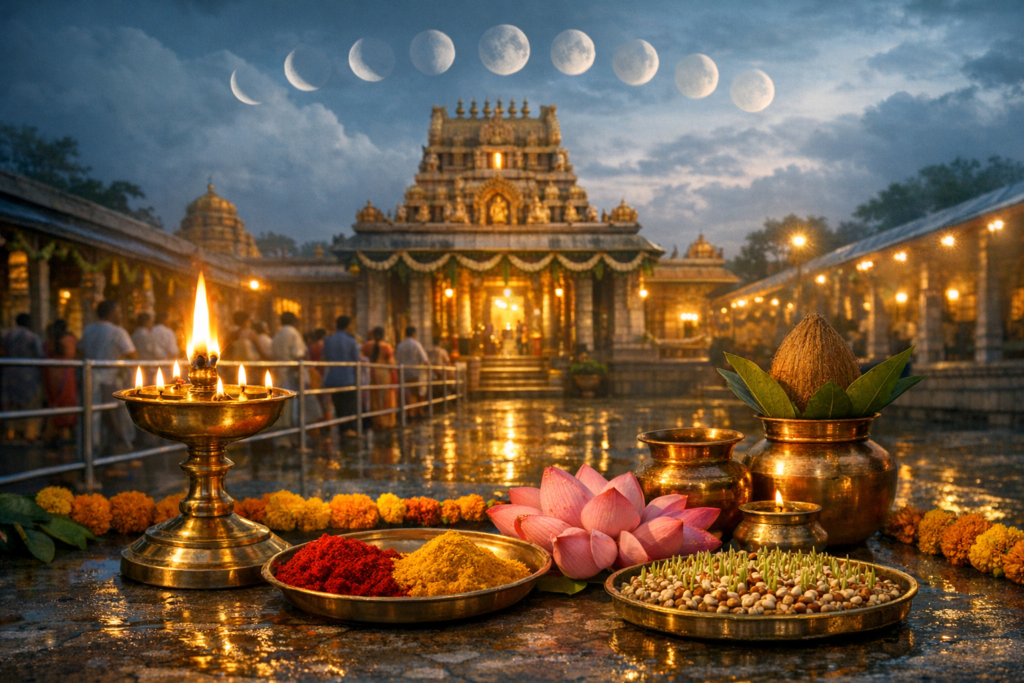
The experiential dimension of the day is unmistakable: temple bells resonate, lamps glow along the mandapa, and chants rise in unison as the Nataraja murti is ritually bathed and adorned. Observers often describe a palpable calm as the abhishekam water flows, the Homam fire crackles, and the altar radiates sanctity. This atmosphere nurtures contemplative focus and community cohesion, encouraging reflection on Shiva as both the cosmic dancer and the still point within.
Arudra Darsanam is traditionally observed when the Ardra nakshatra is in prominence, and its theological core—Shiva’s dance as the pulse of creation, preservation, and dissolution—resonates with shared values across dharmic traditions. While rooted in Hindu Shaivism, the symbolism of rhythm, knowledge, and compassionate order offers a unifying lens for Buddhist, Jain, and Sikh readers who honor disciplined practice, ethical living, and inner clarity. The festival thus becomes a bridge across diverse spiritual lineages that value harmony, wisdom, and service.
For devotees planning a visit, the temple typically announces the detailed schedule of the Homam, Nataraja Abhishekam, and associated observances closer to the date. Attendance commonly spans early morning through evening, with crowds peaking during abhishekam and deeparadhana. Participants often prepare by observing personal vrata, maintaining satvik conduct, and arriving early for seamless darshan.
Skandagiri Temple’s Arudra Darsanam in Hyderabad is as much a cultural heritage moment as it is a devotional one. Its rituals preserve classical forms of temple worship, while the community’s shared participation strengthens intergenerational bonds. The celebration also contributes to Hyderabad’s rich sacred geography—where temples serve as living repositories of history, aesthetics, and ethical teachings relevant to contemporary life.
In essence, Arudra Darsanam at Skandagiri Temple offers a rare confluence of precise ritual, profound symbolism, and communal upliftment. The Homam to Lord Shiva, the dignified Nataraja Abhishekam, and the mindful Giri Pradakshinam together inspire a disciplined inner posture—inviting all to witness, with quiet humility, the dance of the divine within and around.
Inspired by this post on Hindu Pad.