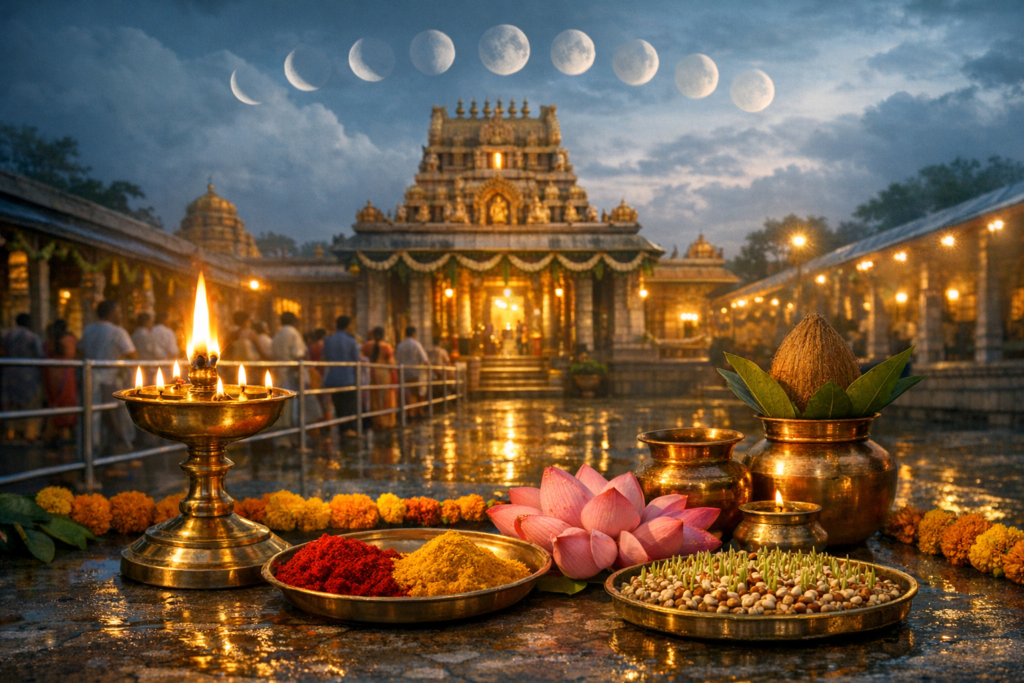
November 17, 2025 (Monday) in the Hindu calendar marks a reflective point in the lunar cycle. According to most regional Panchang traditions, the date transitions from Krishna Paksha Dwadashi in the early morning to Krishna Paksha Trayodashi for the remainder of the day. Many practitioners use this shift as an opportunity to align daily routines, worship, and contemplation with the cadence of the moon’s waning phase.
As per the timing noted in traditional Panchang references for most regions, Krishna Paksha Dwadashi prevails until 5:28 AM on November 17. From that time onward, Krishna Paksha Trayodashi is observed. Local variations can occur based on geographic location and computational parameters, so consulting a trusted regional Panchang is advisable for precise details.
Krishna Paksha Dwadashi holds importance for completing Ekadashi observances, with parana (breaking the fast) typically performed in the morning when Dwadashi is operative. This gentle conclusion emphasizes nourishment, gratitude, and sattvic steadiness after a period of restraint, supporting clarity of mind and steadiness of intention.
Krishna Paksha Trayodashi is traditionally associated with introspection and steadiness, and in many regions the evening twilight of Trayodashi aligns with Pradosh Vrat, a time revered for Shiva worship. While specific shubha muhurta windows vary by locale, practitioners commonly regard Brahma Muhurta (pre-dawn) and the Pradosha period (around sunset/twilight on Trayodashi) as spiritually supportive for japa, dhyana, and simple home puja. For formal rituals or samskaras, a regional Panchang or family priest can provide locally accurate muhurta guidance.
Nakshatra and Rashi details for this date depend on precise regional calculations and the observer’s location. Because Panchang traditions (drik/visesha rules, ayanamsha choices) can differ, exact Nakshatra and Rashi should be confirmed with a reliable local almanac or temple notice to ensure accuracy for personal vows, vratas, and sankalpas.
In practical terms, many devotees find the waning lunar phase conducive to inward-looking practices: mindful study of scriptures (such as the Upanishads or Bhagavad-Gita), quiet seva in the community, or reflective journaling on dharma in daily life. Simple offerings at home—deepa, dhupa, and a few heartfelt mantras—help anchor intention, while restraint in speech and conduct fosters harmony within family and society.
Across the broader Dharmic spectrum—Hinduism, Buddhism, Jainism, and Sikhism—the lunar cadence supports a shared sensibility of rhythm and mindfulness. While observances and emphases vary, the underlying spirit of compassion, self-discipline, and service remains common. Honoring this unity of purpose strengthens inter-traditional harmony and enriches the lived experience of the lunar calendar for all.
To align the day with clarity: note the early Dwadashi window for parana if Ekadashi was observed, use the Trayodashi evening for reflective worship, and consult a local Panchang for Nakshatra/Rashi and region-specific muhurta. This balanced approach preserves accuracy while nurturing spiritual continuity in everyday life.
Inspired by this post on Hindu Blog.