Shukratal, a small pilgrimage town on the banks of the Ganges River in the Muzaffarnagar district of Uttar Pradesh, lies approximately 72 kilometers from Haridwar. Revered in Hindu sacred geography, it is approached by many as a serene tirtha-yatra destination where landscape, memory, and scripture converge. The setting is quiet yet deeply evocative, drawing visitors who seek historical continuity and spiritual reflection in equal measure.
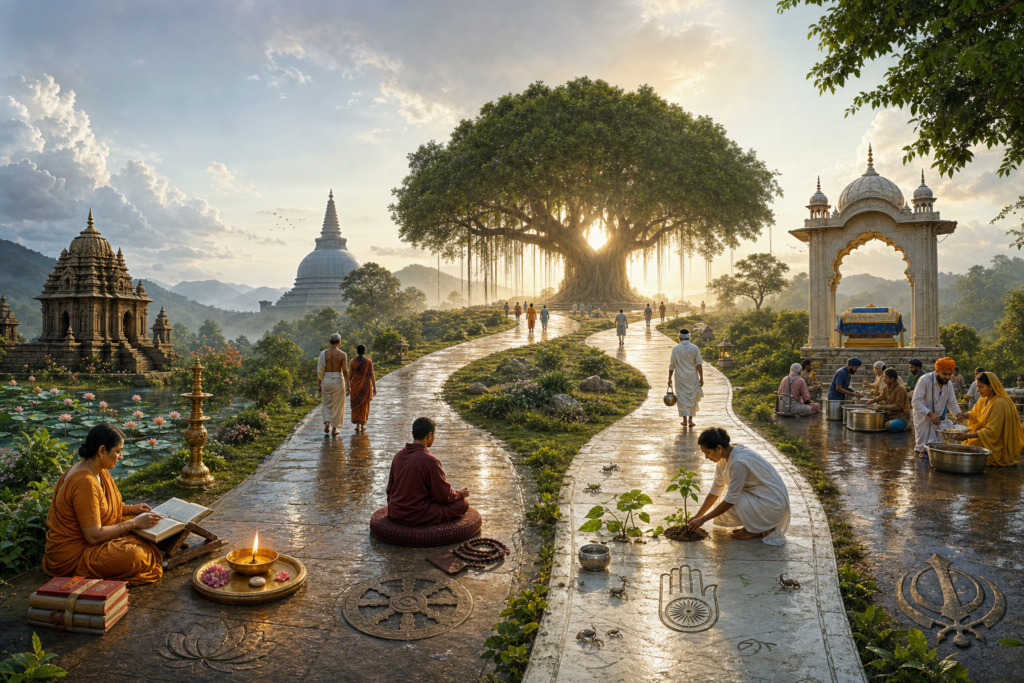
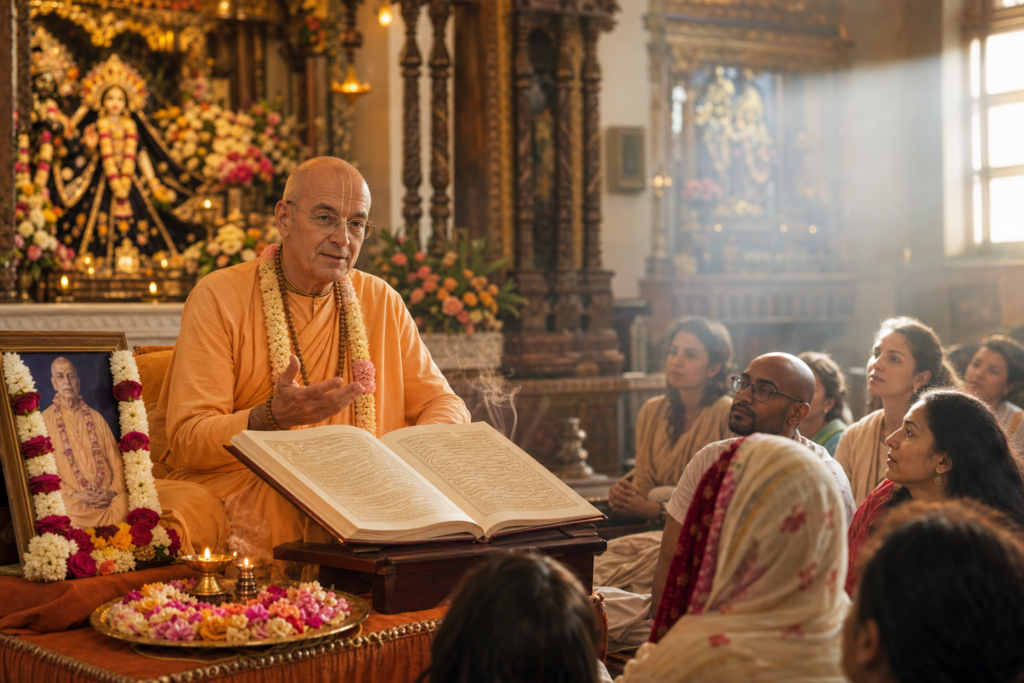
According to the living tradition preserved here, Srila Sukadeva Goswami delivered the Srimad-Bhagavatam, also known as the Bhagavata Purana, to Maharaja Pariksit, the grandson of Arjuna and son of Abhimanyu. This seven-day recitation is said to have taken place beneath a vast banyan known as the Akshaya Vat Vriksha, in the presence of 80,000 sages. At the Sri Sukadeva Temple and the surrounding Sukadeva ashrama, a monumental banyan identified as the Akshaya Vat Vriksha is venerated as 5100 years old, its branching canopy spreading through the complex and shaping the spatial experience of the site.
The ambience at Shukratal rewards unhurried observation. The approach through the ashrama carries a palpable hush, complemented by the murmur of the Ganga. Visitors often describe a sense of contemplative focus under the shade of the banyan, where recitations of the Bhagavata Purana still sound in daily worship. The environment encourages steady attention and inwardness that travelers find relatable regardless of background, inviting personal resonance with an ancient oral tradition.
The Srimad-Bhagavatam’s pedagogy of listening and reflection aligns with core dharmic values such as devotion, ahimsa, seva, and inner stillness. While deeply rooted in Hindu practice, the reflective ethos at Shukratal speaks to shared contemplative inheritances across Hinduism, Buddhism, Jainism, and Sikhism, where sangha or sangat, disciplined hearing, and ethical transformation are central. In this way, the site functions as a bridge for dharmic unity, emphasizing the cultivation of compassion and wisdom that transcends sectarian boundaries.
For those planning a visit, Shukratal is accessible by road from Haridwar and nearby hubs in western Uttar Pradesh. Early mornings and late afternoons tend to be the most tranquil times for darshan and quiet reading. Respectful conduct is encouraged, especially around the Akshaya Vat Vriksha and within the Sri Sukadeva Temple precincts, where many come to recite, listen, or meditate in silence. Engaging with the local caretakers and participating in simple seva further enriches the experience of the ashrama.
Shukratal thus stands as a living archive of oral wisdom, where scripture, place, and practice coalesce. The banyan’s enduring canopy is a fitting emblem for the Bhagavata Purana’s promise of inexhaustible insight, guiding pilgrims toward attentive listening, ethical clarity, and communal harmony. In honoring this heritage, visitors affirm a dharmic vision that values unity, reverence for knowledge, and the shared pursuit of spiritual understanding.
Inspired by this post on Dandavats.