
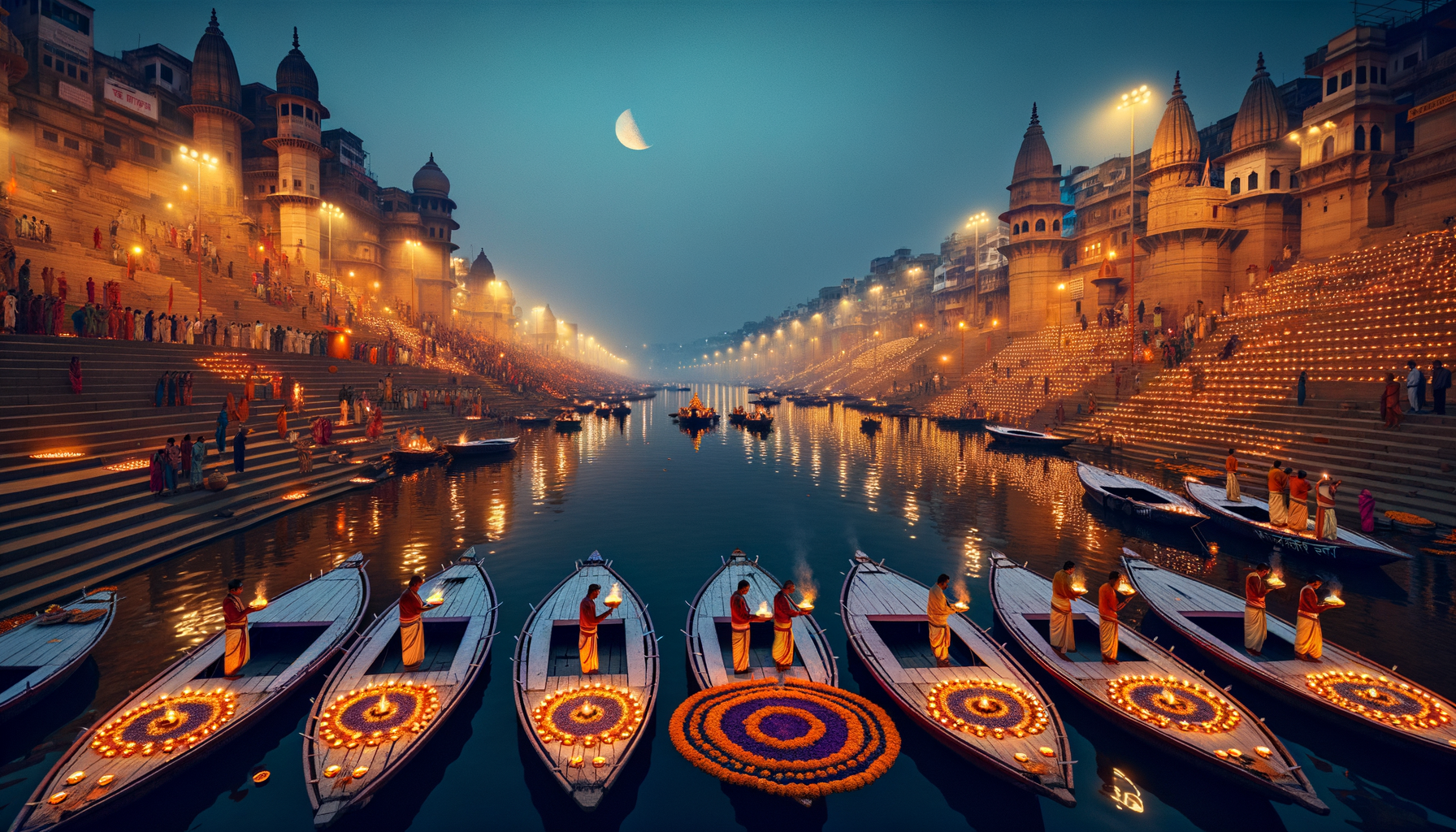
Dev Diwalialso known as Dev Deepavali or the Festival of the Godsis observed annually on Kartik Purnima. In 2025, the festival falls on November 5. Most renowned along the Ganga River in Varanasi, this luminous celebration honors Ganga Mata and transforms the city’s ghats into a radiant tapestry of devotion, heritage, and community. The occasion, popularly associated with Tripurari Purnima in many traditions, conveys the triumph of light, learning, and inner clarity over darkness.
The observances center on Deep Daan (the offering of lamps), Ganga Snan (ritual bathing), and the grand Ganga Aarti performed at key ghats such as Dashashwamedh, Assi, and Rajghat. Thousands of earthen diyas are lit at twilight, their reflections shimmering on the river’s surface. Devotees recite Vedic mantras, sing bhajans, create colorful rangoli, and participate in temple processions, while boats on the Ganga offer a contemplative vantage to witness the city’s sacred glow.
Visitors frequently describe the atmosphere as deeply movingan experience where history, spirituality, and community converge. Families gather to light lamps, elders recount the significance of Kartik Purnima, and children observe the delicate placement of diyas along the steps of the ghats. The visual splendor is complemented by an ethos of seva (service), with many choosing this day for charity, food distribution, and acts of environmental stewardship along the riverbanks.
While Varanasi remains the spiritual epicenter, Dev Deepavali observances are also held across other holy towns along the Ganga-Brahmaputra river systems and in several temple cities across India. The shared act of lighting lamps and offering prayers underscores a pan-Indian cultural continuity that connects communities across regions and lineages.
The festival’s symbolism resonates across the dharmic traditions of Hinduism, Buddhism, Jainism, and Sikhism. The full-moon sanctity, the emphasis on inner illumination, and the practice of dana (generosity) are common ethical threads. Around this full moon, many Sikh communities observe Guru traditions, several Jain groups undertake tirtha yatras in the Kartika period, and Buddhist communities mark full-moon merit-makingtogether reinforcing interfaith harmony and a shared commitment to compassion and wisdom.
For those planning to be in Varanasi on November 5, 2025, early arrival at the ghats is advisable due to large gatherings. Participatory etiquette includes dressing modestly, maintaining silence during aarti, using eco-friendly lamps, and keeping the ghats clean. Respect for local customs and mindful conduct ensure that the sanctity of the river and the safety of fellow pilgrims are preserved.
Those unable to travel can observe Dev Diwali at home by lighting diyas at dusk, reciting hymns such as the Ganga stotram, supporting local artisans by choosing traditional earthen lamps, and engaging in charitable acts. A simple home aarti, accompanied by reflective reading from sacred texts, aligns personal observance with the festival’s spirit of inner clarity and communal goodwill.
Dev Diwali 2025 on Kartik Purnima thus offers a complete, living encounter with India’s cultural heritageuniting ritual practice, ethical action, and interfaith resonance. By honoring Ganga Mata, participating in Deep Daan, and embracing the values of service and ecological care, communities reaffirm a timeless message: light endures, wisdom guides, and compassion binds.
Inspired by this post on Hindu Pad.










