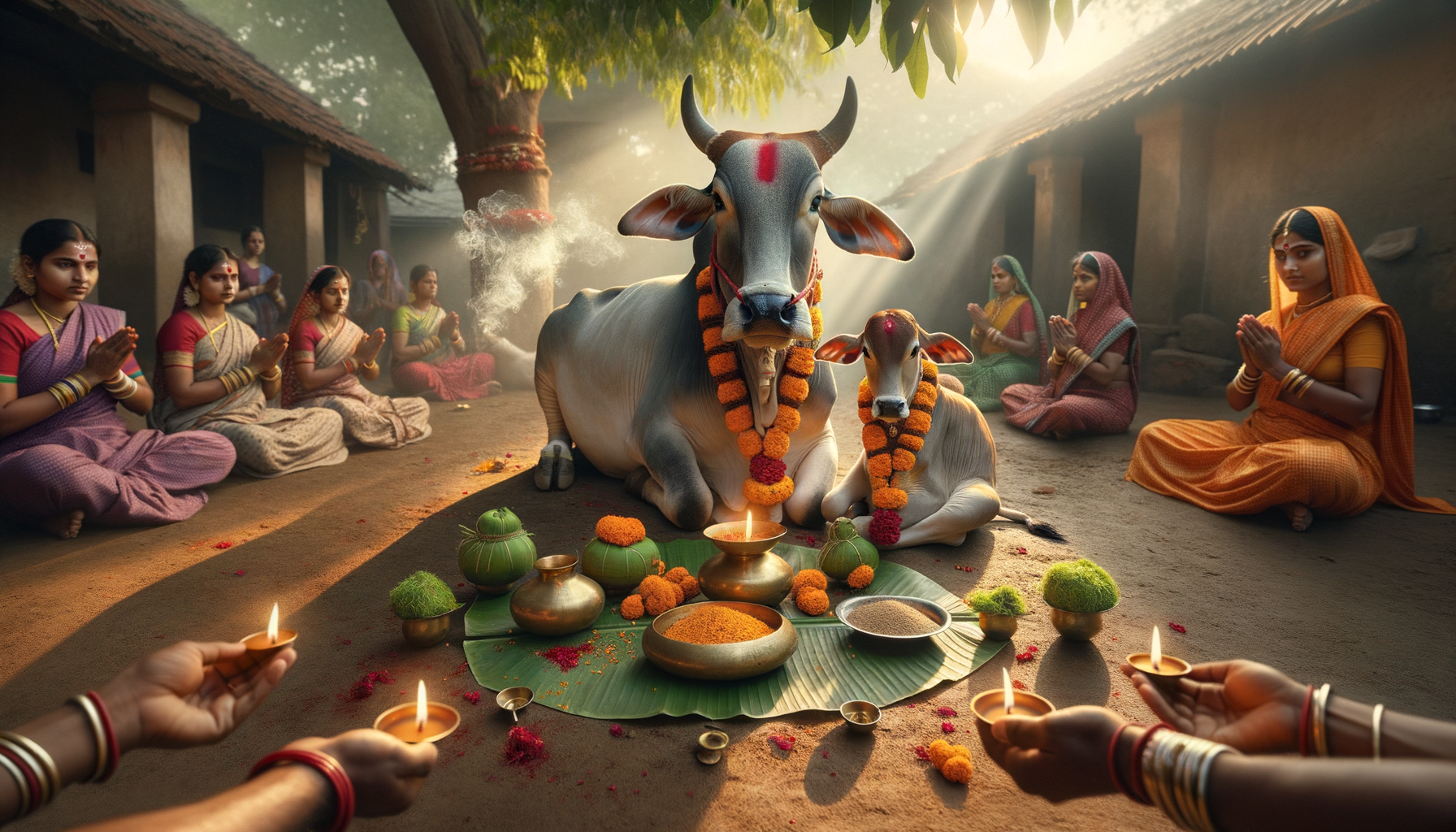
On the auspicious occasion of Vasubaras, Hindu Janajagruti Samiti organised a traditional Go-puja in Nandurbar, honouring Gomata as a living symbol of care, sustenance, and interdependence. The ceremony combined ritual precision with community participation, reinforcing shared dharmic values of compassion, gratitude, and responsible stewardship of life.
Vasubaras, observed in several regions as the opening of the Deepavali festivities, venerates cows and calves for their nurturing presence and contribution to agrarian life. In dharmic thought, this observance aligns with the principles of ahimsa (non-violence), daya (compassion), and seva (selfless service), values that resonate across Hinduism, Jainism, Buddhism, and Sikhism. The spirit of sarbat da bhalaseeking the welfare of allfinds natural expression in Go-puja, where reverence for living beings is foregrounded as an ethical foundation of society.
The Nandurbar gathering followed time-honoured practices: cows were gently bathed and adorned with tilak and garlands; arati was performed with collective devotion; and Gomata was offered fresh fodder and seasonal grains as naivedya. Participants engaged in pradakshina with quiet recitation, creating a contemplative atmosphere that balanced ritual solemnity with communal warmth. These embodied gestures functioned as living pedagogy, transmitting cultural memory through action rather than instruction alone.
Attendees described the event as both emotionally uplifting and educational. Children observed intergenerational etiquettehow to approach, honour, and care for animalswhile elders narrated traditional stories that explain the ethical symbolism of Gomata. Farmers, students, and professionals alike reflected on the practical relevance of Go-puja today: deeper empathy for animals, recognition of ecological interdependence, and renewed respect for livelihoods rooted in sustainable practices.
Beyond ritual, the initiative illustrated how dharmic unity emerges from shared ethical commitments rather than uniformity of practice. The emphasis on non-harm, gratitude, and mutual care speaks to Jain vows of restraint, the Buddhist cultivation of compassion for all sentient beings, Sikh ideals of seva, and Hindu conceptions of dharma as right action. Such convergences foster social cohesion, inviting communities to discover continuity amidst diversity.
From a cultural heritage perspective, community-led Go-puja strengthens living traditions, encourages animal welfare awareness, and supports a broader ethos of environmental responsibility. Events of this nature serve as locally grounded models for cultural preservation: they are participatory, intergenerational, and oriented toward ethical action in daily life. In Nandurbar, the observance of Vasubaras thus became a platform for education, empathy, and collective reflection.
As a complete and proven community practice, Vasubaras Go-puja demonstrates how ritual can catalyse compassionate citizenship. By centring Gomata within a framework of ahimsa and stewardship, the Hindu Janajagruti Samiti initiative offered a balanced approach to traditionone that is academically intelligible, socially relevant, and spiritually inclusive across the dharmic family.
Inspired by this post on Hindu Jagruti Samiti.