Total GDP and per capita GDP capture two distinct but complementary dimensions of an economy. Total GDP reflects national capacitythe overall size of the economic “pie.” Per capita GDP, by contrast, indicates the average slice each person effectively enjoys, serving as a proxy for the quality of life and individual well-being. Viewing them together provides a complete picture of national progress and social outcomes.
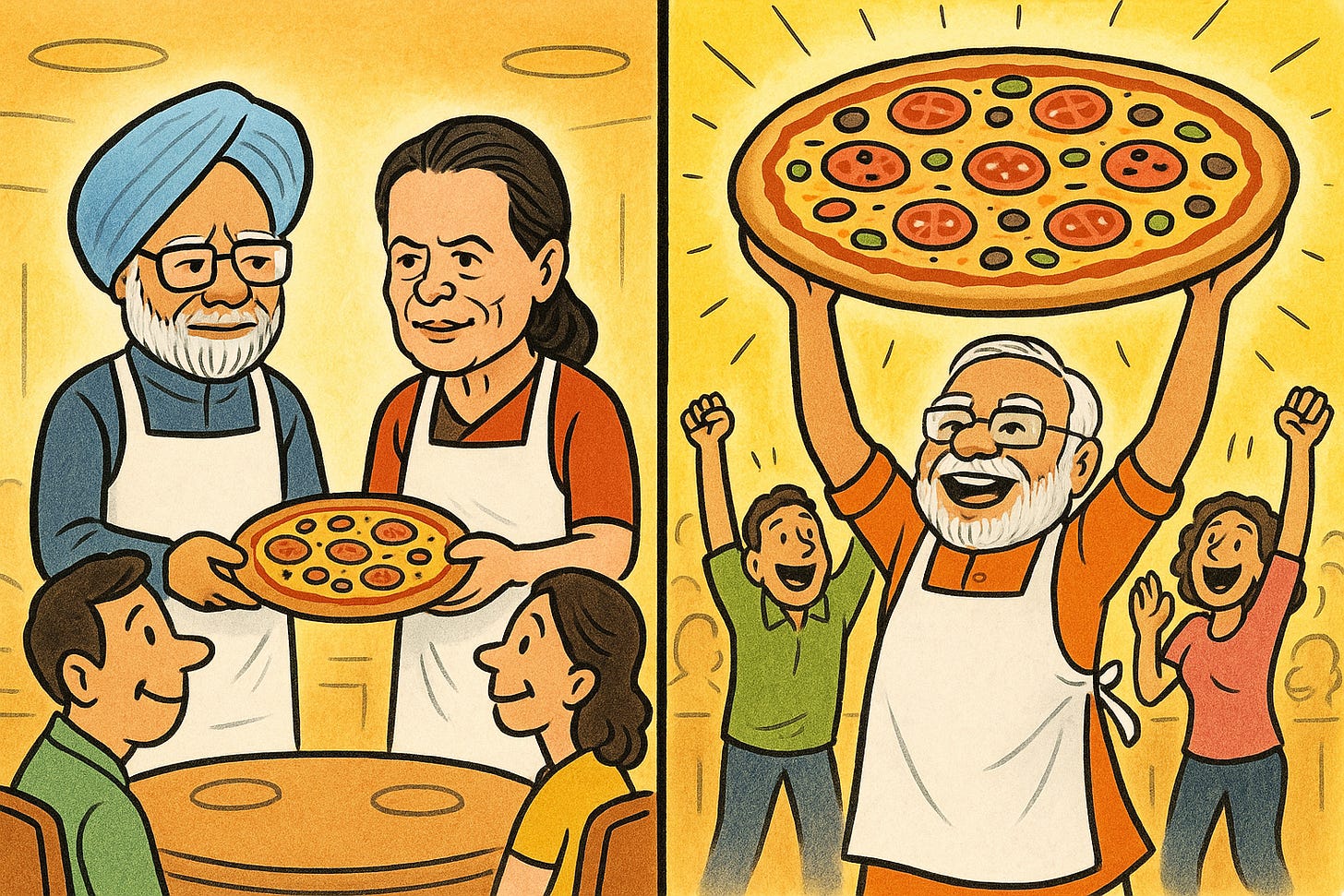
A useful analogy clarifies the distinction. Total GDP is comparable to a family’s total income: as that income grows, the household can undertake larger, longer-term commitments. Per capita GDP resembles personal allowance or disposable spending capacity, shaping day-to-day choicesbetter food, better clothes, and improved access to services. Both matter, but they operate on different horizons and at different scales.
When total GDP rises, a nation gains the fiscal and industrial heft to fund high-impact public goods and long-gestation investments. This includes national infrastructure such as roads, ports, and airports; defense capabilities; health security such as vaccine production and distribution in pandemics; and targeted social support in times of distress. Larger economic scale also strengthens negotiations and voice in multilateral forums like the WTO, UN, UN Security Council, IMF, and World Bank.
Concrete examples highlight this capacity. Higher total GDP enables challenging projectstunnels in Kashmir such as the Zoji-la Tunnel, major bridges like the Dhola–Sadiya Bridge across the Brahmaputra, railway electrification, Vande Bharat, and complex platforms such as aircraft carriers, submarines, and AMCA development. Scale also facilitates manufacturing of vaccines for global needs and funding support to farmers and vulnerable communities, accelerating poverty alleviation through food and energy access.
Higher per capita GDP, in turn, translates to improved quality of life. As average incomes rise, households can access better nutrition, healthcare, education, mobility, communications, and consumer durablesranging from safe transport to high-quality medicines and everyday essentials. Entrepreneurship tends to flourish as personal savings and risk capacity improve, reinforcing a virtuous cycle of innovation and employment.
These improvements are visible in comparative lifestyle data such as Gapminder’s Dollar Street, where everyday living conditions change noticeably as incomes move up the ladder. Better personal health, robust training ecosystems, and sustained investment in human development also correlate with enhanced sports performance over time, often reflected in outcomes such as Olympic medals.
The sequencing matters. In most households, when income rises, spending on discretionary luxuries does not occur immediately. The initial priority is investmentpaying down risks, building assets, and securing the future. Only after a solid foundation is laid do personal allowances rise materially. At a national level, total GDP expansion typically precedes broad-based increases in per capita GDP.
India has invested substantially in foundational capabilitiesphysical infrastructure, logistics, digital public infrastructure, industrial capacity, and public service delivery. As these investments mature, the conditions are increasingly favorable for a faster rise in per capita GDP. Over the coming years, this is likely to manifest in everyday life through better connectivity, reliable utilities, improved public health outcomes, enhanced education pathways, and widespread access to quality goods and services.
Such a transition benefits from social cohesion and ethical public purpose. The shared dharmic ethos across Hinduism, Buddhism, Jainism, and Sikhismemphasizing compassion, self-discipline, non-violence, and collective welfaresupports inclusive development. This cultural foundation encourages equitable opportunity, responsible consumption, and mutual respect, strengthening the social fabric required to convert national scale into individual well-being.
Strategically, the phase ahead calls for agility and execution discipline. A useful sporting analogy moves from a Test mindset (laying the foundation and building stamina) to an ODI approach (balancing consolidation with acceleration) and then to a T20 orientation (speed, precision, and rapid iteration). In economic terms, that means leveraging scale, reducing frictions, deepening skills, and rapidly translating investment into productivity and incomes.
In sum, total GDP signals the nation’s capacity to deliver big, long-term prioritiesdefense, infrastructure, health security, and global influence. Per capita GDP captures how that capacity ultimately improves everyday lifenutrition, healthcare, education, mobility, entrepreneurship, and even athletic performance. Mastering the transition from national scale to personal prosperity is India’s next growth breakthrough.
Inspired by this post on RightViews.