
A visit that must be judged by its strategic architecture
Prime Minister Narendra Modi’s state visit to Indonesia from 6 to 8 July 2026 was consequential because it joined symbolism to an unusually broad programme of institutional cooperation. Ceremonial diplomacy was certainly visible, but it rested beside agreements covering defence, maritime security, critical minerals, steel, digital networks, telecommunications, health, agriculture, education, space, disaster management and cultural conservation. The resulting picture, documented in the official India–Indonesia joint statement, is of a relationship attempting to move from historical goodwill towards measurable strategic interdependence.
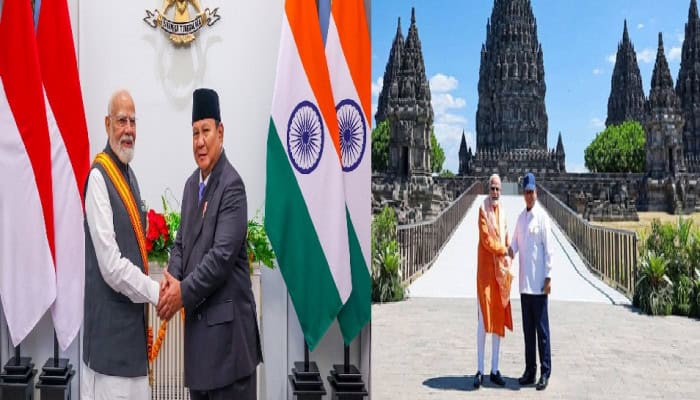
The conferment of the Bintang Republik Indonesia Adipurna by President Prabowo Subianto supplied the visit with its most visible symbol. Indonesia described it as its highest state decoration and presented it in recognition of Modi’s contribution to stronger bilateral relations. Modi, in turn, dedicated the honour to the people of Bharat. The Indonesian presidential account of the ceremony makes clear that the award was intended to represent the friendship between two societies, not merely a personal accolade.
Modi also became the first Indian prime minister to address the Indonesian Parliament. That institutional setting mattered. A parliamentary address reaches beyond executive-to-executive diplomacy and speaks to legislators, political parties and the wider public whose support will be required if agreements are to survive elections and changes of government. It also situated India–Indonesia relations within shared democratic principles, pluralism and the political ideal of unity amid diversity.
A rigorous assessment, however, must distinguish an award from an agreement, an agreement from a funded project, and a project announcement from operational capacity. The visit produced fourteen listed agreements or cooperative instruments and six major announcements, but they do not all possess the same legal weight or implementation schedule. The strongest case for the visit therefore lies neither in dismissing it as political theatre nor in treating every memorandum as a completed achievement. Its importance lies in the strategic direction, institutional density and potential compounding effects of the programme.
Why Indonesia is indispensable to Bharat’s Indo-Pacific policy
Indonesia is the world’s fourth most populous country, the largest Muslim-majority society and the largest economy in ASEAN. With a population exceeding 288 million, it offers a major consumer market, a large workforce and substantial industrial capacity. Official Indian data placed bilateral merchandise trade at approximately US$24.78 billion in financial year 2025–26, making Indonesia one of India’s most important ASEAN partners. The relationship is therefore not a peripheral diplomatic engagement; it connects two large developing economies whose decisions can affect regional supply chains, energy security and the political voice of the Global South.
Geography gives Indonesia even greater strategic weight. Its archipelago connects the Indian and Pacific Oceans and borders sea lanes that carry energy, manufactured goods and raw materials between West Asia, Africa and East Asia. The Strait of Malacca, bounded partly by Indonesia, is among the world’s most important maritime chokepoints. The United States Energy Information Administration estimated that about 23.2 million barrels per day of petroleum and other liquids passed through it during the first half of 2025. Disruption in this corridor would rapidly affect freight costs, insurance, manufacturing and household energy prices across Asia.
Indonesia’s importance nevertheless extends beyond the Malacca Strait. The Sunda and Lombok routes, the approaches to the Andaman Sea, and the waters surrounding Sumatra form part of a wider maritime system. India’s Andaman and Nicobar Islands face Indonesia’s Aceh province across a relatively narrow expanse of sea. This proximity creates practical reasons to cooperate on shipping, fisheries, search and rescue, environmental protection, disaster response and maritime domain awareness.
The political foundation has developed gradually. India and Indonesia elevated their relationship to a Comprehensive Strategic Partnership in 2018 and adopted a shared vision for maritime cooperation in the Indo-Pacific. President Prabowo’s participation as chief guest at India’s Republic Day celebrations in January 2025 added political momentum. Modi’s 2026 visit sought to translate that momentum into recurring summit meetings, parliamentary exchanges, working groups and sector-specific arrangements. Such mechanisms are often less dramatic than a summit, but they are what prevent bilateral relations from depending entirely on personal chemistry between leaders.
Defence cooperation: a shift from transactions to interoperability
Defence was among the most closely watched components of the visit. The official outcomes included cooperation on the BrahMos missile system and an Air-to-Air Missile Cooperation Agreement. The joint statement also called for deeper work in joint exercises, staff talks, military training, peacekeeping, hydrography, information sharing, shipbuilding, maintenance and repair, joint research, co-production, technology transfer and defence supply chains.
Precision is essential when interpreting these outcomes. The official list did not identify the air-to-air missile system by name, even though public commentary connected it with India’s Astra beyond-visual-range missile family. It is therefore accurate to describe the agreement as a significant opening for air-combat cooperation, but premature to present a specified Astra procurement, delivery quantity or deployment schedule as settled unless a subsequent contract provides those details. The same discipline applies to BrahMos: cooperation is officially confirmed, while configuration, value, delivery and basing remain matters for later disclosure.
The significance for Bharat is industrial as well as military. India’s defence exports reached a reported record of ₹38,424 crore in financial year 2025–26, with products reaching more than eighty countries, according to the Ministry of Defence. Engagement with Indonesia reinforces the transition from dependence on imported equipment towards a mixed ecosystem of domestic production, technology partnerships and exports. A credible export programme can support longer production runs, lower unit costs, sustain skilled employment and finance continued research.
Missile cooperation also creates relationships that extend well beyond an initial sale. Training, maintenance, software support, spares, testing, secure communications and periodic upgrades may bind institutions together for decades. This is why defence exports can carry greater strategic weight than ordinary commercial shipments. They generate operational familiarity and require continuing trust concerning sensitive technology, doctrine and end use.
Yet defence diplomacy should not be reduced to weapons. The renewal of the maritime safety and security memorandum, together with an implementing arrangement between Indonesia’s BAKAMLA and the Indian Coast Guard, creates channels for practical cooperation. The planned placement of an Indonesian liaison officer at the Information Fusion Centre–Indian Ocean Region in Gurugram could improve the exchange of shipping data, incident reports and assessments of suspicious maritime activity.
Maritime domain awareness is a layered technical capability. It combines coastal radar, automatic identification system signals, satellite imagery, vessel registries, patrol reports, hydrographic information and commercial shipping data to build a recognised maritime picture. No single sensor provides complete coverage, and ships engaged in illegal activity may disable or manipulate their identifiers. Liaison officers and interoperable information systems can therefore reduce the time required to compare data, classify anomalies and coordinate a proportionate response.
The humanitarian dimension is equally important. Both countries face earthquakes, tsunamis, cyclones, volcanic hazards and maritime accidents. Cooperation in search and rescue, humanitarian assistance and disaster relief can save lives while building habits of coordination among coast guards, navies, disaster agencies and local authorities. The separate disaster-management memorandum provides a framework for training, resilient infrastructure, data applications, preparedness and recovery.
This emerging security partnership is not a treaty alliance. India and Indonesia continue to value strategic autonomy, ASEAN centrality and inclusive regional institutions. Their joint language emphasised international law, the 1982 United Nations Convention on the Law of the Sea, freedom of navigation, dialogue and the peaceful settlement of disputes. That framework allows cooperation to expand without forcing either country into a rigid bloc.
Sabang, Aceh and the Andaman–Indonesia maritime bridge
Indonesia welcomed Indian interest in the integrated development of Sabang Port, located near the northern entrance to the Malacca Strait. Sabang’s position across the Andaman Sea from India’s island territories gives it potential relevance to commercial shipping, marine tourism, offshore services and regional connectivity. The two governments also called for progress through the Andaman–Aceh Joint Task Force.
The official formulation remains exploratory. It envisages work on cruise and tourism facilities, ship repair, shipbuilding and shore-based support for offshore energy operations, but it directs officials to determine scope, financing and modalities. It is therefore inaccurate to describe Sabang as a completed Indian infrastructure project or an agreed military base. What exists is a politically endorsed opportunity that now requires feasibility studies, commercial demand, regulatory approval and a viable financing structure.
If implemented carefully, the project could shorten logistical links between Sumatra and the Andaman and Nicobar Islands, stimulate port services and create skilled employment. It could also improve emergency response in adjoining waters. For coastal communities, the practical value would be visible not in abstract strategy but in safer shipping, more reliable transport, tourism income, repair facilities and faster assistance during disasters.
Sabang also illustrates the safeguards required for durable infrastructure diplomacy. Port expansion must account for environmental effects, local land and livelihood concerns, debt sustainability, customs procedures, security rules and the actual volume of commercial traffic. A project that advances only geopolitical symbolism may become an underused asset. A project rooted in Indonesian development priorities and reciprocal economic activity would be more resilient.
Critical minerals and the industrial contest beneath the diplomacy
Critical minerals form one of the most strategically important pillars of the visit. Indonesia is the dominant global producer of mined nickel, a material used in stainless steel, high-performance alloys and several electric-vehicle battery chemistries. The International Energy Agency reported that Indonesia produces more than 60 per cent of the world’s nickel and that Chinese companies account for roughly three-quarters of the country’s refining capacity. This concentration gives Indonesia extraordinary market influence while also creating supply-chain and ownership risks for other industrial economies.
The visit produced an intergovernmental memorandum on minerals and steel-supply-chain technology, a strategic joint venture between the Steel Authority of India Limited and PT Krakatau Steel to explore a stainless-steel slab facility in Indonesia, and an agreement involving India’s Non-Ferrous Materials Technology Development Centre, Midwest Limited and Indonesia’s PERMINAS for rare-earth magnet development. Taken together, these initiatives aim to connect resources, processing knowledge, industrial demand and manufacturing capacity.
The technical distinction between these value chains is important. Nickel is not a rare-earth element. Nickel may enter stainless steel and nickel-rich battery cathodes, whereas permanent magnets rely on rare-earth elements such as neodymium, praseodymium, dysprosium or terbium. Mining alone does not create strategic autonomy. Ore must be beneficiated, smelted, refined, converted into high-purity materials and then incorporated into cathodes, magnets, motors or specialised alloys. Bottlenecks can arise at any stage.
For Bharat, diversified access could support electric mobility, renewable-energy systems, electronics, aerospace and defence manufacturing. For Indonesia, collaboration with Indian companies could broaden its investment base and support the national ambition to retain more value through domestic downstream processing. The relationship is most promising when it aligns these objectives rather than treating Indonesia merely as a source of raw material.
Nonetheless, a memorandum does not itself secure mineral supply. Durable resilience requires bankable projects, geological and metallurgical studies, predictable licensing, competitive energy, transport infrastructure, environmental approval, financing, long-term purchase arrangements and technically qualified operators. Supply security also improves through recycling, substitution, stockpiling and material efficiency; overseas extraction is only one component of a complete strategy.
Responsible production will be a decisive test. Nickel processing can consume substantial energy and water and may create difficult tailings, air pollution and carbon emissions, especially when powered by coal. Industrial cooperation should therefore incorporate traceability, worker safety, transparent community consultation, waste management, cleaner power and credible lifecycle accounting. A resilient supply chain that externalises severe environmental costs would merely exchange one vulnerability for another.
The wider trade relationship also needs diversification. Official figures for 2025–26 show that India’s imports from Indonesia considerably exceeded its exports, producing a large merchandise deficit. The leaders consequently supported a balanced review of the ASEAN–India Trade in Goods Agreement, improved market access, resolution of tariff and non-tariff barriers, and stronger economic-dialogue mechanisms. Local-currency transactions between the Reserve Bank of India and Bank Indonesia could eventually reduce conversion costs and dependence on third-country settlement currencies for eligible trade.
The strategic objective should not be a mechanically balanced ledger in every year. Commodity prices and energy imports can create unavoidable asymmetry. The more durable goal is a broader commercial relationship spanning pharmaceuticals, engineering, digital services, food processing, advanced materials, tourism, education and joint manufacturing. Such diversity would make bilateral ties less vulnerable to swings in a small number of bulk commodities.
Digital public infrastructure as practical foreign policy
The launch of the Indonesia Open Network, based on India’s Open Network for Digital Commerce architecture, is among the visit’s most innovative outcomes. An open network differs from a conventional marketplace because it seeks to establish interoperable protocols through which buyers, sellers, logistics providers and payment services can discover and transact with one another across multiple applications. If governance and adoption are effective, smaller businesses may gain digital visibility without becoming completely dependent on a single dominant platform.
The proposed cross-border QR payment linkage could be equally tangible. Official language described progress towards implementation, while Modi stated that India’s UPI would integrate with Indonesia’s payment system. It should therefore be understood as an advancing project rather than an already universal service. Operational linkage requires compatible technical standards, foreign-exchange conversion, settlement arrangements, fraud controls, consumer protection, know-your-customer rules, anti-money-laundering compliance and agreement on dispute resolution.
Once those foundations are in place, the benefits could reach ordinary users quickly. An Indonesian merchant serving Indian visitors could receive a familiar QR payment without installing a specialised foreign terminal. A student could pay routine expenses more efficiently, while a small exporter could face lower transactional friction. These modest experiences often create stronger public support for bilateral relations than declarations whose benefits remain remote.
The telecommunications memorandum and discussions on artificial intelligence, digital forensics, computer-emergency-response teams and critical-information infrastructure broaden the digital agenda. They also introduce policy questions about privacy, cybersecurity, data localisation, algorithmic accountability and platform competition. Interoperability without security would spread vulnerabilities; security without openness could entrench costly silos. Technical standards and trusted governance must advance together.
Health, food security and human-capital diplomacy
Several outcomes address immediate developmental needs. Cooperation between India’s Central Drugs Standard Control Organisation and Indonesia’s BPOM can improve regulatory communication concerning medical products. A separate health-workforce implementation arrangement provides for fellowships, specialised clinical training, professional exchanges and the sharing of medical practices. These measures could support access to affordable Indian medicines, but their success will depend on transparent registration, pharmacovigilance, quality assurance and respect for Indonesian health regulations.
Agricultural cooperation included the announced supply of 100 tonnes of DWR 162 wheat seed, together with work on sustainable farming, food security and agricultural technology. Seed diplomacy can be valuable, but agronomic performance is location-specific. Field trials, soil conditions, rainfall, pest resistance, biosecurity and farmer training will determine whether a cultivar delivers useful results in Indonesian conditions. The scientific exchange surrounding the seed may ultimately matter more than the ceremonial quantity.
The proposed Indian Institute of Management Bangalore campus at the Singhasari Special Economic Zone in Malang represents a longer-term investment in people. According to the official education announcement, the first phase is intended to provide executive education, with degree programmes to follow after an initial two-year period if implementation succeeds. Planned areas include global supply chains, artificial intelligence, digital transformation, climate and sustainability, and healthcare management.
The proposal should not yet be described as an operating campus, but its strategic logic is clear. Students, managers, public officials and researchers can form professional networks that endure longer than a summit cycle. An Indonesian executive trained through an Indian institution, or an Indian researcher working with an Indonesian counterpart, becomes part of a living bridge between the two economies.
Space and scientific cooperation adds another technical layer. India and Indonesia extended their framework for peaceful uses of outer space and noted collaboration between ISRO and Indonesia’s BRIN. Indonesia’s Biak tracking facilities have supported Indian satellite, launch-vehicle and Gaganyaan-related activities, while India has assisted Indonesian satellite launches and training. Space cooperation can improve communications, weather forecasting, disaster monitoring, navigation and resource mapping without requiring either country to duplicate every component of an expensive space ecosystem.
Prambanan and the civilisational foundation of modern strategy
The inauguration of India-supported conservation work at the Prambanan Temple Compounds gave cultural diplomacy a concrete institutional form. The Archaeological Survey of India is expected to contribute conservation expertise to a site vulnerable to earthquakes, volcanic activity and the cumulative effects of time. This is not simply a commemorative visit to an ancient monument; it is a heritage-preservation partnership requiring documentation, structural analysis, skilled restoration and long-term monitoring.
UNESCO describes Prambanan as an ensemble containing the great Shaiva complex of Loro Jonggrang and the major Buddhist complex of Sewu, together with Lumbung, Bubrah and associated temples. Its reliefs include an Indonesian rendering of the Ramayana, while its architecture reflects advanced Javanese stone construction. The proximity of Hindu and Buddhist sacred landscapes offers material evidence of historical interaction and religious coexistence rather than a simplistic story of one civilisation copying another.
This distinction is central to understanding the Dharmic connection. Hindu and Buddhist ideas travelled through merchants, monks, scholars, artisans and royal courts, but Indonesian communities translated them into local languages, artistic forms and political traditions. The result was not cultural erasure. It was creative localisation. Such history supports unity among Hindu, Buddhist, Jain and Sikh traditions by demonstrating that Dharma has often travelled through dialogue, adaptation and mutual respect rather than enforced uniformity.
Living symbols continue that connection. Garuda, the vahana of Bhagwan Vishnu, appears in Indonesia’s national emblem and names its flag carrier. The Ramayana remains part of Indonesian performance culture. Sanskrit-derived vocabulary is embedded in Bahasa Indonesia and regional languages, while Bali sustains distinctive Hindu traditions within a Muslim-majority republic. These inheritances belong to Indonesia’s own national story even as they illuminate ancient links with Bharat.
The visit also connected Nalanda, Tagore and Ki Hajar Dewantara to the contemporary partnership. Indonesia received a replica of the ninth-century Nalanda copper plate associated with links between the Pala realm and Srivijaya. The two governments agreed to commemorate 2026–27 as the Tagore–Dewantara Year of India–Indonesia Cultural and Educational Diplomacy, marking a century since Rabindranath Tagore’s 1927 visit and recognising the intellectual exchange surrounding education and social renewal.
Cultural diplomacy is sometimes dismissed as ornamental, yet shared memory can lower the political cost of cooperation. It supports tourism, language learning, academic research, conservation skills and public familiarity. It cannot resolve a trade dispute or deliver a missile system, but it can create the reservoir of trust needed to manage disagreements without allowing the entire relationship to collapse.
An Indo-Pacific partnership without a rigid bloc
India and Indonesia endorsed a free, open, transparent, peaceful, prosperous, rules-based and inclusive Indo-Pacific. They reiterated ASEAN centrality, respect for sovereignty, freedom of navigation and adherence to international law. They also sought closer alignment between the ASEAN Outlook on the Indo-Pacific and India’s Indo-Pacific Oceans Initiative, while referring to Bharat’s MAHASAGAR vision—Mutual and Holistic Advancement for Security and Growth Across Regions.
The phrasing is carefully calibrated. Neither country benefits from allowing the region to be governed by coercion, exclusive spheres of influence or disrupted sea lanes. At the same time, neither seeks to surrender foreign-policy autonomy. Indonesia remains central to ASEAN’s preference for inclusive regional arrangements, while India maintains multiple relationships across competing power centres. Their partnership is therefore best understood as issue-based strategic convergence rather than automatic alignment against a third country.
China is an unavoidable part of this context but should not become the sole explanation for the relationship. Chinese commercial participation is deeply embedded in Indonesia’s nickel sector, and both India and Indonesia maintain extensive economic ties with China. Cooperation on missiles, maritime awareness and supply-chain diversification can reduce concentrated dependencies without requiring a policy of blanket economic separation. Strategic resilience is broader than containment.
The India–Indonesia–Australia trilateral mechanism offers another flexible format. Potential cooperation in maritime awareness, marine-pollution control and the blue economy can connect the eastern Indian Ocean with the wider Pacific while avoiding the rigidity of a military alliance. Such overlapping arrangements are increasingly characteristic of Indo-Pacific statecraft: countries cooperate where interests converge while retaining room to differ elsewhere.
Multilateral coordination adds global reach. Indonesia backed India’s 2026 BRICS chairship, and both governments supported a stronger voice for the Global South, reform of international institutions and expansion of the United Nations Security Council. Their joint emphasis on pluralism, sovereignty and a representative international order links bilateral cooperation to a wider debate about who writes global rules and whose developmental priorities receive attention.
How the visit should be measured
The visit created a portfolio rather than one decisive treaty. Some elements—such as the restoration launch, official dialogue mechanisms and the Indonesia Open Network—have already begun. Others, including the QR payment linkage, IIM Bangalore campus, Sabang development, missile cooperation and industrial ventures, remain at different stages of negotiation or execution. Treating all of them as equivalent would obscure both genuine progress and remaining uncertainty.
Near-term evaluation should examine whether the Indonesian liaison officer is deployed at IFC-IOR, whether coast-guard procedures are exercised, whether DWR 162 seed trials are transparently assessed, whether regulatory working groups meet, and whether Indonesian micro, small and medium enterprises actually join ION. Progress on cross-border payments should be measured through pilots, transaction costs, fraud rates and user access rather than an announcement alone.
Medium-term evaluation should follow feasibility and financing decisions for Sabang, the first executive programmes at the proposed IIMB campus, movement from defence-framework language to contracts or co-production, and capital commitments for stainless steel and rare-earth magnets. In critical minerals, the central questions are whether projects create diversified processing capacity, reliable offtake, skilled employment and verifiable environmental safeguards.
Long-term success will be visible in a more diversified trade basket, stronger maritime awareness, faster disaster response, greater student and tourist mobility, secure industrial inputs and sustained cultural-conservation work. These outcomes may take a decade or more. Their strategic value lies precisely in the fact that they accumulate quietly across institutions and generations.
Several risks could slow that trajectory: bureaucratic delay, incompatible regulations, weak commercial demand, financing gaps, technology-transfer disputes, environmental opposition and changes in political priorities. External shocks—from commodity-price volatility to major-power competition—could also alter calculations. Regular summits, the Joint Commission Meeting, trade and investment working groups, ministerial forums and a proposed economic and financial dialogue will be essential for resolving such problems before they become political grievances.
A defining opportunity, provided implementation follows symbolism
The Bintang Republik Indonesia Adipurna captured the warmth surrounding Modi’s visit, but the deeper achievement was the construction of a multidimensional agenda. Defence technology, coast-guard coordination, ports, critical minerals, digital protocols, medicines, seeds, management education, space cooperation and temple conservation may appear unrelated. Strategically, however, they reinforce one another by linking security, prosperity, knowledge and public trust.
For Bharat, Indonesia offers a pathway into Southeast Asia that is maritime, economic and civilisational at once. For Indonesia, India offers a large market, affordable technology, pharmaceutical and educational capacity, defence-industrial options and an additional partner for diversified development. Neither side needs the relationship to be exclusive for it to become indispensable.
By 2040, the most consequential results may not be the photographs taken in Jakarta or Yogyakarta. They may instead be an Indonesian officer working inside a shared maritime-information network, a merchant using interoperable payments, a student studying supply-chain management in Malang, an engineer producing advanced materials, or a restored Prambanan structure surviving the next natural shock. Those human and institutional outcomes would turn civilisational familiarity into durable strategic power.
The visit can therefore be described as a breakthrough, but only with a disciplined qualification. It opened several credible pathways for India–Indonesia relations and Bharat’s Indo-Pacific strategy; it did not complete them. If both governments maintain political attention, fund the projects and publish evidence of implementation, the July 2026 visit may be remembered as the point at which an ancient friendship acquired the machinery of a modern strategic partnership.
Source context: This expanded analysis develops the argument presented in Siddhartha Dave’s 9 July 2026 commentary at MyIndMakers and checks the visit’s announced outcomes against official India–Indonesia documents and sectoral data.
Inspired by this post on Hindu Post.








Leave a Reply
You must be logged in to post a comment.