
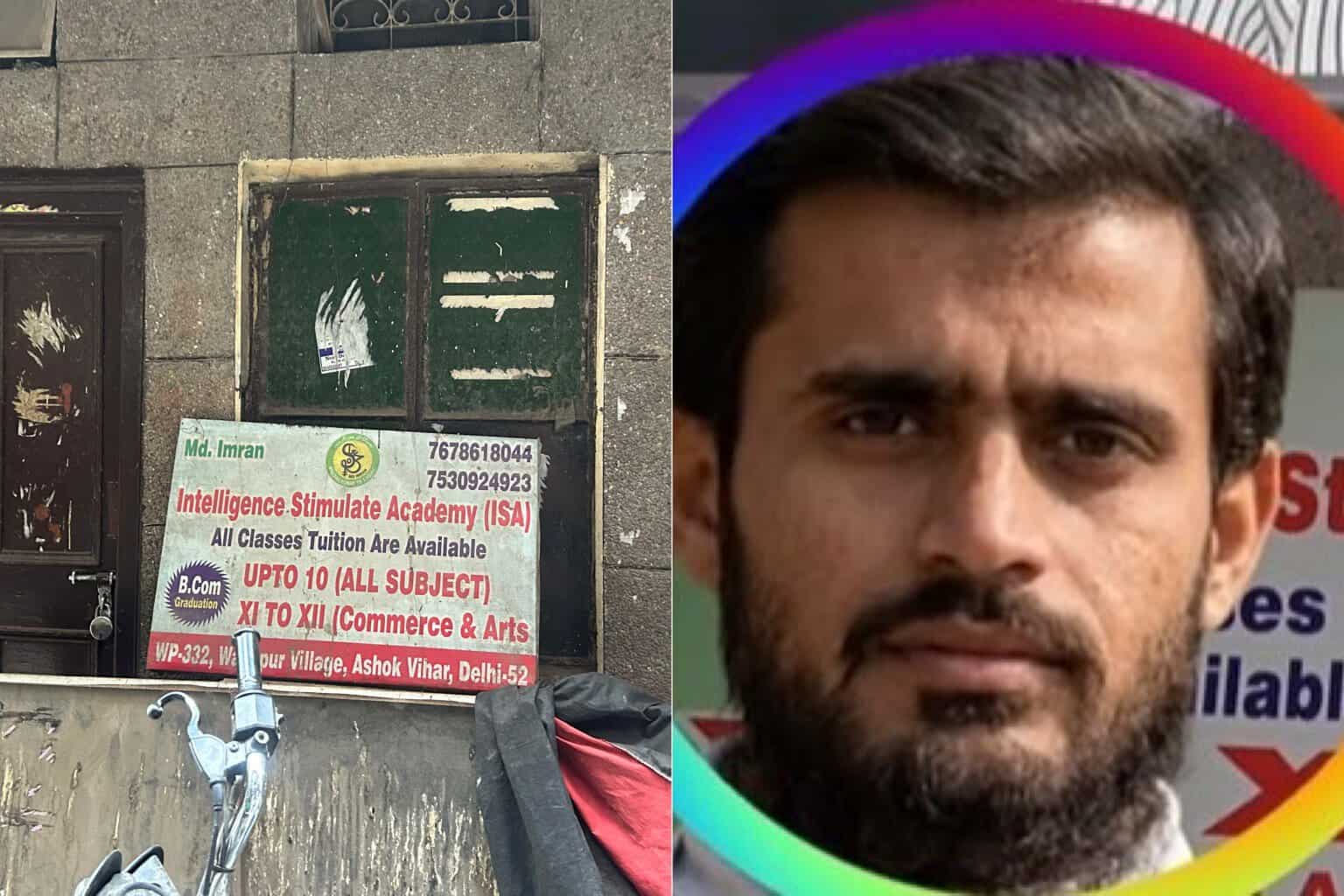
A reported sexual abuse case from Delhi’s Ashok Vihar area has raised urgent questions about child safety, private tuition oversight, parental vigilance, institutional accountability, and the responsibilities of local communities when minors are placed in one-on-one learning environments. According to the report, 35-year-old private tutor Mohammed Imran was arrested after multiple minor female students came forward with allegations of sexual harassment, with three FIRs reportedly filed and fears that more victims may exist.
The case is disturbing not only because of the alleged acts, but because of the setting in which they reportedly occurred. A tuition centre is expected to be a place of academic support, discipline, trust, and personal development. For many Indian families, especially in urban areas such as Delhi, private tutoring has become an extension of schooling itself. Parents send children to such centres with the assumption that a teacher will act as a guardian of learning, not as a threat to dignity and safety.
The reported first breakthrough came on June 1, 2026, when a Class 12 student returned from the tuition centre and told her parents what she had allegedly experienced. As described in FIR No. 200/2026, the tutor had allegedly called her to the centre under the pretext of clearing academic doubts. Once she was alone, he allegedly groped her. That disclosure appears to have opened the path for other students to speak, turning what might initially have appeared to be an isolated complaint into a wider police investigation.
In any such case, the language of due process is essential. The allegations must be investigated through evidence, witness statements, forensic and digital material where available, and legally admissible procedure. At the same time, due process does not require emotional indifference. When minors report sexual harassment, the law and society must respond with seriousness, sensitivity, and speed. A child who breaks silence often does so after fear, shame, confusion, and pressure have already done deep internal damage.
The reported pattern is especially significant from a child-protection standpoint. Abuse in educational settings often depends on access, authority, secrecy, and gradual boundary violations. A tutor may command academic respect, control marks or progress in a subject, and occupy a position that discourages children from questioning instructions. When a student is asked to stay back, come early, sit separately, or meet privately, the request may sound academically normal. That is precisely why safety protocols must be structural rather than dependent only on a child’s ability to resist or report.
Delhi Police, under the jurisdiction of the Ashok Vihar police station, reportedly began examining the matter after the first complaint. The filing of multiple FIRs suggests that investigators treated separate allegations as legally significant rather than absorbing all claims into a vague general inquiry. This distinction matters. Each complainant deserves an individual record, a clear statement, and protection from intimidation or social pressure. In cases involving minors, the Protection of Children from Sexual Offences Act, 2012, is designed to provide child-sensitive procedure and stronger safeguards.
Under the POCSO framework, the focus is not merely punishment after conviction. The statute also emphasizes child-friendly reporting, careful recording of statements, protection of identity, and reduction of secondary trauma during the legal process. In practice, this means that police, medical professionals, counsellors, magistrates, schools, and families must coordinate without turning the child into a spectacle. The dignity of the victim is not an optional courtesy; it is central to justice.
The reported fear that as many as 20 more victims may exist should be treated with caution until verified, but it should not be ignored. In abuse investigations, additional victims often emerge only after the first complainant is believed. Silence can be produced by many forces: fear of being blamed, anxiety about exams, family reputation, social stigma, threats by the accused, or the belief that no adult will act. When one student is heard, others may recognize that the burden is no longer theirs alone.
This is where the Ashok Vihar case becomes larger than a single accused individual. It exposes the vulnerability of informal and semi-formal tuition ecosystems across Indian cities. Many tuition centres operate out of small shops, homes, basements, mixed-use commercial pockets, or residential rooms. Some are well-run and transparent; others depend entirely on personal reputation. Parents may know a tutor’s academic record, fee structure, and exam results, but not whether the premises have basic safety norms, open visibility, grievance channels, or rules against isolated sessions with minors.
A credible child-safety system for private tuition should include visible premises, parent-accessible schedules, written attendance records, CCTV in common areas where legally appropriate, clear restrictions on one-on-one closed-room sessions, complaint mechanisms, and routine communication with guardians. None of these measures replaces moral character, but systems exist because trust alone is not a policy. A good teacher should welcome safeguards because they protect students, families, and honest educators alike.
Parents also face a difficult emotional reality. Many mothers and fathers are already stretched by school pressure, work demands, competitive exams, and the fear that a child may fall behind academically. Private tuition is often chosen out of care. Yet this case shows why academic urgency must never override safety questions. Parents should know where classes are held, whether other students are present, who enters and exits the premises, how doubts are cleared, whether late-evening sessions are necessary, and whether the child feels emotionally safe around the tutor.
Children, however, should not be made responsible for preventing abuse. The burden belongs to adults and institutions. Still, children can be given language that helps them report discomfort early. They should know that no teacher, relative, neighbour, religious figure, coach, or family friend has the right to touch them inappropriately, isolate them through pressure, demand secrecy about physical contact, or make them feel guilty for refusing. Such conversations must be calm, repeated, age-appropriate, and free of shame.
Schools can play a major role even when abuse is alleged to have occurred outside the school campus. Students often disclose distress first to classmates, class teachers, counsellors, or trusted school staff. Schools should maintain trained counselling channels and ensure that complaints involving sexual harassment are escalated according to law. A school’s responsibility does not end at the gate when the risk is connected to a child’s educational life.
The case also calls for community maturity. When an accused person belongs to any religious, caste, linguistic, or social identity, public anger can easily be redirected toward collective blame. That instinct weakens justice. The moral centre of such a case must remain the protection of children, the dignity of survivors, the accountability of the accused if guilt is proven, and the lawful investigation of all complaints. Dharmic traditions across Hinduism, Buddhism, Jainism, and Sikhism emphasize restraint, truth, compassion, self-discipline, and protection of the vulnerable. Those values support a response rooted in justice rather than communal generalization.
In an academic and legal sense, the most important question is not how a community can express outrage, but how it can prevent repetition. Prevention requires mapping risk. Who has unsupervised access to children? Which institutions lack registration or oversight? Are parents informed about class timings and changes? Are complaint channels known? Are police helplines visible? Are children taught that respect for teachers does not mean surrendering bodily autonomy?
The reported arrest of Mohammed Imran should therefore be understood as the beginning of a legal process, not its conclusion. Investigators must establish the facts. Courts must weigh evidence. The rights of the accused must be preserved within the framework of law. The rights of the complainants must be protected with equal seriousness. A justice system fails when it prejudges guilt without evidence, but it also fails when children are disbelieved, delayed, exposed, or pressured into silence.
Media coverage must also act responsibly. The names, images, addresses, school identities, and identifying details of minor victims should never be disclosed. Sensational phrasing may attract attention, but careful reporting protects survivors and strengthens public understanding. The public interest lies in documenting the pattern of allegations, the police response, the legal provisions involved, and the safety failures that allowed the alleged conduct to continue unnoticed.
From a broader social perspective, this case reflects a painful truth: abuse often survives in ordinary spaces. It does not always require remote locations or visibly dangerous environments. It can occur in classrooms, tuition centres, homes, sports facilities, coaching institutes, vehicles, and digital chats. Familiarity can become camouflage. That is why vigilance must be normalised without creating paranoia. A healthy society teaches children to respect elders, but it also teaches elders that respect is earned through conduct and bounded by law.
There is also a need for stronger local governance around private coaching and tuition centres. India has a large shadow education economy, and its scale makes regulation difficult. But basic safety standards should not be treated as excessive bureaucracy. Registration, contact details, emergency protocols, transparent fee records, parent communication systems, and periodic inspections can create a minimum accountability structure. Even small neighbourhood tuition centres can follow simple rules: no locked-room private sessions with minors, no unscheduled isolation, no late sessions without guardian consent, and no informal physical familiarity.
For families already affected by such allegations, the path ahead can be emotionally exhausting. Legal cases involving sexual offences against minors may move slowly. Children may experience fear, anger, sleep disturbance, withdrawal, academic disruption, or guilt. Professional counselling should not be seen as a sign of weakness or dishonour. It is part of recovery. The family’s role is to believe, protect, document, cooperate with lawful investigation, and avoid forcing the child to repeatedly narrate painful details outside necessary legal or therapeutic settings.
The Ashok Vihar allegations also underline the importance of bystander responsibility. Neighbours, shopkeepers, other students, assistants, and parents may notice small irregularities before a formal complaint emerges. Repeated private calling of selected students, unusual class timings, visible distress, sudden avoidance, or unexplained changes in behaviour should not be dismissed automatically. Not every suspicion is proof, but every credible concern deserves a careful and lawful response.
A society guided by dharma cannot measure its strength only through festivals, temples, public identity, or cultural pride. It must also measure itself by how it protects children when they are afraid, how it listens when the vulnerable speak, and how it disciplines power when trust is misused. In that sense, the reported Delhi tutor abuse case is not merely a crime story. It is a test of institutional seriousness, parental awareness, community ethics, and legal resolve.
The immediate priority must be a thorough investigation into every complaint, protection for all minor complainants, psychological support for affected students, and a fair trial based on evidence. The long-term priority must be reform: safer tuition environments, better reporting channels, child-safety education, and a public culture that places the dignity of children above reputation, convenience, or denial.
Based on the reported details from Rashtrajyoti dated June 22, 2026, the case stands as a grave reminder that child protection cannot be outsourced to trust alone. Trust must be supported by vigilance, law, transparency, and moral courage. Where children learn, they must be safe. Where they speak, they must be heard. Where allegations arise, justice must proceed with both firmness and fairness.
Inspired by this post on Hindu Post.










Leave a Reply
You must be logged in to post a comment.