
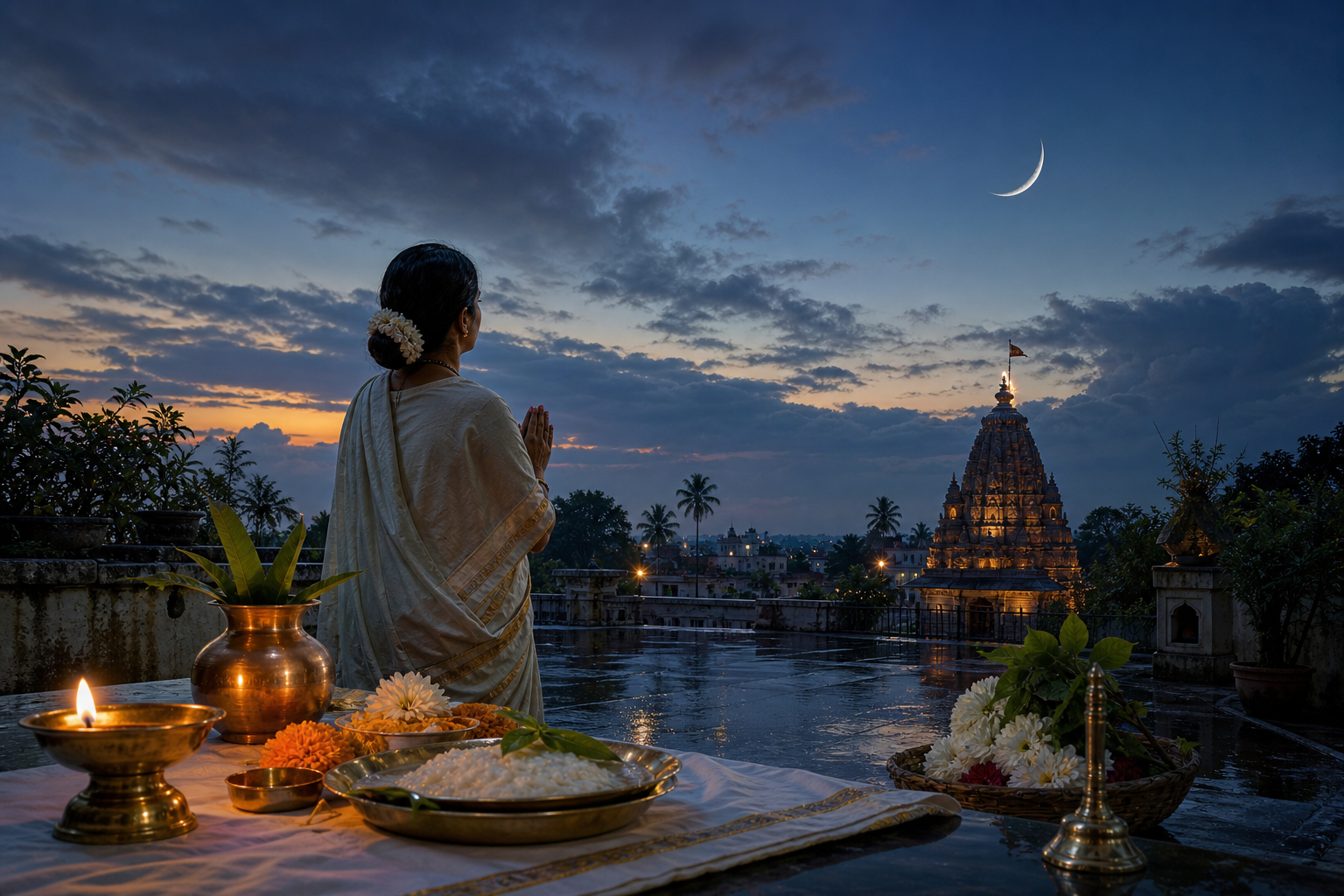
Chandra Darshan in July 2026 is observed on 15 July 2026, marking the sacred sighting of the first visible crescent after Amavasya. In the traditional Hindu calendar, this observance is connected with Ashada Maasa Chandra Darshan and the transition toward the devotional atmosphere of Shravana Month, depending on the regional calendar system followed. The day is significant because it places the devotee at the delicate threshold between the darkness of Amavasya and the renewed growth of Shukla Paksha, when the Moon begins to become visible again.
Chandra Darshan is not merely a calendar entry; it is a ritual encounter with time, light, discipline, and memory. The first sighting of the Moon after the no-moon phase has long been treated as a spiritually auspicious moment in Hindu practice. It invites a quiet pause after the introspective stillness of Amavasya and turns attention toward renewal, mental clarity, and gratitude. For many households, the brief crescent in the evening sky becomes a deeply personal symbol of hope returning after uncertainty.
The July 2026 Chandra Darshan falls in Ashada Month, also called Ashada Masam, according to calendars followed in many parts of North India, Telangana, Andhra Pradesh, Maharashtra, and Karnataka. In other regional systems, the same period corresponds to Aani Masam in the Tamil calendar, Mithunam Month in the Malayalam calendar, Ashar Month in the Bengali Panjika, and Ashad Month in related regional reckonings. These variations do not represent contradiction; rather, they reveal the diversity and sophistication of Indian calendrical traditions.
The association with Shravana Month is also important. In several devotional contexts, the Chandra Darshan after Ashadha Amavasya becomes a doorway into the sacred rhythm of Shravana, a month closely associated with Lord Shiva, vrata, temple worship, mantra japa, and disciplined living. This is why the observance is often described as Shravana Month Chandra Darshanam even when the regional month-name differs by local panchang methodology.
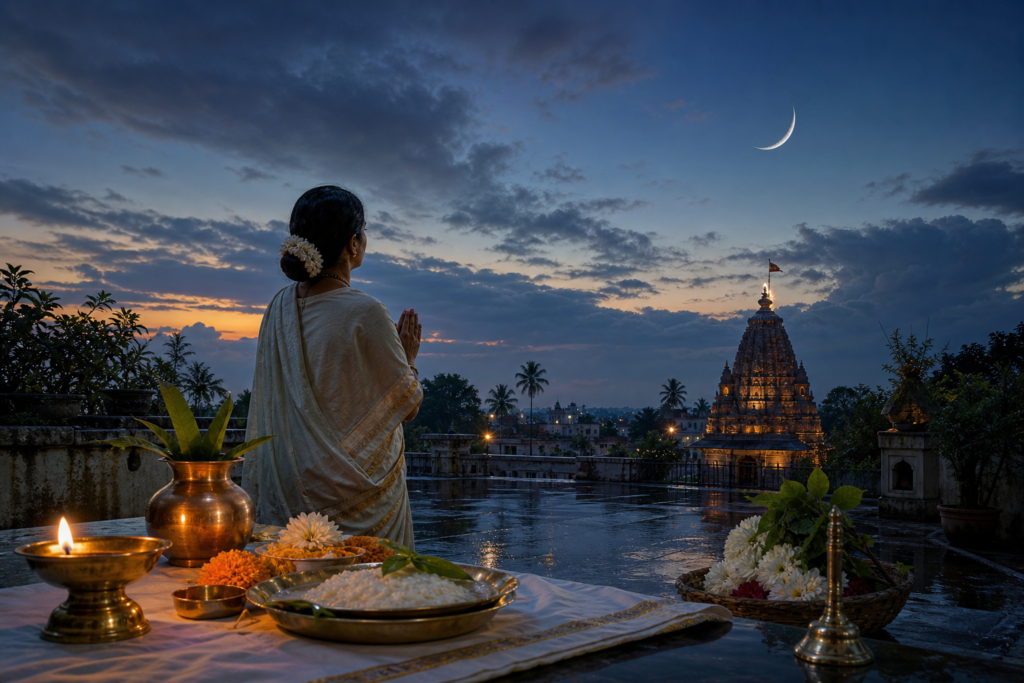
Technically, Chandra Darshan occurs when the young lunar crescent becomes visible after Amavasya. Amavasya is the no-moon phase, when the Moon is not ordinarily visible from Earth because it is positioned close to the Sun in the sky. After this phase, the Moon slowly separates from the Sun and appears as a thin crescent shortly after sunset, usually low in the western sky. The exact visibility depends on geography, atmospheric clarity, moonset time, and local horizon conditions.
Because of these astronomical factors, Chandra Darshan timings should always be checked with a local panchang for the city or region of observance. A general calendar date gives the ritual day, but the actual sighting window varies across India and the global Hindu diaspora. Devotees in Delhi, Mumbai, Hyderabad, Chennai, Bengaluru, Kolkata, Toronto, London, or New York may need slightly different local references for moonrise, moonset, sunset, and the practical crescent-viewing period.
In ritual practice, Chandra Darshan is associated with Chandra Darshana Vrata, Chandra Vratham, and Chandrodaya Vrata. These observances may include fasting, evening worship, offering water or arghya to Chandra Deva, recitation of mantras, lighting a lamp, and praying for peace of mind, emotional balance, family harmony, and prosperity. The Moon is traditionally linked with manas, the mind, and therefore the sighting of the new crescent carries psychological as well as spiritual meaning.
The ritual also reflects a wider Hindu understanding of cyclical time. The lunar month is not treated as a mechanical sequence of dates but as a living rhythm of expansion, fullness, withdrawal, and renewal. Amavasya encourages introspection, remembrance, and ancestral reverence, while Chandra Darshan gently reorients the mind toward growth. This movement from darkness to crescent light is one reason the observance remains emotionally resonant even for people who do not perform elaborate rituals.
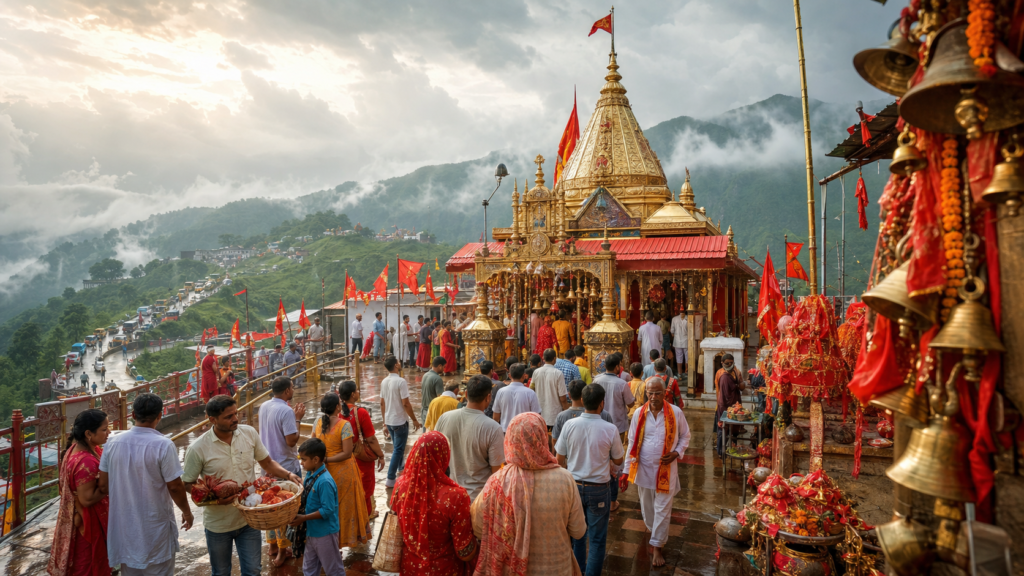
On 15 July 2026, devotees observing Chandra Darshan may begin the day with cleanliness, restraint, and sattvic food habits if they are not undertaking a full fast. Some may visit a temple, especially a Shiva temple, because the period is closely linked with the approach of Shravana devotion. Others may keep the practice simple: an evening bath, a lamp, a short prayer, and a mindful attempt to sight the crescent Moon. The value of the observance lies less in external complexity and more in sincerity, steadiness, and awareness.
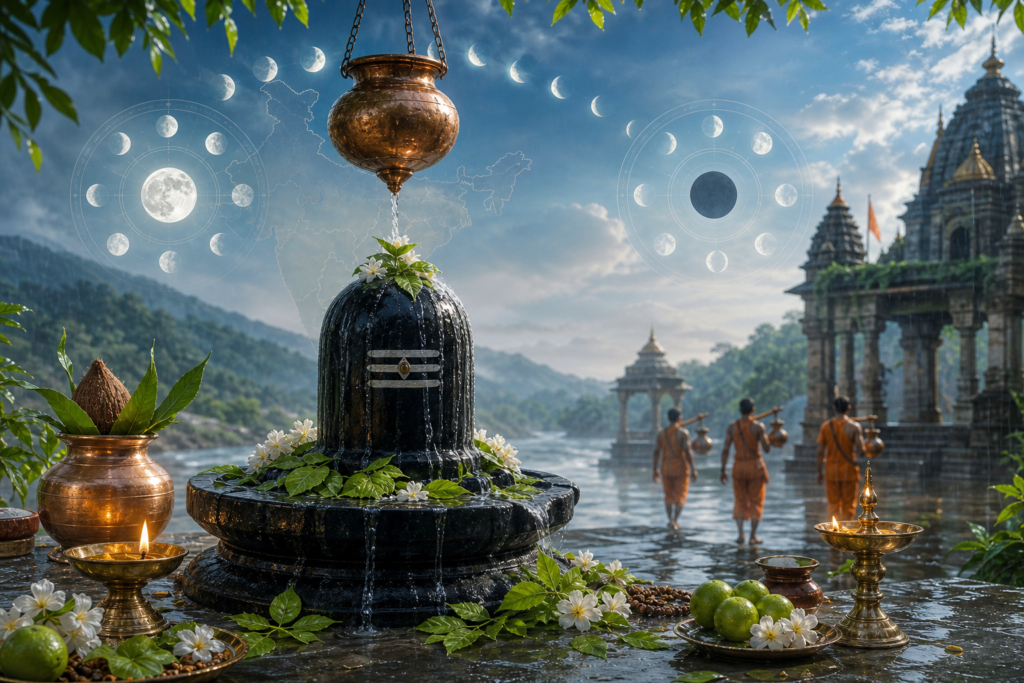
The Moon holds a central place in Hindu symbolism. Chandra Deva is associated with coolness, nourishment, beauty, fertility, mental steadiness, and the subtle rhythms of life. Lord Shiva bears the crescent Moon on his head as Chandrashekhara, showing the mastery of consciousness over changing mental states. In this symbolism, the Moon is not worshipped as a distant object alone; it becomes a way of contemplating the mind, emotion, time, and divine order.
Chandra Darshan also encourages humility before nature. The crescent may be visible only briefly, and sometimes clouds, monsoon weather, haze, or urban light pollution may prevent a clear sighting. This uncertainty is part of the experience. Devotees learn to prepare, wait, observe, and accept. In an age of constant digital certainty, the ritual reintroduces a slower form of attention, where the sky itself becomes a teacher.
The July timing adds another layer of meaning. In much of India, this period falls during the monsoon season, when the atmosphere is heavy with rain, renewal, and agricultural hope. Ashada and Shravana together evoke pilgrimage, vrata, temple festivals, sacred bathing, and devotion to Shiva and Vishnu in different regional traditions. The first crescent after Amavasya becomes part of this seasonal movement from heat and waiting into rain, fertility, and spiritual discipline.
Regional diversity is especially important in understanding this observance. A Tamil household may identify the date through Aani Masam, a Malayalam-speaking family through Mithunam, a Bengali family through Ashar, and a Telugu or Kannada household through Ashada or Shravana reckoning. These names vary, but the reverence for lunar time is shared. Such plurality strengthens Hindu cultural continuity and also offers a generous model for unity among dharmic traditions.
The broader dharmic view of time is not limited to one community or one language. Hindu, Buddhist, Jain, and Sikh traditions have all preserved ways of linking ethical life, sacred memory, and seasonal rhythm. Chandra Darshan belongs specifically to Hindu ritual practice, yet its contemplative message is widely relatable: human beings benefit from moments of pause, renewal, gratitude, and disciplined attention. The crescent Moon becomes a quiet reminder that spiritual life can begin again after every phase of darkness.
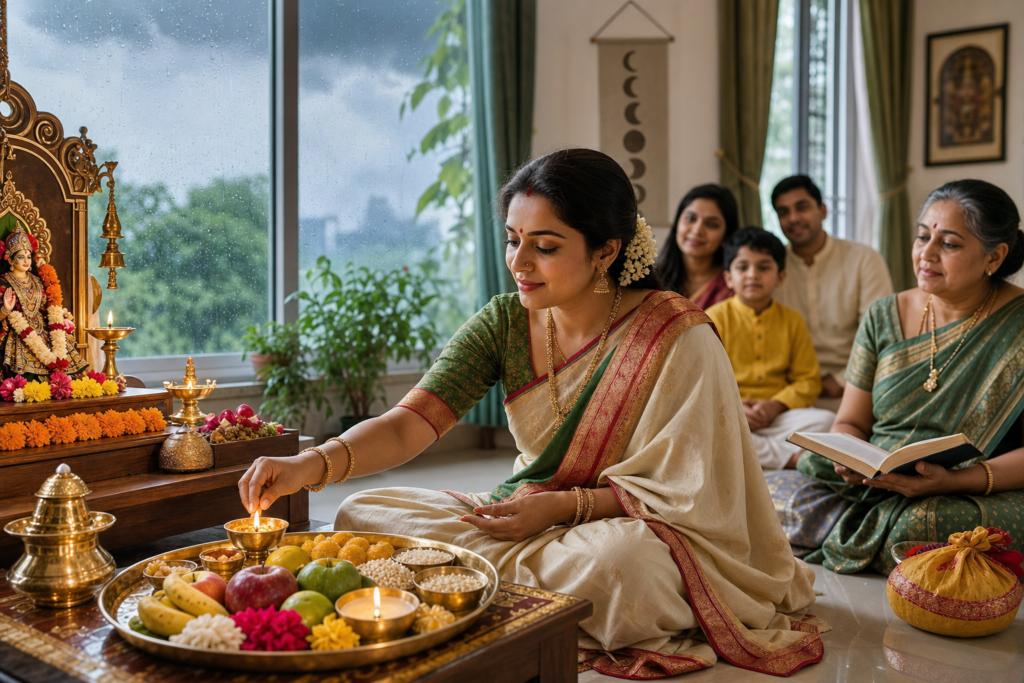
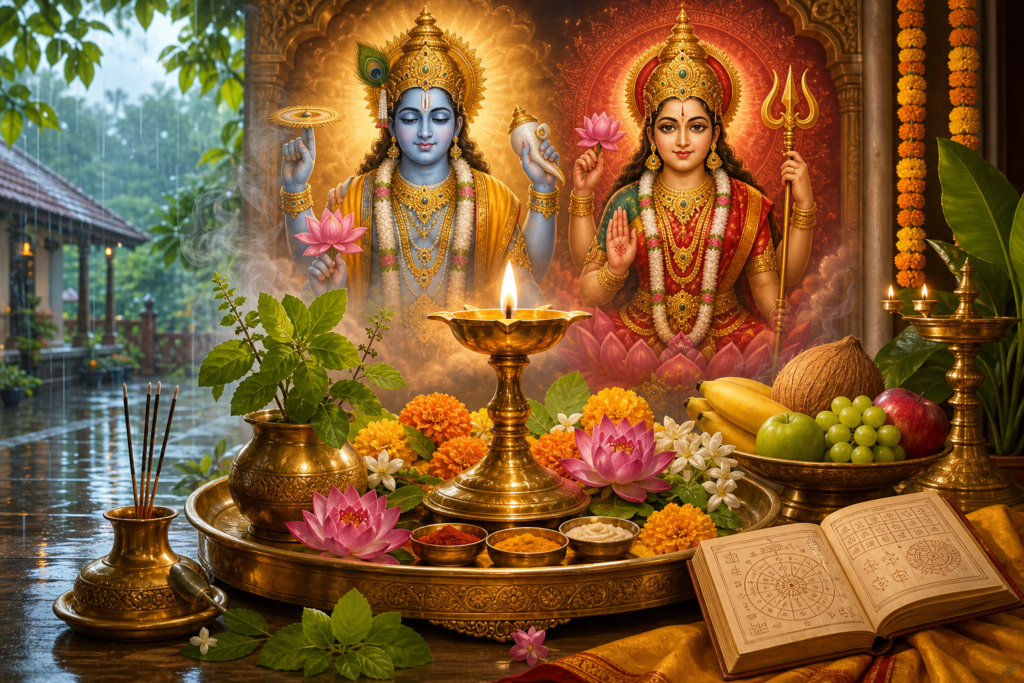
For household observance, a practical sequence may include checking the local panchang, noting sunset and moonset times, cleaning the puja space, lighting a diya, offering water or flowers, reciting a Chandra mantra if that is part of family tradition, and then respectfully viewing the Moon. Some families offer white foods such as milk, rice, or kheer in symbolic association with lunar coolness, though practices vary by region and lineage. Local tradition should be honored where it is known.
The most commonly emphasized principle is mental refinement. Since Chandra is associated with the mind, the day is suitable for reducing agitation, speaking gently, resolving small conflicts, and beginning Shukla Paksha with clarity. Even a short evening prayer can become meaningful when it is joined with restraint in speech, gratitude toward family, and remembrance of the cosmic order that the panchang attempts to map.
Chandra Darshan July 2026 therefore carries multiple layers of significance. It is a date in the Hindu calendar, a post-Amavasya lunar sighting, a vrata occasion, a regional cultural marker, and a symbolic passage into the devotional current of Shravana. Its meaning is enriched by astronomy, ritual, seasonal change, and lived experience. The thin crescent may appear for only a short time, but the discipline it inspires can shape the entire month that follows.
For 15 July 2026, the essential guidance is simple: observe the day with reverence, verify local Chandrodayam details through a reliable panchang, and approach the evening Moon with a calm mind. Whether one performs a formal Chandra Darshana Vrata or simply offers a quiet prayer, the observance invites renewal. In that small silver arc after Amavasya, the tradition sees not only the Moon, but the return of light, rhythm, and inner steadiness.
Inspired by this post on Hindu Pad.

Leave a Reply
You must be logged in to post a comment.