
The controversy over the proposed Sri Ram statue in Bangladesh has become more than a dispute over a religious monument. It now stands as a political and constitutional test of whether Bangladesh can protect Hindu minorities, uphold religious freedom, and restrain extremist pressure without turning minority rights into a negotiable matter.
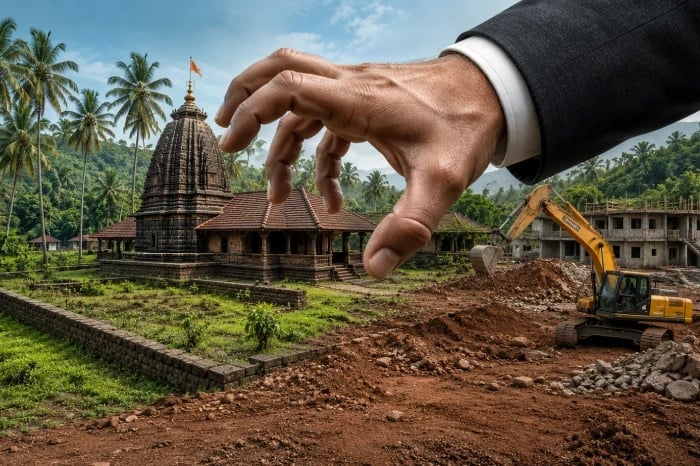
The immediate controversy emerged around the Sri Sri Radha Govinda and Kali Temple in Palashbari, Gaibandha, where an 81-foot statue of Lord Ram was reportedly planned as part of a larger temple complex. According to reports, the project also included statues of Lord Krishna and Lord Shiva, and a substantial portion of the construction had already been completed before work was suspended amid threats and agitation from Islamist groups. What might have remained a local temple-development issue instead became a national debate over the civic place of Hindu worship, public religious expression, and state responsibility in a Muslim-majority republic.
The original News18 opinion piece, “Global Watch | From Ram Statue Halt To Mob Violence: BNP Government’s Surrender To Islamists In Bangladesh,” framed the episode as a sign of a deeper political surrender to Islamist pressure after the Bangladesh Nationalist Party’s electoral victory. Its central concern was not merely that a statue was halted, but that the halt appeared to confirm a wider pattern: when religious minorities face intimidation, the state’s first instinct too often seems to be management of controversy rather than enforcement of equal rights.
That concern has gained force because the issue did not remain confined to construction. Reports from The Times of India and The Economic Times stated that protests by Hindu groups intensified after an image of Lord Ram was allegedly desecrated during demonstrations against the proposed statue. Student groups, Hindu organisations, and minority-rights voices then mobilised in Dhaka and other locations, demanding accountability, arrests, and stronger protection for religious minorities.
The reported torchlight processions, chants of “Jai Shri Ram,” and public demands for justice reveal the emotional dimension of the crisis. For a community that has repeatedly seen temples, homes, religious images, and property become targets during moments of political disorder, the desecration of an image is not perceived as an isolated insult. It is experienced as a warning that visibility itself can invite punishment. In that sense, the Sri Ram statue dispute is also a dispute over whether Hindus in Bangladesh may participate in public religious life without being asked to shrink their identity for the comfort of majoritarian politics.
Bangladesh’s constitutional framework makes the issue even more serious. The Constitution recognises Islam as the state religion, yet it also affirms secular principles and equal status for other religions. Article 41 protects the right of every citizen to profess, practise, or propagate religion, subject to law, public order, and morality. Article 12, in its secular formulation, rejects communalism, the political abuse of religion, and discrimination or persecution on religious grounds. Therefore, the state cannot treat Hindu religious expression as a disturbance while treating extremist mobilisation against that expression as a political inconvenience to be accommodated.
The demographic context is equally important. Bangladesh’s 2022 census recorded Hindus as the country’s largest religious minority, at roughly 7.95 percent of the population. Buddhists, Christians, and other smaller communities form additional minority traditions. These numbers matter because minority rights are not only about individual worship; they concern schools, temples, inheritance, land, community security, festivals, cultural memory, and the right to be visible in the national landscape. When a religious minority is numerically small but historically rooted, public symbols become especially important markers of belonging.
The controversy also revives older anxieties from Bangladesh’s post-1971 history. The Hindu community carries memories of persecution during the Liberation War, including the targeting of Hindu civilians and religious sites by the Pakistani military and allied forces. The reconstructed Ramna Kali Temple in Dhaka remains one of the powerful symbols of that traumatic history. Against that background, contemporary attacks on Hindu religious sites or images are not merely current events; they echo a long struggle over whether the promises of liberation, pluralism, and Bengali cultural coexistence can be fully honoured.
There is also a recurring political pattern in Bangladesh around sculptures and religious symbolism. Islamist objections to statues or public representations have appeared before, including earlier controversies over the Lady Justice statue and sculptures associated with national or cultural figures. The Sri Ram statue dispute is distinct because it directly concerns a Hindu deity and a functioning temple complex. Yet it belongs to a broader struggle over whether religiously motivated vetoes can determine the boundaries of public art, public memory, and minority worship.
From a rule-of-law perspective, the central question is not whether every citizen must approve of every religious monument. In a plural society, disagreement is expected. The question is whether threats, intimidation, desecration, and mob pressure can succeed where legal objections have not. If a project has land permissions, temple authority, local support, and no demonstrated violation of law, then the state’s duty is to provide lawful protection and resolve genuine regulatory issues transparently. Suspending a minority religious project primarily because extremists threaten disorder creates a dangerous incentive: it teaches organised pressure groups that coercion works.
This is why the phrase often attributed to Bangladesh’s current political leadership, that religion is personal but the country belongs to all, has become a measure against which policy is judged. Such a statement is meaningful only when it protects the vulnerable side of a dispute. If “the country belongs to all” means that minorities must avoid offending majoritarian radicals, then the phrase becomes ceremonial. If it means that Hindus, Buddhists, Christians, and Muslims may all practise and express faith under equal law, then it must be backed by policing, prosecution, and public clarity.
India’s reaction further shows that the issue has crossed the boundary between domestic law and regional diplomacy. On June 23, 2026, The Times of India reported that India’s Ministry of External Affairs called on Bangladesh to curb extremist elements and guarantee the safety of minority communities after reports of desecration involving Hindu deities and images. Such statements are not only diplomatic messaging; they reflect a long-standing regional sensitivity because violence against Hindus in Bangladesh affects cross-border sentiment, diaspora advocacy, and India-Bangladesh relations.
At the same time, the issue should not be reduced to an India-Bangladesh dispute. The primary stakeholders are Bangladeshi citizens who belong to minority communities and seek ordinary constitutional protection in their own homeland. Hindu families in Gaibandha, Dhaka, Rangpur, Chittagong, Khulna, and Sylhet do not need symbolic sympathy alone. They need police responsiveness, impartial investigations, protection of temples, recovery of grabbed land where applicable, prosecution of mob leaders, and a political culture that does not dismiss minority fear as propaganda.
Reports on minority violence in Bangladesh during the post-Hasina transition and interim period have repeatedly raised concerns about attacks on homes, temples, businesses, and individuals. Bangladesh’s interim authorities earlier stated that many recorded incidents involving minorities were criminal rather than communal in nature, while acknowledging hundreds of cases and identifying communal elements in a portion of them. Even if some cases are indeed criminal rather than religiously motivated, the distinction cannot become a shield against accountability. A Hindu victim whose home is burned, temple is vandalised, or image of worship is desecrated experiences the failure of the state in immediate and concrete terms.
A technical assessment of such violence must separate four categories: ordinary criminality affecting minorities, political reprisals after regime change, specifically communal targeting, and ideological mobilisation by extremist groups. These categories can overlap. A land-grab may be criminal in form but communal in opportunity. A political attack may become anti-Hindu when the victim’s temple or deity is targeted. A rumour may begin as local conflict but become mob violence through religious incitement. Effective governance requires recognising these overlaps rather than using narrow classification to minimise the problem.
The Sri Ram statue controversy fits this analytical framework because it involves religious symbolism, organised opposition, alleged threats, administrative suspension, and public mobilisation by a vulnerable minority. If the construction halt was justified only by security concerns, the state should have announced a clear protection plan and timeline for lawful resumption. If there were planning or funding concerns, those should have been investigated through standard administrative procedures. What damages public trust is opacity: when a minority community sees the state retreat without transparent legal reasoning, it understandably concludes that extremist pressure has prevailed.
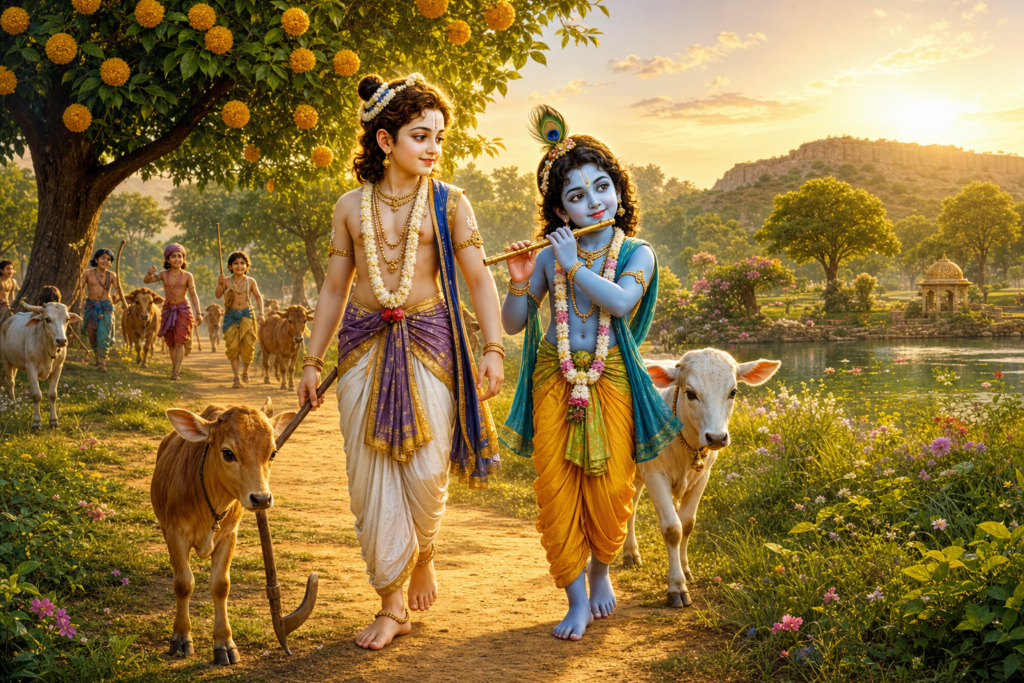
There is also a deeper social cost. Dharmic traditions, including Hinduism, Buddhism, Jainism, and Sikhism, have historically placed high value on sacred image, pilgrimage, ritual continuity, and community memory. In the Bengali Hindu context, temples are not merely worship spaces; they are centres of festival, music, food distribution, education, and intergenerational belonging. When a deity image becomes the object of public humiliation, the injury is not only theological. It tells children and elders alike that their inherited sacred world is insecure in the open.
Yet the answer cannot be retaliatory sectarianism. The appropriate response is principled constitutionalism: protection for Hindu rights, respect for Buddhist and Christian minorities, equal dignity for all religious communities, and firm distinction between ordinary Muslim citizens and Islamist political extremism. Bangladesh’s future depends on avoiding collective blame while refusing to excuse organised intimidation. A plural society can survive disagreement; it cannot survive a political culture in which mobs decide whose gods may be visible.
The BNP government, having come to power after an election in which many minorities reportedly viewed it as the safer available option in the absence of the Awami League, faces a credibility test. Electoral legitimacy does not by itself reassure vulnerable citizens. Reassurance comes through predictable law enforcement, visible prosecution, and clear public messaging that attacks on Hindu temples or images are attacks on Bangladesh’s constitutional order. If the government allows extremist groups to shape outcomes through threats, it will weaken not only minority confidence but also its own authority.
The state’s practical obligations are clear. It must investigate alleged desecration of Lord Ram’s image, identify and prosecute those who issued threats, protect the Palashbari temple complex, clarify the legal status of the statue project, and communicate with minority organisations in good faith. It should also establish district-level monitoring mechanisms for attacks on religious minorities, publish transparent data, and prevent the misuse of blasphemy-style allegations or rumour campaigns that can rapidly trigger mob violence.
International observers should also apply consistent standards. Religious freedom cannot be defended selectively. If a Muslim minority’s mosque, a Christian church, a Buddhist vihara, a Sikh gurdwara, or a Hindu temple is threatened by mobs, the principle is the same: worshippers must not be made dependent on the goodwill of the majority. The language of human rights becomes hollow when it is attentive to some minorities and indifferent to others. Bangladesh’s Hindu minority deserves the same seriousness that global institutions rightly demand for vulnerable communities elsewhere.
The Sri Ram statue episode is therefore a warning and an opportunity. It is a warning because it shows how quickly extremist agitation can convert a temple project into a national crisis. It is an opportunity because the government can still demonstrate that equal citizenship is not a slogan. By protecting the temple, enforcing the law, and rejecting intimidation, Bangladesh can show that pluralism is not weakness and that communal harmony does not require minorities to disappear from public life.
For Bangladesh’s Hindus and other religious minorities, the issue is ultimately simple: the right to worship without fear, build lawful religious institutions, honour sacred figures, and participate in national life as full citizens. For Bangladesh as a state, the issue is equally simple: either constitutional promises govern public order, or organised religious coercion does. The future of minority rights in Bangladesh will be judged not by speeches, but by what happens when the next mob gathers and the next temple asks for protection.
Inspired by this post on Hindu Post.





Leave a Reply
You must be logged in to post a comment.