
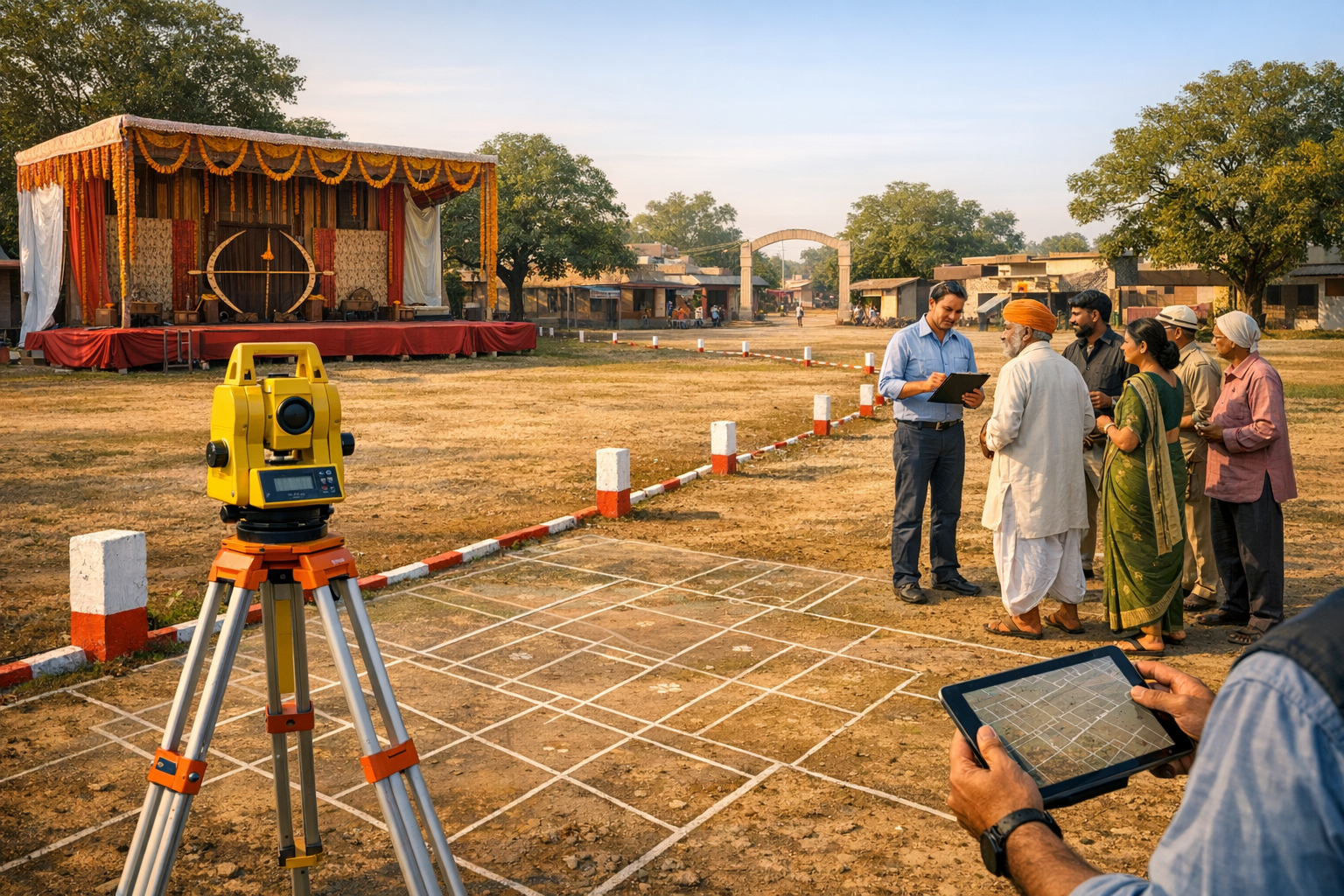
In Deoria, Uttar Pradesh, allegations of encroachment on the historic Ramlila Ground have triggered urgent concern after a public warning of self-immolation drew wide attention. The district administration has assured prompt, lawful action. While the facts on the ground await full verification through official demarcation and record checks, the situation underscores a recurring tension between heritage preservation, civic use of community land, and evolving urban pressures.
The cultural significance of a Ramlila Ground is profound. “Ramlila, the traditional performance of the Ramayana” is inscribed by UNESCO on the Representative List of the Intangible Cultural Heritage of Humanity (2008). Such grounds function as living commons where communities gather to stage ritual theatre, transmit values, and sustain intergenerational continuity. In many towns, this space also operates year-round as a multi-use public arena for fairs, music, and social cohesion, serving Hindus and also drawing participation and viewership from Jain, Sikh, and Buddhist communities in a shared civic spirit.
Across the Gangetic plain, families often recall formative memories of attending Ramlila under open skies—children perched on shoulders, elders explaining scenes, vendors from diverse backgrounds setting up stalls. The Deoria Ramlila Ground, by all indications, plays a similar role in nurturing a sense of place. The immediate public anxiety over alleged encroachment, therefore, is not only about land but about safeguarding a cultural ecosystem that affirms unity across dharmic traditions.
From a legal standpoint, the status of such grounds typically falls under one of several categories: gram sabha or municipal community land reserved for public purposes, trust or endowment property, or other public premises vested in government or local bodies. In Uttar Pradesh, the applicable instruments generally include the Uttar Pradesh Revenue Code, 2006 (with its 2016 Rules), municipal laws and bye-laws where relevant, and the Uttar Pradesh Public Premises (Eviction of Unauthorised Occupants) Act, 1972. These frameworks empower authorities to survey, determine title and use, and remove unauthorized occupation after due process.
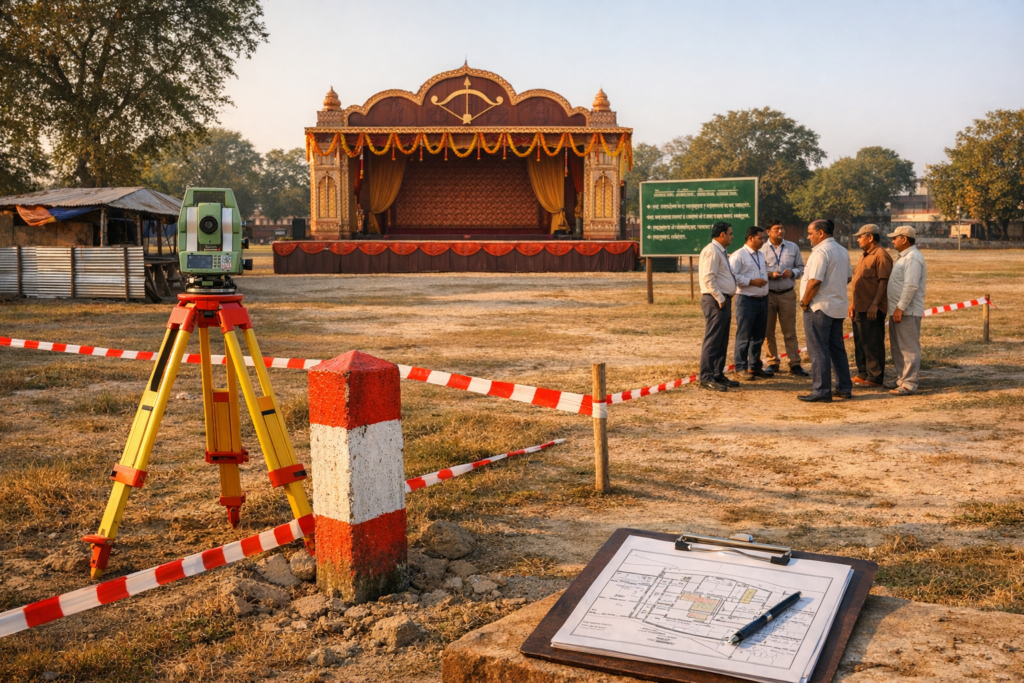
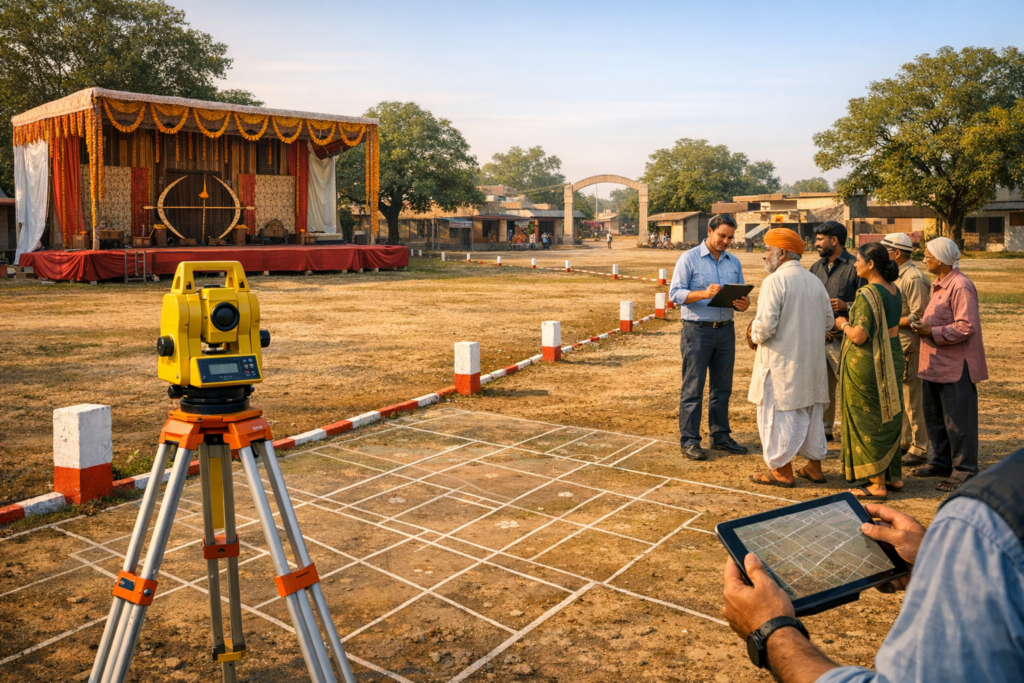
When an encroachment complaint is lodged, standard administrative procedure involves a site inspection and demarcation by revenue authorities (often the tehsildar/assistant collector) using cadastral maps and current land records. Increasingly, districts complement this with GIS overlays, georeferenced village maps, and digitized land records to reduce boundary ambiguity. The objective is to achieve a defensible, evidence-based determination that stands up in administrative and judicial review.
If preliminary findings suggest unauthorized occupation, a statutory notice is typically issued to the concerned parties, inviting their response and evidence. A hearing follows, after which a reasoned order may direct removal of encroachment, restoration of the site to its recorded use, and, where warranted, police assistance to execute the order with minimal disruption. Transparency—through speaking orders, time-bound steps, and public communication—helps maintain trust and reduce the risk of confrontation.
Because the present case involves a reported threat of self-immolation, law-and-order protocols assume particular importance. Preventive measures under the Code of Criminal Procedure (including binding over for breach of peace) can be invoked to avert harm, while counseling and engagement by civil society leaders can de-escalate emotions. Under the Mental Healthcare Act, 2017, persons attempting suicide are presumed to be under severe stress and should receive care and support; any abetment remains a serious offense under the Indian Penal Code. The administrative obligation here is dual: uphold the rule of law and protect life.
Non-violence (ahimsa) and respect for due process are central to India’s civic ethos and to the dharmic traditions of Hinduism, Buddhism, Jainism, and Sikhism alike. In heritage-related disputes, these values translate into patient documentation, reasoned representation, and lawful remedies—rather than self-harm or social polarization. Community leaders across traditions can play a constructive role by urging calm, facilitating dialogue, and affirming that cultural spaces are shared legacies that bind rather than divide.
For residents seeking redress, the most effective path remains institutional. A detailed representation to the District Magistrate and Sub-Divisional Magistrate should include copies of land records (such as khasra–khatauni where applicable), mutation entries, historic maps, photographs of past Ramlila events, and any trust or committee documentation associated with the ground’s stewardship. Requests for formal demarcation and status verification—supported by archival material and testimony from longstanding community members—substantially strengthen the case for restoration.
In parallel, the administration can improve public confidence by publishing a step-wise timeline: (1) record verification, (2) technical demarcation, (3) hearing and order, and (4) supervised execution, followed by (5) conservation measures to prevent recurrence. Where facts are contested, a joint demarcation with representatives of all sides, photographed and video-documented, helps ensure procedural fairness. Should disputes persist, litigants retain the option of statutory appeal or a writ petition, but a clear record often narrows the scope of conflict.
Heritage-sensitive solutions go beyond eviction. Once the legal status is settled, districts can adopt preventive safeguards: perimeter markers with QR-linked documentation; regulated temporary structures tied to festival calendars; crowd-flow and fire-safety plans; and CCTV at ingress points during major events. Integrating the ground into ward- or village-level spatial plans further deters piecemeal encroachment and clarifies compatible year-round uses.
Technical stewardship also benefits from geospatial integration. Digitized cadastral layers overlaid on high-resolution satellite imagery can be anchored to public land registries and updated post-demarcation. This enables quick detection of anomalies, supports responsive policing of boundaries, and provides the evidentiary backbone for any future proceedings. The same data can inform periodic impact assessments of footfall, drainage, and ground health, ensuring that preservation aligns with safety and sustainability.
From a policy perspective, Ramlila Grounds sit at the confluence of cultural heritage and public utility. Their protection advances constitutional guarantees of religious and cultural freedom while delivering civic benefits—safe open space, community programming, and interfaith fellowship. That dual character justifies priority in district planning and targeted maintenance budgets, much as public parks and sports fields are provisioned to meet recurrent community needs.
The unity of dharmic traditions offers a powerful resource for consensus-building. Hindu, Buddhist, Jain, and Sikh stakeholders routinely participate in cultural fairs and service activities surrounding major festivals; their shared commitment to non-violence, compassion, and community welfare is a natural antidote to escalatory rhetoric. A multi-faith advisory group—tasked to support heritage events, mediate disputes, and co-design volunteer protocols—can help keep public celebration joyous, secure, and inclusive.
Responsible communication matters. In fast-moving disputes, premature claims can harden positions and complicate lawful resolution. Residents and media alike can aid the process by foregrounding verified records and official orders, distinguishing allegation from finding, and giving space to measured administrative updates. This information hygiene reduces rumor-driven flashpoints without muting legitimate civic oversight.
If the Deoria administration’s assurance of swift action is paired with transparent procedure, careful demarcation, and empathetic engagement, the present impasse can be converted into a preservation success story. The desired outcome is straightforward: protect the Ramlila Ground’s recorded boundaries, restore unhindered community use, and embed safeguards that keep the space open, safe, and vibrant for future generations.
Ultimately, the test of governance in heritage matters is the ability to uphold the rule of law while honoring living traditions. A calm, evidence-led approach—supported by community solidarity across dharmic lines—can prevent self-harm, defuse confrontation, and reaffirm Deoria’s Ramlila Ground as a treasured commons where culture, devotion, and fellowship continue to flourish.
Inspired by this post on Struggle for Hindu Existence.








Leave a Reply
You must be logged in to post a comment.