
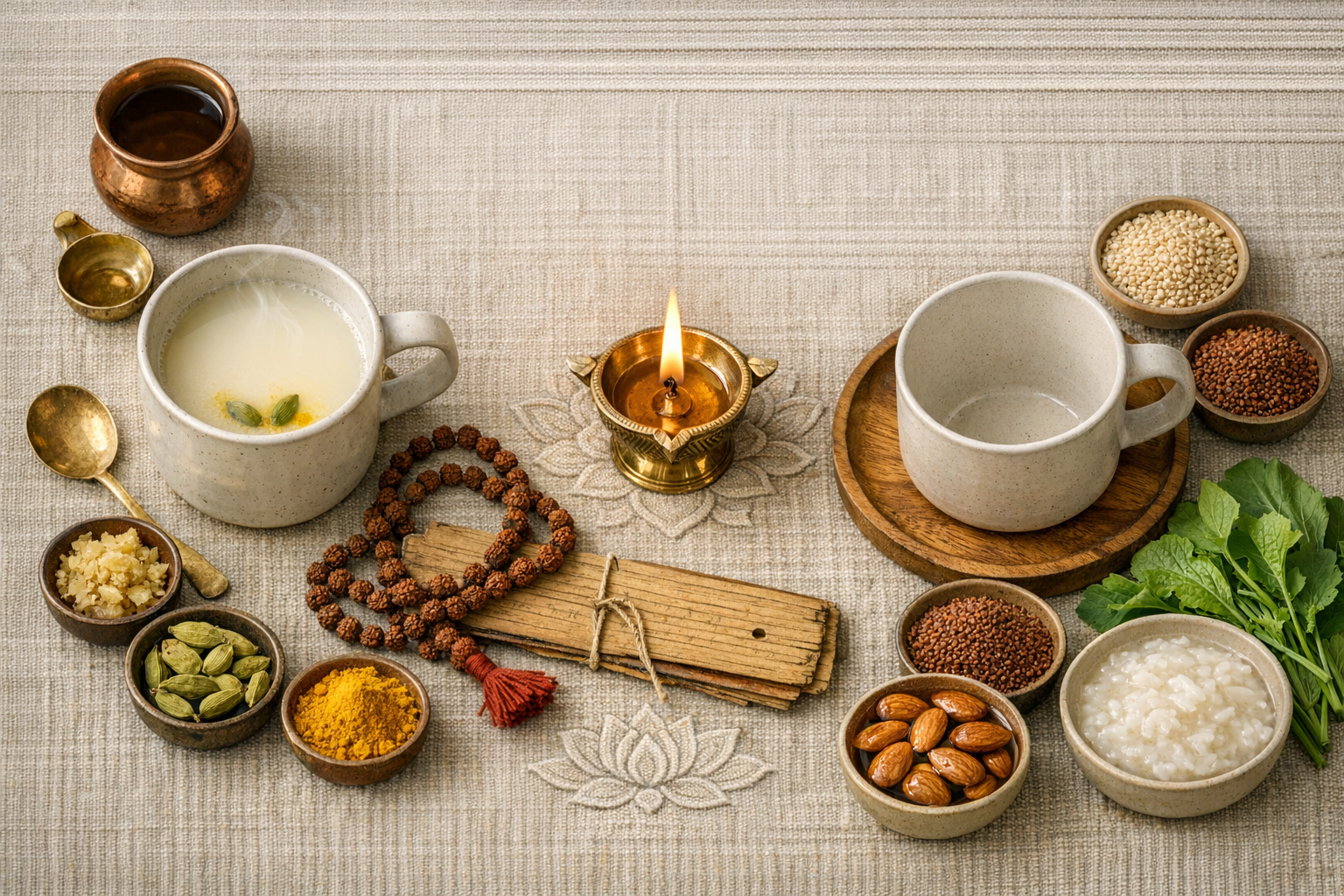
Dugdha Vrata, literally “the vow of milk,” is used in Hindu tradition to describe two distinct but equally purposeful disciplines: a commitment to abstain from milk and dairy altogether, and a commitment to subsist on milk alone for a defined period. Both are forms of vrata—structured vows of restraint and mindfulness—used to refine intention, deepen sadhana, and align daily life with dharma. Each path can be approached safely and meaningfully when guided by clear sankalpa (intention), sound health considerations, and a spirit of compassion that resonates across dharmic traditions.
Etymologically, dugdha means milk and vrata denotes a deliberate vow undertaken with sacred resolve. In the broader framework of upavasa (fasting/abstinence), classical dharma discourse recognizes many dietary disciplines—ranging from complete fasting to phalahara (fruit-based intake), ksheerahara (milk-based intake), and regionally transmitted observances preserved in family lineages and monastic practice. Dugdha Vrata, as used in contemporary spiritual life, thus stands at the intersection of textual ideals and living tradition.
In practice, the term has two primary meanings. First, the dairy-abstinence vow emphasizes restraint and ethical discernment by removing milk and milk products from the diet for a set duration. Second, the milk-only vow simplifies intake to a single, sattvic staple—traditionally warm, diluted, and gently spiced milk—to ease digestion and free time and attention for intensified mantra, dhyana, and svadhyaya. Both require clarity of purpose and careful attention to individual constitution.
Dairy abstinence (Dugdha Nivritti Vrata) is often chosen to cultivate discipline, support ethical consumption, or accommodate physiology. Many householders adopt it during periods of tapas to reduce dietary complexity and bring habits back into balance. In communities attentive to ahimsa, abstinence can also reflect a compassionate response to concerns about modern dairying. For others, it can be a pragmatic choice to address congestion or digestive discomfort associated with dairy.
From an Ayurvedic lens, dairy can be nourishing and sattvic when well-tolerated and sourced ethically; yet it may aggravate kapha in some constitutions, especially when taken cold, heavy, or with incompatible foods. Temporarily removing dairy can lighten the digestive load (reducing ama), stabilize energy, and create a calm platform for meditation. The effect is not universal—pitta-leaning constitutions may do well with small amounts of warm, spiced milk—so individualization remains central.
Ethical considerations shape many contemporary vows. Where ahimsa-centered milk is unavailable, a dairy-abstinence vrata can honor compassion without compromising nutrition. This resonates with related sensibilities in Jain practice regarding non-harm, and with the broader dharmic emphasis on mindful consumption. The spirit of Dugdha Vrata thus extends beyond a single food choice into a reflection on interdependence and reverence for life.
Spiritually, abstaining from dairy can be framed as pratyahara—the gentle withdrawal of the senses—by relinquishing a comfort food that easily binds taste and habit. The simplicity created by the vow frees attention for mantra, svadhyaya, and seva. Over time, the practitioner observes not only the body’s responses but also subtle shifts in craving, restlessness, and clarity.
The milk-only vow (Ksheerahara Vrata) has a different logic: it narrows intake to a single sattvic food, saving time, simplifying choices, and fostering one-pointedness (ekagrata). In many lineages, short periods—one to three days—are preferred for lay practitioners, while longer periods are considered only with experienced guidance. The goal is not self-denial for its own sake, but the creation of a quiet inner field for deep sadhana.
Understood through Yoga and Ayurveda, ksheerahara reduces sensory novelty at the dining table and steadies the nervous system when milk is warm, diluted, and digestively balanced with mild spices like ginger, cardamom, or turmeric. The practice can steady prana, support meditation, and encourage reflective silence. However, individual response varies, and careful attention to agni (digestive fire) is essential.
Practical intake for a short milk-only vrata commonly ranges between 600–1200 ml of warm, diluted milk per day, divided into smaller servings (for example, 150–250 ml per intake, 3–5 times daily), alongside ample warm water. Nutritionally, 1 liter of whole milk typically provides roughly 32 g of protein, 45–65 g of fat, and about 45–50 g of lactose (carbohydrate), totaling approximately 600–700 kcal; these values vary by milk type and fat content. Such figures highlight why most lay practitioners select brief durations and why careful planning and supervision are prudent for any extension.
Hydration, electrolyte balance, and digestion all require attention. Salted warm water or lightly spiced herbal infusions may be used between servings, as constitution allows. If feelings of weakness, dizziness, gastric distress, or headaches arise, the vow should be modified or discontinued compassionately and without guilt. The vrata is a means to inner steadiness, not a contest of endurance.
Contraindications merit emphasis. Individuals with lactose intolerance, casein sensitivity, metabolic disorders (including diabetes), renal or hepatic concerns, pregnancy, eating disorders, significant underweight, or complex medical regimens should avoid a milk-only vow unless a qualified healthcare professional provides explicit clearance and oversight. Minors should not undertake restrictive fasts. When in doubt, choose the abstinence-based vrata or a gentler satvik modification.
Ahimsa-centered sourcing is integral where milk is used. Traditional guidance favors fresh, ethically obtained, and properly boiled milk taken warm, ideally diluted and spiced to digestibility. If such sourcing is uncertain, the abstinence form of Dugdha Vrata remains fully aligned with dharma and often better expresses compassion in contemporary contexts.
While references to fasting disciplines such as upavasa, phalahara, and ksheerahara appear across dharmic literature and regional Nibandha traditions, Dugdha Vrata today is best approached as a living observance shaped by lineage counsel and practical wisdom. The intention (sankalpa) and the quality of practice matter more than rigid formulae.
Many choose to begin or end such vows on auspicious lunar days—Ekadashi, Purnima, Amavasya, or on deity-specific festivals—aligning personal discipline with the communal rhythm of worship. Others adopt fixed durations like three, seven, or eleven days to match work and family life. The guiding principle remains satya (truthfulness with oneself) and ahimsa (non-harming).
A clear sankalpa transforms a dietary rule into a spiritual commitment. A concise declaration might be: “For [number] days, with devotion and care for all beings, the diet will be [milk-only/dairy-free], undertaken to purify body and mind, deepen japa and dhyana, and strengthen compassion in thought, word, and action.” A brief offering, prayer, and gratitude complete the resolve.
Daily rhythm is simple and steady. On rising, perform gentle cleansing, a few rounds of pranayama (comfortably paced), and a period of mantra-japa or dhyana. Keep workday meals minimal in complexity. In the evening, close with gratitude, a short reading of scripture, and quiet reflection on the mind’s state. This continuity helps the vrata ripen into inner poise.
Mindful closure (udyapana) protects both body and mind. After a milk-only period, begin with warm water, then a light, easily digestible meal—kanji (rice gruel), thin khichdi, or stewed fruit—before returning to normal satvik fare. After a dairy-abstinence period, reintroduce foods deliberately, watching for clarity, energy, and digestive comfort rather than rushing back to prior habit patterns.
A short, practical template for a dairy-abstinence vow might span eleven days: remove milk, curd, ghee, butter, paneer, and processed dairy while maintaining a balanced satvik diet with grains, pulses, vegetables, nuts, seeds, and fruit. Favor warm, simply spiced meals, adequate protein, and calcium sources such as sesame, ragi, greens, and legumes. Keep caffeine and sugar moderate to deepen steadiness.
For a brief milk-only vow—often one to three days—take warm, diluted milk in small, regular servings, pausing at signs of fullness. Support digestion with mild spices, maintain hydration, and rest adequately. If energy dips, add a measured serving or end the practice with compassion. The vrata is successful when clarity, gentleness, and self-awareness increase.
Many practitioners note subtle fruits: reduced reactivity, easier meditation sits, and a kinder relationship with food. These reports are not claims of uniform outcome but reminders that even modest, well-held vows can renew attention, free time, and redirect energies toward japa, seva, and study.
Across dharmic traditions, the deeper thread is shared: disciplined compassion. Hindu households may choose ductile vows like Dugdha Vrata to refine sattva; Jains, guided by rigorous ahimsa, often center non-harm in food choices, including contemporary vegan practices; Buddhist observances emphasize restraint and mindful awareness; Sikh teachings uphold honest work, seva, and remembrance of the Divine, prioritizing ethical living over ritual austerity. Converging in spirit, these approaches honor the same summit—inner purity expressed as kindness in the world.
Common pitfalls include overextending duration, ignoring constitutional needs, treating the vow as self-punishment, and neglecting rest or hydration. Another is ethical dissonance—using milk without confidence in compassionate sourcing. Each of these is best addressed by reducing intensity, seeking guidance, and re-centering on intention rather than idealized performance.
Choosing between dairy abstinence and milk-only practice depends on constitution, stage of life, access to ethical dairy, and the aim of the vow. Those prioritizing ahimsa or managing kapha imbalances may find abstinence more coherent; those seeking radical simplification for a very short, supervised period may explore a milk-only practice. In all cases, intention, safety, and compassion govern the choice.
Contemporary research on fasting and dietary simplification points to benefits such as reduced decision fatigue and improved attentional stability; however, high-quality evidence specific to milk-only regimens is limited. Prudence, medical consultation where appropriate, and a readiness to adapt remain part of responsible practice. Spiritual benefits unfold most reliably when the body is respected as a field of dharma rather than an obstacle.
The ecological and ethical dimension deserves thoughtful care. Where milk is used, prioritize welfare-centered sourcing; where this is not possible, the abstinence path may more accurately express ahimsa today. In both cases, the vrata becomes a practice of conscious interdependence—honoring the earth, animals, farmers, and one’s own body.
Ultimately, Dugdha Vrata is a training in presence: narrowing choices to widen awareness, restraining habit to reveal freedom, and translating inner clarity into outward kindness. Held with steadiness, humility, and cross-traditional respect, it becomes a bridge between personal transformation and the shared values of Sanatana Dharma and allied dharmic paths—ahimsa, satya, and compassion.
This article offers educational guidance on spiritual practice and general wellness. It is not medical advice. Individuals with health conditions, those on medications, and all who plan extended vows should consult a qualified healthcare professional and, where possible, a trusted spiritual guide before undertaking restrictive practices.
Inspired by this post on Hindu Pad.










Leave a Reply
You must be logged in to post a comment.