
Ashoka Triratri Vrata is a distinctive observance in the Hindu calendar that unfolds across three consecutive nights with worship dedicated to the Trimurti—Brahma, Vishnu, and Shiva. Classical dharmashastra literature attributes a precise rule to this vrata: Hemadri (Chaturvargachintamani, Vrata-khanda) prescribes that it must begin on Shukla Trayodashi, the thirteenth lunar day of the waxing fortnight, and then continue through Shukla Chaturdashi and into Purnima. This timing ensures that the vow is anchored to auspicious tithis and is not performed arbitrarily.
The name Ashoka—literally “freedom from shoka (sorrow)”—encapsulates the intent of the rite. In traditional understanding, the vrata is undertaken to relieve grief, stabilize the mind, cultivate sattva, and harmonize the forces of srishti (creation), sthiti (preservation), and samhara (transformation) represented by the Trimurti. In contemporary spiritual practice, many households also observe it to seek clarity in decision-making, familial well-being, and inner resilience.
Textual references present Ashoka Triratri Vrata as a three-night sequence more than as a fixed-calendar festival. While the rule of beginning on Shukla Trayodashi is firm, regional parampara determines the preferred lunar month. In several traditions, practitioners aim for the third night of worship to coincide with Purnima, taking advantage of the fullness of the lunar cycle for udyapana (formal completion). Other lineages align the vrata with months they associate with sattvic refinement, while retaining Hemadri’s core instruction on tithi.
Determining the correct tithi for this vrata relies on the local panchang. Because the vow is observed at night, the tithi prevailing during the night hours—especially the pradosha to nishita interval—is typically used for sankalpa. If a tithi changes around sunset or near midnight, the convention is to privilege the tithi that governs the bulk of the worship window. A local, sunrise-based panchang (accounting for latitude, longitude, and time zone/daylight adjustments) is therefore essential for accuracy.
Although Hemadri emphasizes the start time and three consecutive nights, the specific order of Trimurti worship across the nights is handled by family tradition. Two widely observed sequences are: Brahma on Trayodashi, Vishnu on Chaturdashi, and Shiva on Purnima; or Brahma on Trayodashi, Shiva on Chaturdashi, and Vishnu on Purnima. The first sequence follows the intuitive arc toward fullness under the preserver’s grace on Purnima; the second resonates with the customary sanctity of Shiva on the fourteenth lunar day. Both adhere to the vrata’s spirit and are acceptable within dharmic norms.
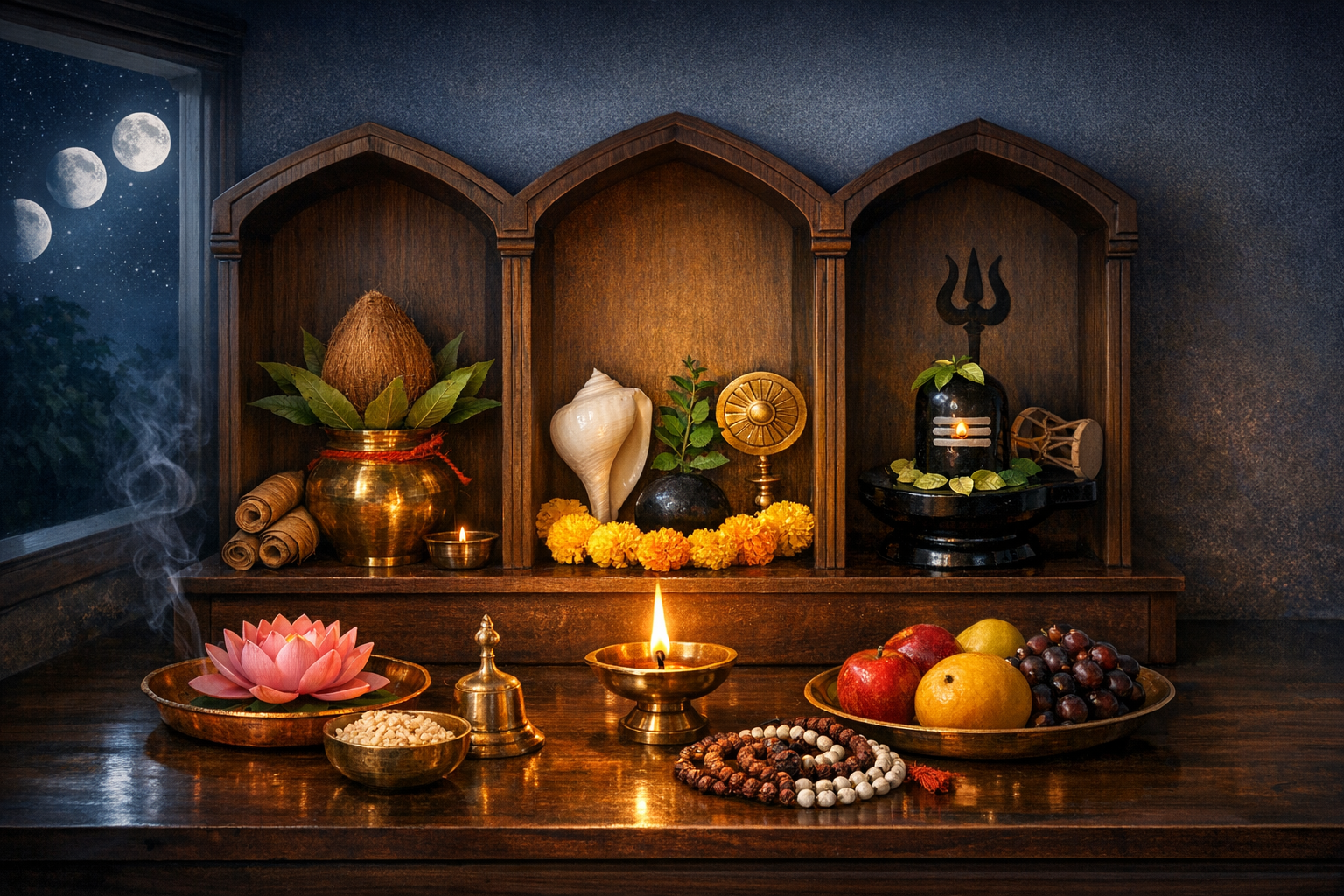
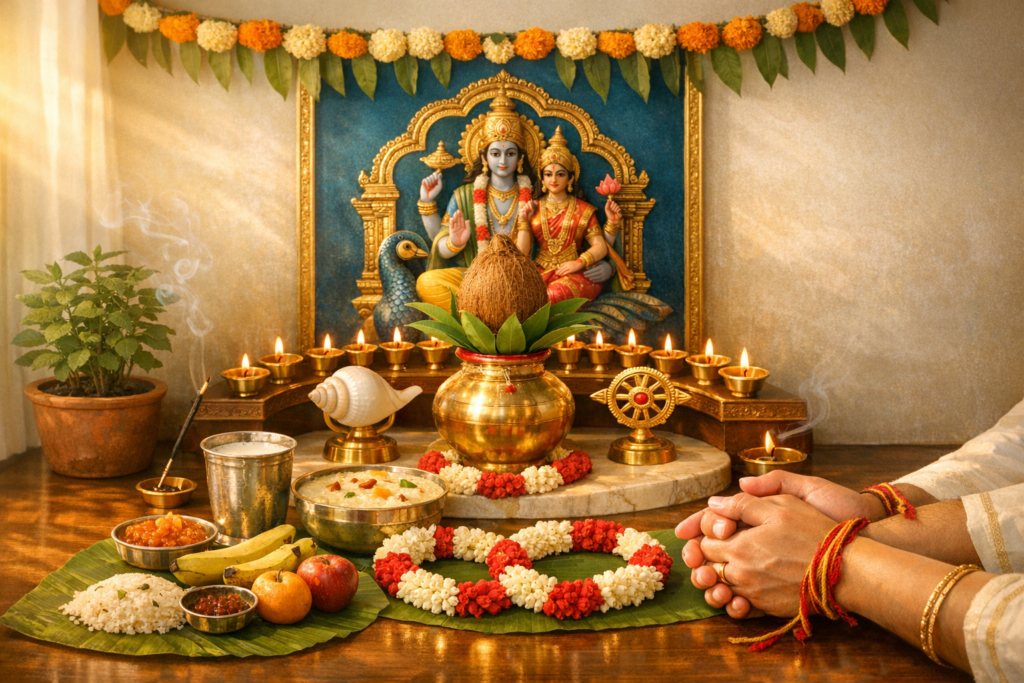
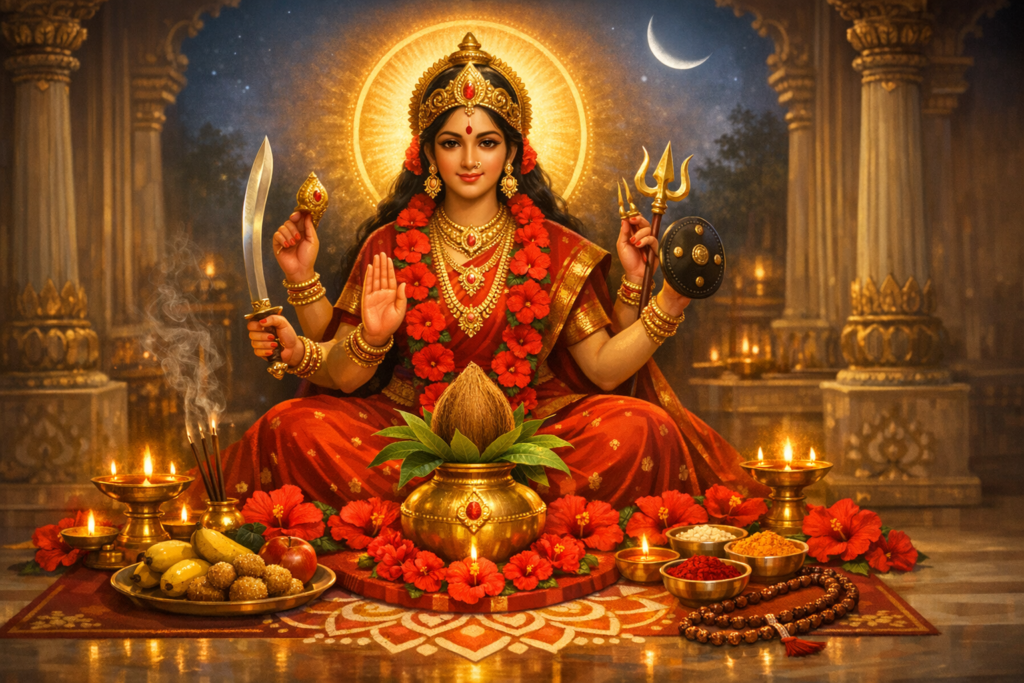
Preparations for each night are austere and methodical. A clean, sattvic setting is created, preferably with a small altar dedicated to the deity of the night and a kalasha symbolizing cosmic wholeness. Practitioners typically follow panchopachara or shodashopachara puja vidhi, offer light (deepa), fragrance (gandha), flowers (pushpa), water (arghya and achamana where applicable), and naivedya that reflects dietary simplicity. The recitation of stotra, nama-japa, and brief meditation are woven into the sequence to cultivate dharana and dhyana.
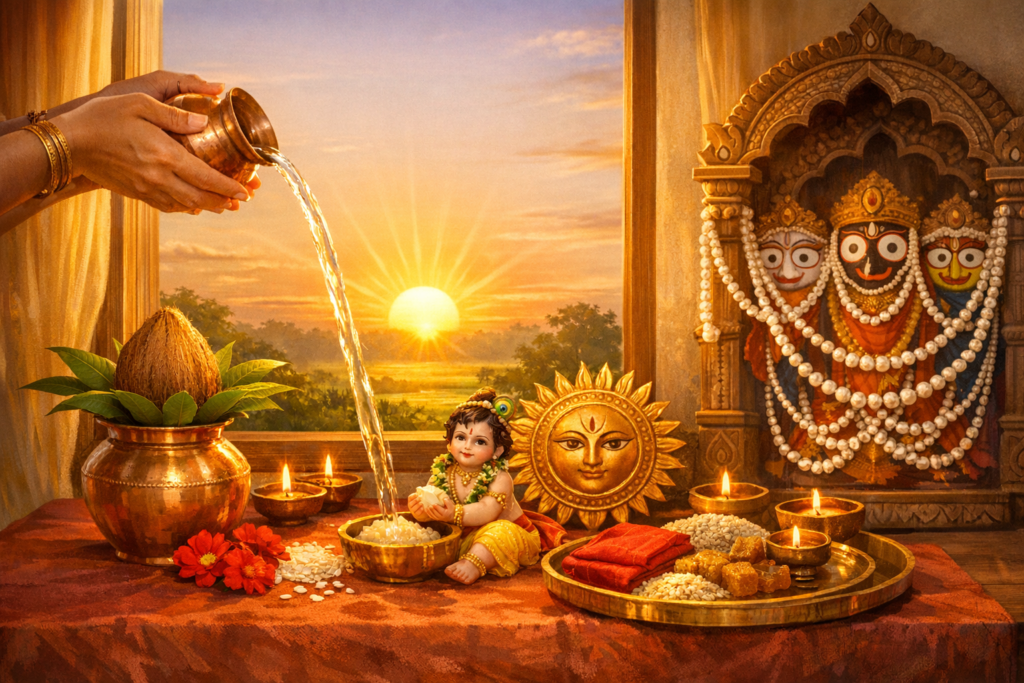
On the first night (Shukla Trayodashi), the vrata centers on Brahma-tattva and the cultivation of creative clarity. Offerings often include lotus (when available), whole grains or akshata, and a white or red cloth as a seat for the deity’s image or yantra. Appropriate recitations include the Brahma Gayatri (for example, “Om Chaturmukhaya Vidmahe, Hamsarudhaya Dhimahi, tanno Brahma prachodayat”), along with verses that honor the principle of srishti. The contemplative focus is on right intention and the birth of noble resolve.
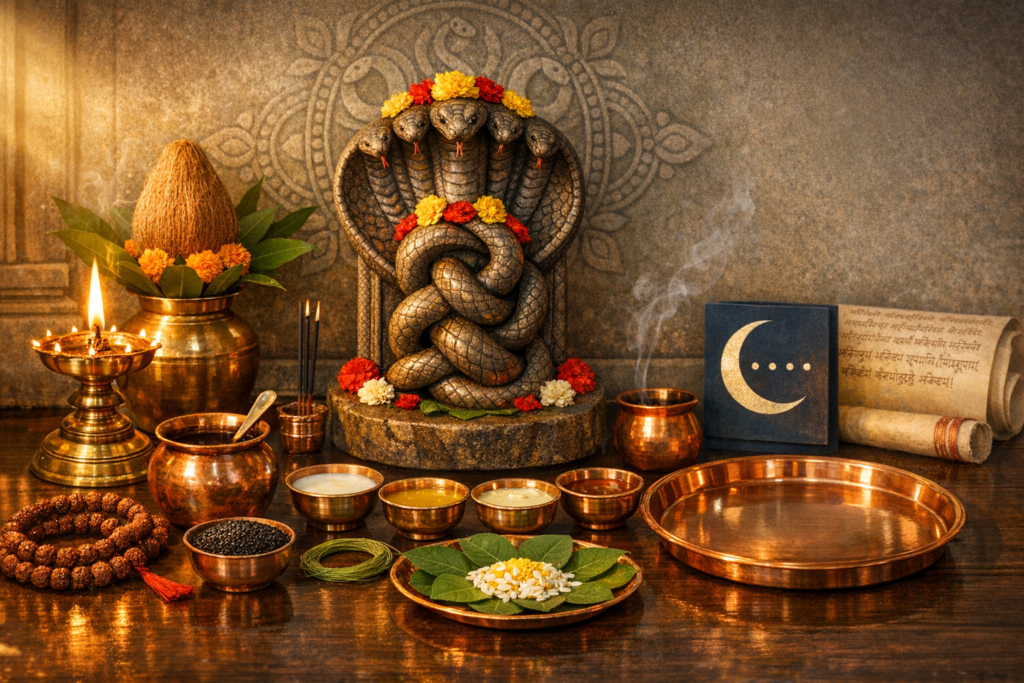
On the second night (Shukla Chaturdashi), the vrata honors either Vishnu or Shiva according to family parampara. If Vishnu is worshiped, devotees typically recite Vishnu Sahasranama, Purusha Sukta passages, or the mantra “Om Namo Narayanaya,” and offer tulasi and yellow flowers. If Shiva is worshiped, Rudra-abhisheka with water, milk, or panchamrita may be performed where appropriate, accompanied by “Om Namah Shivaya,” Mahamrityunjaya mantra, or select Rudram recitations. The contemplative focus is on preservation through steadiness, or transformation through surrender.
On the third night (Purnima), the vrata culminates with the remaining member of the Trimurti. When the sequence concludes with Vishnu on Purnima, the worship emphasizes fullness, protection, and grace; if it concludes with Shiva, the emphasis is on inner stillness and the dissolution of sorrow at the peak of lunar brightness. Where family traditions complete the triad differently due to availability of murtis, some offer worship to the Trimurti symbolically through a single saligrama or a Shivalinga while invoking all three tattvas.
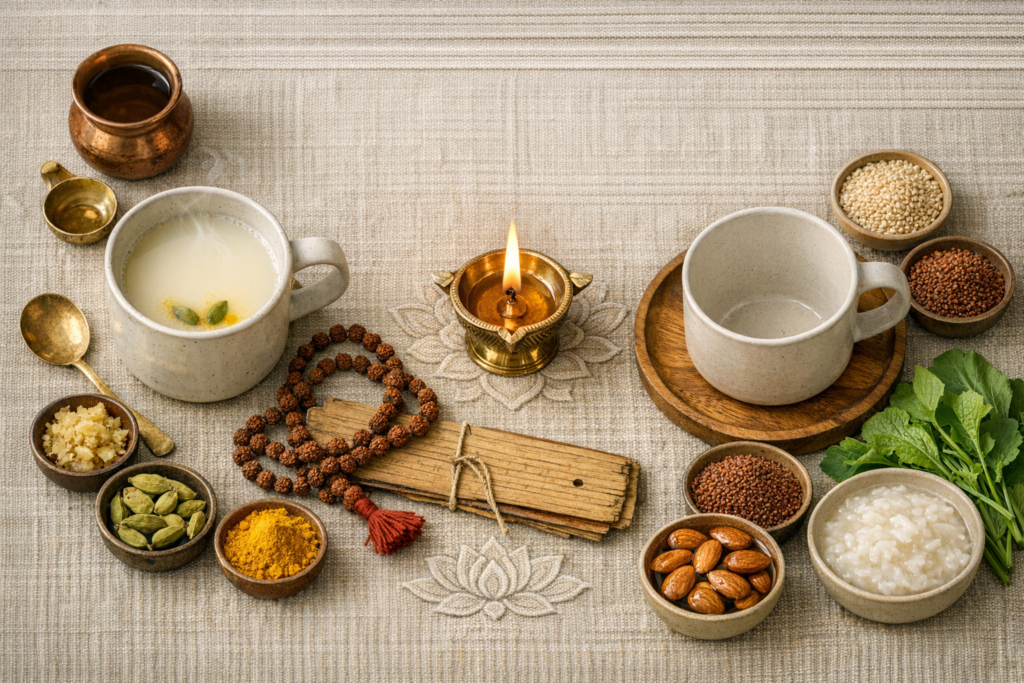
The vrata’s fasting discipline is flexible but principled. Observers often adopt upavasa for all three days (or for key portions of each day and night), with many choosing a satvik, single-meal anashana pattern at midday and light fruits or milk at night. A strict fast is not mandatory for all; individuals with health constraints may opt for phalahara or a simplified diet. The niyamas typically include ahiṃsa in conduct, truthfulness in speech, and sobriety in thought and action, supported by restrained screen time, silence periods, or reflective journaling to enhance mental clarity.
Night vigil (jagarana) is commended where feasible, at least for part of each night, to deepen japa and align the mind with the vrata’s triadic rhythm. Lighting a steady deepa through the night is a common practice signifying unwavering awareness. Devotees often maintain a modest count of japa—such as one mala per night of the deity’s primary mantra—so that the discipline is sustainable yet meaningful over three nights.
The udyapana or formal completion usually takes place on Purnima or the following morning, depending on local norms and the time the night worship concludes. Parana is marked by offering naivedya, conducting a brief gratitude puja, distributing prasada to family and community, and engaging in dana or annadana within one’s means. In many homes, the spirit of dana is consciously extended beyond sectarian boundaries, reflecting the vrata’s commitment to relieving sorrow universally.
Symbolically, Ashoka Triratri Vrata integrates the three gunas and the three cosmic functions into a single, contemplative arc. Brahma’s srishti aligns with disciplined intention and the responsible use of creative energy (rajas refined by sattva). Vishnu’s sthiti aligns with steadiness, duty, and devotion (sattva as guiding balance). Shiva’s samhara aligns with release—letting go of attachments and patterns that no longer serve (tamas transformed by awareness). Moving through these lenses sequentially helps many practitioners translate metaphysical insight into lived resilience.
The vrata’s title further conveys its psychological aim: moving from shoka (affliction, grief, confusion) to ashoka (equanimity). While traditional phala-shruti passages often speak of protection, prosperity, and familial harmony, contemporary practitioners frequently emphasize outcomes such as improved emotional regulation, reconciliation within families, and a clearer sense of dharmic priorities. As with all vratas, the benefit is less transactional and more transformative, grounded in sincerity, satya, and consistent effort.
Ritual variations are well attested and acceptable. In communities where Brahma murtis are uncommon, worship may be directed to a symbol (such as a blank copper plate with a swastika and lotus), a kalasha, or to a combined Trimurti image while invoking Brahma explicitly in mantra and sankalpa. Some lineages use one altar throughout, rotating the central deity; others set three distinct spaces. The essential feature is intentional, focused worship of the Trimurti across the three prescribed nights.
For households maintaining a robust daily sadhana, integrating the vrata can be straightforward. A concise structure that many find balanced includes sankalpa, introductory japa, panchopachara or shodashopachara, one primary stotra, quiet meditation for five to fifteen minutes, and a closing kshama-prarthana. Where time is limited, reducing the number of upacharas while preserving attention and reverence is preferable to rushed formality.
Careful tithi management avoids common scheduling errors. If Trayodashi begins late at night, many traditions still consider the night valid for initiation, provided Trayodashi prevails during the core worship window. If the tithi changes very close to midnight, households often choose the span that accommodates an unhurried puja. When traveling, a locally accurate panchang for the destination city should be consulted, since tithis can shift notably across longitudes.
Inclusivity is intrinsic to the vrata’s spirit. Family members of all ages can participate according to capacity—children may offer flowers or light a lamp, elders may lead stotra recitation, and those with health considerations can sit during puja or contribute in preparation. The vrata’s objective is the shared cultivation of ashoka—freedom from sorrow—within and across households, not mere ritual compliance.
In a broader dharmic perspective, the triadic movement at the heart of Ashoka Triratri Vrata resonates with the civilizational emphasis on integrative threes. Buddhism’s Triratna (Buddha, Dhamma, Sangha), Jainism’s Ratnatraya (samyak darshan, samyak jnana, samyak charitra), and the Sikh tradition’s three pillars (Naam Japna, Kirat Karni, Vand Chakna) each articulate complementary pathways to inner clarity, ethical living, and communal responsibility. While the vrata itself is a Hindu practice, the shared intuition that wholeness arises from a balanced triad affirms unity across dharmic traditions.
Ashoka Triratri Vrata also aligns with ecological and ethical sensibilities emphasized in modern discourse. Simple offerings, restrained consumption, and mindful sourcing of puja materials minimize waste while honoring ahimsa. Many households adopt reusable lamps, organic flowers, and limited packaging, ensuring that the cultivation of sattva extends to environmental responsibility.
Questions often arise about dietary rules and life-cycle constraints. Classical guidance prioritizes purity and intention over rigidity: sattvic food, abstention from intoxicants, and courteous speech are key. Women and men may observe the vrata according to health and family norms; where personal cycles or commitments limit participation, contributing through stotra, kirtana, or arranging the altar remains spiritually meaningful.
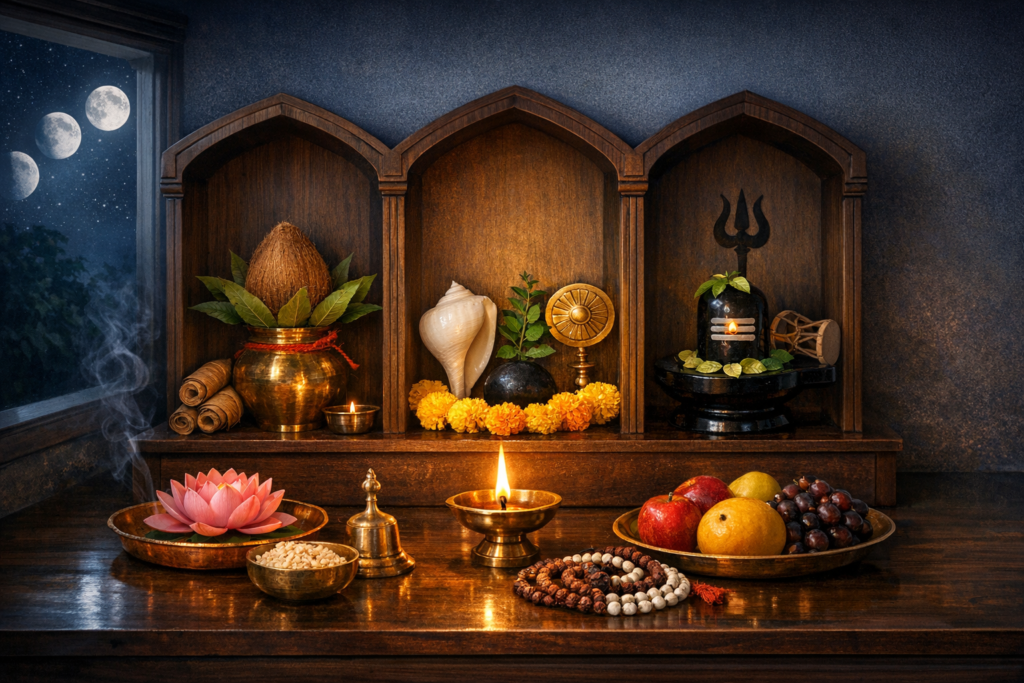
When appropriate murtis are not available, symbolism provides effective continuity. A kalasha with mango leaves and a coconut can represent Brahma; a saligrama, conch, or chakra emblem may stand for Vishnu; a Shivalinga, trident, or bilva leaf cluster can evoke Shiva. Devotees commonly supplement such symbols with the deity’s primary nama-japa to anchor devotion.
For those new to the vrata, a practical outline can be helpful. On night one, after a bath and simple meal, undertake sankalpa for the three-night vow and worship Brahma-tattva with Brahma Gayatri and contemplations on right intention. On night two, honor either Vishnu or Shiva with their principal mantra and one core stotra. On night three, complete the triad, concluding with gratitude, distribution of prasada, and dana. Keeping a brief journal of insights each night can deepen retention and application post-vrata.
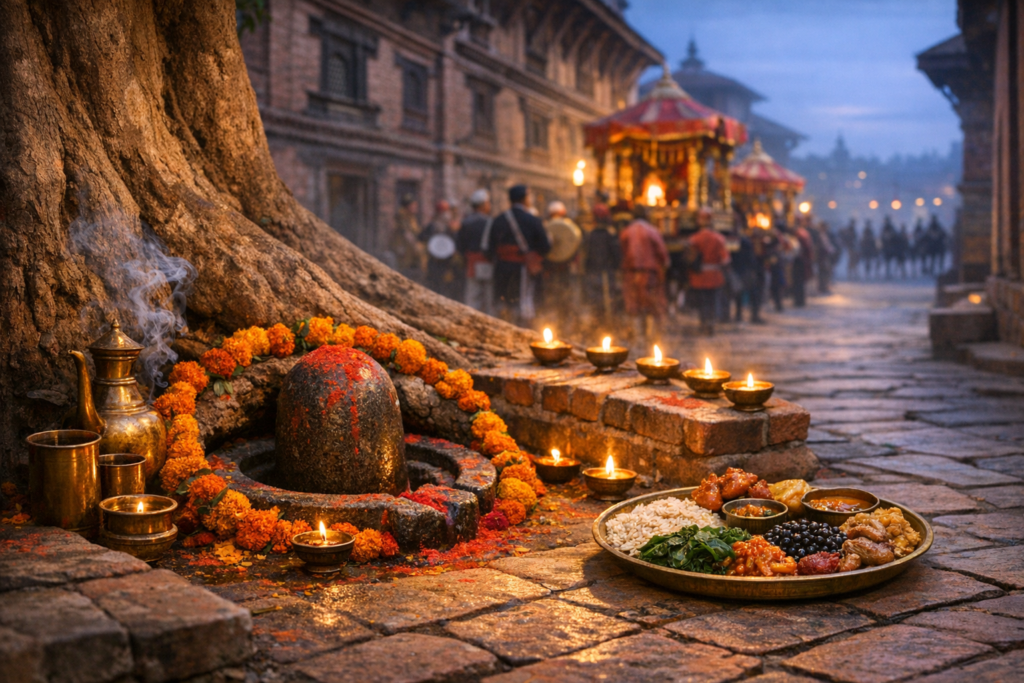
Across regions, the devotional texture differs but the philosophical core remains consistent. Some households emphasize nama-sankirtana with family and neighbors; others prefer quiet dhyana with minimal upacharas. Urban practitioners might schedule worship in the pradosha period, while rural households extend it beyond midnight. All of these variations keep faith with Hemadri’s rule on timing and the threefold devotion to the Trimurti.
Ultimately, the discipline of Ashoka Triratri Vrata lies in carrying insights forward once the lamps are extinguished. Creation becomes the courage to think and act nobly; preservation, the humility to maintain dharma every day; and transformation, the wisdom to let go of what binds. In that sense, the vrata is both a liturgical cycle in the Hindu calendar and a living pedagogy for emotional steadiness and ethical clarity—qualities celebrated across Hinduism, Buddhism, Jainism, and Sikhism alike.
As with all vratas, adherence to family parampara is the first principle, followed by consultation of a reliable panchang for tithi, and a steady commitment to satya and ahimsa. When observed with attentiveness rather than anxiety, the three nights unfold as a contemplative bridge from shoka to ashoka, translating the Trimurti’s cosmic functions into everyday strength, compassion, and discernment.
Inspired by this post on Hindu Pad.

Leave a Reply
You must be logged in to post a comment.