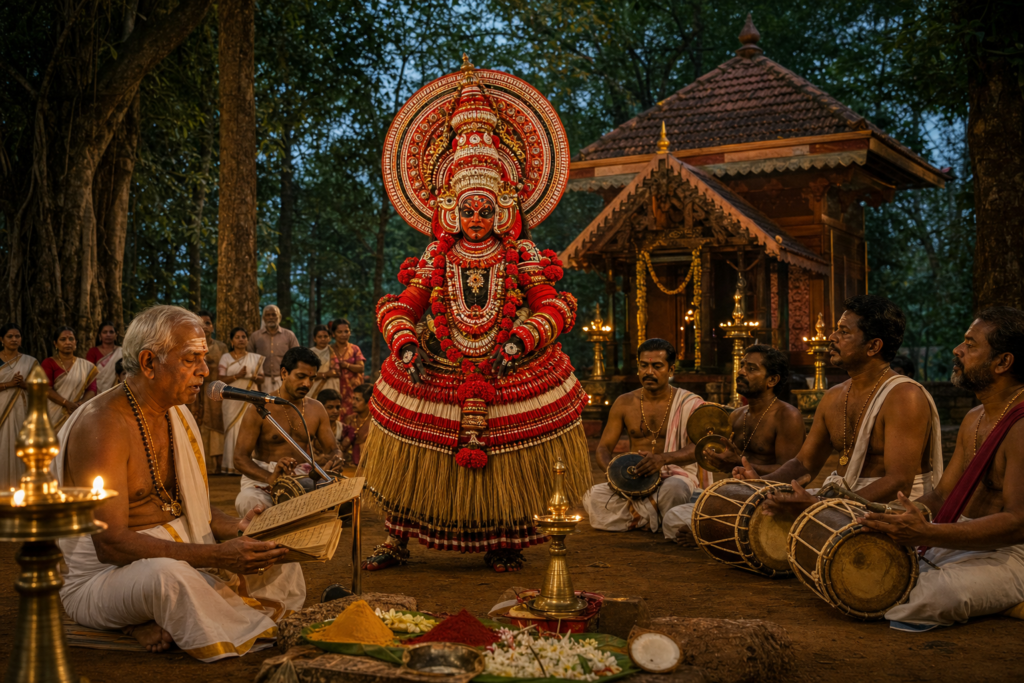
Vat Purnima, also known as Vat Savitri Purnima or Vata Savitri Vratam, will be observed on June 29, 2026 (Jyeshta Purnima). The vrata is dedicated to Savitri and Goddess Gauri and is traditionally undertaken by married women for long life, well-being, and prosperity within the household. Rooted in the Mahabharata’s Vana Parva narrative of Savitri and Satyavan, the observance blends scriptural devotion with living cultural practice, and it remains a significant feature of Hindu cultural traditions across India.
In 2026, the Vat Purnima date aligns with Jyeshta Purnima and is especially observed in many regions of North India as well as in Andhra Pradesh, Telangana, and Karnataka. In parallel, several western statesmost prominently Maharashtra, Goa, and Gujaratmaintain a closely related tradition known as Vat Savitri Vrat on Jyeshta Amavasya. Both streams preserve the same devotional core: reverence for Savitri’s steadfastness and the sanctity of conjugal harmony (saubhagya), expressed through worship of the Vata-vriksha (banyan tree) and Gauri.
Calendar practice helps explain this duality. Communities following regional panchang traditions may privilege either the Full Moon (Purnima) or the New Moon (Amavasya) for this observance. The Purnima-focused ritual in North India and parts of South India coexists with the Amavasya-focused ritual in western India. The underlying vrata, however, shares one scriptural foundation and one ethical horizon: commitment, fidelity, and mutual care in the grihastha ashrama (householder stage).
The theological center of Vat Purnima is the Savitri–Satyavan katha. In the Mahabharata, Savitri’s unwavering resolve, clarity of speech, and spiritual merit enable her to dialogue with Yama and reclaim her husband’s life. The narrative emphasizes vrata (vow), vak-shuddhi (purity in speech), dhriti (fortitude), and viveka (discernment) as transformative forces. For practitioners, the story becomes a living meditation on dharma, demonstrating how steadfastness and compassion sustain family life and social order alike.
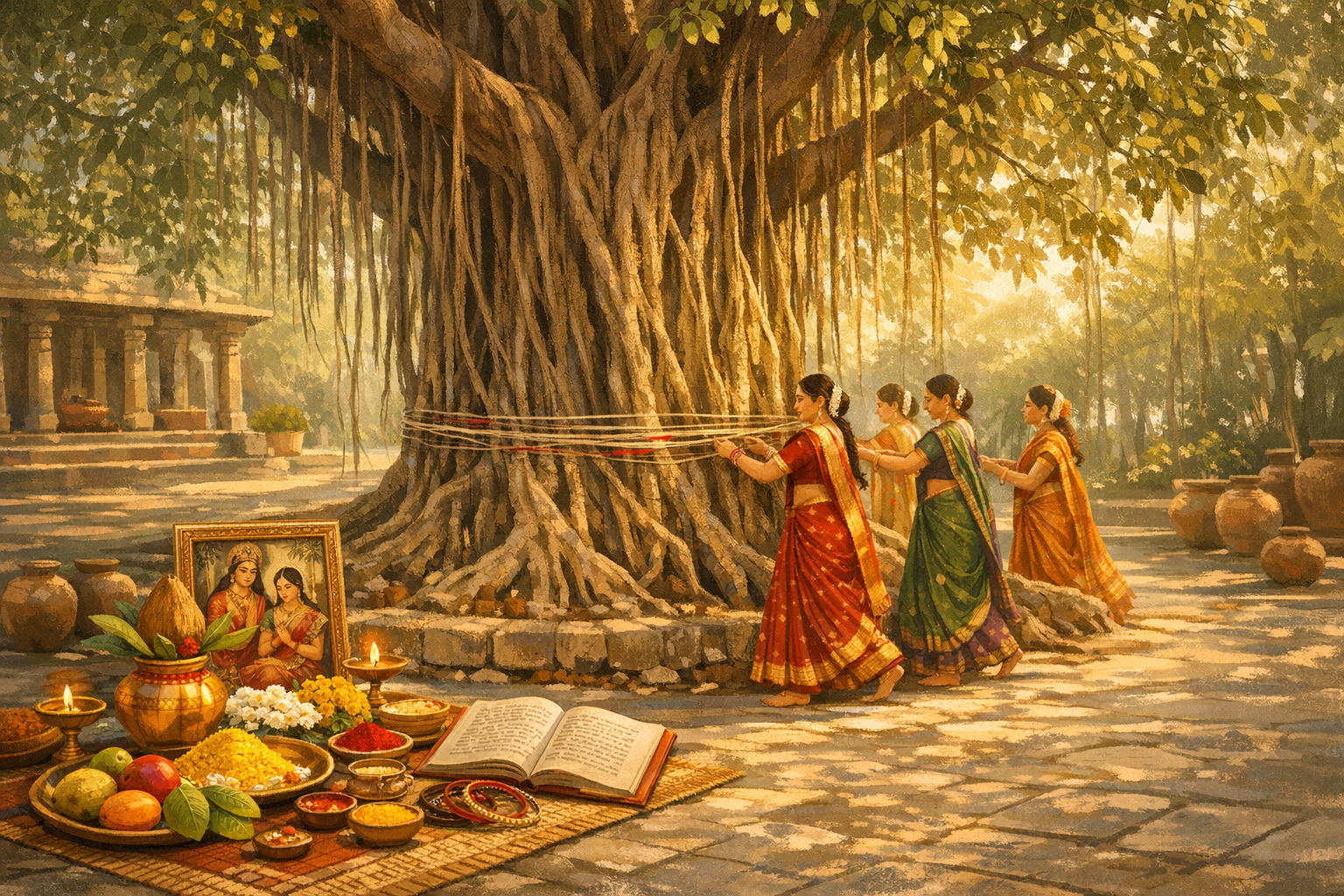
Equally central is the Vata-vriksha (Ficus benghalensis). In classical symbolism, the banyan’s expansive canopy, aerial roots, and remarkable longevity make it an apt emblem of stability, shelter, and intergenerational continuity. The Vata is associated with akshaya (the inexhaustible), suggesting a lineage of life, values, and blessings that endure beyond one lifetime. This symbolism is integral to the ritual practice of circumambulating the tree and tying protective threads (raksha-sutra) as a pledge to preserve fidelity and harmony.
The banyan’s ecological role strengthens this ritual meaning. Ficus species are keystone trees in many Indian landscapes, supporting birds, pollinators, and small mammals while stabilizing soil and moderating local microclimates. Observing Vat Purnima with environmental stewardshipusing biodegradable offerings, avoiding harm to roots and bark, and supporting tree-plantingaligns dharma with contemporary sustainability goals and reflects the broader ethos of environmental responsibility embedded in Hindu thought.
Dharmic traditions converge on this ethical horizon. Tree reverence appears in Hindu smritis and puranas, Jain chaitya-vriksha traditions recognize sacred trees such as the nyagrodha (banyan), Buddhists uphold deep veneration for the Bodhi tree, and Sikh teachings poetically affirm nature’s sanctity in lines such as “Pavan Guru, Paani Pita, Mata Dharat Mahat.” In this shared civilizational regard for the natural world, Vat Purnima can be appreciated as a living bridge across dharmic communities, nurturing unity through common values of gratitude, non-violence, and ecological care.
Determining the best time to perform Vat Purnima puja in 2026 should be based on the local panchang. The vrata is typically observed during the morning (pratahkal) after sunrise, and many households prefer to complete the main puja and parikrama before midday. Where precise tithi transitions matter, practitioners follow the rule that the observance aligns with the day on which Purnima prevails at sunrise. Given regional differences in drik (observed) versus traditional calculations, consulting a reliable local almanac is prudent.
Preparations usually begin with a pre-dawn or early morning snana (ritual bath) and a simple sankalpa (statement of intent) that names the vrata, date, location, and the wish for family well-being. A home altar is arranged for Savitri and Gaurioften with images or murtis, a kalasha, deepa (lamp), and puja-samagribefore proceeding to the Vata-vriksha if accessible. Where a living banyan is not available, many families worship a Gauri–Savitri altar at home, offer water to a potted banyan or a symbolic representation, and plan a later visit to a temple courtyard banyan to complete the parikrama respectfully.
Common puja-samagri includes a diya (sesame or cow ghee preferred), dhoopa, flowers (particularly white or yellow for Gauri), akshata (turmeric-blessed rice), kumkum, haldi, sandal paste, sacred thread (cotton), fruits, seasonal sweets, betel leaf and nut (where customary), and a small lota of clean water for arghya to the tree roots. Many households add cloth for the deity, mirror, bangles, and a mangal-sutra token as emblems of saubhagya (good fortune in marriage).
A typical puja-vidhi proceeds in stages. After the sankalpa, Ganesha is invoked for unobstructed completion, followed by invocation of Goddess Gauri and Savitri with simple mantras (for example, “Om Gauryai Namah” and “Om Savitryai Namah,” repeated with devotion). Panchopachara or Shodashopachara offeringsfragrance, flower, incense, lamp, and naivedyaare made reverentially. Devotees then recite or listen to the Savitri–Satyavan katha, reflecting on its central dharmic lessons: steadfastness (nishta), truthful speech, and compassionate resolve.
The parikrama of the Vata-vriksha is integral. Devotees gently pour water at a safe distance from the trunk, offer akshata and flowers near the roots without injuring them, and circumambulate the tree while tying a cotton raksha-sutra. The number of circumambulations varies by family traditionthree, five, seven, eleven, sixteen, twenty-one, or even 108 in some regions. The intent is more important than the count: the thread symbolizes continuity, care, and the safeguarding of shared life. Eco-sensitive practiceusing only cotton thread and biodegradable offeringsis strongly encouraged.
Fasting observances range from nirjala (waterless) to phalahara (fruits) to a saatvik one-meal fast. Many practitioners conclude the fast (parana) after the puja and dana, while others end after moonrise or the next sunrise based on family tradition. The vrata is inclusive and humane: pregnant individuals, nursing mothers, elders, and those with health constraints should follow medical counsel and observe the devotional corepuja, katha, parikrama, and danawithout compromising health.
Recitation of the katha crystallizes the vrata’s theological arc. Savitri, endowed with learning, composure, and resolve, follows Yama with unswerving devotion and wise speech. Her requests culminate not in personal gain but in dharmic continuitieslineage, welfare of elders-in-law, and restoration of her husband’s prana. The narrative teaches that vrata is not mere austerity; it is ethical excellence enacted through clarity, compassion, and constancy.
Regional practice adds richness. In North Indian communities observing Vat Purnima on Jyeshta Purnima, offerings to Gauri may highlight turmeric, kumkum, and mirror–bangle symbols of saubhagya. In Andhra Pradesh, Telangana, and Karnataka, Vata Savitri Vratam often includes extended readings of the katha and group parikrama at temple banyans. In Maharashtra, Goa, and Gujarat, where the vrat is widely kept on Jyeshta Amavasya, the ritual grammar remains the same: Savitri–Gauri worship, Vata parikrama, and the tying of the protective thread. In all regions, the vrata culminates in prayers for mutual well-being and in acts of seva.
Charity (dana) and service are recommended gateways to anchor the vrata in social ethics. Simple practicesdistributing sattvik food, supporting girls’ education, donating for tree-planting drives, providing water to birds and animals in summertranslate ritual intention into lived compassion. Such steps resonate with the dharmic principle of lokasangraha (upholding the world) and demonstrate how domestic rites can illuminate broader social responsibility.
Because Vat Purnima stands at the intersection of sacred narrative and living ecology, practitioners increasingly integrate environmental stewardship into the observance. Avoiding synthetic materials, keeping the tree’s bark unharmed, pouring only modest water at the periphery of the root zone, and cleaning the site after puja preserve both sanctity and sustainability. These practices harmonize scriptural reverence with the contemporary imperative to protect biodiversity and urban green cover.
Some households place particular emphasis on Gauri upasana during Vat Purnima. As a form of Shakti associated with marital auspiciousness and well-being, Gauri symbolizes grace stabilizing household dharma. The combined invocation of Savitri and Gauri thus carries a complementary message: dharma requires both strength and tenderness, both resolve and nurturing care.
For those unable to access a banyan tree, continuity is maintained through symbolic worship. A home altar to Savitri–Gauri, a potted banyan sapling, or a respectful visit to a temple courtyard on an adjacent day, accompanied by the katha and the sankalpa, safeguards the vrata’s integrity. The essence lies in devotion and ethical intent rather than logistics alone.
A few practical cautions enhance both sanctity and safety. Offerings should be minimal and biodegradable; no nails, staples, or synthetic cords should be used on the bark; and the area should be left cleaner than before the puja. Communities can coordinate collective worship around a single old tree to minimize impact, reflecting shared guardianship for a living heritage organism.
From a broader civilizational perspective, Vat Purnima exemplifies the continuity of Indian cultural heritageritual, story, ecology, and family life woven together. It demonstrates how vows (vratas) function as experiential education in dharma: they cultivate mindfulness, ethical speech, and disciplined intention. Many families relate a palpable sense of calm and togetherness arising from the shared act of puja, parikrama, and listening to the katha in the soft light of a summer morning.
To summarize the essentials for 2026: Vat Purnima (Vat Savitri Purnima) is on June 29, 2026, observed especially across North India, Andhra Pradesh, Telangana, and Karnataka. A closely allied observance, Vat Savitri Vrat, occurs in Maharashtra, Goa, and Gujarat on Jyeshta Amavasya. The ritual core remains constant everywhere: Savitri–Gauri worship, Vata-vriksha reverence, reading or listening to the katha, optional fasting, parikrama with raksha-sutra, and charity. For precise muhurta and tithi boundaries, a trusted local panchang should be consulted.
In spirit and in practice, Vat Purnima is a luminous expression of unity-in-diversity across dharmic traditions and across India’s cultural regions. It is at once an homage to a timeless idealSavitri’s steadfastnessand an invitation to embody that ideal through thoughtful ritual, kind speech, mutual care, and environmental stewardship. Observed with understanding and sensitivity, the vrat becomes more than a date on the Hindu calendar; it becomes a living path to familial harmony, inner resolve, and collective well-being.
Inspired by this post on Hindu Pad.