Thursday, April 23, 2026, in the Hindu calendar (Panchang) marks the transition from Shukla Paksha Sashti to Shukla Paksha Saptami. As per the given timing, Shukla Paksha Sashti (the sixth lunar day of the waxing phase) ends at 03:27 AM (IST) on April 23, after which Shukla Paksha Saptami (the seventh lunar day) prevails for the remainder of the day in most regions. Because the Saptami tithi is active at sunrise, the day is observed as Saptami for religious and cultural purposes across many traditions.
This entry synthesizes the daily Hindu calendar perspective with practical guidance on Tithi computation, Nakshatra and Rashi interpretation, and the use of Shubh Muhurat indicators (such as Abhijit Muhurat, Rahu Kalam, Yamaganda, Gulika, and Choghadiya). It also highlights regional practices and the shared lunar sensibilities that connect Hinduism, Buddhism, Jainism, and Sikhism, aligning with the broader goal of unity among dharmic traditions while maintaining methodological accuracy.
Understanding Tithi: In Vedic time-reckoning, a Tithi is a precise angular separation of 12° between the Sun and the Moon. Each fortnight (Paksha) contains 15 Tithis, and a lunar month (Masam) contains 30 Tithis. The Tithi active at local sunrise is customarily taken as the “day’s Tithi” for observance, even if the Tithi changes later that day. Consequently, April 23, 2026, is Saptami for most day-long observances, with the noted exception that tasks specifically requiring Sashti would have concluded before 03:27 AM IST.
Regional month names and festival observance can vary due to two month conventions: in the Amanta system (prevalent in much of peninsular India), the lunar month ends on Amavasya; in the Purnimanta system (commonly used in northern India), the lunar month ends on Purnima. On April 23, 2026, both systems agree on the Tithi sequence (Sashti to Saptami) but may label the running month differently (e.g., Chaitra or Vaishakh) depending on local tradition. This is normal Panchang variance and does not affect the fundamental Tithi timing.
Time zones and locality matter. The 03:27 AM endpoint for Sashti and the onset of Saptami are given in IST. Outside India, Tithi boundaries shift with longitude and time zone. Practitioners should therefore confirm Tithi transitions using a reliable local Panchang, ensuring that latitude, longitude, and time zone settings are correctly applied. This is especially important for precise vrata timings, sankalpa statements, and temple rituals coordinated to local sunrise and moonrise.
Significance of Shukla Paksha Saptami: Saptami in the bright fortnight is traditionally associated with Surya worship (Surya Aradhana). While the well-known Surya Saptami occurs in Magha Shukla Saptami, any Saptami in the waxing phase is considered favorable for offering arghya to the Sun at sunrise, reciting Aditya Hridayam, and engaging in light, sattvic observances that support clarity, health, and vitality. Families across regions often recall the warmth and steadiness of the rising sun on Saptami as a felt symbol of renewal and balanced effort, making the day suitable for study, professional planning, and community service.
Relevance of Sashti ending before dawn: Shashti (Sashti) is associated in many traditions with Subrahmanya/Skanda worship and vrata practices oriented to discipline and courage. Since Sashti lapses at 03:27 AM IST on April 23, those observing Shashti-vratam would typically have aligned core observances to the previous day or completed them before the stated end time. From sunrise onward on April 23, Saptami dharmas prevail for sankalpa and daily puja.
Nakshatra and Rashi: Nakshatra denotes the lunar mansion occupied by the Moon at a given time, while Rashi denotes the Moon’s sign (Chandra Rashi). Both are astronomical determinations based on the Moon’s ecliptic longitude, then mapped to the 27 Nakshatras and 12 Rashis. Because Nakshatra and Rashi change with time and location, exact values for April 23, 2026, should be read from a local Panchang calibrated to one’s coordinates. For planning, Nakshatra guides the quality and tone of activities (e.g., fixed, movable, soft, sharp), while Chandra Rashi is often used for personal reflection, mantra japa focus, and Muhurat refinement.
Shubh Muhurat frameworks used daily: In the absence of a specialized Muhurat (e.g., marriage, griha-pravesh), families commonly use universal daily indicators, refined by local sunrise/sunset. Key frameworks include:
• Abhijit Muhurat: Centered around local solar noon; traditionally considered auspicious for initiatives requiring clarity and decisiveness. A practical approximation is about 24 minutes before and after local solar noon, though exact duration can vary slightly with season and location. Some traditions avoid Abhijit Muhurat on Wednesdays, underscoring the need to follow one’s parampara.
• Brahma Muhurta: Approximately 1 hour 36 minutes before local sunrise, prized for meditation, svadhyaya, and subtle practices. On Saptami, many choose this window for Surya-focused mantra japa and pranayama to harmonize mind and breath before dawn.
• Rahu Kalam, Yamaganda, and Gulika: Daylight is divided into eight equal parts from sunrise to sunset. Each weekday assigns specific segments to these doshic periods, generally avoided for initiating major undertakings:
— Thursday Rahu Kalam falls in the 6th segment of the day (approximately mid-afternoon, depending on season and latitude).
— Thursday Yamaganda falls in the 7th segment of the day (later afternoon).
— Thursday Gulika falls in the 3rd segment of the day (mid-morning).
To compute exact times, determine sunrise and sunset for the locality, divide that interval by eight, then map the segments per weekday. This yields precise windows without relying on generalized clock times that may not fit local daylight length.
• Choghadiya (popular in western India): Daytime and nighttime are each divided into eight segments called ghadiyas. For planning, Amrit, Shubh, and Labh are considered favorable, while Udveg, Kal, Rog, and Kaal (spelled variously) are typically avoided for first-time initiatives. Exact start-end of each Choghadiya period depends on the day length at the observer’s location. When used alongside Tithi and Nakshatra, Choghadiya provides a practical, on-the-go filter for everyday decisions.
Practical guidance for April 23, 2026 (Saptami at sunrise): For personal worship and study, early morning hours (including Brahma Muhurta and the period near sunrise) are suitable for Surya Aradhana, brief recitations of Aditya Hridayam, Gayatri japa, and a measured sankalpa oriented to health, clarity, and steady effort. For professional or household initiatives, choosing windows outside Rahu Kalam and Yamaganda, and favoring Abhijit Muhurat if aligned with tradition, offers a balanced approach grounded in the daily Panchang logic.
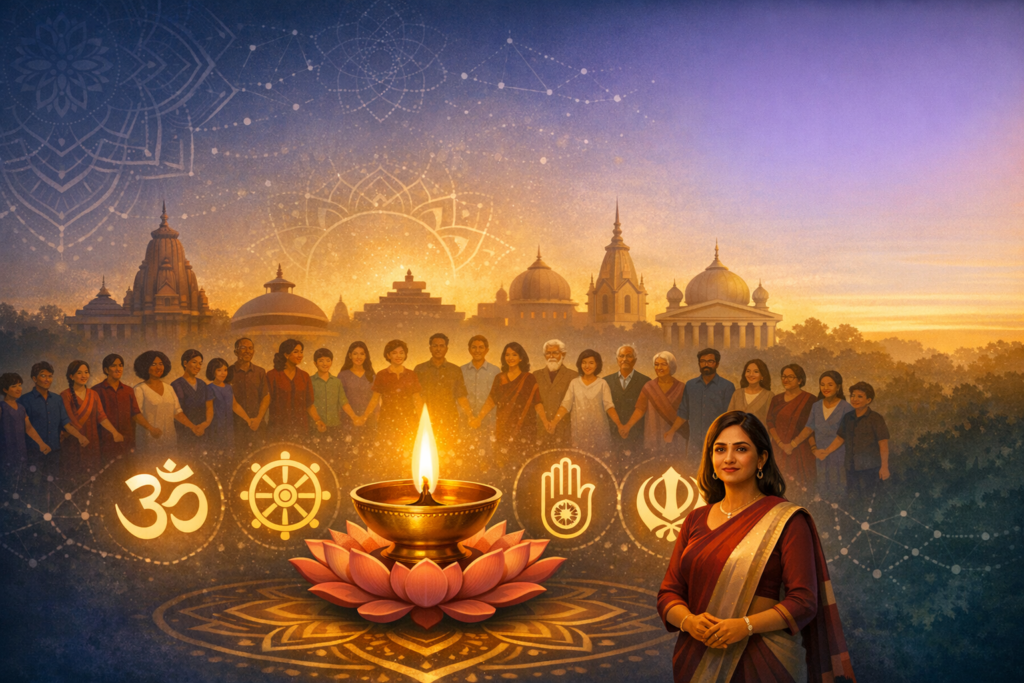
Community resonance and dharmic unity: While the Panchang is a Hindu calendrical system, its lunar logic resonates across the dharmic family. Buddhist communities structure Uposatha around lunar phases; Jain communities align vratas and pratikraman cycles with Tithis; and Sikh heritage engages with both Nanakshahi and traditional lunisolar rhythms through historical observances and agrarian cycles. The shared attentiveness to the sky—Sun, Moon, seasons—encourages a felt unity that transcends sectarian boundaries, nurturing mutual respect, joint service, and compassionate living.
How to cross-check Nakshatra, Rashi, and Muhurat locally (step-by-step):
1) Confirm locality settings: Ensure correct city or latitude/longitude and time zone (including daylight saving adjustments, if applicable) in the Panchang resource being used.
2) Read Tithi at sunrise: Verify that Saptami is active at local sunrise on April 23, 2026. Note the Sashti end time in your local time; if living outside IST, convert 03:27 AM IST appropriately.
3) Derive Nakshatra and Chandra Rashi: Use a reliable Panchang or ephemeris that lists Moon longitude. Map that longitude to the 27 Nakshatras and 12 Rashis. If the Moon transits a boundary during the day, note the transition time relative to planned activities.
4) Compute Rahu Kalam, Yamaganda, Gulika: Obtain local sunrise and sunset; divide the interval into eight equal parts. For Thursday, mark the 6th part as Rahu Kalam, 7th as Yamaganda, and 3rd as Gulika. Avoid these windows for high-stakes beginnings.
5) Identify Abhijit Muhurat: Determine local solar noon (not necessarily 12:00 by the clock). Approximate a window of about ±24 minutes around it, subject to tradition-specific refinements.
6) Optional—use Choghadiya: Divide daytime and nighttime separately into eight parts. Choose Amrit, Shubh, and Labh for routine starts; avoid the remaining types for first-time undertakings.
Observance suggestions for Saptami: A gentle, sustainable routine helps embody the spirit of Shukla Paksha’s upward momentum. Preferred practices include:
• Surya arghya at sunrise with gratitude for vitality and discernment.
• Short recitations: Aditya Hridayam, Gayatri Mantra, or a Surya stotra from the tradition followed at home.
• Mind–breath alignment through pranayama and quiet meditation in Brahma Muhurta or early morning hours.
• Acts of service (seva) or charitable deeds directed toward community well-being and environmental care, honoring the shared dharmic value of compassion.
Planning cautions and best practices: For life events (marriage, namakarana, griha-pravesh, etc.), general indicators like Abhijit Muhurat are helpful but not substitutes for a tailored Muhurat that incorporates Janma Nakshatra, natal kundali, Desh–Kaal–Patra, and the specific samskara’s rules. When possible, consult a qualified practitioner for nuanced guidance. For daily decisions—meetings, study, travel—choosing windows that avoid Rahu Kalam and Yamaganda, and that align with supportive Nakshatra qualities, is a sound, tradition-consistent approach.
Key takeaways for April 23, 2026 (Thursday):
• Shukla Paksha Sashti ends at 03:27 AM (IST).
• Shukla Paksha Saptami is active at sunrise and governs the day’s observances in most regions.
• Use local sunrise/sunset to compute Rahu Kalam (Thursday = 6th daytime part), Yamaganda (Thursday = 7th), and Gulika (Thursday = 3rd).
• Abhijit Muhurat centers on local solar noon; Brahma Muhurta precedes sunrise by roughly 1 hour 36 minutes.
• Confirm Nakshatra and Chandra Rashi locally, as they vary by time and place; use them to fine-tune personal practice and planning.
In essence, this Saptami day offers a balanced canvas for devotion, thoughtful beginnings, and small, steady steps toward long-term aims. The Panchang’s astronomy-rooted structure enables precision without rigidity, allowing households, students, professionals, and communities across the dharmic spectrum to act with mindfulness, unity, and mutual respect.
Inspired by this post on Hindu Blog.