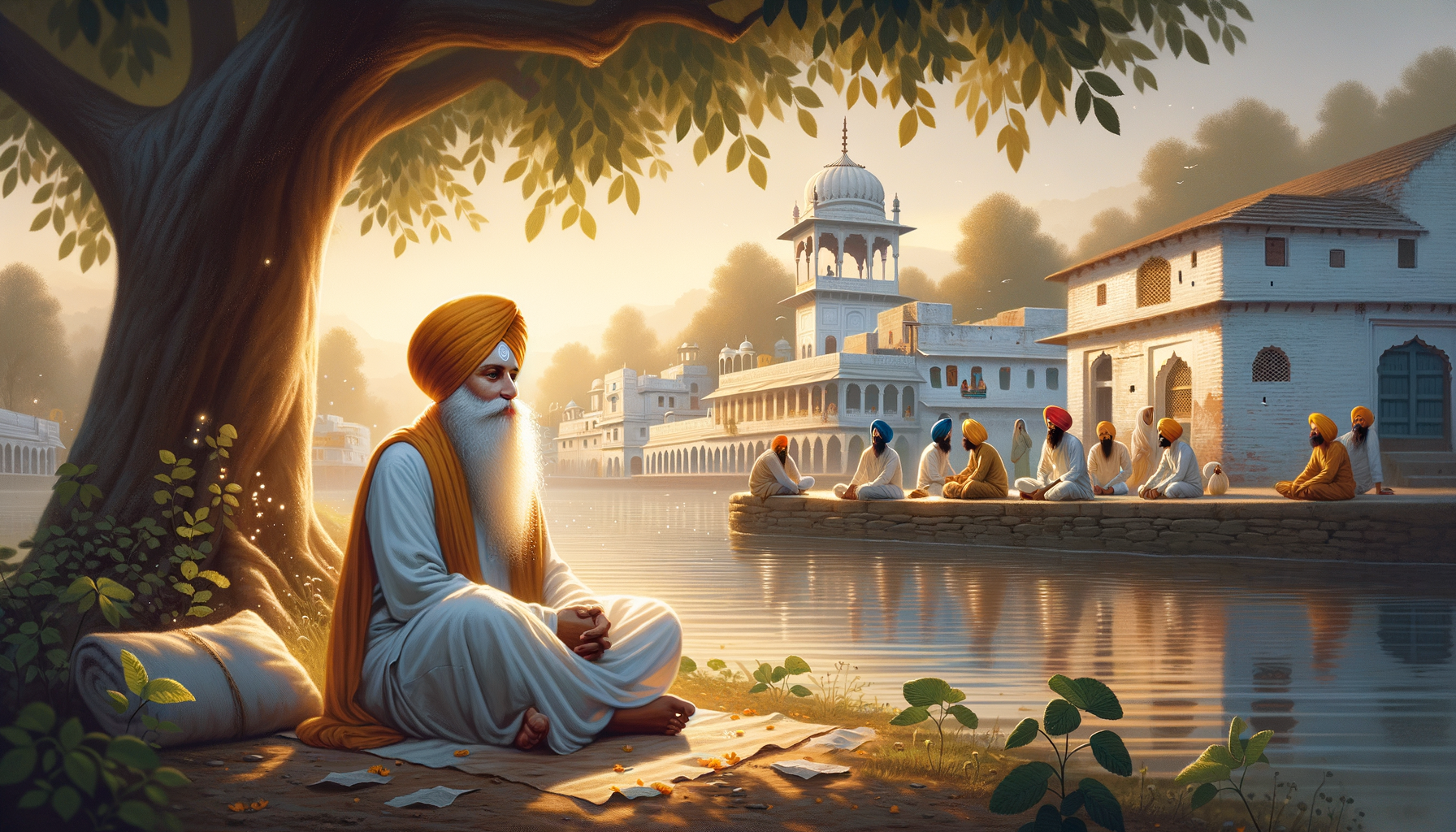
Baba Jaimal Singh, a distinguished figure of 19th-century India, is widely regarded as a Guru within the Radha Soami tradition and remembered for establishing a thriving spiritual center at Beas in Punjab. His life and work exemplify the continuity of the Guru–Shishya tradition and the shared ethical and contemplative values embraced across Hinduism, Buddhism, Jainism, and Sikhism.
Born in 1838 into a Sikh family, Jaimal Singh pursued inner realization with uncommon dedication from a young age. At 17, he was initiated by Shiv Dayal Singh, the founder of the Radha Soami tradition, a transformative moment that set the course of his spiritual journey and grounded his practice in disciplined meditation, humility, and service.
His most enduring institutional contribution was the establishment of a spiritual center at Beas, Punjab (often known as the Dera at Beas). Conceived as a space for sincere practice rather than sectarian identity, the Beas center welcomed earnest seekers and encouraged a life of introspection, ethical conduct, and devotionprinciples resonant with the broader dharmic heritage of the subcontinent.
Jaimal Singh’s teachings emphasized direct inner experience of the Divine through meditative discipline and moral clarity. He taught that spiritual progress unfolds through steady practice, compassionate living, and a respectful bond with the Guru, aligning with the longstanding Indian understanding that wisdom is transmitted through realized guides and earnest disciples. These tenets fostered harmony and mutual respect among followers, regardless of prior affiliation with Hindu, Buddhist, Jain, or Sikh paths.
Historically and spiritually, his legacy lies in nurturing a community shaped by devotion and inclusivity. The Beas center served not only as a locus of contemplative training in Punjab but also as a beacon for unity in a diverse religious landscape. By prioritizing inner realization over outward labels, his work reinforced a civilizational ethos where multiple spiritual journeys can flourish side by side.
For many contemporary readers navigating fast-changing times, Jaimal Singh’s focus on steady practice, compassion, and humility feels both relatable and practicable. It offers a clear, non-sectarian invitation to cultivate inner stillness while honoring the pluralism that defines India’s dharmic traditions. In this way, his 19th-century guidance continues to illuminate a modern path of unity, dignity, and spiritual growth.
Inspired by this post on Hindu Blog.