Empowering Safety: Self-Defence Training for Young Women in Pandharpur Inspires Hope

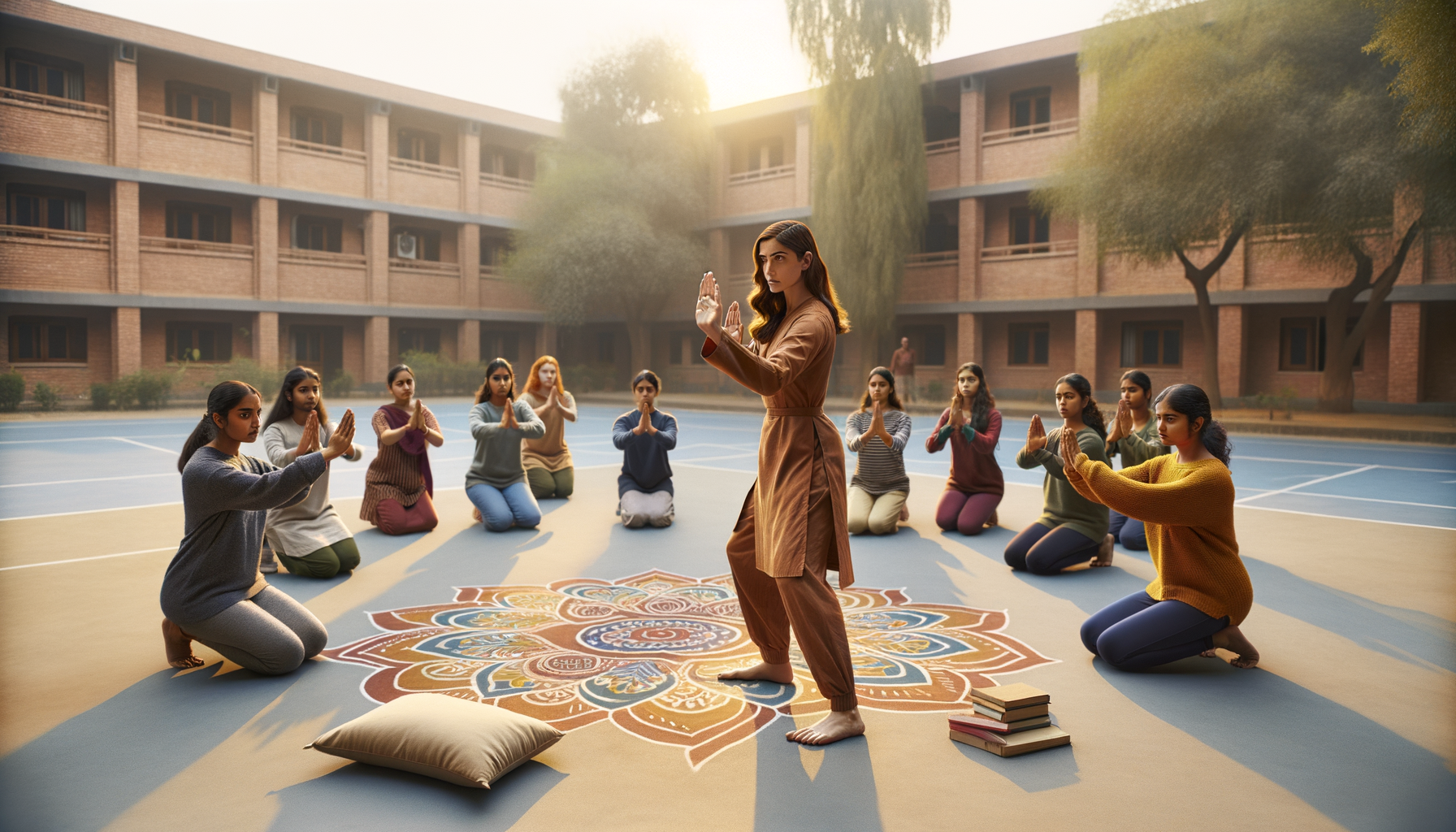
An instructor leads students through mindful movement in a school courtyard, encircling a colorful rangoli; kneeling learners mirror hand postures while books and a cushion rest nearby.

A self-defence training camp was organised at the girls’ hostel of New Satara College of Engineering and Management, Korti (Pandharpur) with the explicit aim of strengthening women’s safety and confidence. Coordinated by Hindu Janajagruti Samiti, the initiative drew a large participation of young women and focused on equipping them with practical skills for everyday security and resilience.

The structured curriculum integrated situational awareness, boundary-setting, basic defensive techniques, and guidance on seeking timely help, all delivered through demonstration, practice, and reflection. Instructors emphasised de-escalation, presence of mind, and the responsible use of learned techniques, ensuring participants developed confidence alongside a clear understanding of personal safety ethics.

Participants reported feeling more prepared to navigate public and campus spaces, noting that consistent practice improved their response time and calmness under pressure. Faculty members and hostel staff observed heightened attentiveness to safety protocols and peer support, indicating that the training fostered a culture of collective responsibility.

Community stakeholders highlighted that such programmes are most effective when they blend skill-building with values of compassion, courage, and disciplineprinciples shared across the dharmic traditions of Hinduism, Buddhism, Jainism, and Sikhism. In this spirit, the camp reinforced a unifying message: safeguarding the dignity and autonomy of young women strengthens the well-being of the entire community.

By situating self-defence within a broader framework of education, mentorship, and mutual respect, the Pandharpur camp serves as a replicable model for institutions across India. It demonstrates that women’s safety is not only a matter of technique but also of awareness, solidarity, and the shared commitment to create secure, inclusive learning environments.


Inspired by this post on Hindu Jagruti Samiti.


Graphic with an orange DONATE button and heart icons on a dark mandala background. Overlay text asks to support dharma-renaissance.org in reviving and sharing dharmic wisdom. Cultural Insights, Personal Reflections.

FAQs

What was the purpose of the self-defence training camp in Pandharpur?

The camp aimed to strengthen women’s safety and confidence at the girls’ hostel of New Satara College of Engineering and Management, Korti (Pandharpur). Coordinated by Hindu Janajagruti Samiti, it focused on practical skills for everyday security and resilience.

What did participants learn during the training?

The curriculum covered situational awareness, boundary-setting, basic defensive techniques, and guidance on seeking timely help. Instructors also emphasised de-escalation, presence of mind, and responsible use of learned techniques.

How did the self-defence programme affect participants?

Participants reported feeling more prepared to navigate public and campus spaces. The article notes that consistent practice improved response time and calmness under pressure.

What changes did faculty and hostel staff observe?

Faculty members and hostel staff observed greater attentiveness to safety protocols and stronger peer support. These responses suggested that the training encouraged a culture of collective responsibility.

Why does the article connect self-defence training with dharmic values?

Community stakeholders highlighted that such programmes work best when skill-building is paired with compassion, courage, and discipline. The article frames safeguarding the dignity and autonomy of young women as a responsibility that strengthens the whole community.

Can this Pandharpur self-defence camp model be replicated elsewhere?

The article presents the Pandharpur camp as a replicable model for institutions across India. Its approach combines education, mentorship, practical self-defence, awareness, solidarity, and mutual respect.