
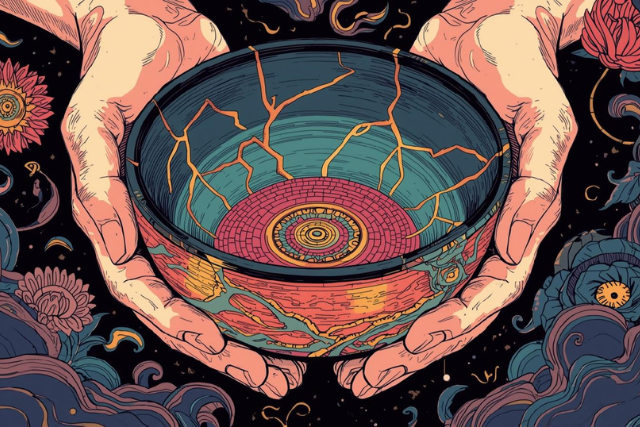
“The wound is the place where the Light enters you.” ~Rumi
On July 2, 2009, three words“He is gone”precipitated a profound rupture. The body registered the shock before cognition could assemble meaning: breath stalled, the stomach tightened, and ordinary time seemed to fracture. The person loved most did not return from a camping trip, and a once-stable world split into a before and an after.
In the aftermath, the heart felt shattered into innumerable fragments. Over fifteen years, the effort to reassemble a livable inner landscape unfolded as an ongoing healing journey, marked by grief, resilience, and cautious hope.
Prior study in holistic medicine, psychology, and human services did not inoculate against trauma. Chronic PTSD persisted despite conceptual knowledge, demonstrating a crucial lesson in mental health: information is valuable, yet the nervous system requires embodied, consistent care to restore safety and coherence.
Pregnancy introduced a decisive turning point. With a new life to protect, intention sharpened around healing and wholeness, not only for personal recovery but also to interrupt intergenerational patterns. Even so, a persistent question remained: “Who would I have been if I hadn’t been broken first?”
During early rebuilding, comparison amplified doubt. Observing others who seemed earlier on the path, it was easy to conclude that damage had set life too far back. Questions arose about worthiness to serve others while still navigating anxiety, depression, and a broken heart.
Gradually, a more accurate conclusion emerged: helping others does not require perfection or a scar-free past. What sustains service is authenticity, presence, and the willingness to meet each moment as it is. Worth does not vanish in brokenness; it can, in fact, become more visible through integrity and compassion.
The evidence of struggle often appeared in ordinary placesundone to-do lists, unfolded laundry, a cluttered car, overdraft fees, wrinkled clothes. Yet value remained intact beneath the surface. Allowing vulnerability made connection possible, and connection made healing more feasible. This is the practical arc of self-compassion: not erasing pain, but integrating it.
Imperfections ceased to appear as detours and became the path itself. Apparent roadblocks reassembled into essential lessons, quietly aligning with purpose. Post-traumatic growth often hides in this reframingwhere meaning coalesces around previously unendurable experience.
For a long period, life ran on shutdown mode; the magnitude of loss felt unprocessable. A shift began through conscious somatic breathwork, bodywork, yoga, and Ayurvedic restorative practicesmodalities that engage the mind-body connection. These practices nurtured vulnerable parts, reduced shame, and transformed secrecy into strength and relational wisdom. In time, pain transitioned from something carried to something consciously transformedcore somatic healing at work.
The sentence “he is gone” once implied the end of one life as well. With distance and integration, a different truth stands out: loss, scars, and struggle do not erase value; they reveal it. What matters most is not what departs, but the decision to rise with what remains.
Across the dharmic traditionsHinduism, Buddhism, Jainism, and Sikhismconvergent principles support this transformation. Ahimsa and aparigraha foster gentle, disciplined living; mindfulness stabilizes attention; seva cultivates meaning through service; simran and meditation deepen inner steadiness; and yoga with pranayama strengthens regulation of the nervous system. These shared frameworks form a unified, non-sectarian foundation for resilience, self-worth, and post-traumatic growth.
Practically, the integration looks simple and steady: breath awareness to ground the body, yoga and restorative practices to soothe the mind, mindful reflection to reorganize meaning, and compassionate action to reconnect with community. Such consistent care supports PTSD recovery, reduces anxiety and depression, and helps grief evolve into purpose.
The trajectory of this journey clarifies a universal question: So ask yourself, are you hiding scars or letting them light the way for someone else? The concealed wound may be the very lantern another person needs to move beyond secret pain.
Inspired by this post on Tiny Buddha.










