
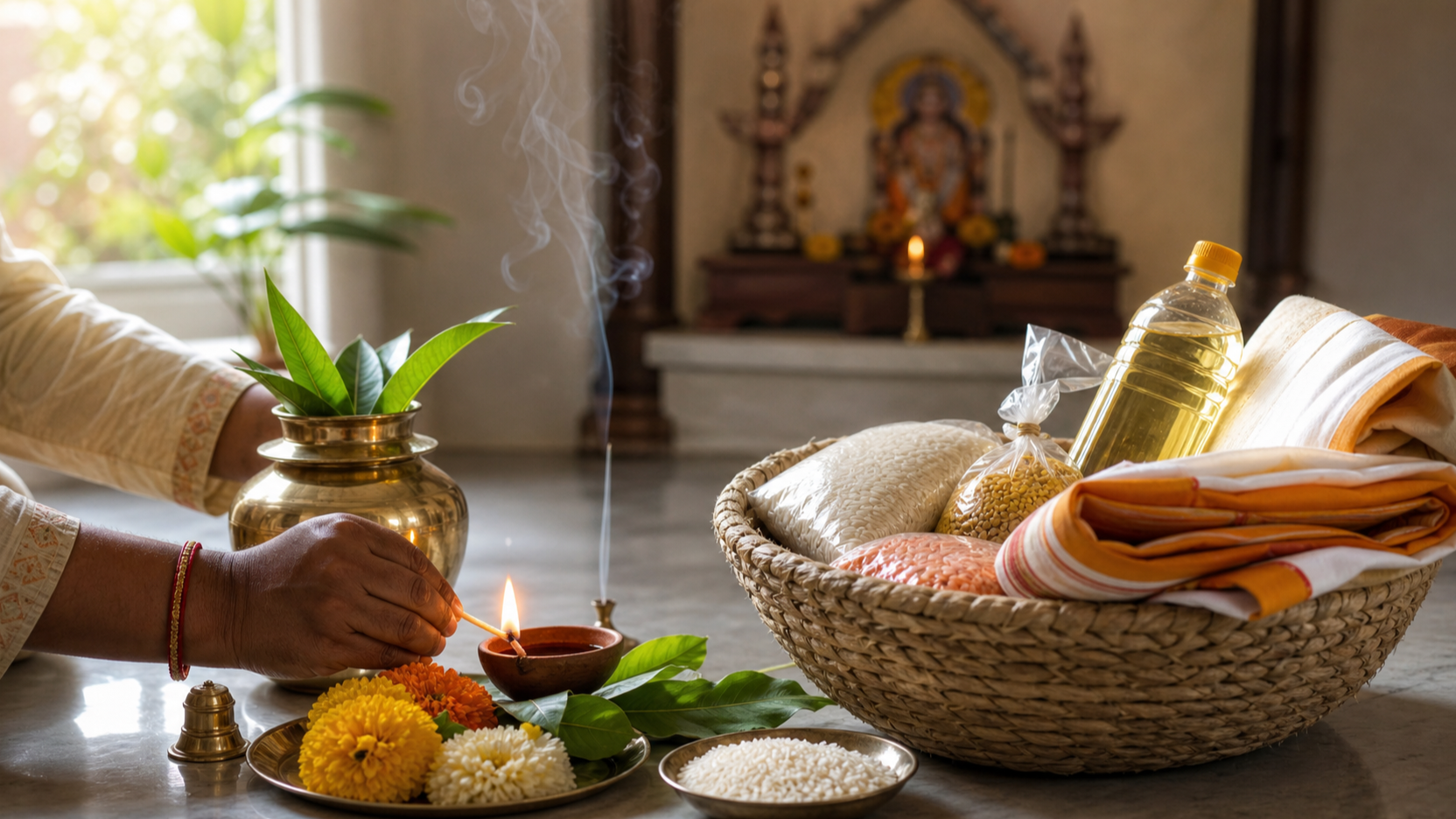
If Akshaya Tritiya is approaching and you are wondering whether you need to buy gold, arrange an elaborate puja, or locate a perfect muhurta, begin with a simpler question: what good action do you want to make durable?
A meaningful observance has three parts. Identify the correct local tithi, worship according to your capacity and sampradaya, and begin one dharmic commitment that will continue after the festival. Gold is optional. Follow-through is central.
Akshaya means more than material increase

Akshaya means that which does not diminish, while Tritiya means the third lunar day. Akshaya Tritiya falls on Shukla Paksha Tritiya in the month of Vaishakh. Its promise is traditionally expressed as enduring punya, or merit, arising from right action.
That meaning is easily reduced to a sales message: purchase something on this day and your wealth will keep growing. Dharma asks more of us. An auspicious tithi cannot make an unaffordable purchase prudent, turn greed into prosperity, or guarantee that every venture will succeed. It gives you a favorable occasion on which to align intention, action, and continuity.
The most fitting beginning is therefore not necessarily the largest one. It is the one you can keep nourishing. A first contribution to a scholarship fund may be more faithful to the day than an ornament bought on debt. The first page of a serious course of study may matter more than a ceremonial announcement that is forgotten within a week. A sincere attempt at reconciliation may carry more dharmic weight than a public display.
Test your proposed action with four questions. Is it ethically sound? Can you sustain it? Does it benefit someone beyond your own status? Will you know whether you continued it? If the answers are clear, you have found a practical expression of akshaya.
This is also why the festival’s traditional narratives emphasize continuity rather than instant gain. Associations with the Akshaya Patra evoke nourishment that does not fail. The tradition of Vyasa beginning the Mahabharata dictation to Ganesha points toward disciplined intellectual labor. The memory of Kubera receiving prosperity under Lakshmi’s grace places wealth within a sacred moral order. These accounts vary across regions and lineages, but their practical direction is consistent: receive grace by becoming capable of responsible action.
Choose the date by local tithi, not an Indian calendar screenshot

A tithi is not a midnight-to-midnight date. It is determined by the changing angular relationship between the Sun and Moon. Each tithi covers 12 degrees; Shukla Tritiya runs from 24 to 36 degrees of separation after the new moon. Its boundaries can therefore fall at any civil time.
This distinction matters most when you live outside Bharat. The festival may appear on one Gregorian date in India and another in Toronto, London, Singapore, or California. Copying a date from a message sent by relatives can place your observance outside the local tithi.
- Use a location-aware panchang. Set it to the city where you will actually observe the festival, not to your birthplace or an Indian reference city.
- Check which civil date carries Tritiya at local sunrise. The customary rule is to observe Akshaya Tritiya when Vaishakh Shukla Tritiya prevails at your local sunrise.
- Note the tithi’s ending time. If you want to time a sankalpa, daana, purchase, or beginning more precisely, complete it while Tritiya remains in effect.
- Resolve ambiguity locally. When two panchangs differ, or your family follows a particular sampradaya, check the calendar used by your temple or consult a knowledgeable acharya rather than averaging the published times.
North Indian Purnimanta calendars and the Amanta calendars common in much of South India reckon the lunar month from different endpoints. That can change how surrounding dates are labeled, but communities still converge on Vaishakh Shukla Tritiya for this observance. The apparent disagreement is usually calendrical, not theological.
Akshaya Tritiya is counted among the Sade-Teen Muhurat, the especially auspicious periods in the Hindu calendar. It is treated as nitya-shubha, so families commonly begin studies, ventures, weddings, griha pravesh, charitable projects, or account books without searching for an elaborate secondary muhurta. Some households still examine Choghadiya, Tarabalam, or local custom for additional assurance.
Natural auspiciousness does not cancel practical responsibility. A marriage still requires consent and preparation. A business still requires honest accounts and sound terms. A house entry still requires a safe, habitable home. If ashoucha connected with a birth or death applies in your household, follow your family’s dharma-shastra practice instead of assuming the festival overrides it.
Jyotisha traditions often explain the day’s quality through the Sun in Mesha and the Moon in Vrishabha, their exaltation signs, sometimes with Rohini Nakshatra present. Treat this as an interpretation of the festival’s shubha character, not as a substitute for checking the actual local tithi.
A home observance you can adapt without losing its center
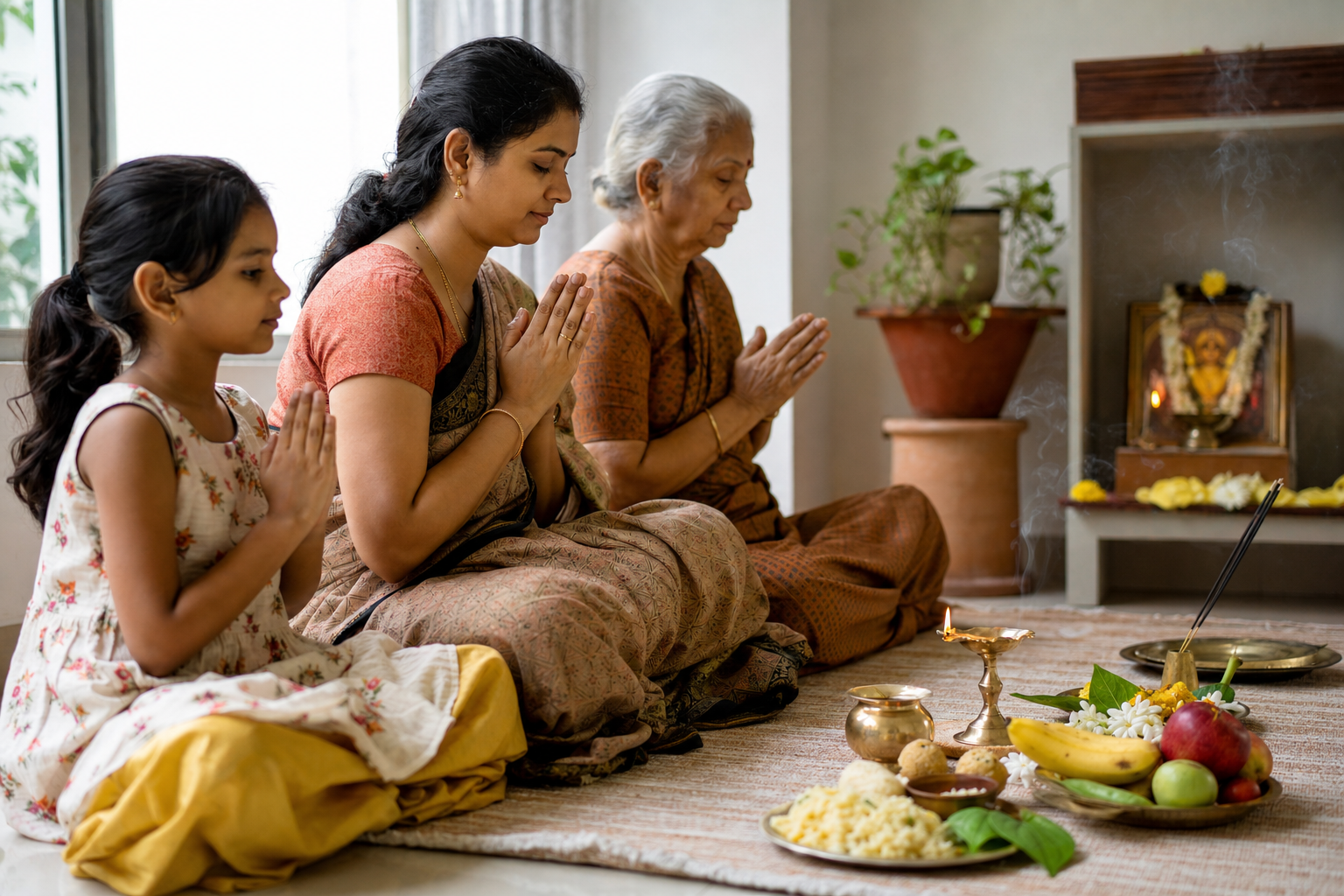
Your observance can be concise or elaborate. Its integrity comes from attention, sankalpa, worship, daana, and continuation. Do not let the absence of special ingredients or a large shrine become an excuse to do nothing.
- Begin with snana and a settled space. Bathe, wear clean clothing, prepare the place of worship, and remove avoidable distractions. The purpose is to mark a transition from routine activity to deliberate observance.
- State a specific sankalpa. Name Vaishakh, Shukla Paksha, and Tritiya according to your practice. Then name the action you are beginning. Replace a vague wish for prosperity with a clear resolve such as supporting one student’s education, beginning regular Gita study, saving without waste, planting and caring for a tree, or repairing a strained relationship.
- Offer puja according to your capacity. Vishnu and Lakshmi worship is customary, using the simpler Panchopachara or fuller Shodashopachara form familiar to your household. If your family follows another established deity or sampradaya-centered practice, preserve that continuity.
- Choose one recitation and attend to it fully. Traditional choices include Vishnu Sahasranama, Lakshmi Ashtottara Shatanamavali, Bhagavad-Gita passages, or selected portions of Srimad-Bhagavatam. One attentive recitation is better than several hurried ones.
- Add japa, dhyana, Tulasi puja, or deepa-daana. Select practices you already understand, or receive guidance before adopting unfamiliar ritual details. The day is suited to deepening discipline, not collecting techniques.
- Complete a concrete act of daana or seva. Decide the recipient before the day if possible. This prevents the charitable intention from remaining symbolic.
- Schedule the continuation immediately. Put the next study session, savings transfer, service day, donation, or reconciliation step on your calendar before you close the observance.
If time is limited, keep the essential sequence: make a truthful sankalpa, offer prayer or recitation, give something useful, and take the first repeatable step. Ritual scale should follow your circumstances; sincerity should not depend on scale.
A light upavasa or strictly sattvic food is common, but fasting is not a contest. If abstaining from food would be unsafe for you, choose simple sattvic meals and practice restraint in another form. The spiritual aim is clarity and self-command, not preventable harm.
Let daana lead, and keep prosperity under dharma
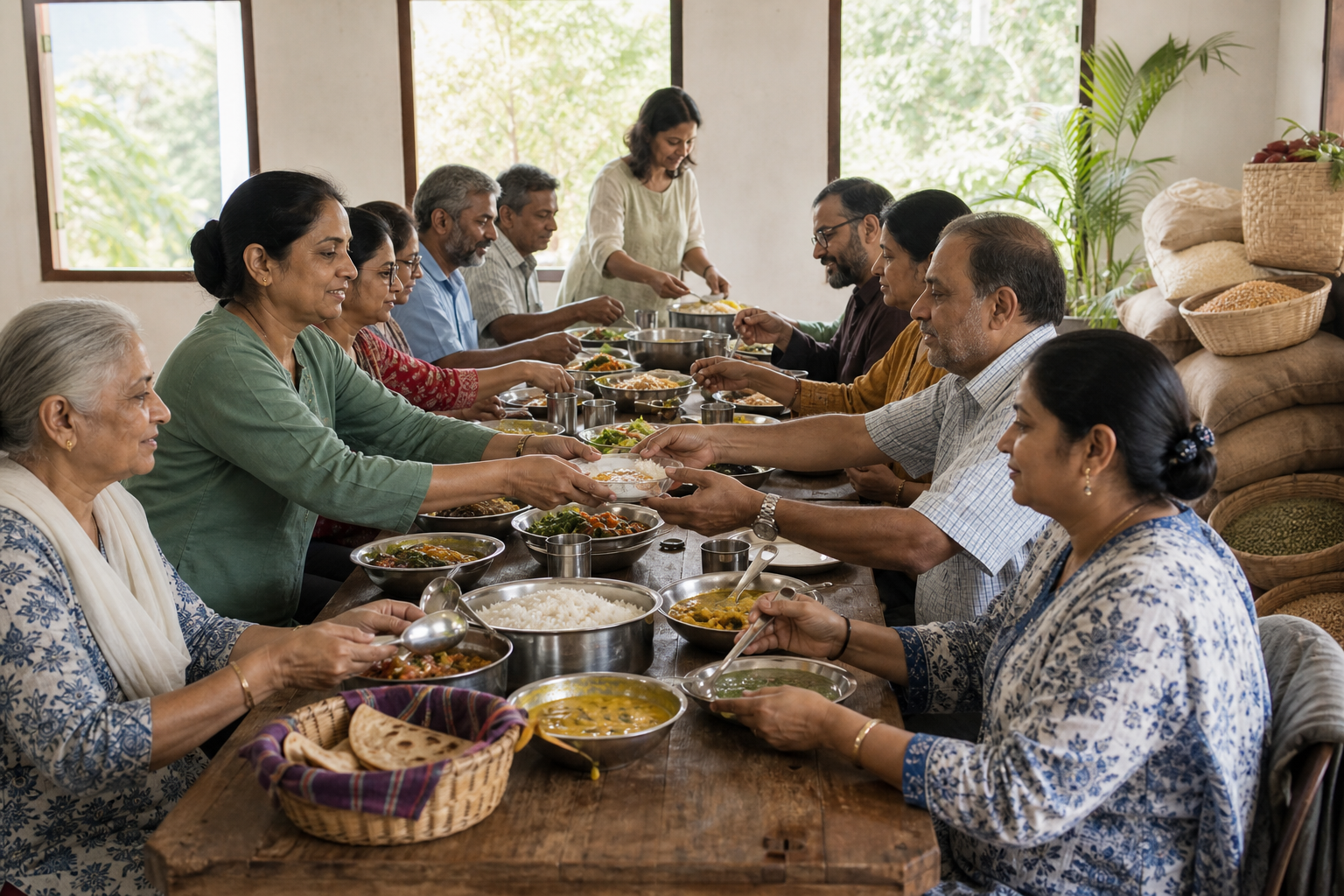
Choose a form of giving that meets an actual need
Classical forms associated with the day include anna-daana, jala-daana, vastra-daana, and vidya-daana: food, water, clothing, and learning. Their contemporary expressions can include community kitchens, clean-water work, scholarships, educational materials, tree planting, healthcare support, temple service, and preservation of cultural heritage.
Before giving, ask what the recipient can genuinely use. Food that is wasted, clothing that cannot be distributed, or a donation made without checking the institution’s work does not become effective merely because the date is auspicious. Match the gift to a verified need, keep a receipt or record where appropriate, and decide whether you can repeat the support.
You do not need a large budget to participate. You can serve at a community meal, help a student with a subject you know, provide water in a responsible way, support an artisan, tend a planted sapling, or give regular time to a temple or community institution. The important movement is from benevolent feeling to useful action.
If you buy gold, do not make auspiciousness an excuse for financial harm
Buying gold is a popular custom, but it is not the definition of Akshaya Tritiya and is not required for a complete observance. If a purchase fits your finances, favor hallmarked metal, transparent billing, and a seller whose terms you understand. Keep essential household needs, existing obligations, savings discipline, and daana ahead of ornament or display.
Do not borrow solely to participate in the custom. An auspicious tithi does not remove interest costs, guarantee investment returns, or make an unclear transaction safe. If buying gold would strain the household, begin a modest savings practice instead. The ethically earned and carefully preserved first coin expresses the day more honestly than a prestigious purchase that creates anxiety.
The same rule applies to a new venture. Write down the ethical boundaries before launch: how you will treat workers and customers, what forms of revenue you will refuse, how accounts will remain transparent, and what benefit the work should create. This turns a ceremonial beginning into an accountable dharmic one.
Recognize the wider Dharmic memory without flattening differences
Akshaya Tritiya carries several regional and sampradaya-specific memories. In Odisha, Ratha Anukula begins the construction of the chariots for Jagannath Rath Yatra, and the Chandan Yatra opens. Many peninsular communities observe Parashurama Jayanti, reflecting on the requirement that strength remain governed by dharma and directed toward service.
Jain observance remembers King Shreyans offering sugarcane juice to Rishabhanatha, or Adinatha, in the proper manner. Many practitioners conclude Varshi Tap on Akha Teej and break the fast with sugarcane juice. The episode makes correct giving inseparable from generosity: the donor needs discernment, and the recipient is never an instrument for the donor’s self-display.
Hindu daana, Jain dana, Buddhist traditions of giving, and Sikh seva are not interchangeable rituals, and not every community observes the same festival. They nevertheless disclose a recognizable civilizational grammar: restrain the ego, give competently, serve without humiliation, and allow merit to outlast the moment of giving. You honor Dharmic unity best by noticing that shared ethic while respecting each tradition’s distinct discipline.
Key takeaways for this Akshaya Tritiya
- Check your own location. Observe the civil date on which Vaishakh Shukla Tritiya prevails at local sunrise, using a reliable city-specific panchang.
- Do not confuse auspiciousness with guaranteed profit. The day favors dharmic beginnings; it does not remove financial, ethical, or practical consequences.
- Keep worship proportionate and focused. Snana, sankalpa, puja or recitation, daana, and a scheduled next step form a sound home observance.
- Put giving before display. Food, water, clothing, education, service, environmental care, and cultural preservation all give practical form to enduring merit.
- Treat gold as optional. Buy only within your means and with transparent terms; otherwise begin a responsible savings habit.
- Make the beginning measurable. Record when you will study again, give again, serve again, or take the next step toward reconciliation.
Before the day arrives, put three things in writing: your city’s tithi window, the person or institution you intend to help, and the date of your next action. On Akshaya Tritiya, complete the gift and begin the discipline. When that next date arrives and you keep the promise, akshaya has moved from an auspicious idea into your character.