
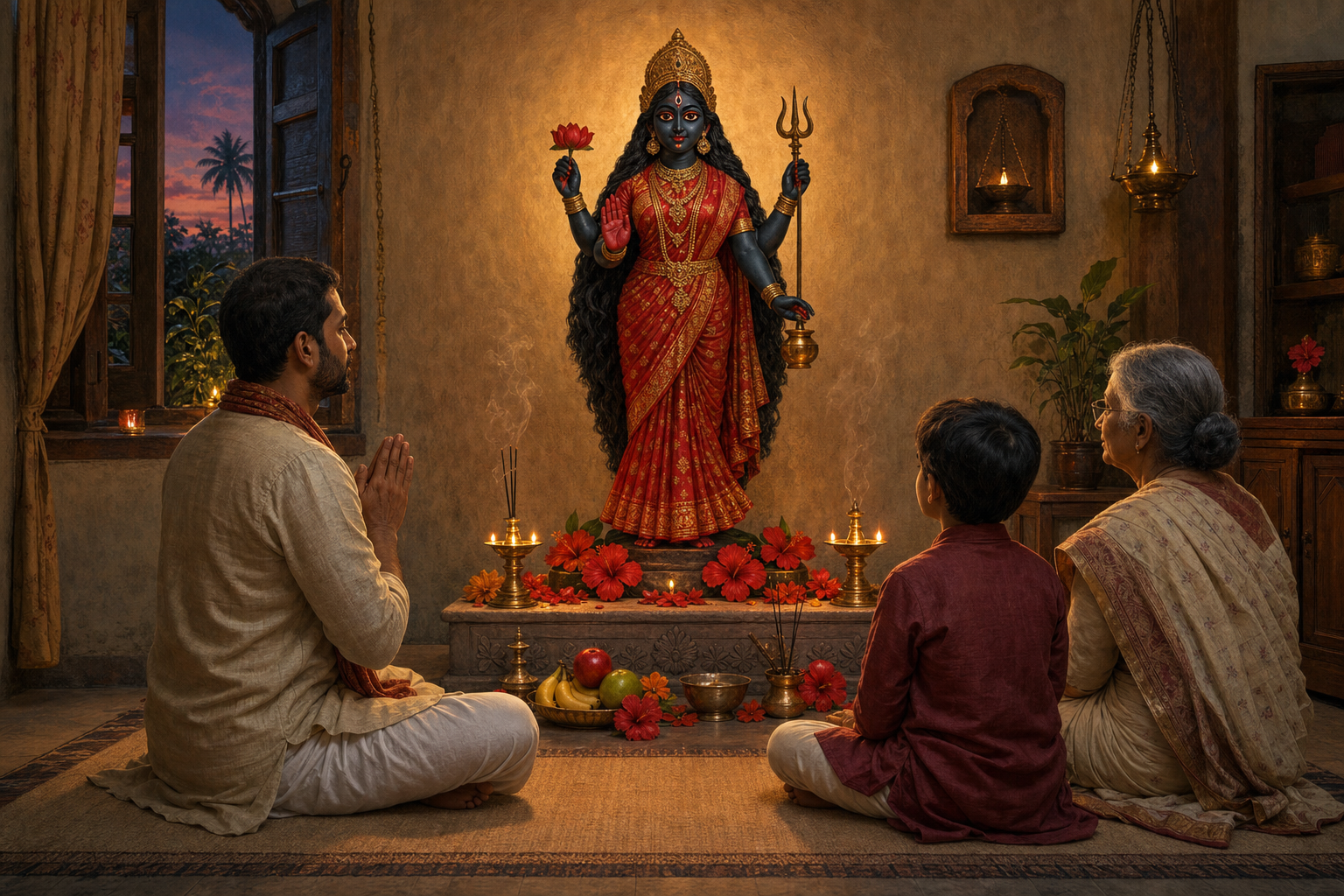
You may have encountered Raksha Kali while facing illness, family uncertainty, conflict, or a fear you cannot reason away. Her fierce form can feel immediately reassuring, yet it can also leave you wondering whether worship requires initiation, elaborate Tantra, or rituals that do not belong in an ordinary home.
You can approach her meaningfully without pretending to possess advanced knowledge. The sound starting point is a simple devotional practice, a clear ethical intention, and respect for the boundaries of your family or lineage. Raksha Kali protects dharma; her worship should therefore make your conduct steadier, more responsible, and less ruled by fear.
What makes a Raksha Kali tradition protective
The Sanskrit word raksha carries the sense of protection, refuge, guardianship, and safeguarding. Raksha Kali is the protective presence of Kali made personal: not merely force directed against an enemy, but divine shelter that helps a devotee remain truthful and capable when circumstances become unstable.
In many Shakta lineages, she is counted among the ekadasha, or eleven, manifestations of Kali. She is also closely associated with Dakshina Kali, whose power is commonly experienced as compassionate and boon-bestowing. Raksha Kali brings the guarding dimension of that grace into sharper focus. She watches over life and dharma while confronting fear, confusion, and destructive tendencies.
This does not produce one universally standardized Raksha Kali tradition. Particular names, images, offerings, and liturgical sequences can be local or lineage-based. If your family, temple, or guru-parampara preserves a specific form, follow that inherited discipline instead of trying to correct it with a generic checklist.
It also helps to distinguish emphasis from identity. Bhadrakali foregrounds auspicious benevolence. Chamunda is especially associated with the fierce removal of deeply rooted negativity. Raksha Kali foregrounds vigilant shelter. These are complementary expressions of Shakti, not rival deities competing for the same role.
Most importantly, protection is not a promise that difficulty will never reach you. In this tradition, raksha gives you the inner containment needed to meet difficulty without surrendering judgment, compassion, or duty. If a practice makes you more suspicious, vindictive, or careless about real-world dangers, it is moving away from that purpose.
How to read the fierce image without fearing it
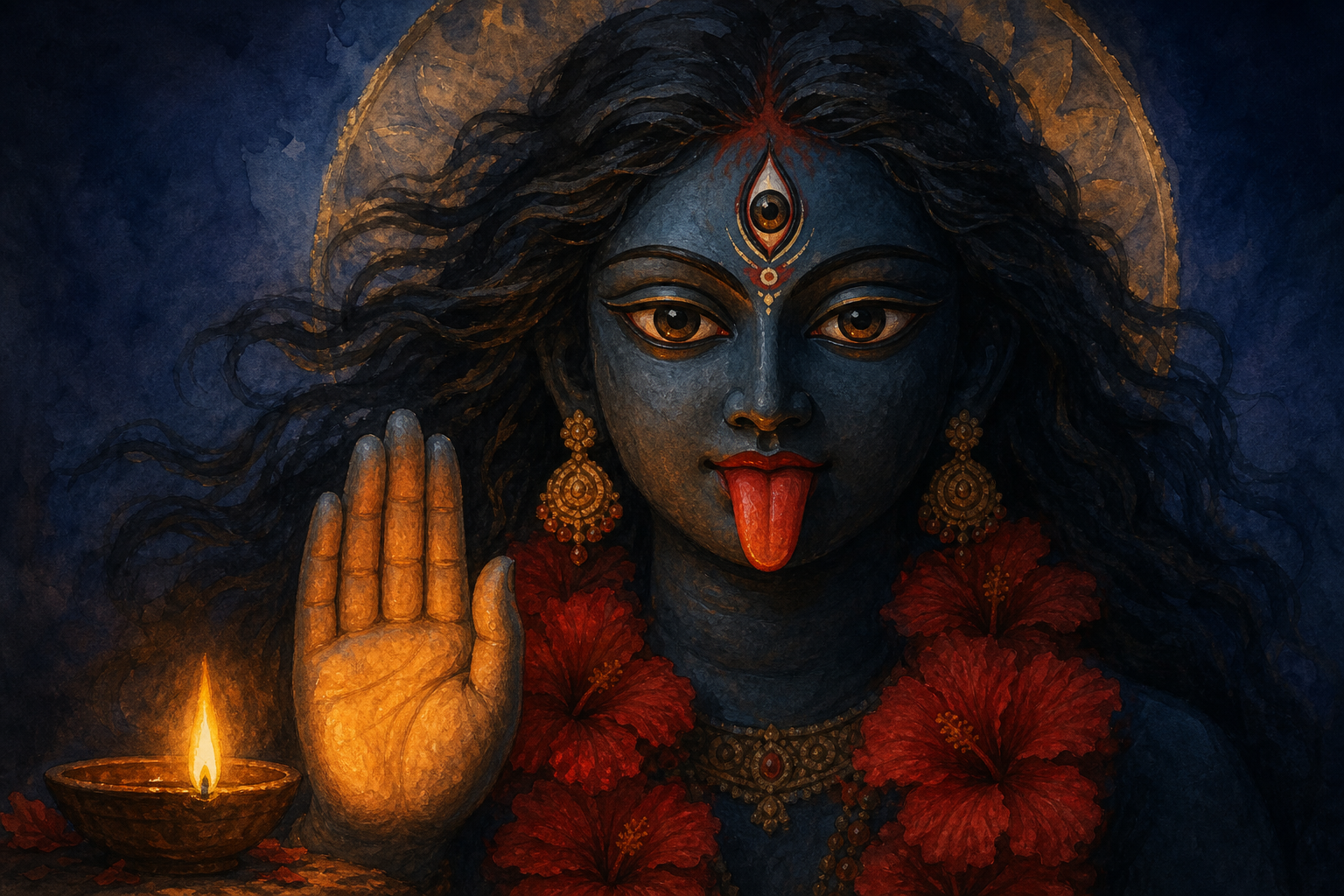
Raksha Kali’s iconography is fierce because protection must be able to face what the protected person fears. The image is not an invitation to imitate violence. It places danger, death, ego, and disorder inside a sacred field in which none of them has the final word.
- The dark or deep-blue body: Kali’s color signifies the immeasurable matrix of time and the field into which all forms return. Devotionally, it can be read as the capacity to absorb what overwhelms the individual mind.
- The abhaya mudra: The raised hand says, in effect, that fear need not govern your next action. In a protective image, this gesture deserves as much attention as the weapons.
- The varada mudra: The boon-giving hand presents protection as grace, not simply resistance. The devotee is being equipped to live well, not merely defended from harm.
- The khadga, or sword: The sword represents discrimination, the capacity to cut a truthful path through panic, self-deception, and attachment.
- The severed head: A traditional contemplative reading sees the obstinate ego and its ignorance being surrendered. It is not a command to direct literal violence at another person.
- The extended tongue: It can signify the consuming of egoic poison and fear. The disturbing element of the image becomes part of its protective work.
- The garland of heads and girdle of arms: Shakta interpretation can associate the garland with the Sanskrit sound-forms and the arms with relinquished karmic doership. Protection therefore includes purification of speech, thought, and action.
- The cremation ground: Smashana imagery places Kali at the boundary where familiar identities end. She is sovereign even there, so an ending can become the ground of transformation rather than abandonment.
Not every image will contain every feature. When you stand before one, begin with the hands and gaze. Find abhaya before dwelling on the severed head; find watchful care before interpreting ferocity. This prevents you from reducing Kali either to a frightening spectacle or to a harmless symbol stripped of transformative force.
A simple household practice that respects tradition
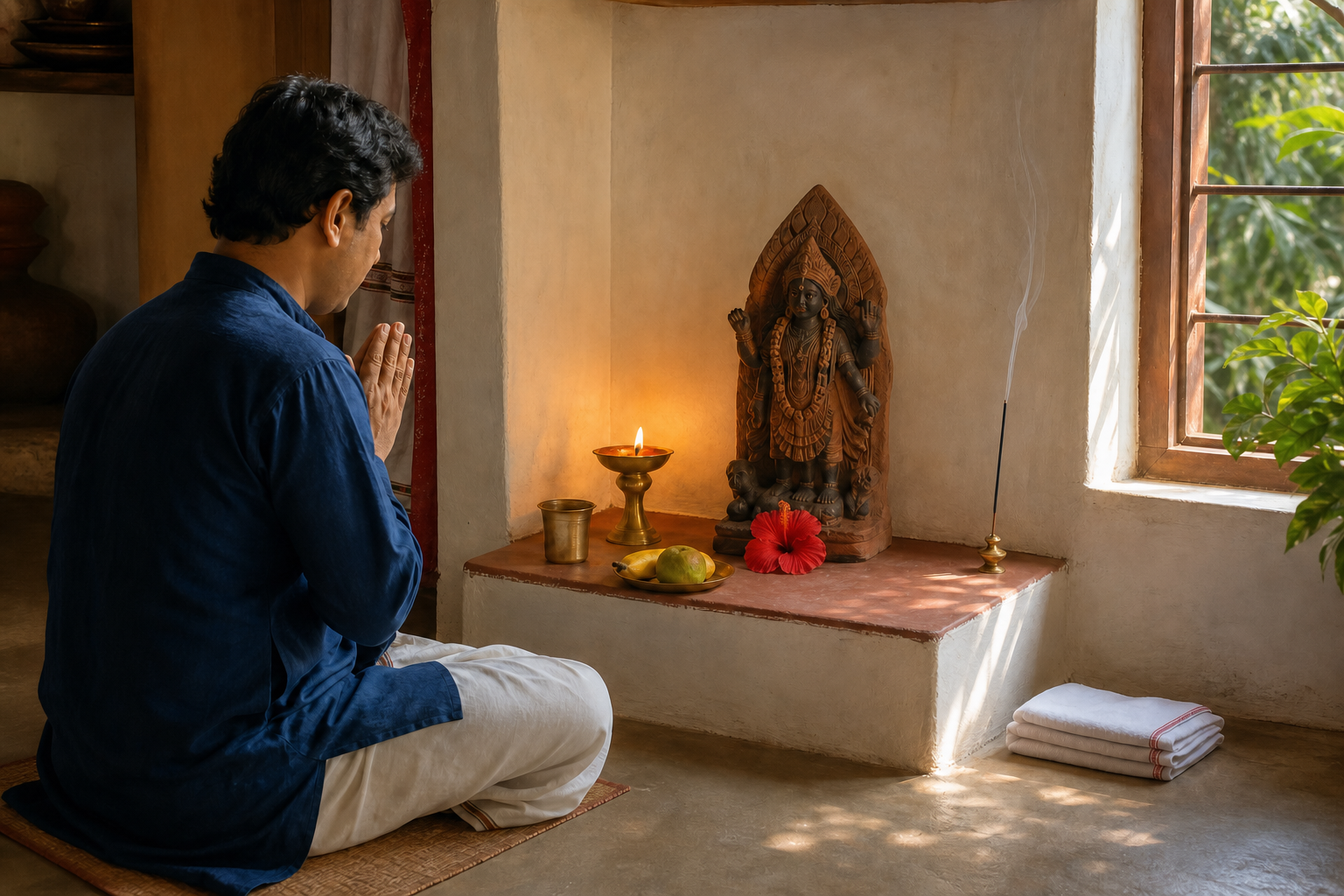
If you already have a prescribed family or initiatory practice, keep to it. If you do not, a modest Panchopachara puja offers a disciplined way to honour Raksha Kali without borrowing advanced ritual operations. Its five offerings are gandha, pushpa, dhupa, deepa, and naivedya.
- Gandha: fragrant paste, such as sandal paste, according to availability and household custom.
- Pushpa: flowers. Red hibiscus is especially associated with Kali worship, but a respectfully offered flower is better than anxious concern over obtaining a particular variety.
- Dhupa: incense, including guggul or sandal incense where customary.
- Deepa: a ghee or mustard-oil lamp. Place it on a stable surface, away from cloth, and never leave it unattended.
- Naivedya: fruit, sesame sweets, or a suitable cooked offering consistent with your tradition.
The following sequence is intentionally simple. Consistency and attention matter more here than ceremonial display.
- Prepare a clean place. Use an image already honoured in your household, or a respectful image of Kali. Keep the surface uncluttered and arrange the lamp so you can tend it safely.
- Settle yourself before making a request. Wash your hands, sit or stand quietly, and allow hurried breathing and reactive thoughts to ease. This is part of the practice, not wasted time before it.
- Make a dharmic sankalpa. Name what you seek to protect and why. A sound intention might concern clarity during a family difficulty, courage to fulfil a duty, the safety of a community, or strength to act without hatred. Avoid turning the sankalpa into a demand for another person’s humiliation.
- Invoke and offer. Present the five offerings in order, using your customary prayers if you have them. A household with fewer materials can offer what is available sincerely rather than treating abundance as proof of devotion.
- Use only a mantra appropriate to your level. Om Krim Kalikayai Namah is a concise general Kali invocation. Krim, also written Kreem, is widely revered as Kali’s transformative bija. Recite attentively for a manageable period; do not chase an impressive count at the expense of concentration.
- Sit in the meaning of abhaya. After japa, remain quiet long enough to identify the next responsible action that fear has been preventing. It might be seeking help, speaking truthfully, setting a boundary, apologizing, or attending to a neglected duty.
- Close respectfully. Offer gratitude, conclude according to household custom, and receive or share the naivedya as prasada. Carry the sankalpa into conduct instead of treating the end of puja as the end of protection.
A raksha-sutra may be tied after puja when that is part of your custom. Treat the consecrated thread as a reminder of the vow you made, not as permission to ignore ordinary precautions. Its most useful daily function is to interrupt forgetfulness: when you notice it, return to steadiness, truthful speech, and proportionate action.
Know where simple devotion ends and Tantra begins
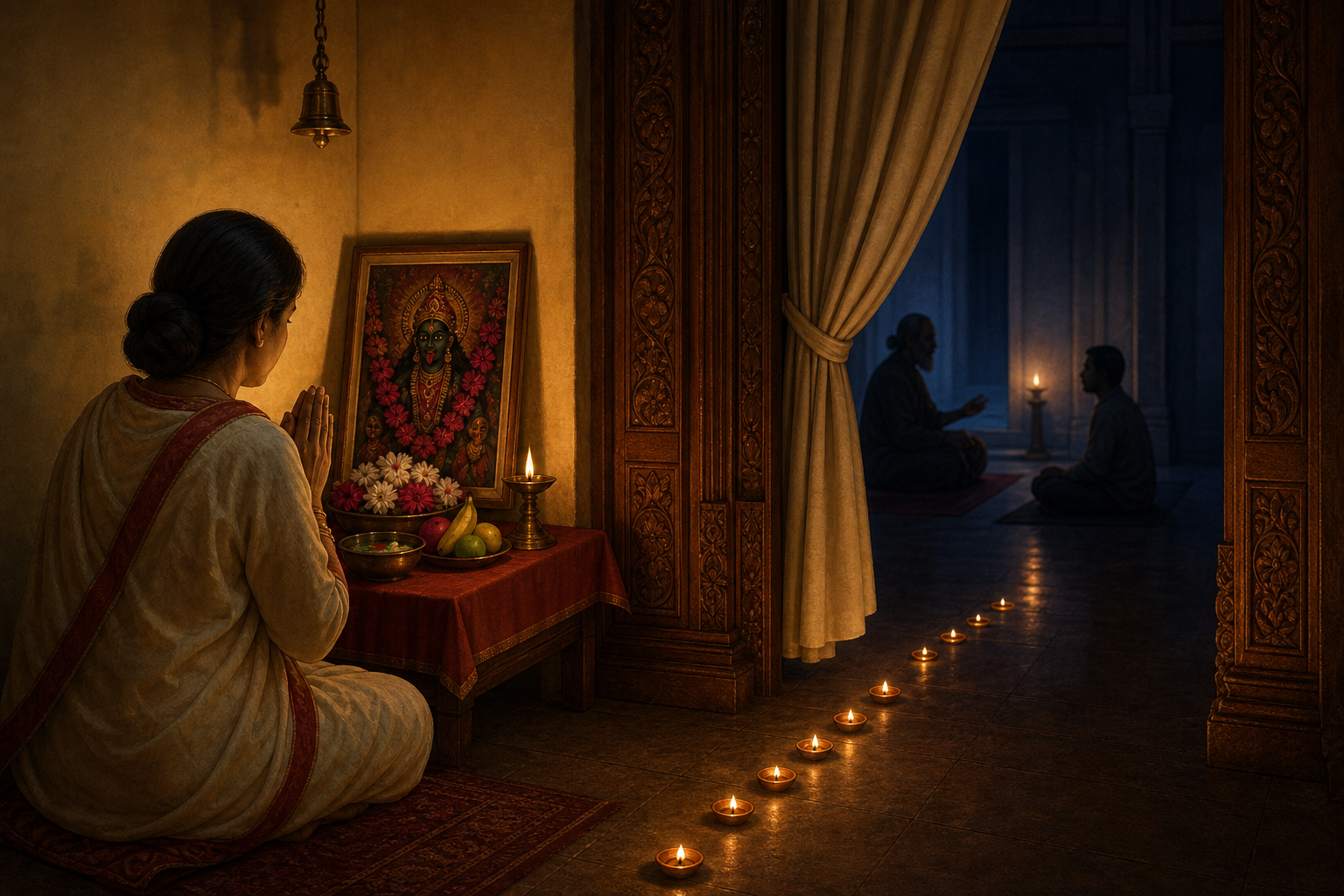
Practices that can remain modest
Remembrance, prayer, a basic Panchopachara offering, contemplation of abhaya, and a general Kali invocation can form a coherent household practice. A longer Shodashopachara puja expands the worship to sixteen services, including water offerings, arghya, achamana, cloth, and other acts of welcome. It can be learned carefully within a family or temple tradition rather than assembled from unrelated fragments.
Practices that call for competent guidance
Formal nyasa places mantras upon the body. Kavacha practice employs a ritual armour of mantra. Bhuta-shuddhi, prana-pratishtha, and consecrated yantra worship may also carry precise visualizations, sequences, ritual obligations, and lineage-specific meanings. These are not decorative additions to make a home puja feel more powerful. Advanced kavacha and nyasa traditions are best approached with guidance.
If you are drawn to them, ask a teacher what preparation is required, which mantra belongs to the practice, how mistakes are corrected, and what daily observance follows initiation. A trustworthy answer should give you clearer obligations, not vague promises of invulnerability or power over other people.
When protective worship is intensified
Amavasya, the new-moon night, is a traditional time for intensifying Kali worship. Kali Puja, observed on the Deepavali night in Bengal and other parts of eastern India, gives protective devotion a public and communal form. Collective sankalpas may extend from individual households to neighbourhoods and wider society.
Greater solemnity does not automatically mean greater complexity. If you have no lineage instruction for a new-moon observance, deepen the practice you already understand: prepare more attentively, reduce distraction, offer sincere japa, and add a concrete act of service. You do not need to imitate a temple’s ritual scale inside your home.
Protection becomes real through courage and compassion
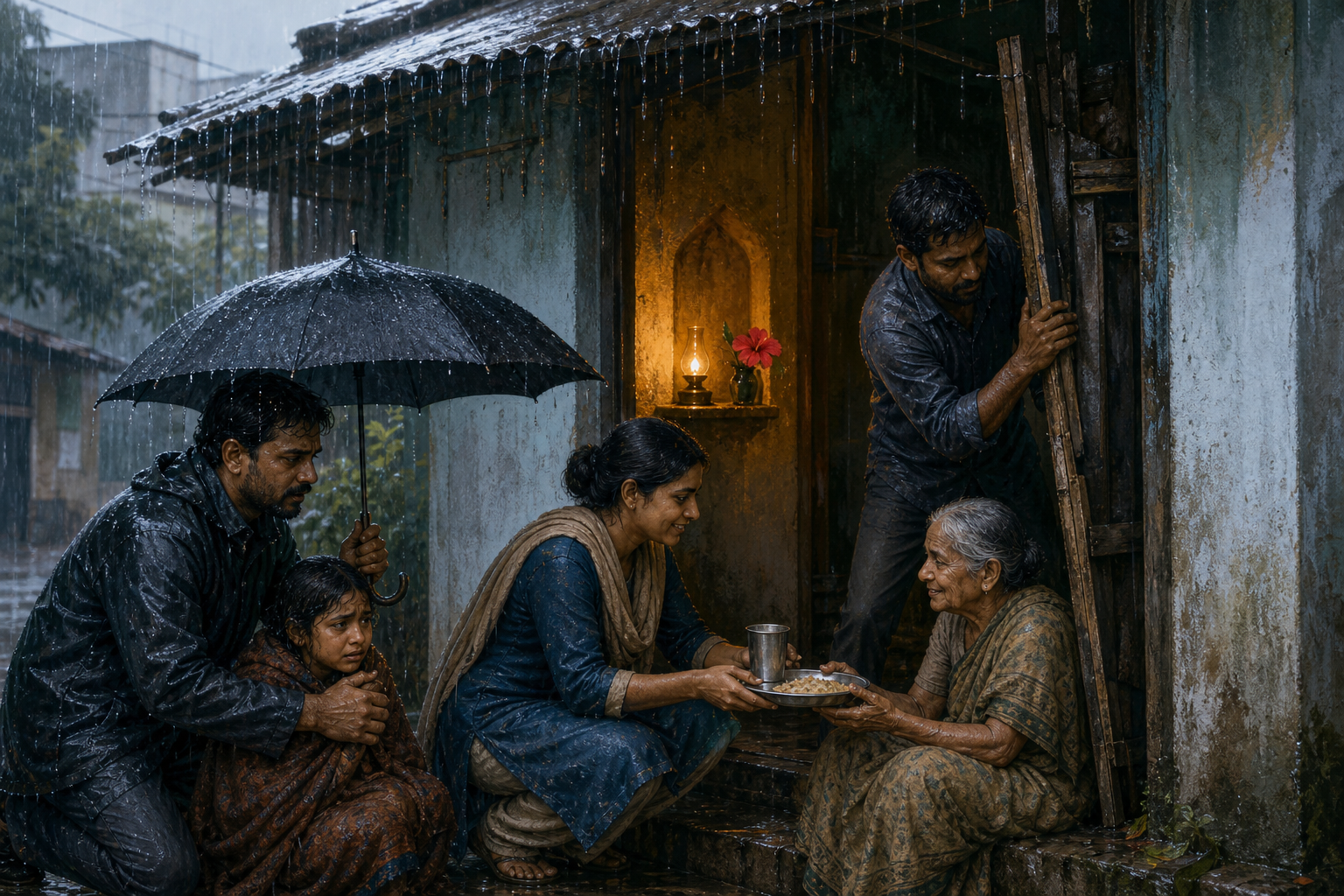
Raksha Kali traditions have been invoked during epidemics, crop failures, and periods of social turmoil. Their communal purpose is not to deny material danger. Worship helps prevent fear from overwhelming judgment, renews the will to support others, and places practical action within a sacred duty of care.
During illness, violence, or another immediate danger, obtain the appropriate medical, emergency, or professional help. Puja can steady the mind that must seek and use that help; it is not a substitute for treatment, safety planning, or competent intervention. The same principle applies at the community level: prayer for protection should strengthen mutual aid, not replace it.
The governing ethic is protective strength tempered by compassion. Kshatra without karuna can turn into domination; compassion without the courage to confront harm can become passivity. Raksha Kali holds the two together. Before calling an action protective, ask whether it is necessary, proportionate, directed toward safeguarding life or dharma, and free from cruelty for its own sake.
This gives the iconography an immediate use. The sword asks you to distinguish fact from panic. The severed head asks what ego is contributing to the conflict. The garland asks whether your words are truthful. Abhaya asks what you would do if fear did not control you. Varada asks how the strength you receive will benefit someone beyond yourself.
A shared Dharmic pattern without false equivalence
Other Dharmic traditions also join fierce imagery to the protection of the good. Vajrayana Buddhism recognizes Mahakala as a dharmapala. Jain devotional traditions honour protective yakshis such as Ambika and Padmavati. Chandi di Var uses a valorous Shakti idiom within Sikh tradition to kindle courage in the defence of justice and the vulnerable.
These figures should not be collapsed into interchangeable versions of one deity. Their metaphysics, liturgies, and religious settings differ. The useful comparison lies in the ethical pattern: fierceness becomes sacred when it serves truth, restraint, courage, and protection rather than hatred.
Key takeaways
- Raksha Kali emphasizes Kali’s vigilant, compassionate protection of life and dharma.
- Her weapons and fearsome ornaments are traditionally read as instruments of discrimination, release from ego, and mastery of fear, not as permission for aggression.
- A basic Panchopachara puja and a general Kali invocation provide a sound household starting point when no different family practice applies.
- Nyasa, kavacha, formal prana-pratishtha, and lineage-specific yantra or mantra work require instruction because their sequence and obligations matter.
- Amavasya and Kali Puja are important occasions for intensified worship, but greater devotion does not require improvised complexity.
- The test of protective worship is conduct: clearer judgment, proportionate response, practical care, and greater courage without cruelty.
At your next puja, make one precise protective vow and attach one action to it. Let the lamp illuminate a decision, the mantra steady its performance, and abhaya remain with you when it is time to act. That is how Raksha Kali’s shelter moves from the altar into daily dharma.