
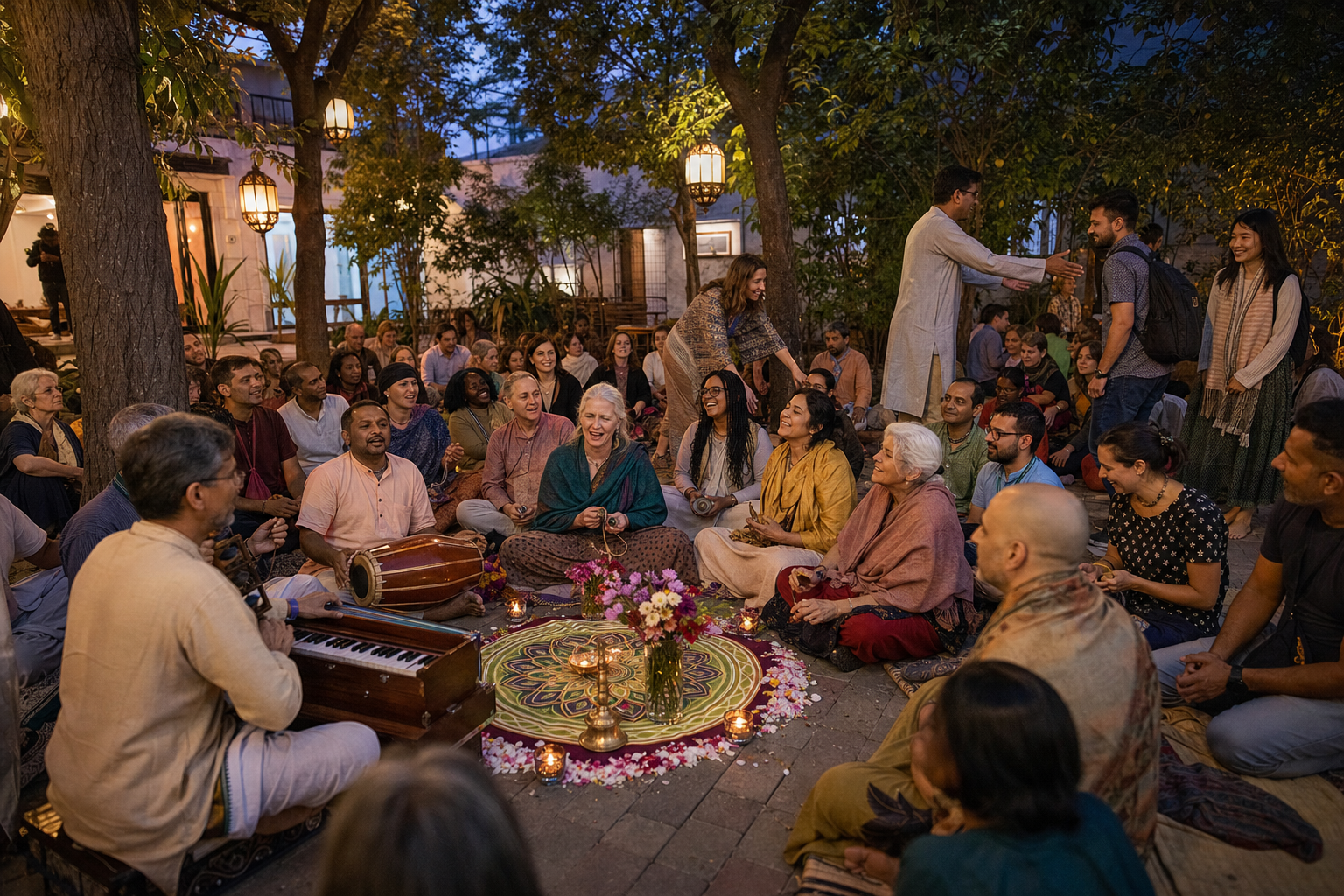
You may have a temple hall, instruments, volunteers, books, and a public program on the calendar. The harder question is whether a newcomer will know how to enter, participate, and continue after the sound fades.
Effective public bhakti has a clear movement: invitation, participation, and continuation. Miss the first, and people feel like outsiders. Miss the second, and devotion becomes a performance they merely watch. Miss the third, and even a moving evening leaves no path into practice.
Define the next practice before planning the program
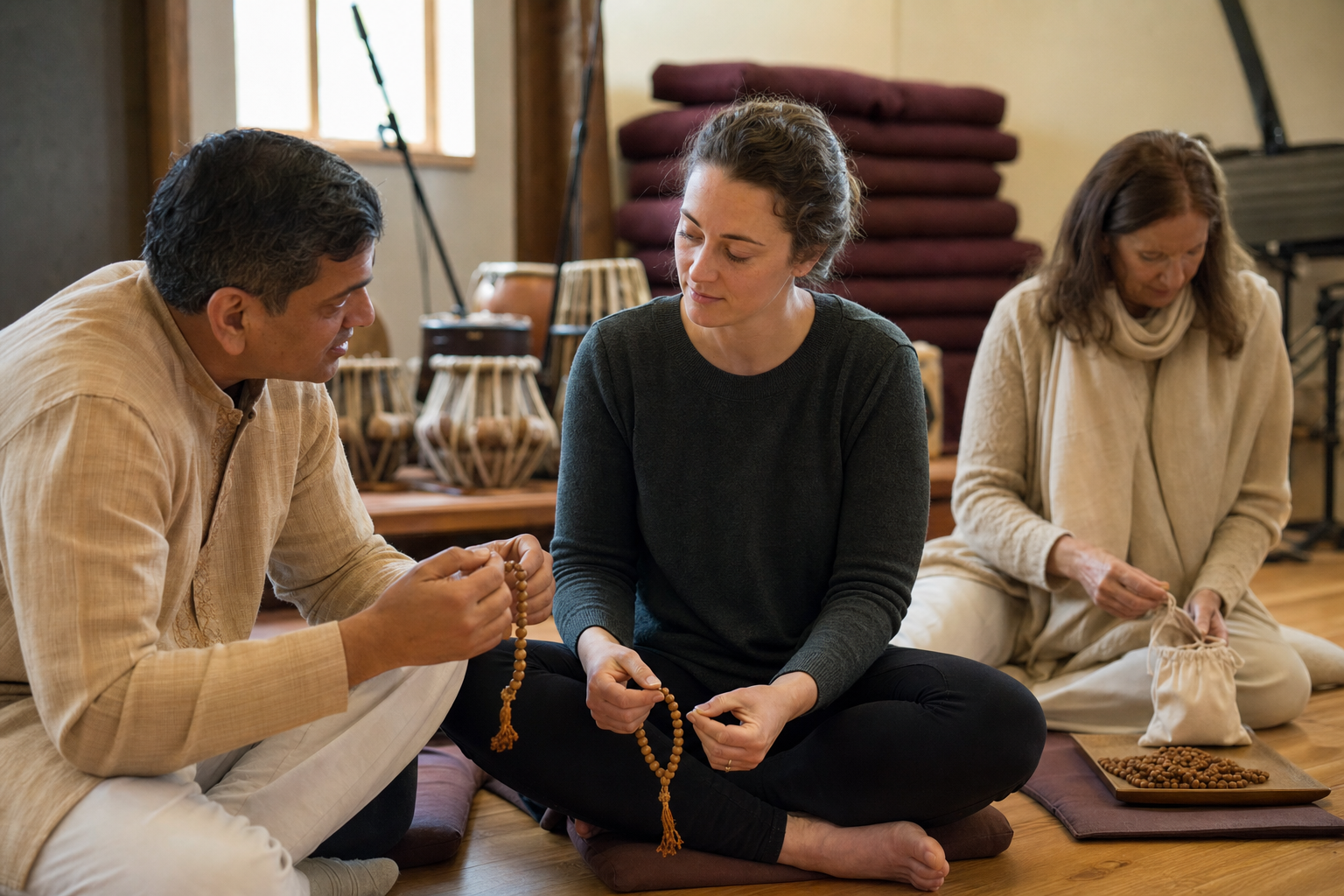
Begin with a sentence describing what a first-time visitor should be able to do when the program ends. Avoid goals such as raising awareness or creating a spiritual atmosphere. They sound worthy but do not tell your team what to build.
A usable outcome sounds more like this: a newcomer can join the central refrain, understand why it is being sung, receive prasadam or a text voluntarily, and know exactly where to return for further practice. That outcome turns every artistic and logistical choice into a testable decision.
- At the threshold: Can a person enter without already knowing temple etiquette, Sanskrit, or the people in the room?
- At the devotional center: Is the sacred practice unmistakable, or has it been buried beneath announcements, performance, and explanation?
- At the point of continuation: Is there a suitable next step for someone who wants to chant, read, ask questions, serve, or simply return?
Choose a central practice and let everything else support it. If the center is nama-sankirtana, music, lighting, introductions, and stage movement should help people hear and answer the Divine Names. If the center is scriptural discussion, the kirtan should prepare attention rather than consume the entire program. If the center is book outreach, conversation should help a person find a genuine point of entry rather than push the largest available volume.
Within Gaudiya Vaishnavism, nama-sankirtana is understood as the yuga-dharma, not as devotional decoration added to an otherwise secular event. That theological center can remain intact while the surrounding invitation becomes more accessible. The practical aim is to help people move from spectatorship to participation and from participation to practice.
Build a newcomer journey, not a sequence of performances
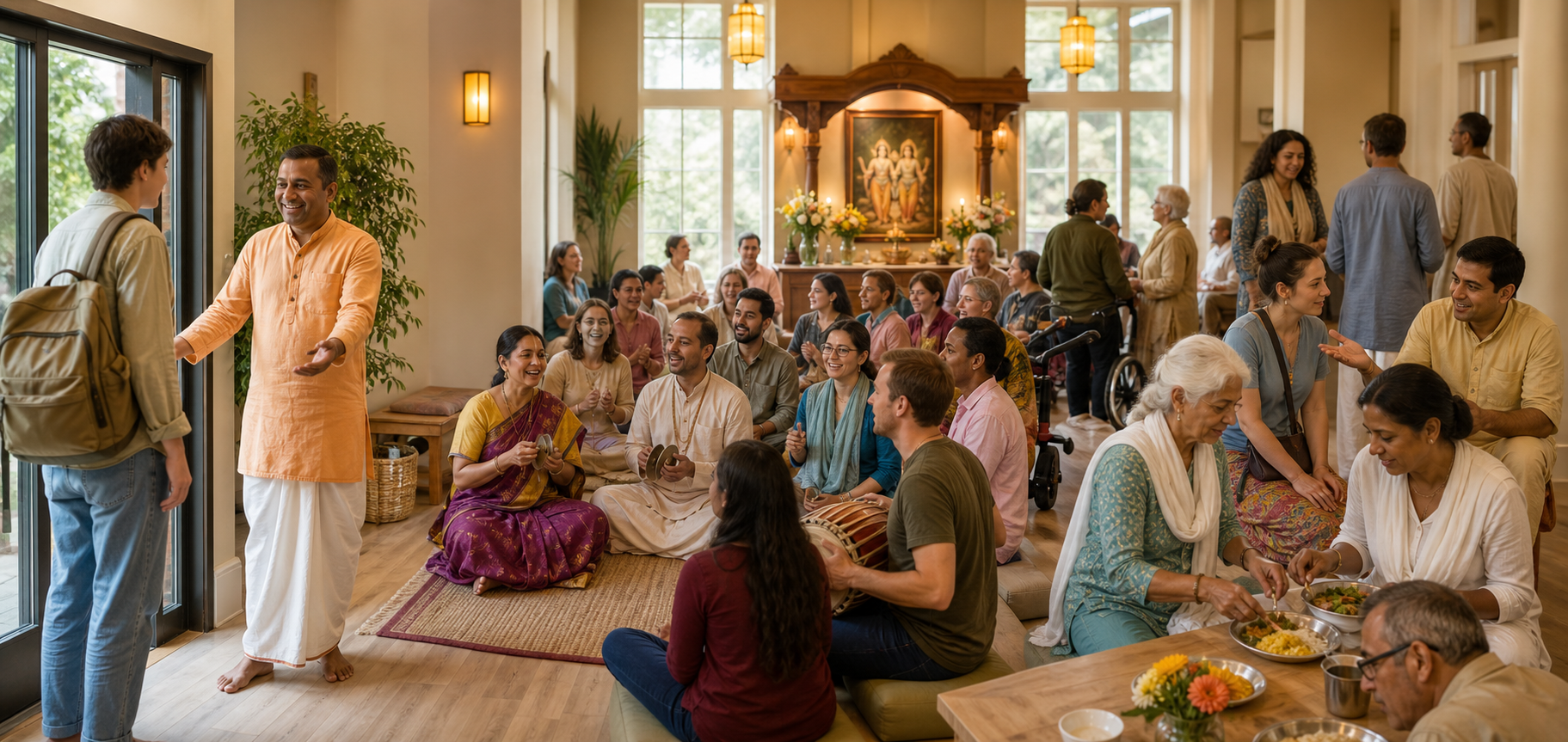
A regular devotee reads the room through habit. A newcomer cannot. Footwear, seating, bowing, arati, dancing, photography, prasadam, and the proper moment to ask a question may all be unclear. Silence from the host does not feel neutral; it makes the visitor guess.
Give the threshold to a named volunteer. At a temple, that person can explain footwear, seating, washrooms, photo boundaries, and how to receive prasadam. At a campus program, the same role can identify the refrain, introduce the tradition plainly, and tell visitors that listening is also welcome. At a street program, the threshold may be no more than eye contact followed by permission to speak.
A useful welcome is brief: Welcome. You may sit, clap, listen, or sing the repeated response. We will explain each ritual when it occurs, and you are welcome to ask questions afterward. This gives permission without demanding enthusiasm. Clear first-visit guidance on participation and temple conduct lowers a barrier that experienced practitioners can easily overlook.
Make call-and-response genuinely answerable
Call-and-response distributes devotional agency. The leader offers a phrase, but the congregation completes the act. That only works when the response is audible, learnable, and allowed enough space to return.
- Introduce the principal refrain before adding melodic variations.
- Keep the first responses within a range that untrained voices can follow.
- Let the congregation finish the phrase instead of singing over it.
- Place supporting instruments beneath the collective voice, not in competition with it.
- Use a vernacular line to frame meaning while keeping the sacred mantra intact.
- Treat a strong congregational response, rather than maximum volume or speed, as the musical peak.
Your visitors do not need a lecture on musicology, but your musicians should know what their choices are doing. Raga shapes devotional mood, while tala gives the group a common rhythmic ground. Familiar kirtan patterns include dadra in six beats and kaharva in eight. The useful question is not whether a rhythm is traditional or contemporary in isolation. Ask whether it steadies attention and makes the response easier to inhabit.
Explain ritual at the moment it becomes visible
If your program includes a shankha, garlanding, or arati, give each practice one plain sentence when it appears. The conch marks an auspicious beginning. A garland expresses reverence and hospitality. In arati, light and the senses are offered to the Divine. These are not stage effects; they are embodied theology expressed through sound, fragrance, gesture, and light.
Do not front-load every explanation. A long orientation delays encounter and asks the newcomer to remember details without context. Let the person see the act, hear its meaning, and then experience it. Reserve deeper theology for the discussion that follows.
Let hospitality complete the teaching
Prasadam gives devotion a domestic and communal form. Explain it accurately as vegetarian food first offered to Krishna, show people how it will be served, and make room for them to sit without being immediately approached for a commitment. A shared meal can carry the ethos of welcome more convincingly than another speech.
This is also where dharmic kinship can be acknowledged without erasing distinctions. Prasadam is not identical to Sikh langar or a Buddhist monastic meal, yet all can express hospitality, service, and nourishment within their respective traditions. Name the shared value and preserve the particular practice.
Adapt the form without disguising the devotional center
Contemporary instruments, vernacular lyrics, theater, comedy, and digital media can widen the doorway. They become a problem only when the doorway replaces the shrine: the audience remembers the production but cannot identify the practice, the teaching, or the next step.
Test any adaptation with direct questions:
- Can a newcomer tell that the program is a devotional offering rather than a spiritual-themed concert?
- Does the arrangement preserve the audibility and integrity of the mantra?
- Does the language explain relevance without making promises the tradition does not make?
- Can practitioners recognise the siddhanta beneath the accessible form?
- Does the performance environment embody sobriety, self-restraint, and respectful conduct?
- Would the same artistic choice still make sense if applause were removed?
Guitar, bass, drum kit, harmonium, mridanga, and kartals do not settle these questions by themselves. Arrangement does. A modern ensemble can serve sankirtana when the mantra remains central and the congregation retains a real voice. Traditional instrumentation can still fail when virtuosity turns everyone else into a passive audience.
Sobriety matters for the same reason. A disciplined environment makes the message credible before anyone explains it. Public intensity does not require intoxication, cynicism, or reckless conduct. The affinity between a Straight Edge ethic and dharmic commitments to restraint shows how clarity offstage can support integrity onstage.
Use humor to expose folly without humiliating people
Theater can make karma, distraction, desire, and ego visible in ordinary situations. A character who repeatedly checks a phone during japa communicates divided attention more quickly than an abstract lecture. A family scene about wanting the prestige of seva without accepting the work can reveal attachment while leaving everyone recognizable and human.
A reliable boundary is to direct humor toward the contradiction between a professed value and an actual habit. Do not make the Deity, a sacred name, an ethnic accent, another dharmic tradition, or an inexperienced visitor the object of ridicule. Hasya serves outreach when people recognise their own confusion without losing dignity.
End a skit with a choice or practice, not a scolding explanation. Let the distracted character put the phone down and join the refrain. Let the reluctant volunteer accept a modest service. The audience should see how dharma changes conduct, not merely hear that the character was wrong.
Practise dharmic solidarity without flattening traditions
Vaishnava kirtan, Sikh Shabad Kirtan, Buddhist sutra or mantra chanting, and Jain stavan demonstrate a broad dharmic trust in disciplined sound, memory, and communal practice. Ahimsa, seva, restraint, compassion, and contemplative attention provide honest ground for friendship.
Shared ground does not require saying that every practice means the same thing. Tell a Sikh visitor that the commitment to sung devotion and seva is familiar, then explain what Krishna-nama means in Gaudiya Vaishnavism. Welcome a Buddhist visitor’s experience of chanting without relabeling it as bhakti. Affirm a Jain visitor’s concern for ahimsa while describing the specific place of prasadam in Krishna devotion. Precision is a form of respect.
Support warmth with roles, consent, and disciplined logistics
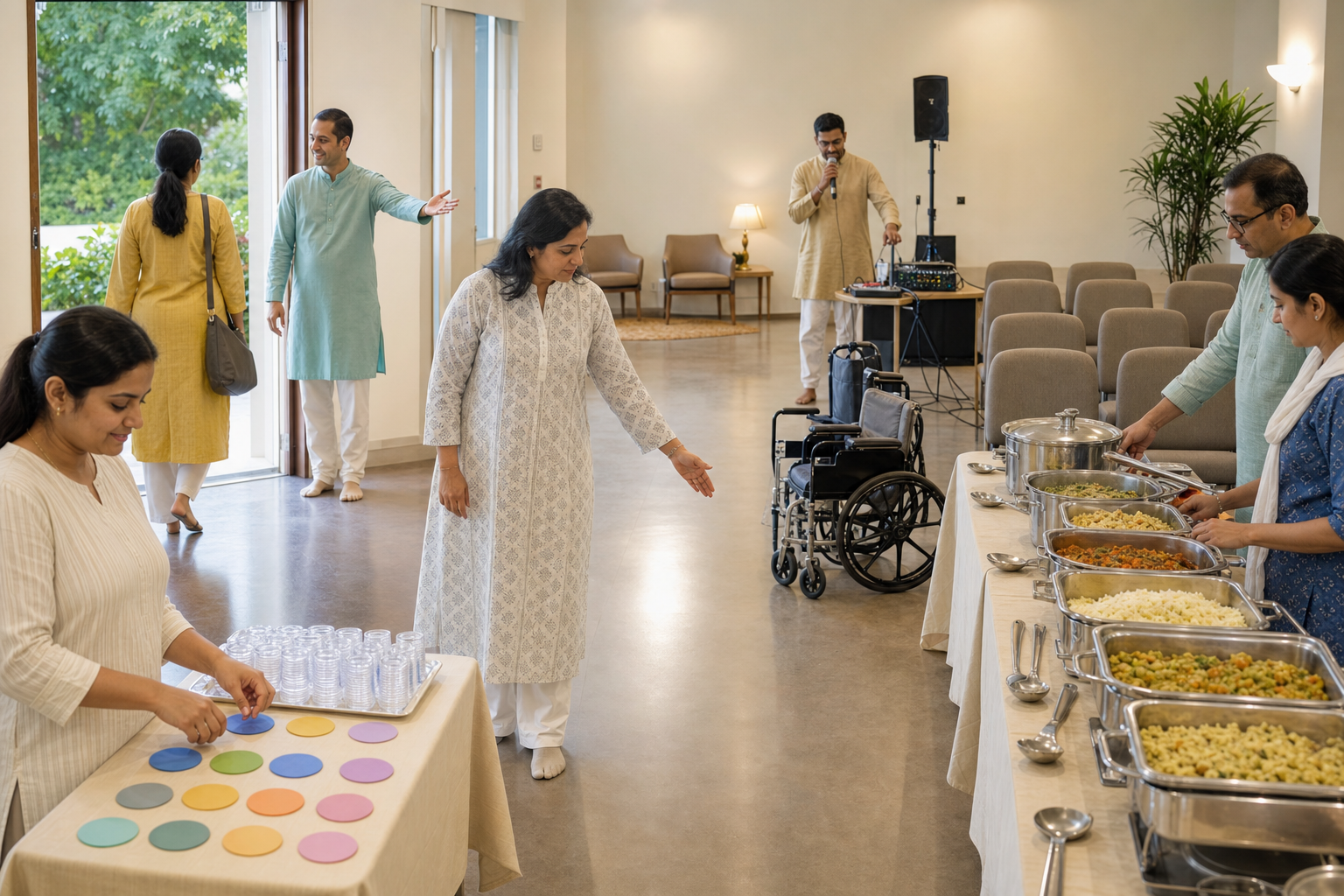
A devotional atmosphere can feel spontaneous while resting on careful service. When every task belongs vaguely to everyone, the most visible parts usually happen and the quiet responsibilities are missed. The instruments are ready, but nobody welcomes the hesitant visitor. Books are displayed, but nobody records what left the table. Photos are posted, but consent was never discussed.
| Service role | Clear responsibility | Warning sign |
|---|---|---|
| Threshold host | Welcome visitors and explain immediate etiquette | People remain at the door or copy others anxiously |
| Kirtan lead | Protect the mantra, mood, pace, and congregation’s response | The ensemble is audible but the congregation is not |
| Floor guide | Show lyrics, model clapping, and help participation begin | Only regular attendees know when to respond |
| Philosophy contact | Answer questions accurately and admit when follow-up is needed | Every volunteer gives a different doctrinal answer |
| Prasadam lead | Manage explanation, flow, seating, and respectful service | The meal feels rushed, confusing, or promotional |
| Book steward | Match texts to interest and reconcile inventory | Books move, but nobody knows which readers or needs they served |
| Documentation volunteer | Record the event within consent and sacred boundaries | Cameras obstruct worship or include people who did not agree |
Books should open pathways, not close transactions
Public book outreach works best when listening precedes recommendation. Ask what drew the person over: chanting, philosophy, meditation, ethics, Krishna, community, or a personal search. The answer tells you whether to offer a concise introduction, a deeper study volume, or information about a reading circle.
- Open with permission rather than an assumption of interest.
- Listen for the person’s actual question before naming a title.
- Describe what the text contains and the level of commitment it asks from a reader.
- State clearly whether the book is a gift or whether a donation is being requested.
- Accept refusal immediately and end the exchange with the same courtesy with which it began.
- Offer a place to discuss the text so that distribution can mature into study.
A layered catalog gives different readers suitable entry points. Concise works can introduce central ideas; substantial books can serve those ready for sustained study; complete scriptural sets may suit households, temples, libraries, or established groups. This graduated approach to text selection is more useful than treating every encounter as a contest to place the largest item.
Ethics and inventory discipline reinforce each other. Pre-sort titles by type, assign handoff responsibility, place reserve stock where it can be replenished, and reconcile the opening and closing counts. If several teams are active, record transfers instead of relying on memory. Transparent tallies express satya and also reveal which resources people actually chose.
Protect volunteers from the belief that exhaustion proves devotion. Rotate demanding roles, plan for weather and transport, keep reserve supplies accessible, and discuss bottlenecks after the program. Seva should cultivate steadiness and responsibility, not hide preventable disorder behind spiritual language.
Consent applies to attention, texts, and images
A public setting is not blanket consent. Do not block someone’s path, continue after a clear refusal, conceal the identity of the tradition, or treat emotional openness during kirtan as permission for a pressured commitment. Name the practice honestly and let interest remain voluntary.
Photography requires its own boundary. A person may gladly chant while declining to appear online. Mark camera-free areas when possible, tell participants when recording is underway, and preserve moments of worship that should not be converted into promotional material. Responsible digital sharing can extend access and preserve community memory, but privacy and sacred boundaries remain part of the service.
Measure what changes after the applause
Attendance, books distributed, meals served, and video views tell you about reach. They do not tell you whether people understood, participated freely, or found a sustainable practice. Keep the reach numbers, but place them beside evidence of movement.
- Participation: Compare time spent in congregational singing with time spent watching performers or listening to announcements.
- Refrain accessibility: Notice whether first-time visitors can rejoin the central response without continuous prompting.
- Question quality: Record recurring questions and whether they become more specific after the program.
- Continuation: Track voluntary return visits, reading-circle participation, interest in japa, and offers of seva.
- Audience breadth: Notice who participates comfortably and who remains at the edge because language, etiquette, or presentation was unclear.
- Service health: Review volunteer fatigue, stock discrepancies, congested areas, unanswered questions, and consent concerns.
Do not test visitors or turn satsanga into market research. Volunteers can observe the program, invite optional feedback, and record what people freely ask or choose. The aim is to improve hospitality and teaching, not to manufacture a favorable report.
Hold a short retrospective around concrete moments. Where did newcomers first join? Where did they stop responding? Which explanation was too dense? Which question appeared repeatedly? Did anyone feel pressured? Which role was overloaded? What next step did interested people actually choose? Improve the weakest transition before adding another attraction.
Key takeaways
- Define success as a voluntary next practice, not merely a large audience.
- Give a named host responsibility for the newcomer’s threshold experience.
- Keep the mantra and congregational response above musical display.
- Adapt instruments, language, humor, and media without disguising the tradition.
- Match books to real questions and maintain transparent inventory records.
- Measure participation, understanding, continuation, and service health alongside reach.
Before your next public program, write the visitor outcome and assign the threshold host. If those two things are still vague, more equipment or publicity will not solve the central problem. Make the doorway clear, keep bhakti at the center, and give each willing person a path they can actually walk after leaving.
References
- Dandavats – Singing Between the Lines: Ekendra Das on Spiritual Messaging in Krsna Conscious Music and Theater
- Dandavats – Inside ISKCON Korea’s Grand Welcome for Maharaj Ji: Kirtan Energy, Bhakti-Yoga, and Dharmic Unity
- Dandavats – Unprecedented ISKCON Sankirtan: Mahotsaha Das Sets 2026 World SKP Record with 5,294 Books