-
Padmavathi Srinivasa Kalyanam 2026: Sacred Tirumala Dates, Rituals, Darshan and Travel Guide

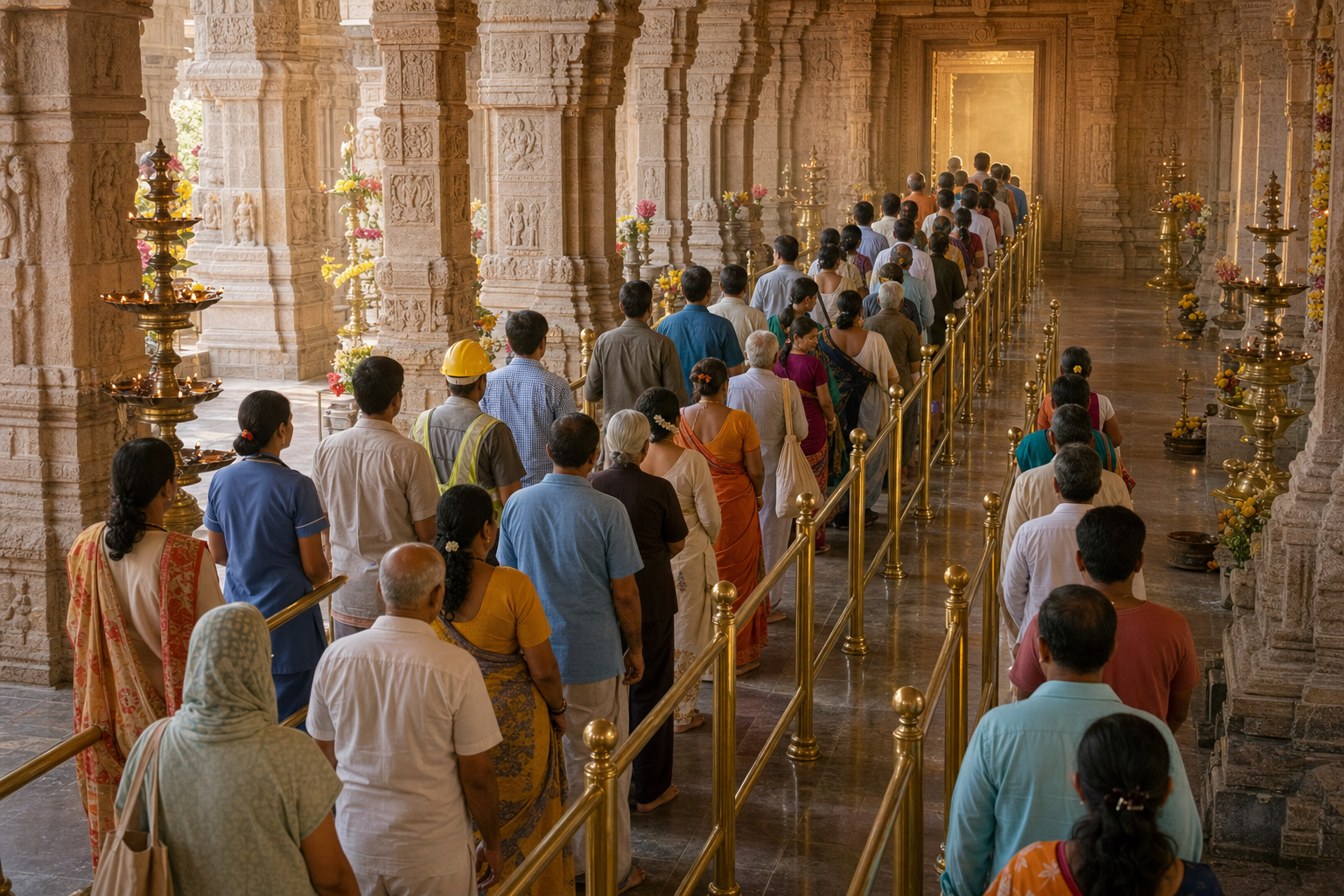
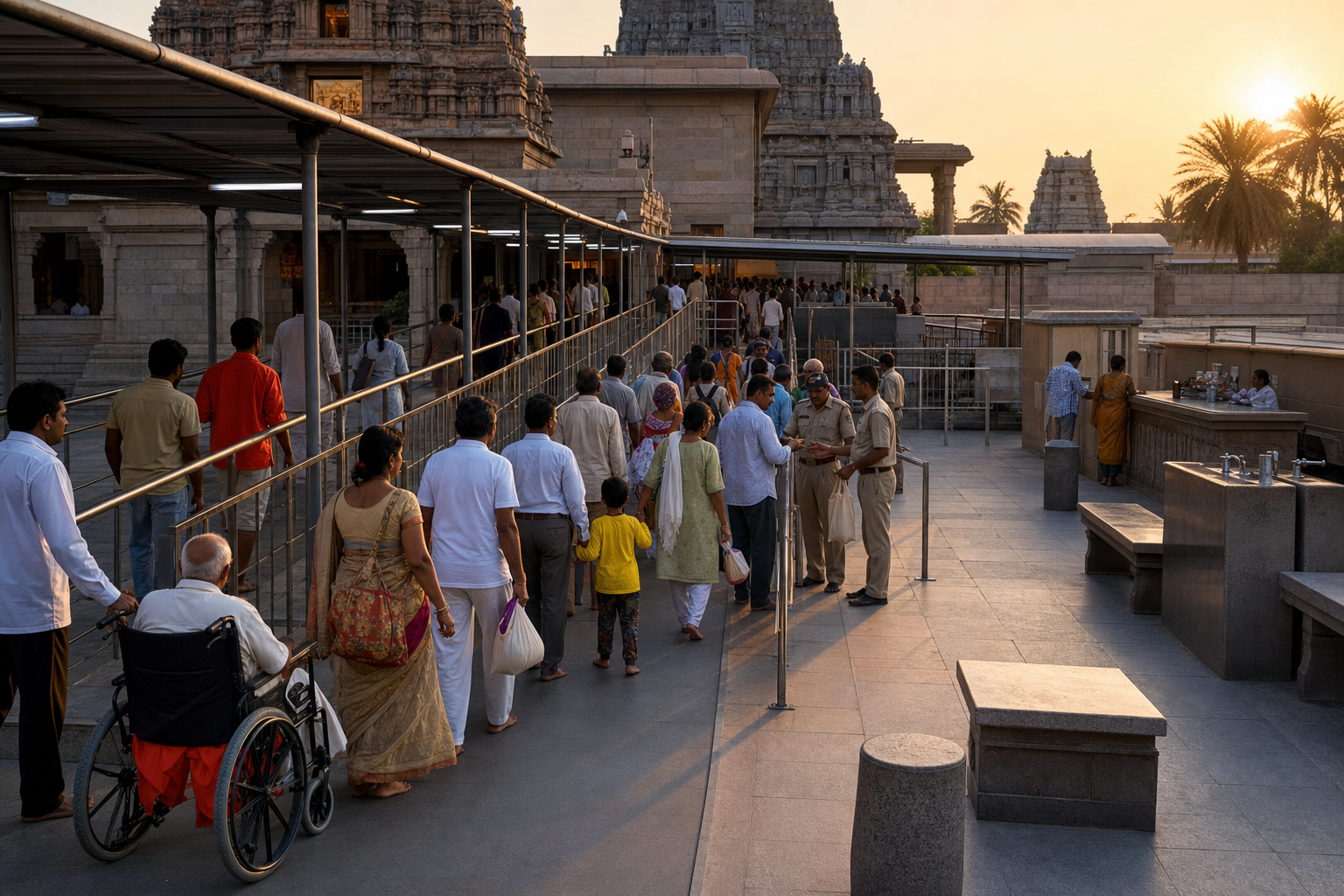
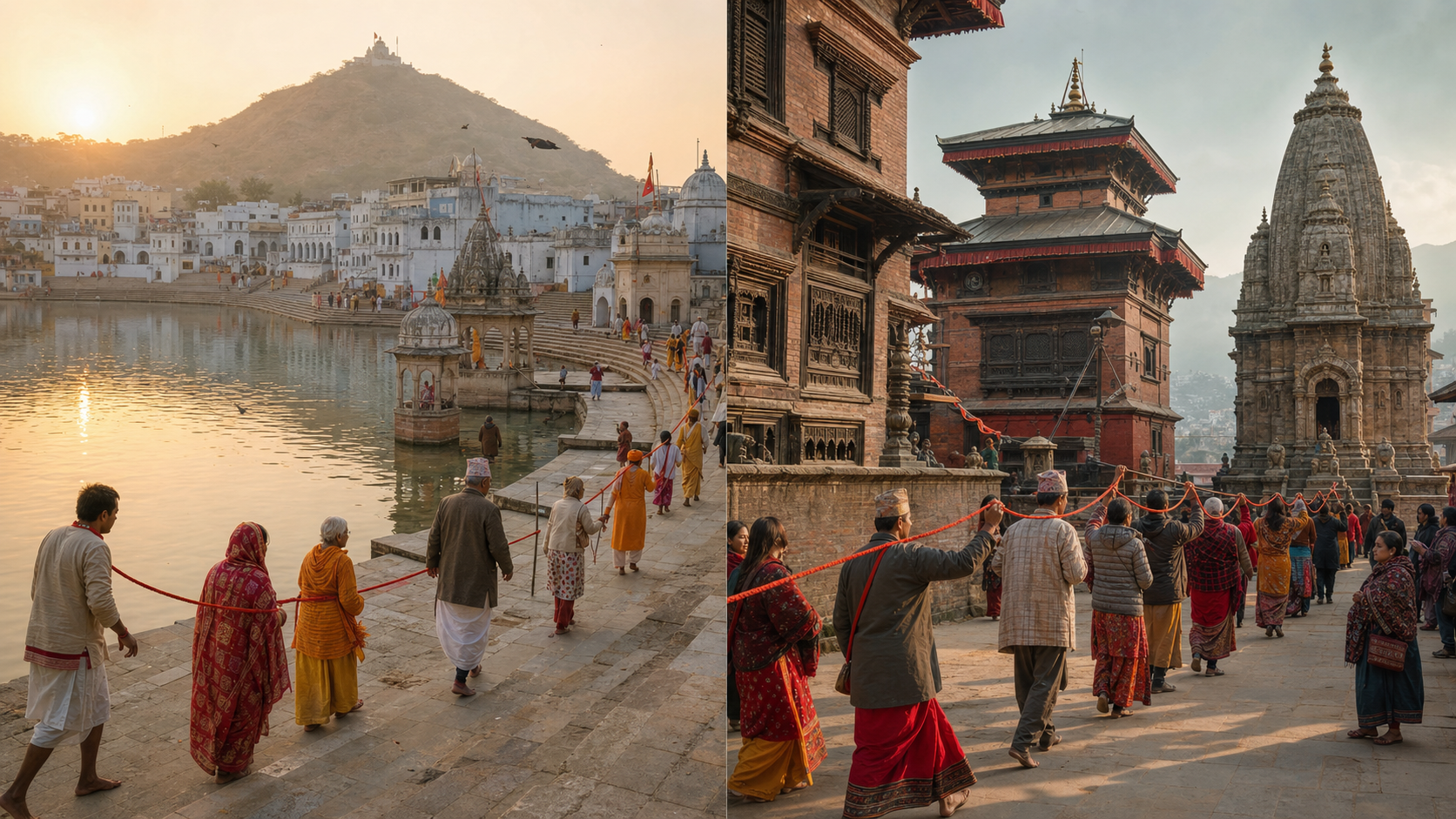
Sri Padmavati Srinivasa Parinayotsavam (Padmavathi Srinivasa Kalyanam) will be held in Tirumala from 25–27 April 2026 at the Parinayotsava Mandapam, Narayangiri Gardens. This in-depth guide explains the festival’s theological significance, its Vaikhanasa Agama-based wedding rituals, and the role of Sridevi and Bhudevi with Sri Srinivasa in the Tirumala observance. Readers gain clear planning insights on…
-
New Delhi TTD Brahmotsavams 2026: Celebration Dates, Sacred Rituals, and a Comprehensive Guide

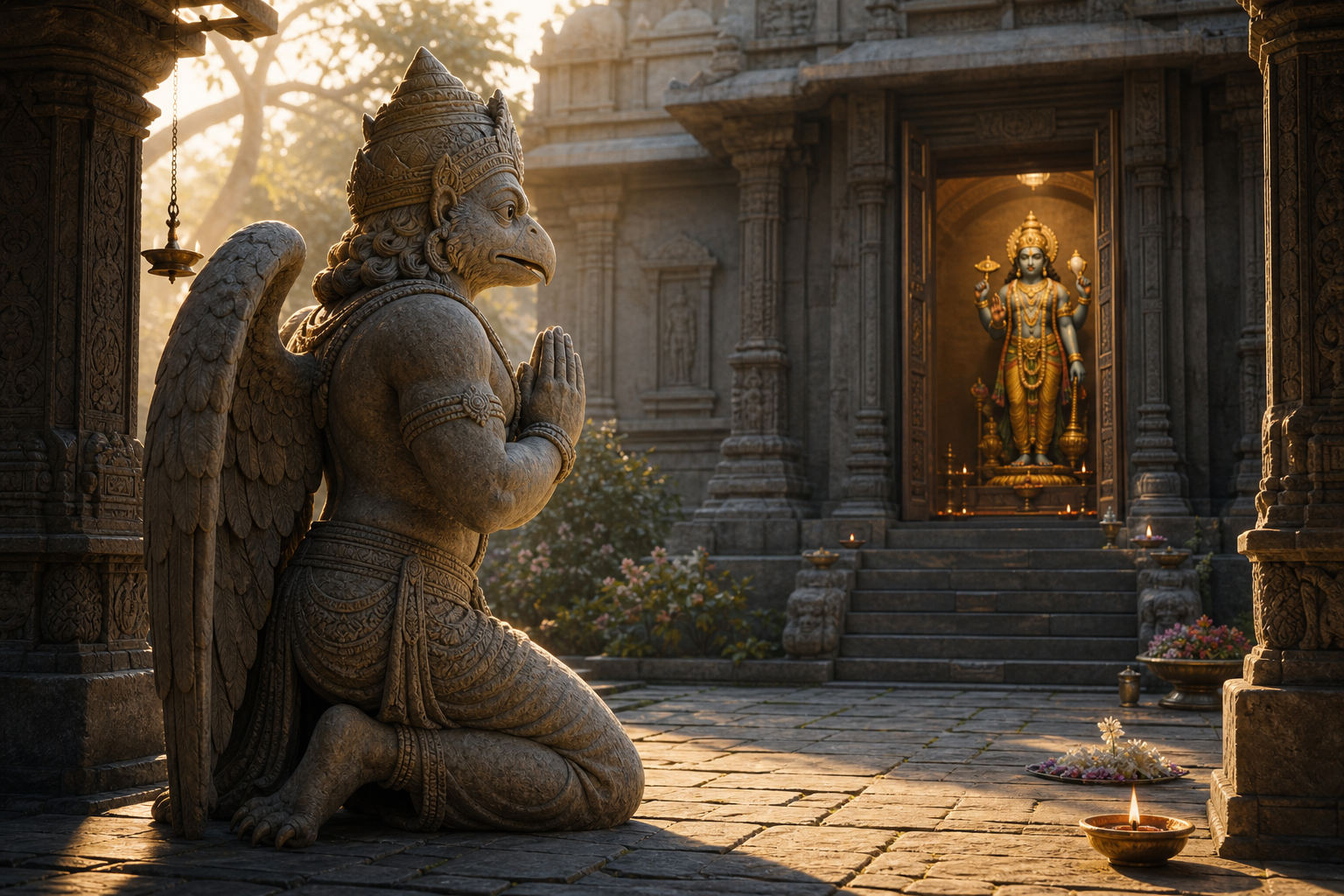
New Delhi’s TTD Sri Venkateswara Swamy Temple will celebrate Brahmotsavams from May 01–09, 2026, with Koil Alwar Thirumanjanam on April 28 and Ankurarpanam on April 30. The festival begins with Dwajarohanam and unfolds through daily vahana sevas, veda parayanam, and devotional programs rooted in Pancharatra Agama tradition. Highlights customarily include Garuda Seva and, where feasible,…
-
Divine Dwarapalakas of Lord Murugan: Sumukha & Sudeha—Veerabahu’s Fearless Gatekeepers of Dharma

This in-depth exploration examines Sumukha and Sudeha—the revered sons of Lord Veerabahu—who serve as the Dwarapalakas (divine gatekeepers) of Lord Murugan. It situates their roles within the wider narrative arcs of the Skanda Purana and Tamil traditions, linking their valor in the Surapadman campaign to their enduring presence at the temple threshold. Readers gain a…
-
Timeless Gautama Maharshi: Rig Veda Seer, Dharmasutra Sage, and a Unifying Dharmic Beacon

Gautama Maharshi emerges as a multidimensional sage whose legacy spans the Rig Veda, the early Dharmasutra tradition, classical Indian logic, and the living sacred geography of the Godavari. This article clarifies how the shared name “Gautama” applies to multiple luminaries—Vedic seers, the Dharmasutra authority, Akṣapāda Gautama of the Nyāya-sūtra, and revered figures in Jain and…
-
Are the Puranas Just Fiction? A Rigorous, Heart-Centered Guide to Finding God and Trusting Truth

Are the Puranas fiction or a reservoir of living wisdom? This analysis explains how Puranic narratives operate beyond a literal-versus-fable dichotomy by integrating mythic memory, ethics, ritual rationale, and contemplative instruction. Drawing on Indian epistemology (pramāṇa), it clarifies how śabda (trustworthy testimony), anumāna (inference), and yogic pratyakṣa (direct insight) jointly ground a rational, testable faith.…
-
18 Timeless Dr A.P.J. Abdul Kalam Quotes to Ignite Purpose, Learning, and Dharmic Unity

Dr A.P.J. Abdul Kalam’s 18 most resonant quotes, presented with context and analysis, reveal a rigorous, values-centric roadmap for students, educators, innovators, and policymakers. Each quotation is paired with research-informed insights on learning, resilience, and excellence, while remaining grounded in India’s civilizational ethos of Unity in Diversity and Vasudhaiva Kutumbakam. The curation highlights Kalam’s synthesis…
-
Bombay HC Quashes Final Charges in 2006 Malegaon: Landmark Reaffirmation of Due Process

Bombay High Court has quashed the remaining charges against the last four individuals in the 2006 Malegaon blast case, leaving no trial-ready defendants in that docket. The ruling underscores that terrorism prosecutions must rest on admissible, corroborated evidence and strict procedural compliance, not communal narratives or political shorthand. It explains what quashing of charges means…
-
Banda Singh Bahadur Immortalized: Historic Statue Unveiled at Guru Nanak Darbar, Gravesend

The unveiling of Baba Banda Singh Bahadur’s statue at Guru Nanak Darbar Gurdwara, Gravesend, anchors Sikh history within the UK’s cultural landscape while advancing a unifying dharmic message. The memorial contextualizes Banda Singh Bahadur’s transformation under Guru Gobind Singh, his brief yet consequential governance reforms, and his enduring ethos of justice and seva. Visitors gain…
-
When a Village Dog Joined the Kirtan: Compassion and Dharma on ISKCON Maharashtra Padayatra

During an ISKCON Maharashtra Padayatra, a village dog quietly joined the evening nagar sankirtan, offering a vivid case study in compassion expressed through public devotion. The incident illustrates how bhakti practice, sound, rhythm, and calm human posture can create a sense of safety recognizable even to animals. A cross-dharmic lens—drawing on Hindu daya and ahimsa,…
-
From Shame to Self-Compassion: Overcoming Erythrophobia with Science and Dharmic Wisdom

Erythrophobia—the fear of blushing—often arises not from physiology itself but from shame-based interpretations that amplify anxiety and avoidance. This comprehensive guide integrates clinical psychology, neurophysiology, and dharmic wisdom to reframe sensitivity as attunement rather than defect. Readers learn how cognitive and attentional biases sustain the fear cycle and how psychoeducation, attentional retraining, and graded behavioral…
-
Divine Timing vs Desperation: Kumbhakarna’s Forced Awakening and Ravana’s Catastrophic Folly

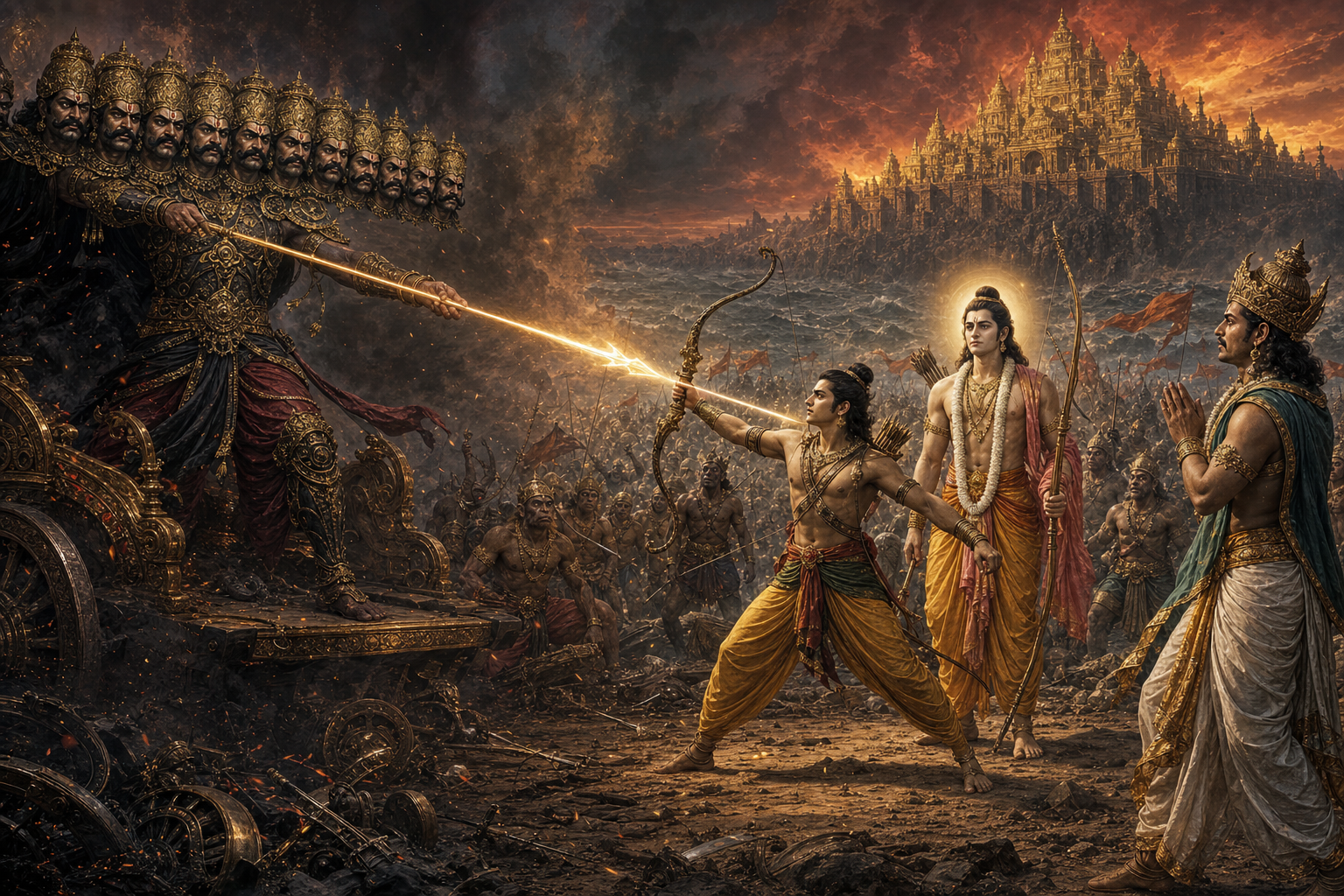
This essay examines Kumbhakarna’s forced awakening in the Ramayana as a study in divine timing and human impatience. It clarifies the nature of his cyclical sleep, traces textual variants, and situates Ravana’s choice within decision theory and dharma-yuddha ethics. The battlefield narrative is read alongside modern sleep science to show how premature activation degrades performance…
-
Restore Historical Clarity: HJS urges NCERT to reinstate Maratha Empire map in Class 8 textbook

Hindu Janajagruti Samiti (HJS) has requested that NCERT reinstate the Maratha Empire expansion map in the Class 8 history textbook to improve historical accuracy and learning outcomes. Maps help Class 8 learners anchor timelines in geography, making complex eighteenth-century political formations intelligible. A carefully annotated Maratha map would depict core territories, confederal expansions, and key…
-
Gujarat ATS Disrupts Alleged Jihadi Cell; NIA Exposes Bengaluru Prison Radicalisation Network

Two developments—the Gujarat ATS disruption of an alleged jihadi module and the NIA’s exposure of a prison-based radicalisation network in Bengaluru—highlight the dual front of India’s counterterrorism challenge: online grooming of youth and covert recruitment behind bars. This analysis explains how investigators typically blend HUMINT, OSINT, SIGINT, and digital forensics under the UAPA and NIA…
-
Sacred Bulls Across Civilizations: Nandi in Ancient Hinduism vs Minoan Crete’s Bull Cult

From Indus Valley seals to the palaces of Knossos, this long-form comparative study explores how the bull became a sacred anchor in both ancient Hinduism and Minoan Crete. Readers learn how Nandi, Śiva’s vahana and gatekeeper, embodies dharma, while Minoan bull‑leaping and horns of consecration ritualize courage and communal identity. The analysis integrates archaeology, textual…
-
Chhattisgarh forms ‘Hindu Rashtra Samanvay Samiti’ to protect Hindus, fortify dharmic unity

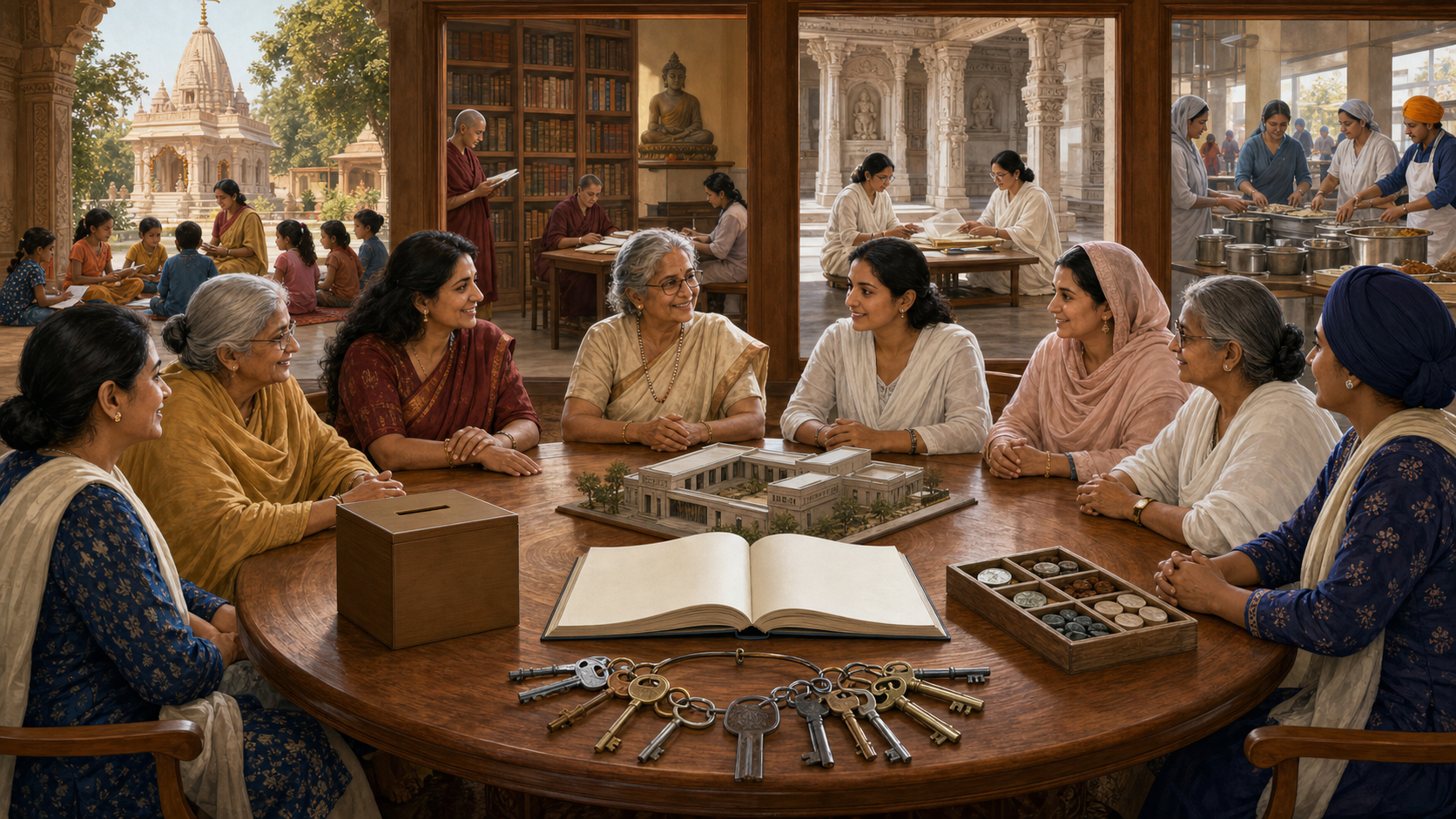
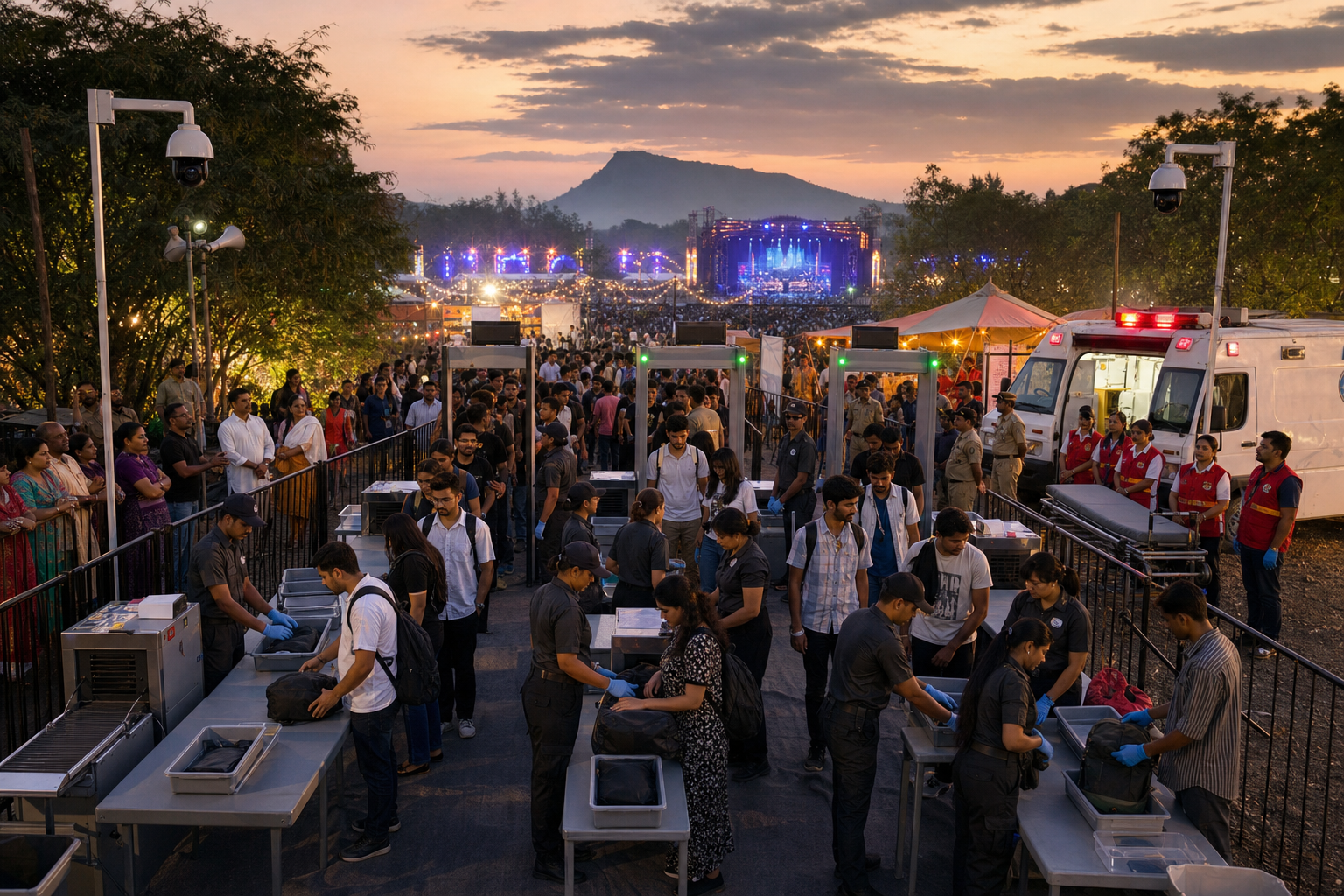
Chhattisgarh has formed the ‘Hindu Rashtra Samanvay Samiti’ to coordinate lawful, community-led responses to reported attacks on Hindus and to strengthen social cohesion. Framed as a cultural–civilizational initiative consistent with the Constitution of India, it emphasizes Ahimsa, Anekantavada, seva, and Vasudhaiva Kutumbakam. The analysis outlines a practical architecture: incident reporting, helplines, volunteer training, festival safety…
-
Soul in Stone: Classical Hindu Aesthetics, Vishnudharmottara Purana, and Living Sculpture

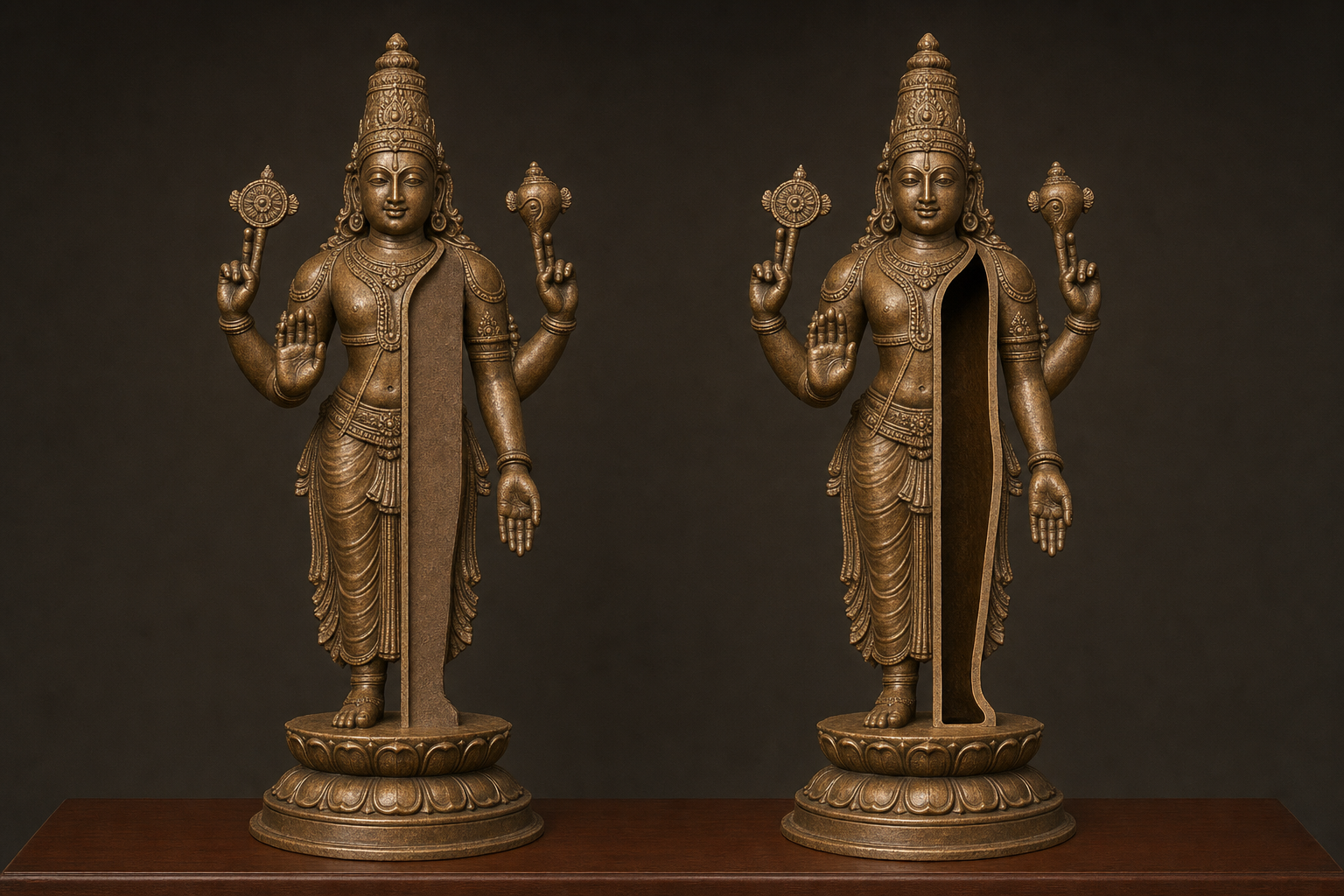
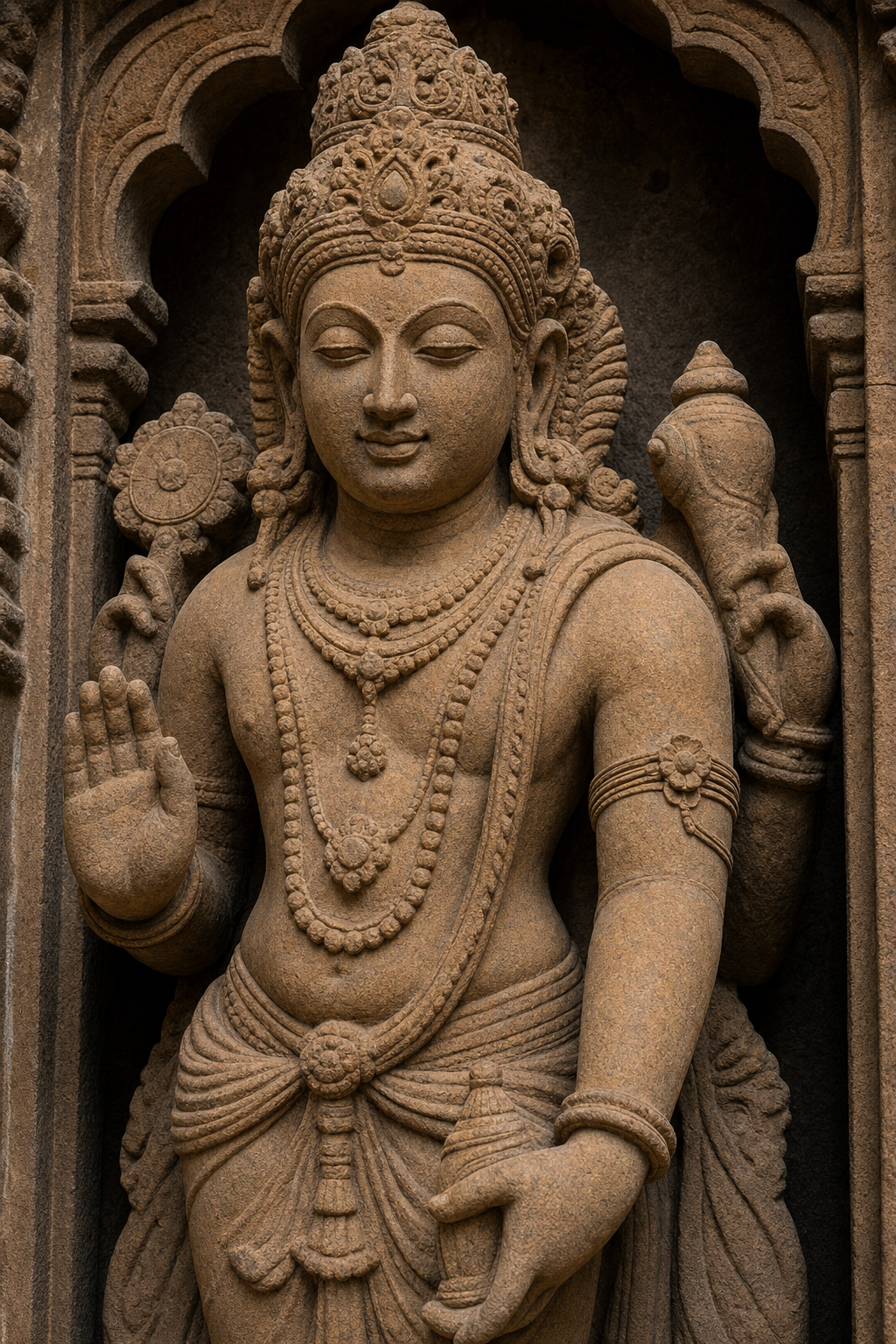
Classical Hindu aesthetics treats sculpture as a disciplined pathway for making consciousness visible in matter. Drawing on the Vishnudharmottara Purana’s Chitra-sutra, especially Chapter 43 of the third khanda, this article explains how pramana (proportion), bhava (expression), and lavanya (grace) turn craft into living art. It shows how the six limbs of painting inform sculpture, why…
-
Unity in Diversity: Harmonizing Distinct Personalities in Dharmic Service and Devotion

This article presents an academic yet accessible exploration of unity in diversity across Dharmic traditions. It clarifies Srila Prabhupada’s insight—”Variety is the mother of enjoyment”—and shows how distinct talents become seva that strengthens cohesion. Drawing on Srila Rupa Goswami’s Bhaktirasamrita- sindhu, it highlights Krishna’s identities as dhirodatta and dhiralalita to validate diverse human temperaments in…
-
Dharmic Harmony and Heritage: Telangana Minister Konda Surekha’s Inspiring Visit to Bhaktivedanta Manor

Bhaktivedanta Manor welcomed Telangana Cabinet Minister Konda Surekha Garu, creating a timely bridge between Indian endowments governance and the UK’s Hindu diaspora. The visit spotlighted how religious endowments and environmental stewardship can be jointly advanced to protect sacred spaces and biodiversity. It underscored shared dharmic values—ahimsa, seva, and public-minded service—across Hinduism, Buddhism, Jainism, and Sikhism.…
-
Kumbhakarna’s Six-Month Slumber: A Tragic Shield, Strategic Weakness, and Dharma in the Ramayana

Kumbhakarna’s six-month sleep in the Ramayana is both armor and Achilles’ heel, a boon that restrains destructive potential while creating a fatal strategic gap when broken. Drawing on Valmiki’s account and later retellings, this analysis clarifies how a slight, divinely guided shift from indrāsana to nidrāsana reconfigures cosmic balance. It explores the symbolism of nidra…