
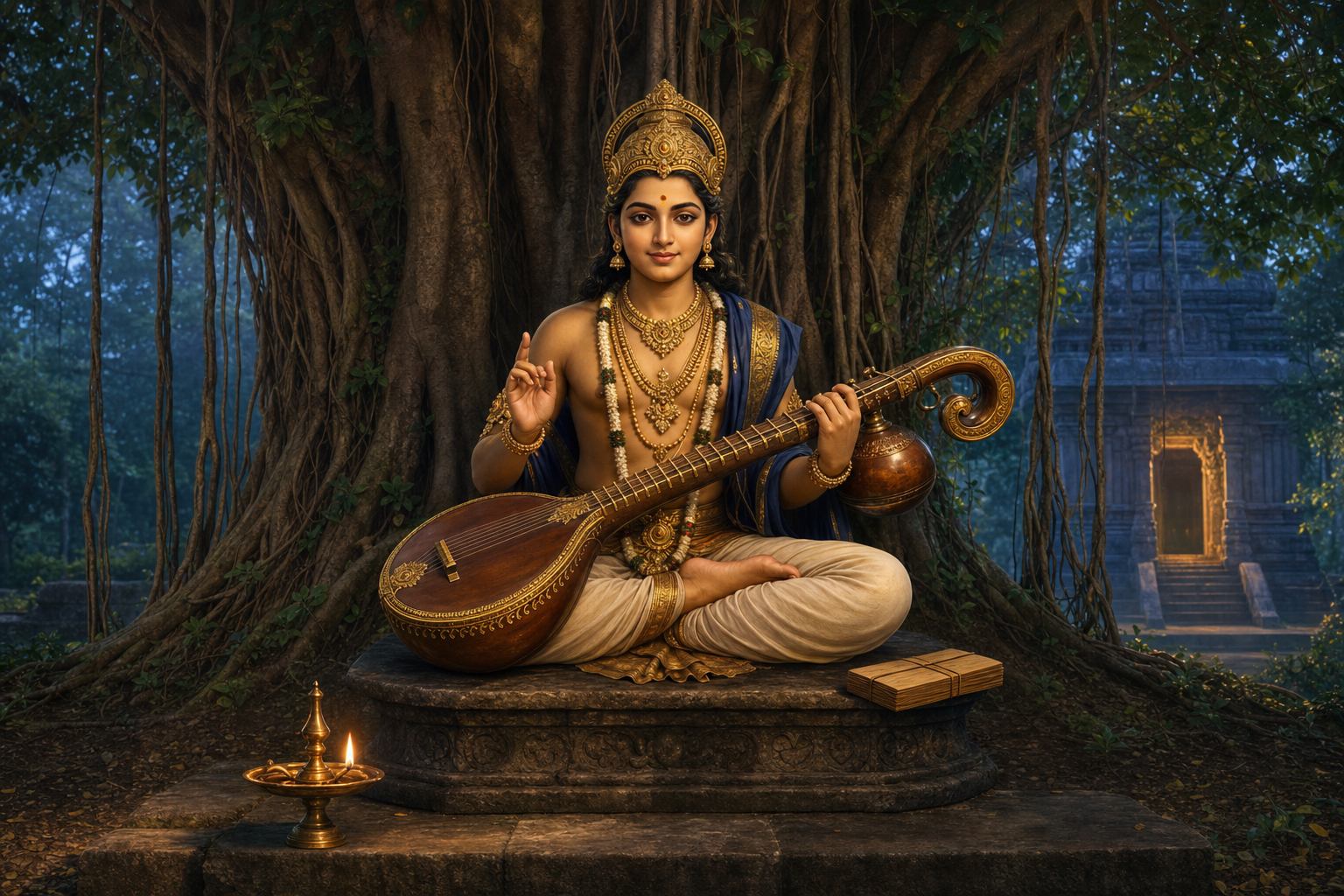
You may know Ayyappa as the lord approached through pilgrimage, vrata and surrender, yet a quiet image of Shasta seated beneath a banyan can leave you unsure how to respond. Should you offer worship, study the symbols or sit in meditation? With Jnana Shasta, those aren’t competing choices. The icon leads you from reverence to inquiry, and from inquiry into silence.
The useful way to approach this form is to read it as a sequence rather than an inventory of sacred objects. You receive the teaching, steady the mind, examine what obscures clear seeing, rest without forcing an answer and then return to your duties. Once you understand that movement, the murti becomes a practical guide to contemplation.
Read the whole icon, not just one emblem
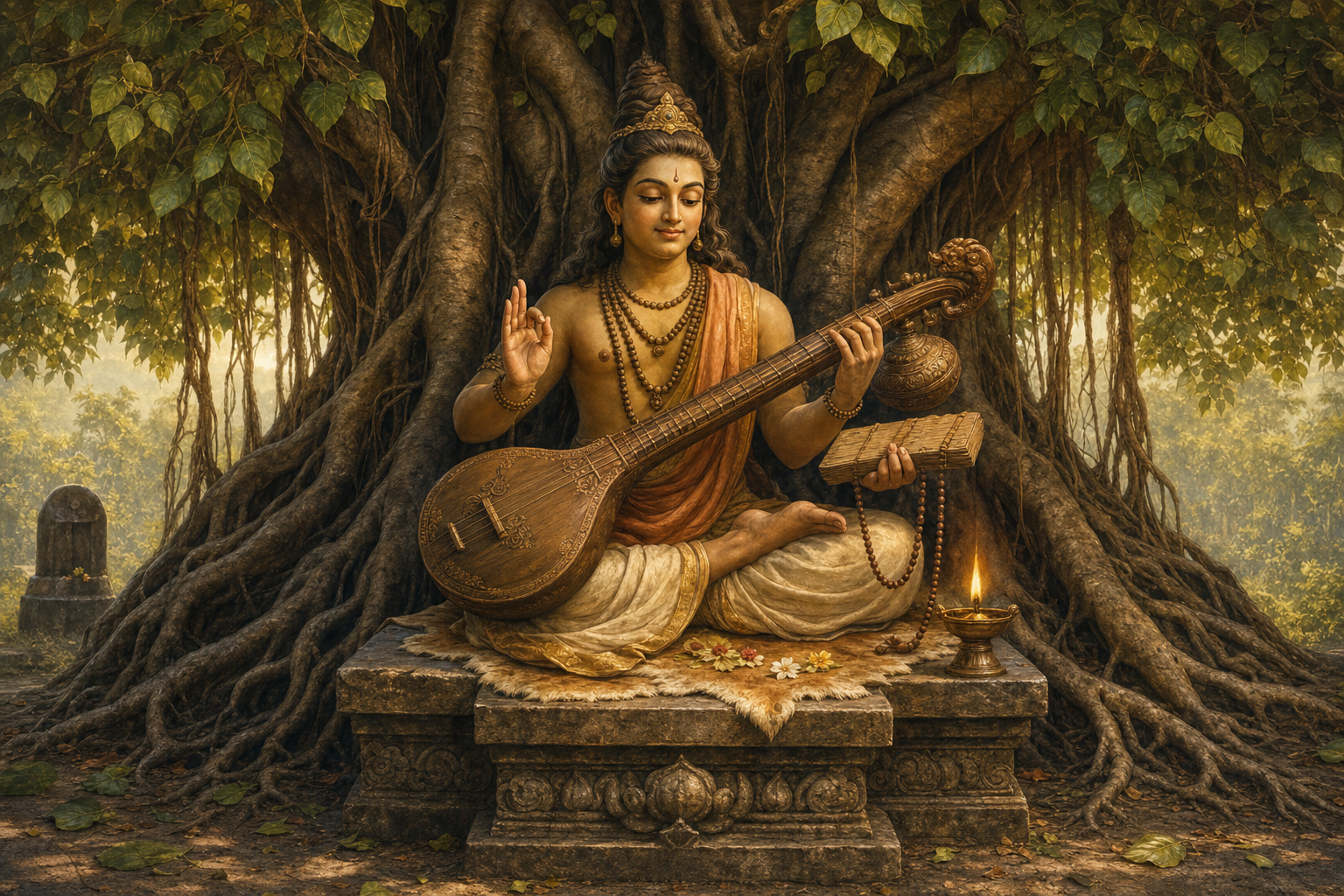
The name itself establishes the purpose. Shasta comes from the Sanskrit root shas, associated with teaching, guiding and enjoining. Jnana is not merely accumulated information; it is direct, liberating knowledge that removes avidya, or ignorance. Jnana Shasta is therefore the Teacher of Wisdom whose instruction is embodied in stillness.
This distinction changes the question you bring before the image. Instead of asking only, “What blessing can I obtain?”, you can also ask, “What am I failing to see clearly?” The first question expresses devotion. The second begins contemplation. Jnana Shasta holds them together.
A contemplative representation will commonly combine several of the following features:
- A youthful, composed form seated in padmasana or a comfortable cross-legged posture such as sukhasana.
- A simple seat or dais, sometimes accompanied by a yogapatta passing across the knees to indicate sustained meditative discipline.
- A right hand in jnana-mudra or chin-mudra, with the index finger meeting the thumb.
- A palm-leaf manuscript, kamandalu or akshamala, connecting knowledge with disciplined practice.
- Eyes gently lowered in an inward gaze rather than directed dramatically toward the outer world.
- A banyan tree whose spreading canopy gives the scene the character of a forest classroom or open sanctuary.
No single feature should be treated as an infallible identification test. South Indian traditions preserve several forms of Shasta. Dharmasastha may appear with Purna and Pushkala, in a protective or martial aspect, or with different combinations of attributes. Some contemplative variants have two arms; some lineages preserve four-armed forms. When you encounter an unfamiliar murti, begin with the name and tradition maintained by that temple rather than forcing the image into a checklist.
The banyan and the youthful silent teacher may also remind you of Dakshinamurti. The resemblance is meaningful, but the two forms shouldn’t be casually declared interchangeable. Dakshinamurti is Shiva as the guru who communicates through silence. Jnana Shasta expresses the guru-bhava of Shasta or Dharmasastha, who is also known through the Hariharaputra tradition. Their iconographies resonate because both direct attention beyond verbal explanation, not because their distinct identities disappear.
Let each visual detail give you a practice instruction
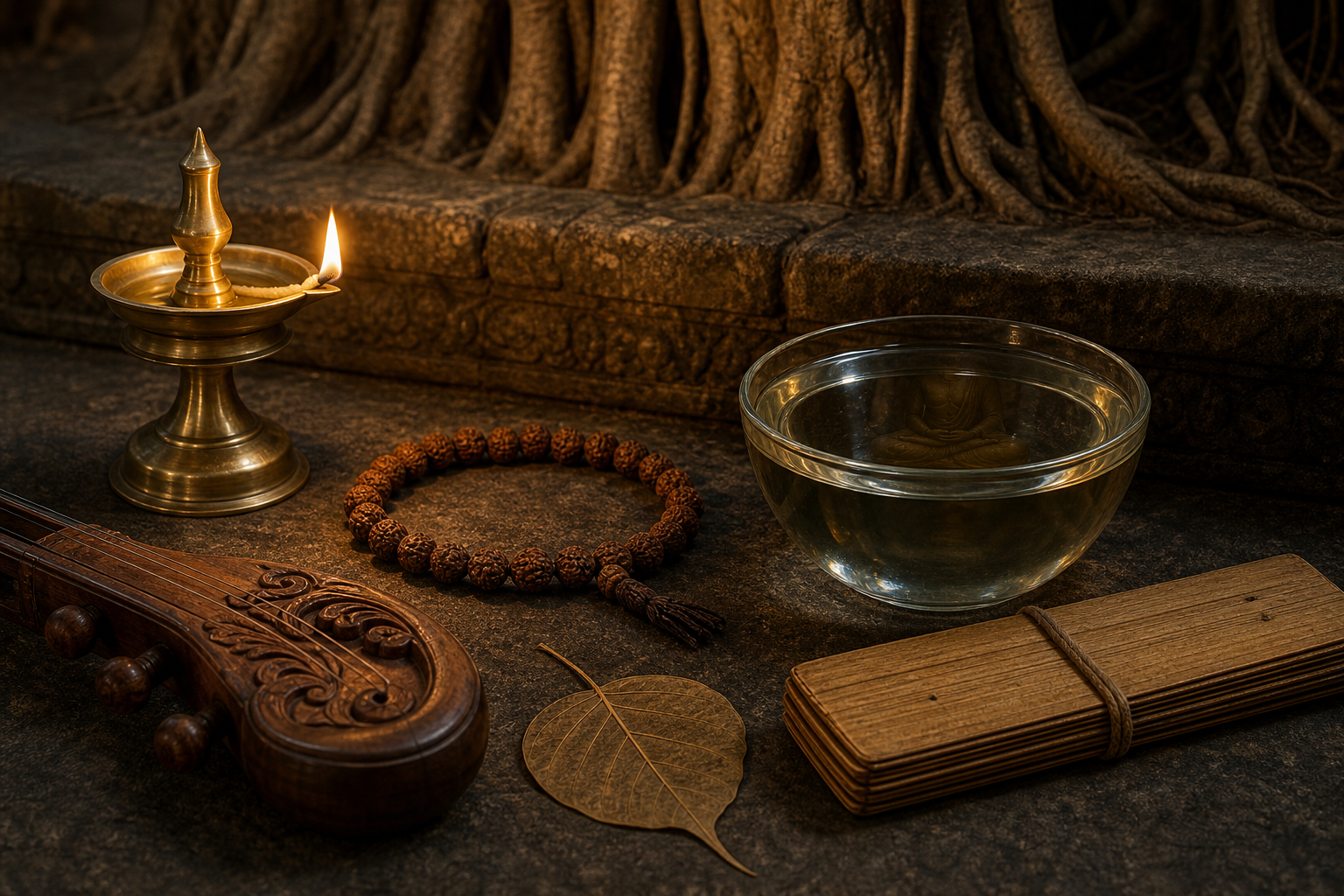
Sacred iconography becomes contemplatively useful when a symbol changes what you do. Before trying to memorise every possible attribute, translate the visible elements into instructions for your own attention.
- The steady seat says: become available to the teaching. Stability comes before subtle inquiry. If you imitate the outer pose while the body is strained, discomfort will dominate the sitting. Use padmasana only if it is already natural for you; otherwise choose a supported sukhasana or another stable seat. The principle is disciplined ease, not a display of flexibility.
- The mudra says: examine the assumed separation. The meeting of index finger and thumb is commonly read as the finite self returning to the infinite. Don’t treat the gesture as a mechanism that automatically creates realization. Let it remind you to inspect the identity, fear or attachment that you are taking to be absolute.
- The manuscript says: receive before improvising. Jnana isn’t produced by private speculation alone. A teaching must first be heard or studied through a trustworthy guru and shastra. The pustaka therefore checks the temptation to call every passing impression an insight.
- The rosary or water vessel says: knowledge must be assimilated. Reading can point the mind in the right direction, but repetition, restraint and contemplative continuity allow a teaching to enter the way you perceive and act.
- The lowered eyes say: stop searching only outside yourself. The gaze isn’t an instruction to reject the world. It asks you to notice the awareness through which the world, the body and the movement of thought are known.
- The banyan says: knowledge has lineage and shelter. Its descending prop roots resemble a tradition that renews itself across generations, while its broad canopy evokes a place where learning is protected and shared. Your practice may be inward, but it isn’t rootless.
The banyan, or vata, should not be confused with the ashvattha or peepal associated with the Buddha’s awakening. Both belong to a larger Dharmic imagination in which a sacred tree can shelter tapas, teaching and insight. The kinship lies in that civilizational use of the living world, not in pretending that every tree, doctrine or divine form is identical.
Read together, the attributes establish three safeguards. The text points to scriptural testimony; the mudra invites reasoned reflection; the silent seat points toward direct assimilation. Hindu contemplative pedagogy names the corresponding movement shravaṇa, manana and nididhyasana: receive the teaching, examine it carefully and abide in it deeply enough that it ceases to remain a borrowed idea.
Leaving out any one of these can distort the practice. Study without contemplation accumulates concepts. Silence without a sound teaching can become vagueness. A claimed experience that refuses reason, ethical scrutiny or guidance can become self-deception. The icon holds all three together so that learning matures into discernment.
A contemplative sequence from lamp to silence
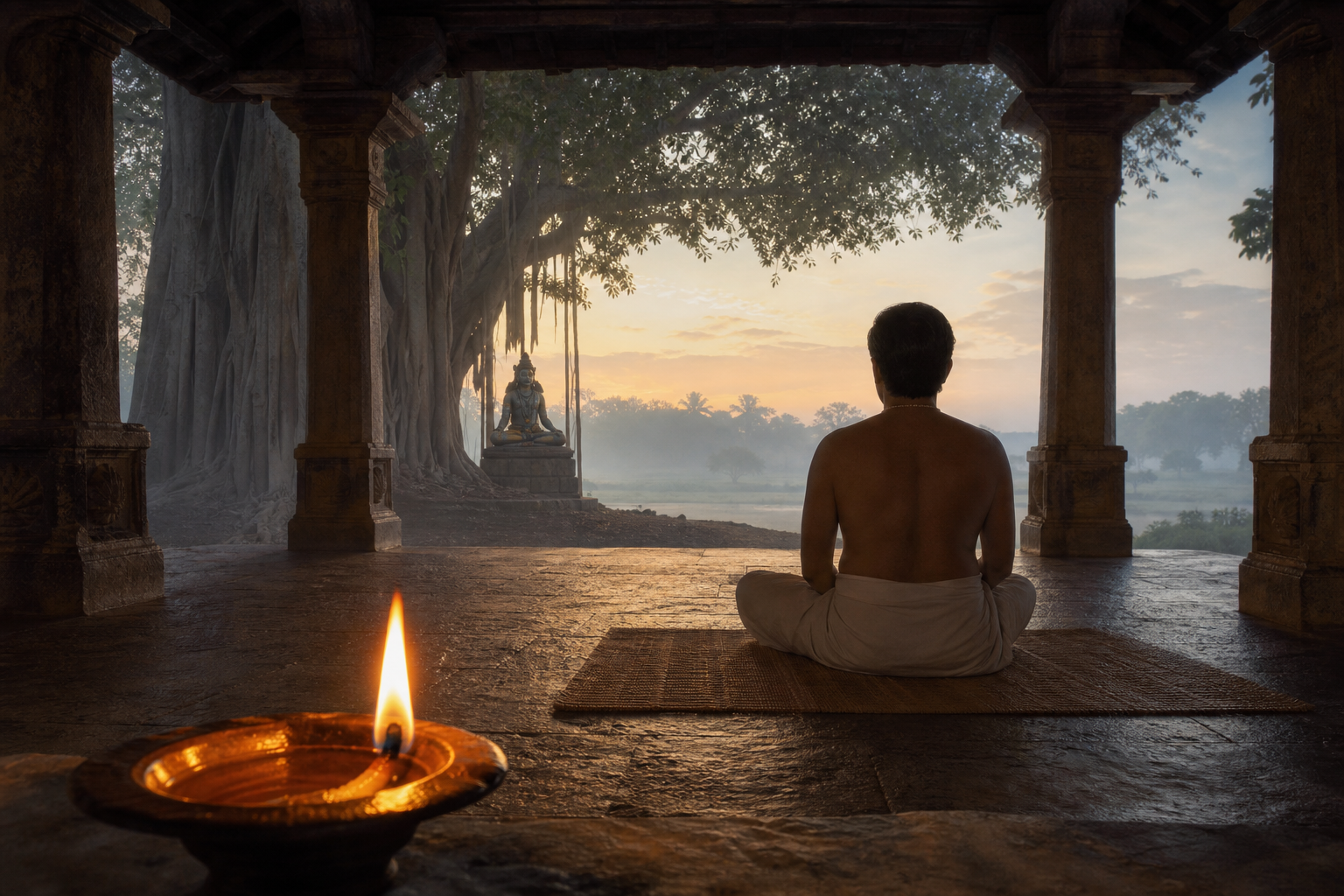
You don’t need an elaborate private ritual to begin. You do need a deliberate transition from outward worship to inward attention. The following sequence preserves the movement signalled by the icon without imposing a repetition count or a rigid period of sitting.
At home before an image of Jnana Shasta
- Prepare one clear focal space. Place the image respectfully and remove unrelated visual clutter. If offering a dipa is part of your practice and can be done safely, light it and allow the steady flame to gather your attention.
- Establish a sustainable seat. Let the spine rise without stiffness. Rest the hands comfortably or form the mudra gently. Keep the breath natural; this practice doesn’t require you to force or retain it.
- Receive one teaching. Read a short passage from a scripture you already study, or recall one instruction genuinely received from your guru or tradition. Stay with that single teaching rather than browsing through several texts in search of a dramatic thought.
- Read the icon from outside to inside. Notice the banyan, the seat, the mudra, the manuscript or rosary, and finally the inward gaze. Translate them silently as lineage, steadiness, discernment, practice and interior seeing.
- Choose one mantra. Recite either Om Sri Dharmasasthaya Namah or Swamiye Saranam Ayyappa, following the pronunciation and manner you have received. One steady current of japa is more useful here than repeatedly changing formulas.
- Let repetition become quieter. Move from audible or whispered japa toward mental repetition. When the mantra naturally becomes subtle, stop manufacturing sound and remain attentive. If the mind scatters, return to the mantra without treating distraction as failure.
- Use one question for reflection. You might ask, “What in this situation is changing, and what is aware of that change?” For an ethical difficulty, ask, “Which reaction is preventing me from seeing my dharma clearly?” Don’t turn the sitting into an endless internal argument. Examine the question, then release it.
- Close with a concrete dharmic intention. Bow, extinguish the lamp safely when appropriate, and identify one action that will express greater truthfulness, non-harm, responsibility or service. This prevents contemplation from becoming an escape from the day in front of you.
Mauna in this practice doesn’t mean aggressively suppressing thought or trying to manufacture a blank state. It is the alert quiet that becomes available when you stop feeding every mental movement. Mantra steadies attention until attention can remain without continual verbal support. If quiet doesn’t arise, continue the japa calmly. Silence is an invitation, not a performance target.
At a temple or during pilgrimage
A temple’s ritual order and local sampradaya come first. Don’t rearrange the shrine’s practice to reproduce your home sequence. Instead, use the actual setting as the field of contemplation.
- During darshan, look at the murti that is present rather than the version you expected. Notice the posture, hands, attributes, expression and surrounding imagery before assigning meanings.
- Allow your customary invocation or nama-japa to settle the mind while you wait. The familiar cry Swamiye Saranam Ayyappa can become interior surrender rather than remaining only an outward proclamation.
- If pradakshina is permitted, walk at the pace required by the space and use each step as a return to attention. Keep your eyes open and remain considerate of other devotees; contemplative absorption doesn’t excuse obstructing the path.
- Sit quietly only where temple custom and available space allow it. The lamps, foliage, stone, open courtyard and ordinary sounds of the precinct can all support attention without your demanding complete external silence.
- When pilgrimage includes vrata, dietary simplicity and restraint, recognise their contemplative purpose. They prepare the mind to receive rather than functioning as a transaction that obliges the deity to deliver a particular experience.
The movement from dipa and japa into interior quiet is more important than reproducing every external detail. Some sittings will remain full of mental noise. Continue with steadiness. The discipline is to return, not to judge the practice by whether it produced an unusual state.
Test insight by the life you lead afterward
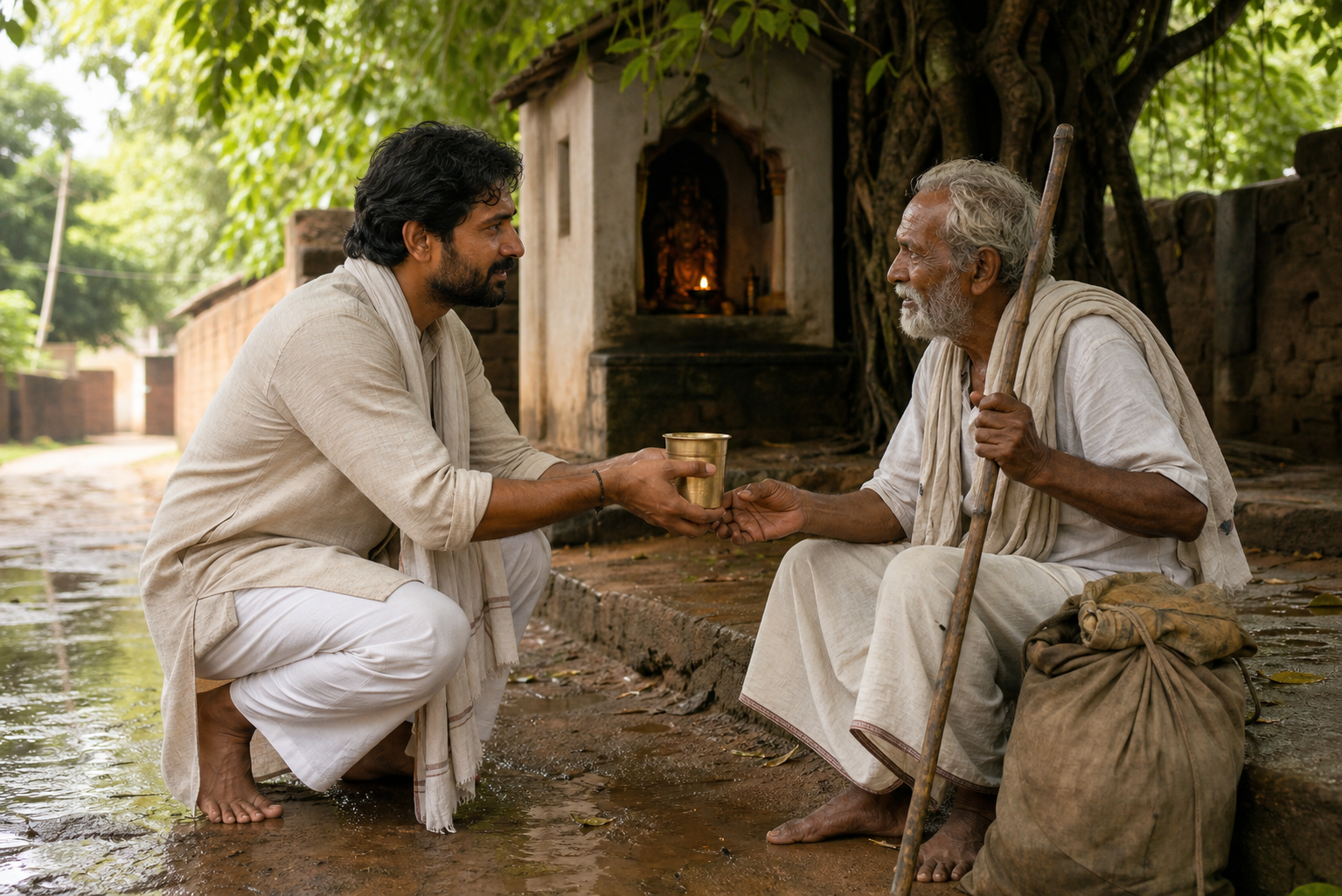
Jnana Shasta is also Dharmasastha. That name prevents a crucial mistake: separating knowledge from right conduct. An idea that makes you feel spiritually elevated while leaving you less truthful, less responsible or less considerate has not yet matured into wisdom.
After contemplation, test your clarity against five questions:
- Satya: Can you describe the situation truthfully, without exaggerating another person’s fault or hiding your own contribution?
- Ahimsa: Can your next response reduce avoidable harm without abandoning a duty that genuinely must be performed?
- Dharma: Which responsibility is actually yours, and which imagined role are you using to control what belongs to someone else?
- Seva: What useful act can you perform without turning service into a display of spiritual identity?
- Humility: What part of the situation might remain outside your present viewpoint?
This is where bhakti and jnana meet. Devotion steadies the heart and loosens self-importance. Discernment exposes confusion. Surrender to Ayyappa need not compete with inquiry into the Self; properly held, surrender makes the mind teachable, while inquiry prevents devotion from becoming mechanical.
The same ethical test also helps you recognise kinships across the Dharmic traditions without erasing their differences. Buddhist prajna matures with karuna, so insight cannot be indifferent to suffering. Jain kevala-jnana belongs to its own rigorous path, while anekantavada warns the ordinary knower against arrogance about a partial viewpoint. Sikh gyan is inseparable from shabad, nam and seva. These aren’t interchangeable doctrines. They do, however, challenge the same spiritual vanity: the claim to possess wisdom without compassion, humility or service.
Watch especially for three errors. Don’t use silence to avoid a necessary conversation. Don’t use nondual language to dismiss another person’s pain. Don’t mistake a calm mood for final knowledge. If your conclusions repeatedly weaken dharma, return to the triad represented by the icon: trustworthy teaching, honest reflection and sustained assimilation.
Key takeaways for your next sitting
- Identify Jnana Shasta through the whole contemplative composition, not through one hand gesture or object.
- Let the seat teach steadiness, the manuscript teach disciplined study, the mudra teach inquiry, the inward gaze teach attention and the banyan teach rooted continuity.
- Use a comfortable posture. Forcing padmasana contradicts the steadiness you are trying to cultivate.
- Move through a clear sequence: dipa, one received teaching, visual contemplation, one mantra, quiet attention and a dharmic intention.
- When attention scatters, return to japa. Don’t force silence or turn the absence of a special experience into a verdict on your practice.
- Judge the fruit by conduct: greater truthfulness, non-harm, responsibility, humility and service.
At your next darshan or home sitting, choose one feature of the icon and obey its instruction instead of merely admiring it. Sit as steadily as you can, receive one teaching, allow the mantra to become quiet, and carry one clarified duty back into the world. That is how the silent teacher begins to be heard.