
-
Nava Veeras of Muruga: Origins, Iconography, and Living Traditions of Nine Divine Guardians
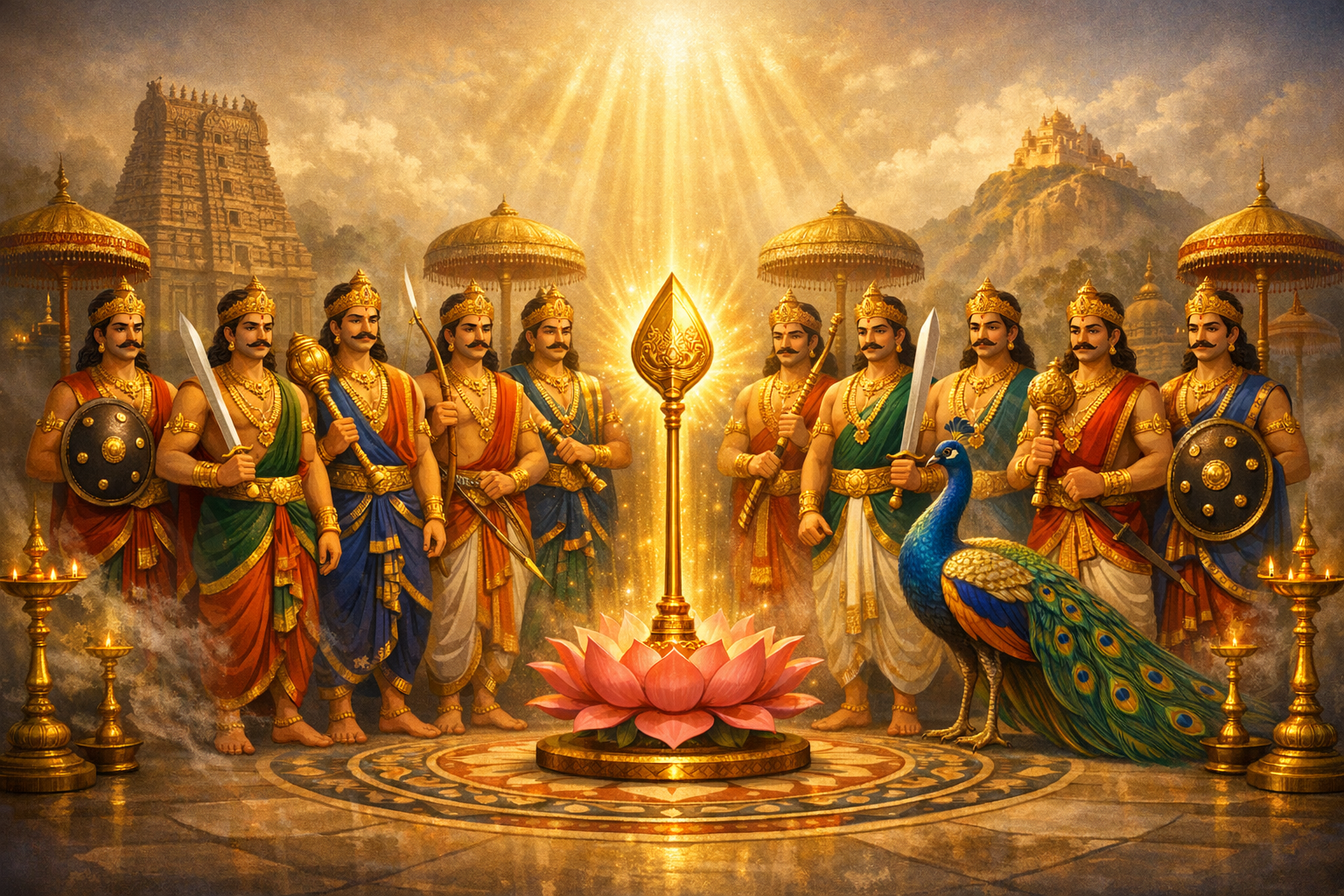
This article explores the Nava Veerasthe nine divine guardians of Lord Murugaas living embodiments of Parvati’s Shakti and exemplars of disciplined courage in service of dharma. It situates their origins within the Skanda Purana/Kanda Puranam tradition, explains their roles in the Soorasamharam cycle, and examines how regional temple practices shape their iconography and worship. Readers…
-
Siddha Kali and the Science of Siddhis: Tantric Methods, Mantras, and Ethical Mastery

Siddha Kali is revered in Shakta traditions as the beneficent source of siddhisspiritual capacities that ripen through disciplined mantra, meditation, and ethical living. This long-form exploration presents the iconography, mantric grammar, and ritual architecture that distinguish her worship, from nyasa and yantra to Panchopachara offerings. It situates siddhi within a pan-dharmic ethos shared by Hinduism,…
-
Matrisadbhava of Kerala: Authoritative Guide to Shakta Tantra and Bhadrakali (Rurujit)
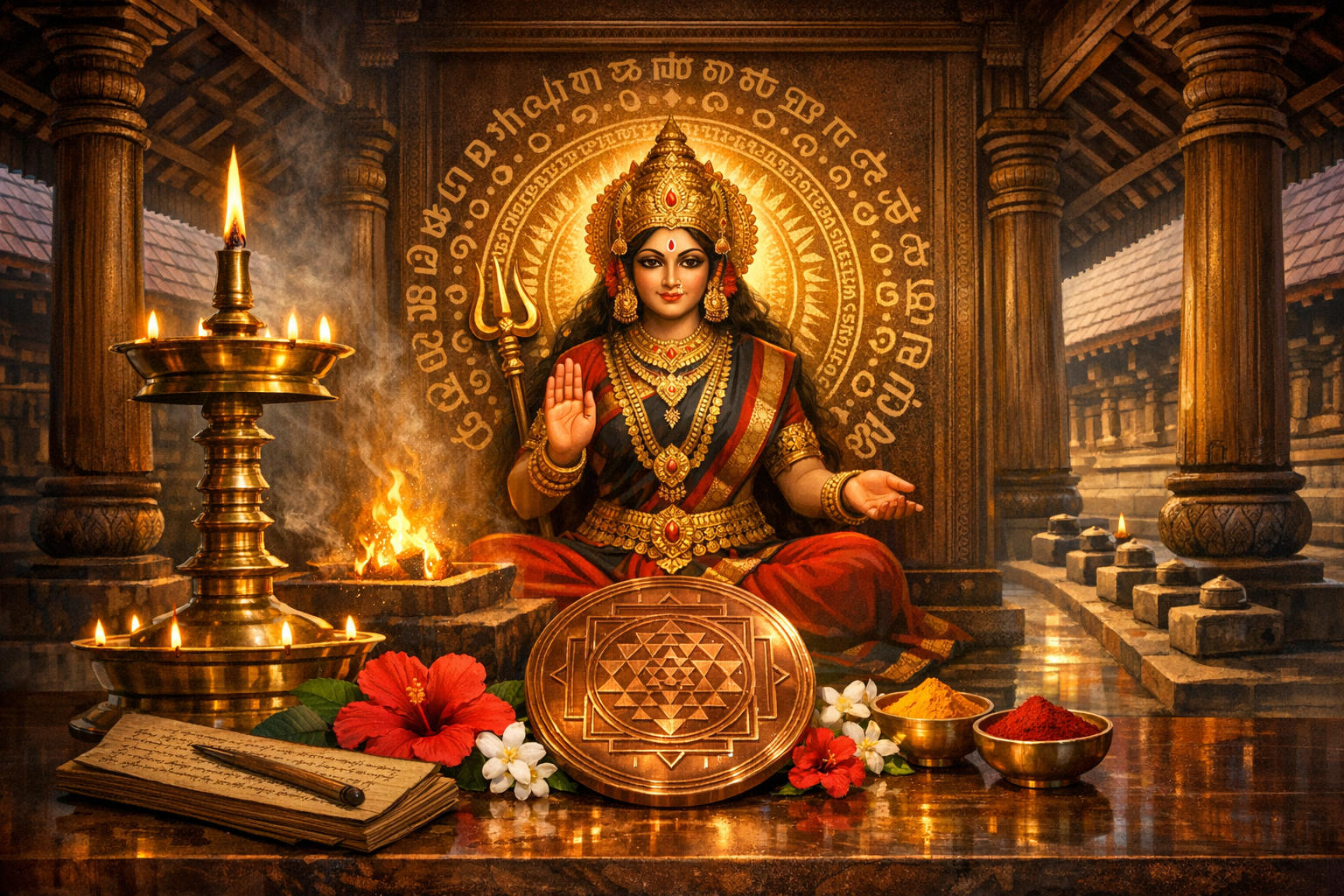
Matrisadbhava stands out in Hindu scriptures as a Kerala-centered Shakta Tantra that systematically encodes the worship of Goddess Bhadrakali, also revered as Rurujit. It unites doctrinal depth with Kerala’s temple pragmaticsnyāsa, mantra, yantra, homa, and baliwhile foregrounding an ethic of care and precision. The text’s maternal vision affirms unity in diversity across Dharmic traditions, highlighting…
-
Kalaratri Saptami 2026: 10 Powerful Navratri Day 7 Practices for March 25 and Oct 17

The seventh day of Navaratri (Saptami) honors Goddess Kalaratri as Shubankari, the fierce remover of darkness who grants auspicious outcomes. In 2026, Saptami falls on 25 March during Chaitra Navratri and on 17 October during Sharad Navratri, with local panchang variations possible. This guide details ten grounded practicessankalpa and altar setup, mantra japa, night worship,…
-
Shakti in Motion: HJS empowers women at Hindu Mahila Mahotsav, Loni Kalbhor, Pune 2026

On Gudi Padwa 2026, Loni Kalbhor’s Hindu Mahila Mahotsav blended a grand two-wheeler rally with guidance from Hindu Janajagruti Samiti (HJS) on women’s empowerment, self-defence, and Dharmashikshan. By aligning with the Shalivahana Shaka new year and Chaitra Navratri 2026, the program connected public celebration to inner discipline and ethical action. The rally modelled safety-first civic…
-
Rakta Chamundi: Blood-Red Shakti of Wrathful Compassion, Liberation, and Cosmic Balance
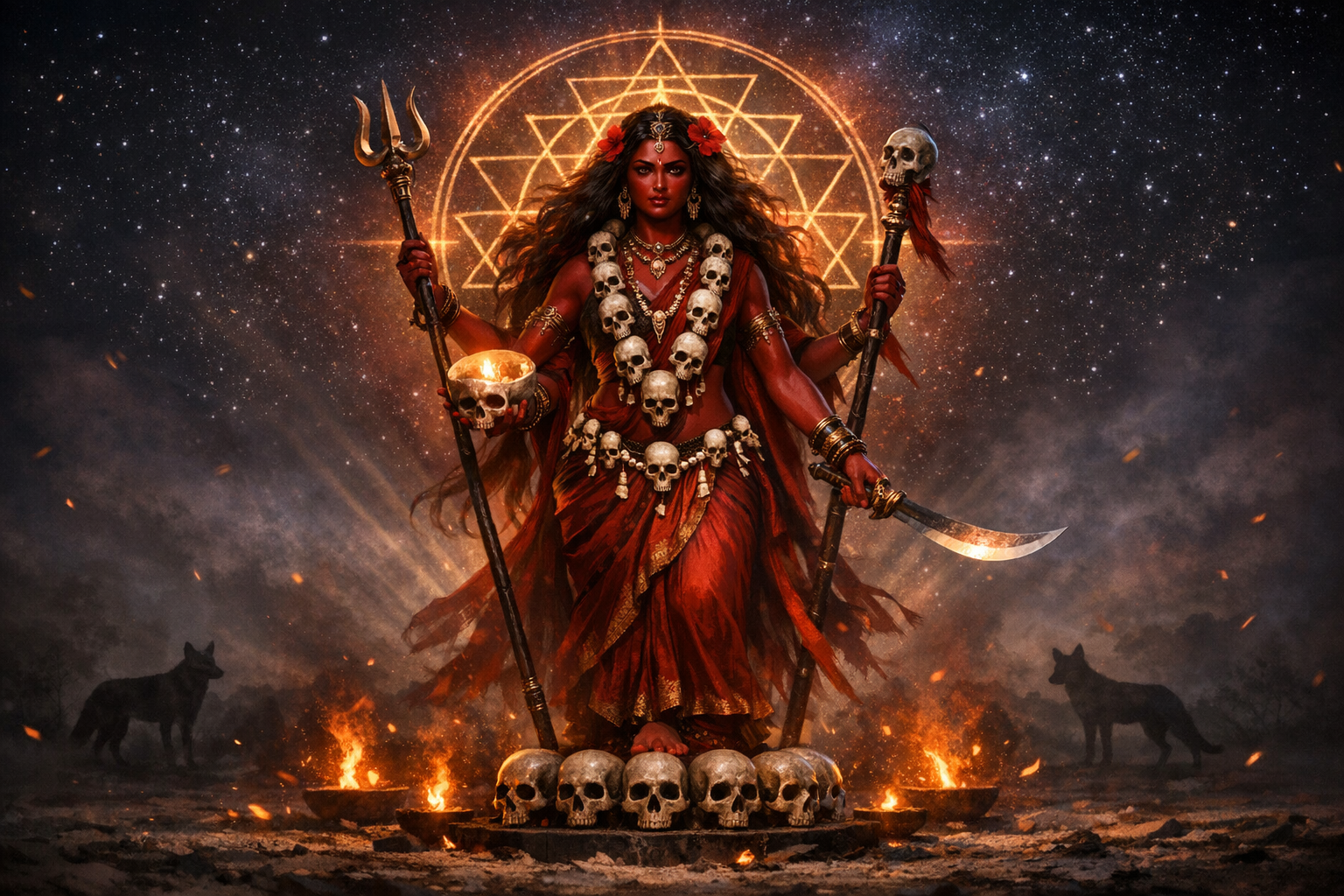
Rakta Chamundi, or Raktha Chamundi, embodies the Hindu Goddess as blood-red Shakti: fierce in aspect, compassionate in purpose, and liberative in effect. Grounded in the Devi Mahatmya’s episodes of Chanda, Munda, and Raktabija, she symbolizes a precise ethical force that ends the repetition of harm. Iconographyskull-garland, cremation-ground setting, and Panchamundi Asanateaches impermanence, vigilance, and mastery…
-
Tiruloki Sundareswara–Akhilandeswari: Timeless Shaiva-Shakta Rituals and Architecture

Thiruloki Akhilandeswari Samedha Sundareswara Swamy Temple is a Shaiva–Shakta sanctum where devotion, philosophy, and Temple Architecture converge within the living stream of Sanatana Dharma. This long-form guide explains the meaning of the deities’ names, outlines the Agamic framework of worship, and describes daily puja, Pradosha, Karthika masam celebrations, Arudra Darshan, Navaratri, and Maha Shivaratri. Readers…
-
Chhinnamasta Unveiled: The Mahavidya of Sacred Paradox, Kundalini, and Fearless Compassion

Chhinnamasta, one of the ten Mahavidyas, distills the paradox of creation and destruction into a single, coherent symbol. Her iconographyself-severed head, three streams of blood, and stance atop Kama and Ratiteaches sublimation of desire, mastery over ego, and the redistribution of life-energy as compassion. Read through the lenses of Shakta-Tantra and kundalini yoga, the triple…
-
Serpents, Secrets, and Shakti: Decoding the Hidden Power of Goddess Guhya Kali
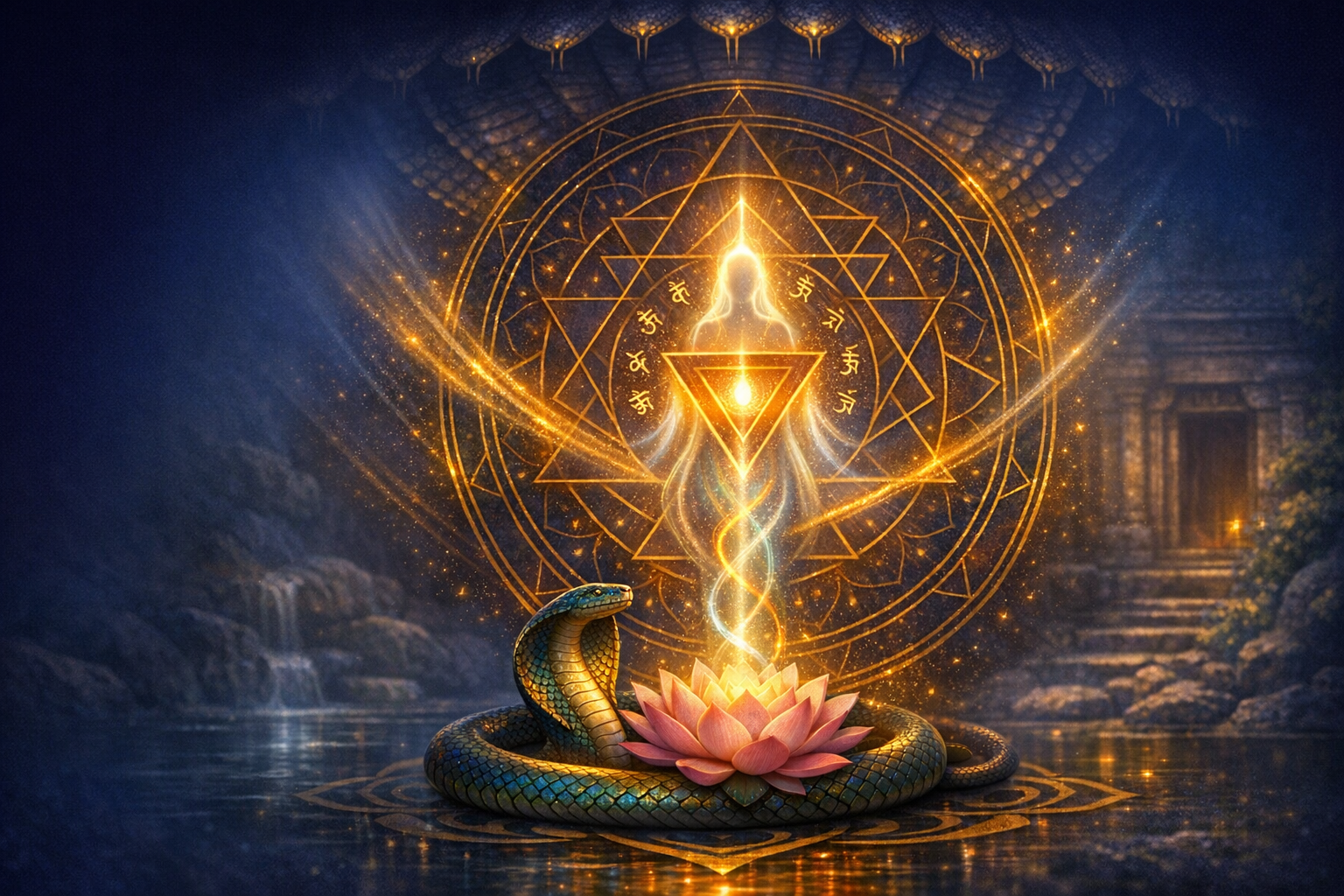
This in-depth exploration decodes the symbolism of serpents alongside the esoteric presence of Goddess Guhya Kali in Shakta Tantra. It clarifies the meaning of guhya (secret) as ethical, paced revelation and shows how Kali, as Shakti, cuts through inner knots that obscure clarity. Readers gain a technical overview of kundalini, the nadis (ida, pingala, sushumna),…
-
Kumari Puja Unveiled: Encounter the Living Goddess of Navratri with Sacred Ritual Precision
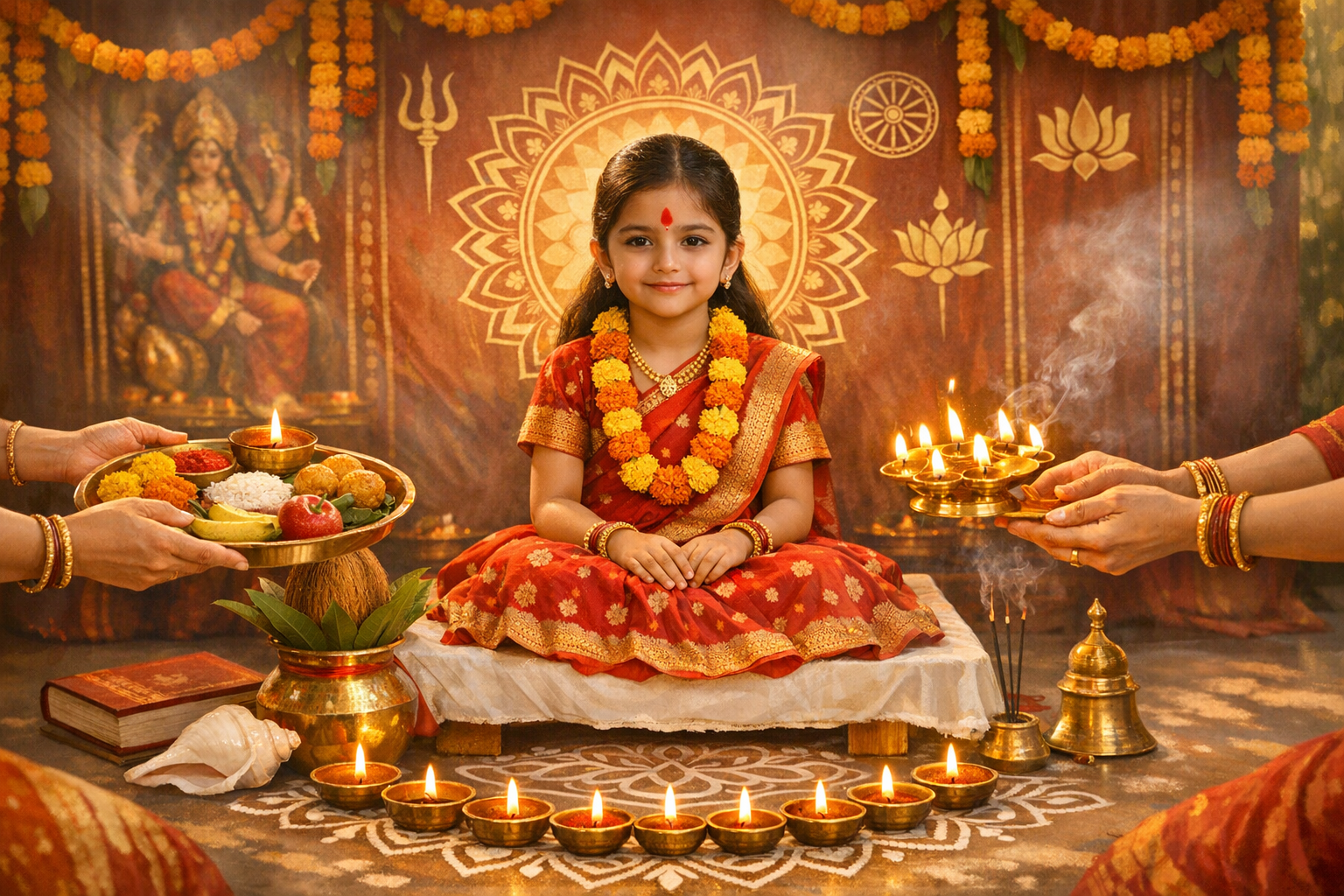
Kumari Puja venerates the Divine Mother as a living presence in pre‑pubescent girls during Navratri and Durga Puja, translating Shakta philosophy into compassionate, ethical practice. This comprehensive guide explains historical lineages, scriptural foundations in the Devi Mahatmya and Vedanta, and the symbolism of honoring the Navadurga through Kanya Puja. It details a clear, respectful puja…
-
Kanya Puja 2026: Ultimate Kumari Pooja on Ashtami/NavamiDates, Vidhi, Meaning, Dharmic Unity
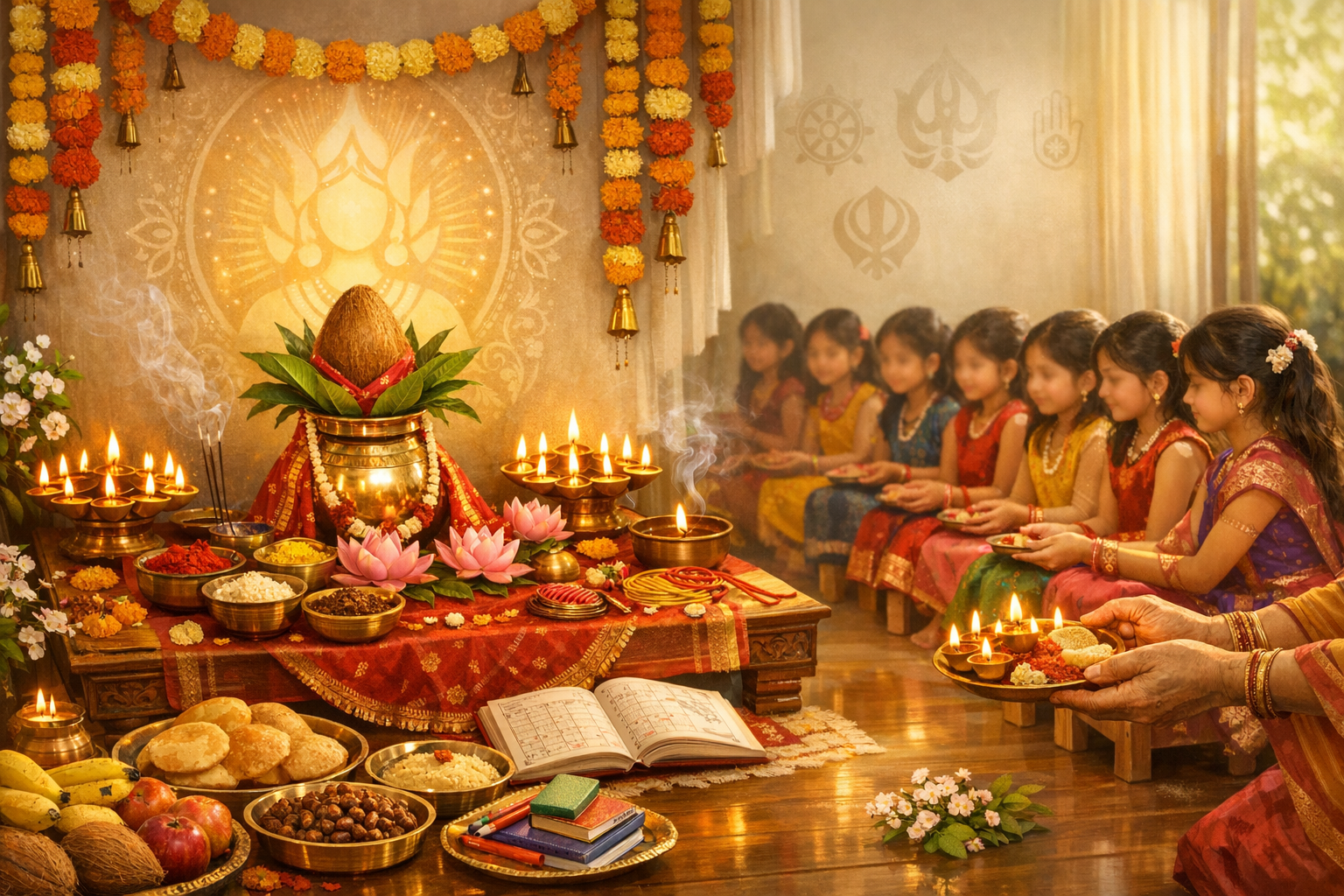
Kanya Puja (Kumari Pooja/Kanjak Puja) is a central Navratri rite that honors the living presence of Devi in young girls through hospitality, nourishment, and gifts. In 2026, the puja aligns with Durgashtami on October 18, with many also observing on Mahanavami, October 19; during Chaitra Navaratri it falls on March 26 (Thursday). This comprehensive guide…
-
Goddess Jogadya Durga of Bengal: Unveiling Adya Shakti, Yoga, and a Timeless Shakta Legacy

Goddess Jogadya (Yogadya) is Bengal’s intimate manifestation of Durga, uniting the yogic discipline of attention with the primordial Adya Shakti. This in-depth guide explains her theology, iconography, and ritual grammar, situating Jogadya within Bengal’s sacred geography and festival calendarfrom Charak Sankranti in Chaitra to Sharadiya Navaratri in Ashwin. Readers learn how daily worship follows Panchopachara…
-
When the Formless Takes Form: Skanda Purana on Parvati’s Awe‑Inspiring Union with Shiva
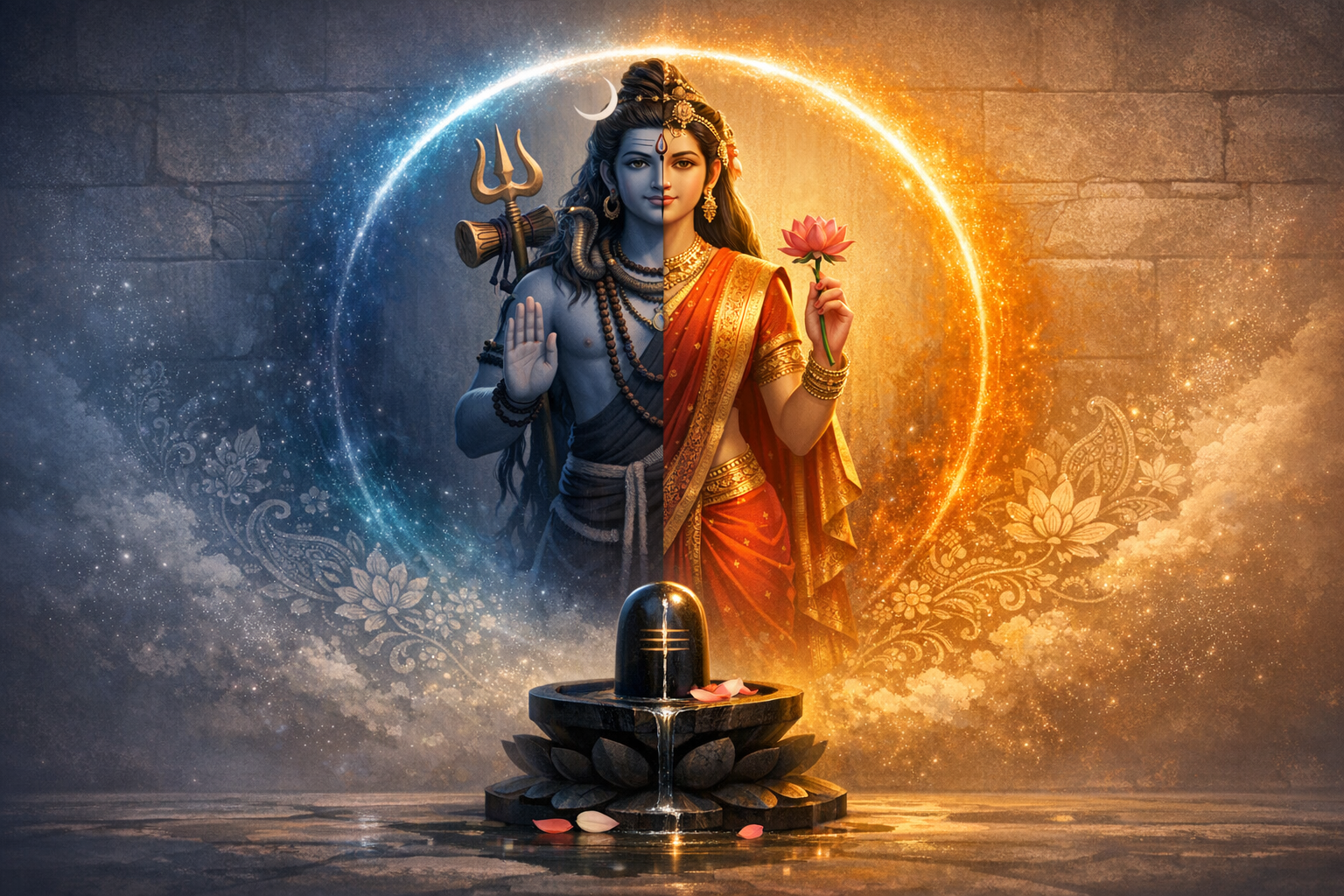
This in-depth exploration of the Skanda Purana’s teaching on Goddess Parvati and Lord Shiva presents their union as a precise account of how formless consciousness and living form are inseparably one. Readers will learn how the nirguna–saguna dialectic, familiar from the Upanishads, is rendered experiential through Shaiva iconography such as Ardhanarishvara, the Shivalinga, and Shiva…
-
Kanya Puja 2026: Exact Dates, Ritual Steps, and Deep Significance for Navratri & Durga Puja
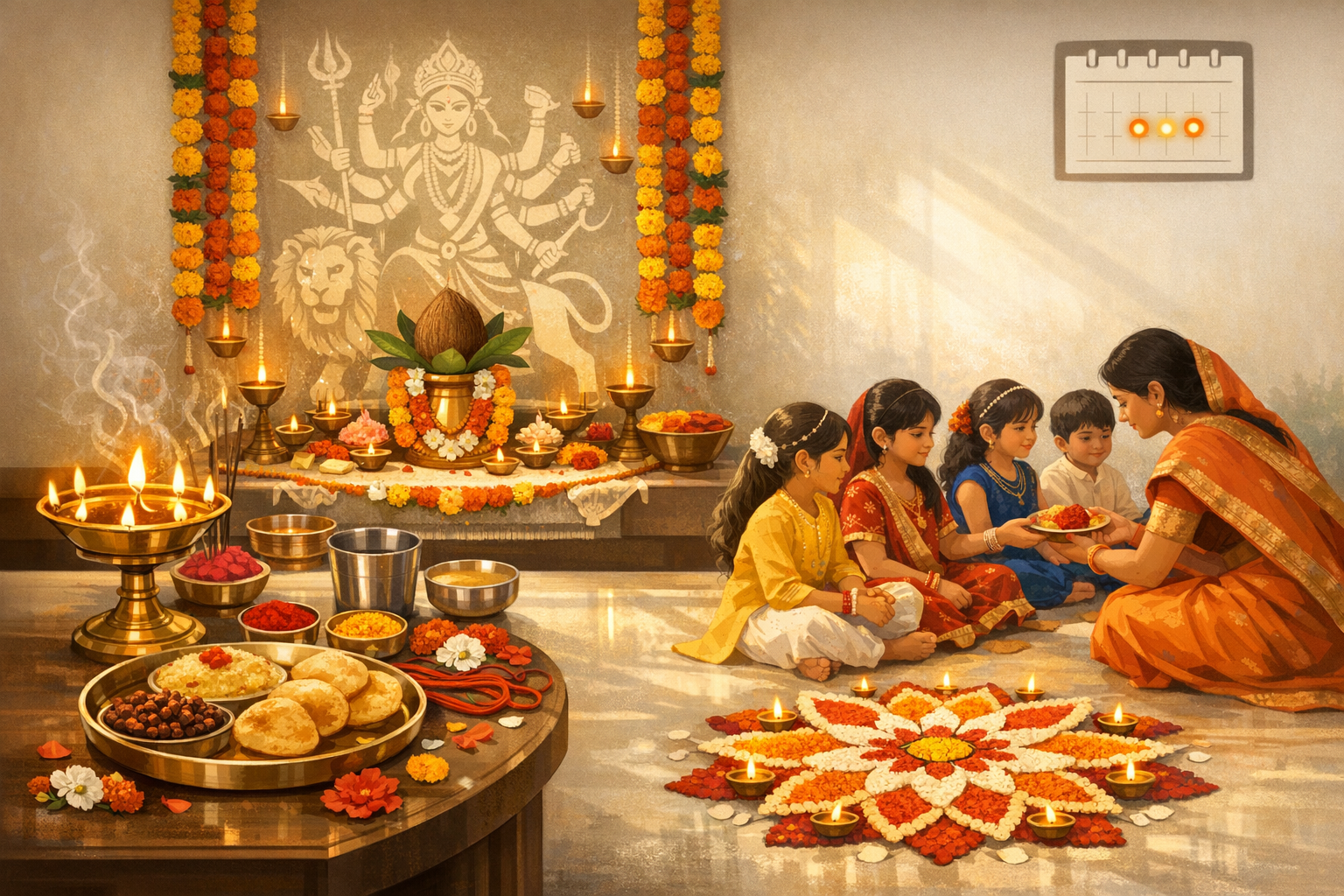
Kanya Puja, also called Kumari Pooja or Kanjak Pooja, is a central rite of Navratri Durga Puja in which prepubescent girls are honored as embodiments of Devi. In 2026, the principal date is October 18 (Durgashtami), with many traditions also observing it on October 19 (Mahanavami); during Chaitra Navaratri, it falls on Thursday, March 26.…
-
Sindhara Dooj 2026 (Gauri Dwitiya): Auspicious Dates, Powerful Rituals, and Navratri Day 2 Meaning
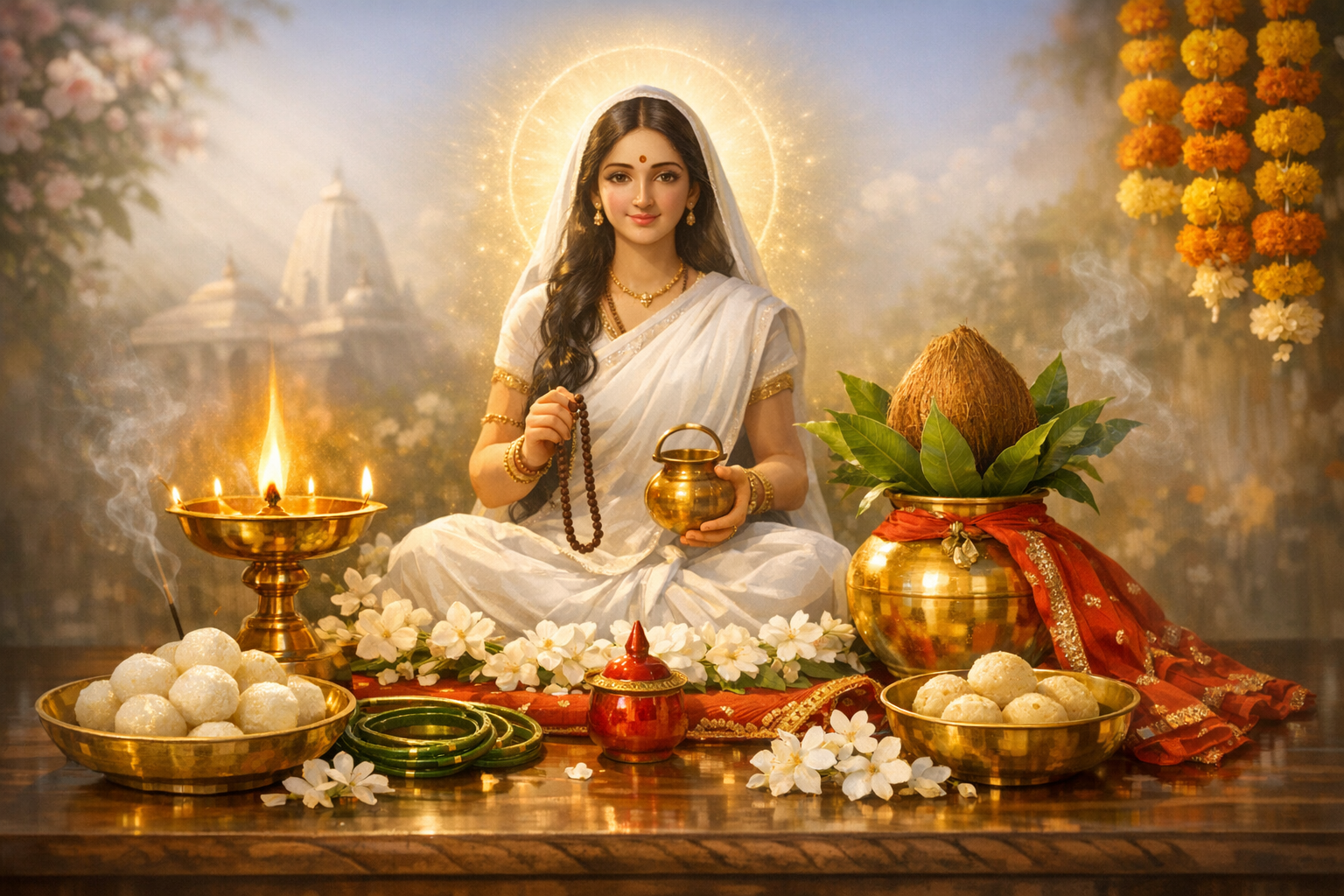
Sindhara Dooj (Gauri Dwitiya) marks Navratri’s second day, uniting the ascetic focus of Maa Brahmācharini with the cultural celebration of sowbhāgya. In 2026, it falls on March 20 (Chaitra/Vasant Navratri) and October 12 (Ashwin/Sharad Navratri); the Dwitiya tithi at sunrise guides observance, with local panchang checks recommended for devotees abroad. The guide explains theological meaning,…
-
Kundalini Tantra Unveiled: A Scientific, Dharmic Guide to Awakening the Serpent Power

This comprehensive guide presents Kundalini Tantra as a precise, ethical, and integrative science shared across dharmic traditions. It clarifies yogic anatomy (nadis, chakras, sushumna nadi) and explains how breathwork, bandhas, mudras, mantra, and meditation organize subtle energy safely. A stepwise 12-week framework details how to build foundations with yama-niyama, asana, and pranayama before progressing to…
-
Chakrapani Bhairava at Muktinath: Witness Shiva–Shakti–Vishnu Unity in the Himalayas

Set in Nepal’s Mustang, Muktinath (Chumig Gyatsa) unites Śākta, Śaiva, Vaiṣṇava, and Buddhist traditions in one sacred landscape. The Gandaki Devi Śakti Pīṭha is traditionally identified with Sati’s right cheek, guarded by Chakrapani Bhairavathe kṣetrapāla who protects shrine, pilgrims, and dharma. The analysis explains how the epithet “Chakrapani,” a Vaishnava title of Viṣṇu, when paired…
-
Goddess Kali’s Fearless Paradox: Creator, Destroyer, and Tantric Symbolism of Transformation
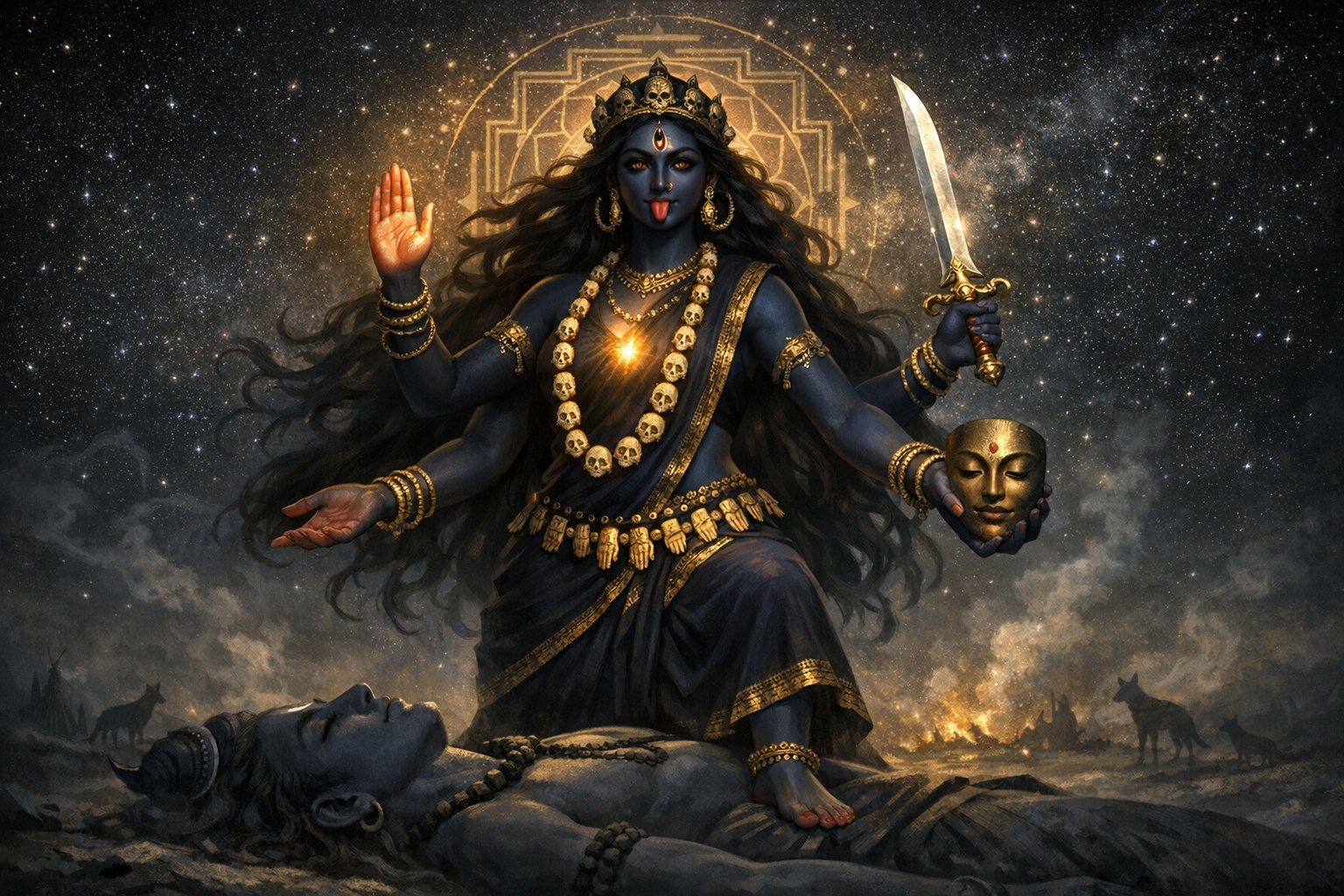
Goddess Kali unites the roles of creator, destroyer, and transformer, encoding a precise Śākta metaphysics within striking iconography. Readers gain a clear, research-informed guide to her symbolsfrom the muṇḍamālā and cremation ground to abhaya and varada mudrāsand how each maps to ethical action and psychological resilience. The narrative situates Kali within scripture (Devī Māhātmya, Kālīkā…
-
Shiva–Shakti Raasa Leela: Unveiling the Cosmic Dance of Love, Consciousness, and Creation
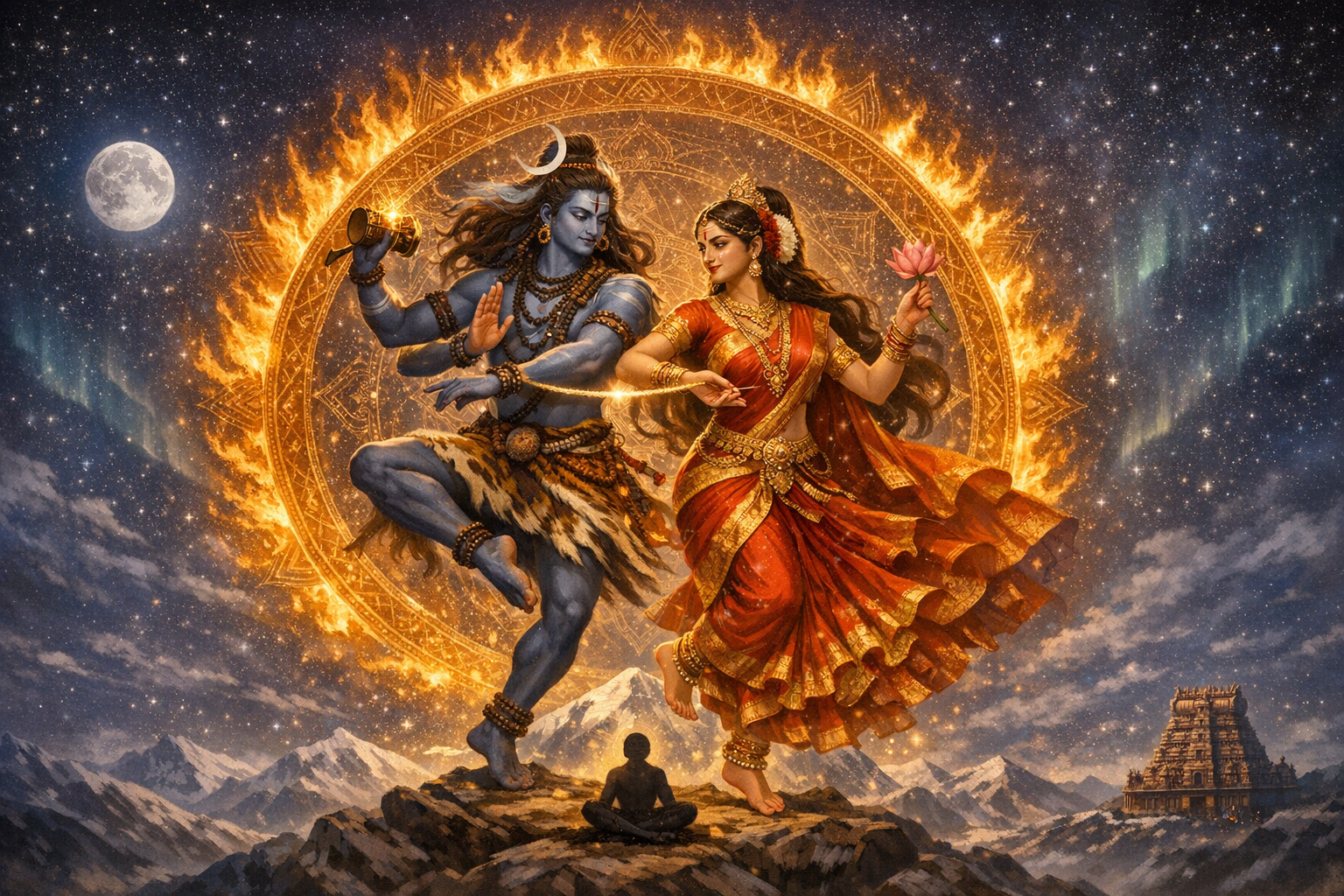
Shivashakti Raasa Leelaalso known as Sri ShivShakti Rasalilapresents the union of Śiva and Śakti as a continuous dance and embrace that render Shaiva metaphysics visible and livable. Anchored in Natyashastra aesthetics, Shaiva Āgamas, and Kashmir Shaivism’s rasa theory, it interprets creation as spanda (vibration) and devotion as aesthetic savoring (rasa). Iconography of Śiva Naṭarāja, Somāskanda,…
-
Ashtadasa Shakti Peethas: A Definitive, Heartfelt Guide to the 18 Sacred Seats of Shakti
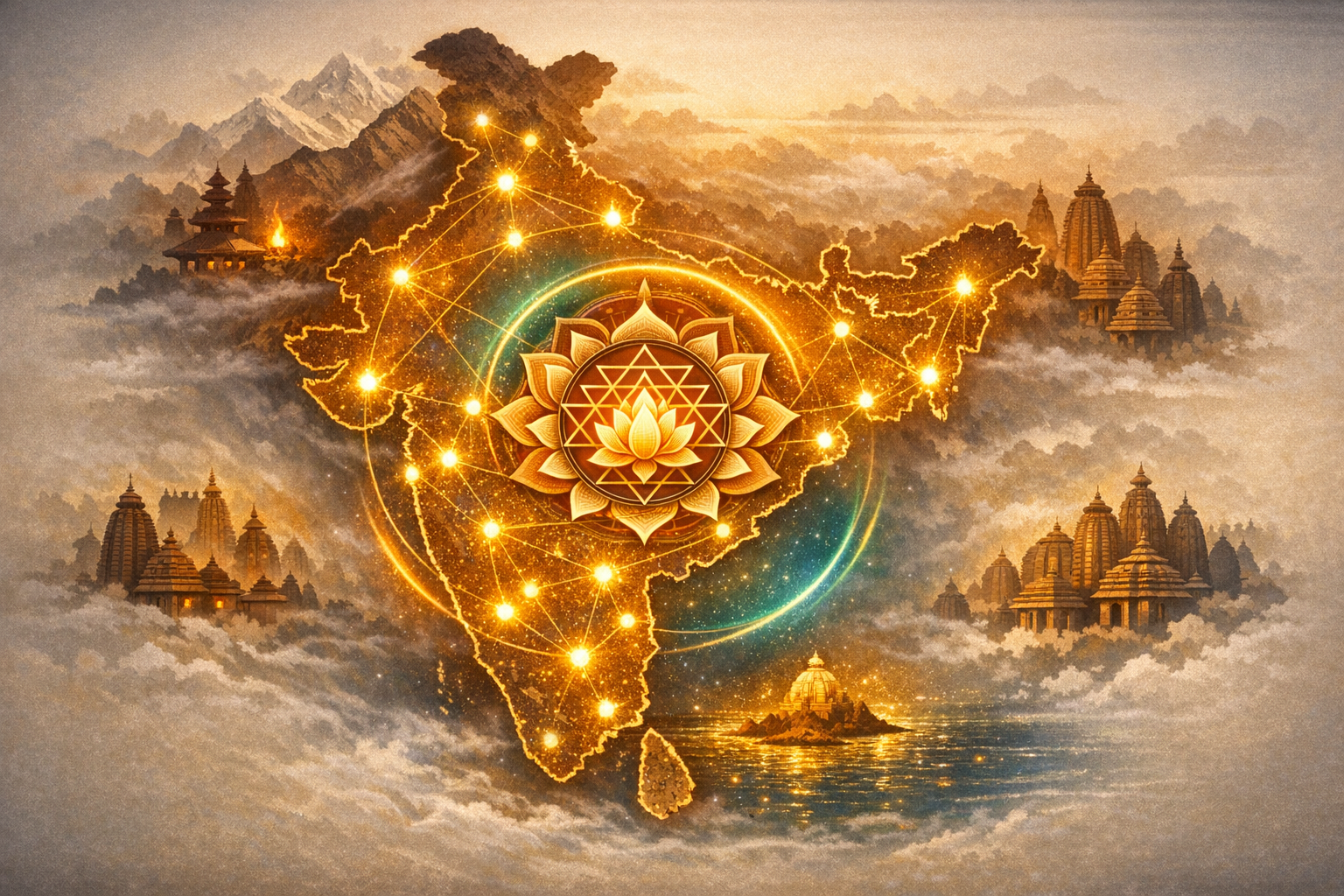
The Ashtadasa Shakti Peethaseighteen revered seats of the Divine Feminineform a pan–South Asian sacred geography integrating myth, ritual, and pilgrimage. This comprehensive guide explains their Purāṇic-Tantric origins in the story of Sati, clarifies why some traditions count 18 while others preserve 51/52/64, and outlines a widely cited working list with regional context. It details the…