
-
Virabhadra vs Bhairava: Decoding Shiva’s Fierce TwinsOrigins, Iconography, Tantra, Temple Worship
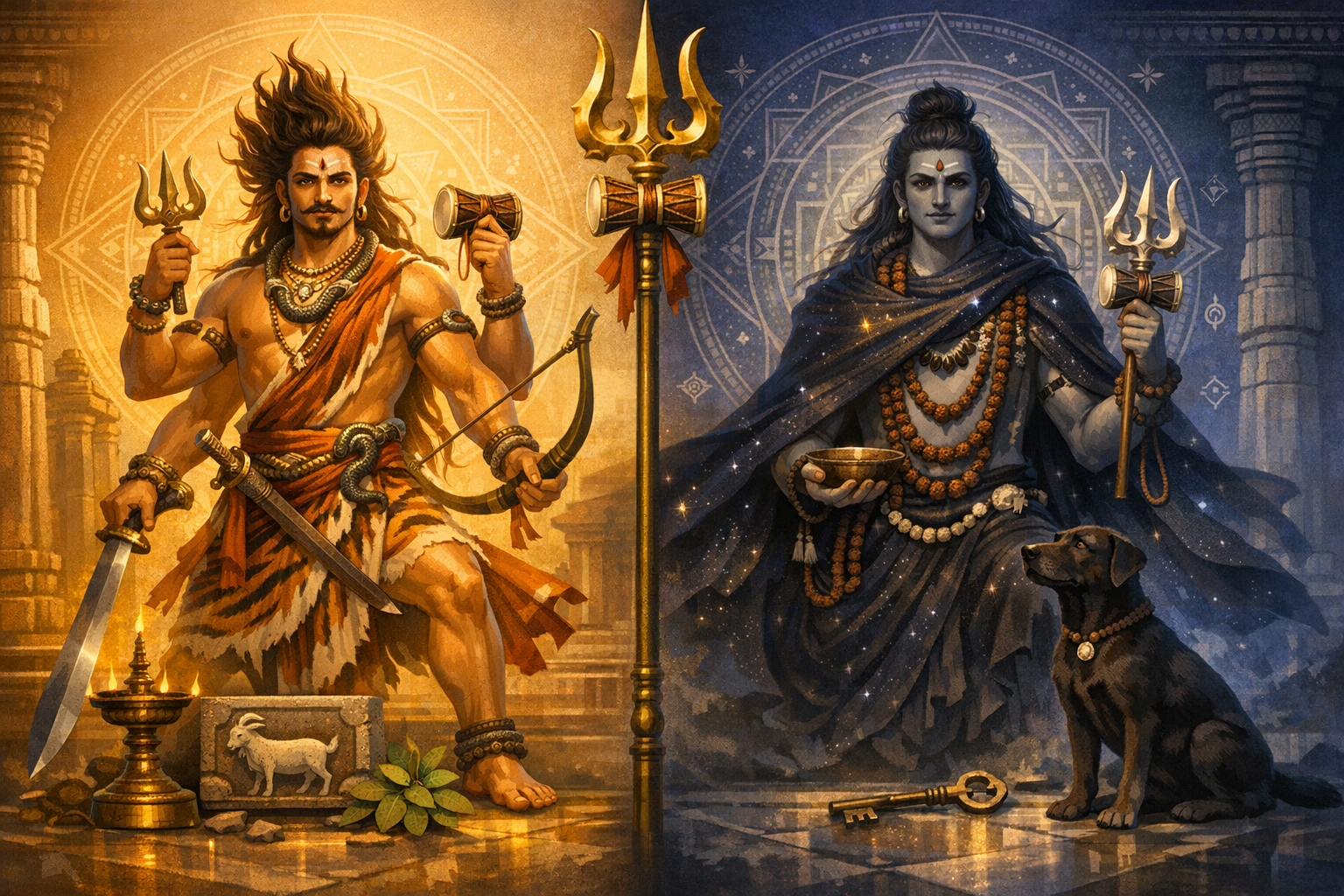
Virabhadra and Bhairava are Shiva’s fiercest yet compassionate forms, distinguished by purpose, scope, and soteriology. Virabhadra embodies event-specific dharmic correction in the Daksha Yajna narrative, while Bhairava serves as perennial guardian of thresholds and time. Their iconographies differVirabhadra as heroic warrior and Bhairava as digambara sentinel with skull-bowl and dog vahanayet both enact restorative justice.…
-
Indrajit’s Final Penance: A Riveting Study of Dharma, Filial Loyalty, and Redemption in Ramayana

This long-form analysis explores Indrajit (Meghanada) as one of the Ramayana’s most complex figuresan invincible warrior confronting a profound dharmic dilemma between filial loyalty and moral law. Anchored in the Valmiki Ramayana and enriched by regional traditions such as the Krittivasi Ramayana, it explains how the Nikumbhila sanctuaryoften associated with Kaliframes his final yuddha-yajna as…
-
Kalika Tandava Decoded: Shiva’s Eight‑Armed Cosmic Dance of Renewal and Liberation
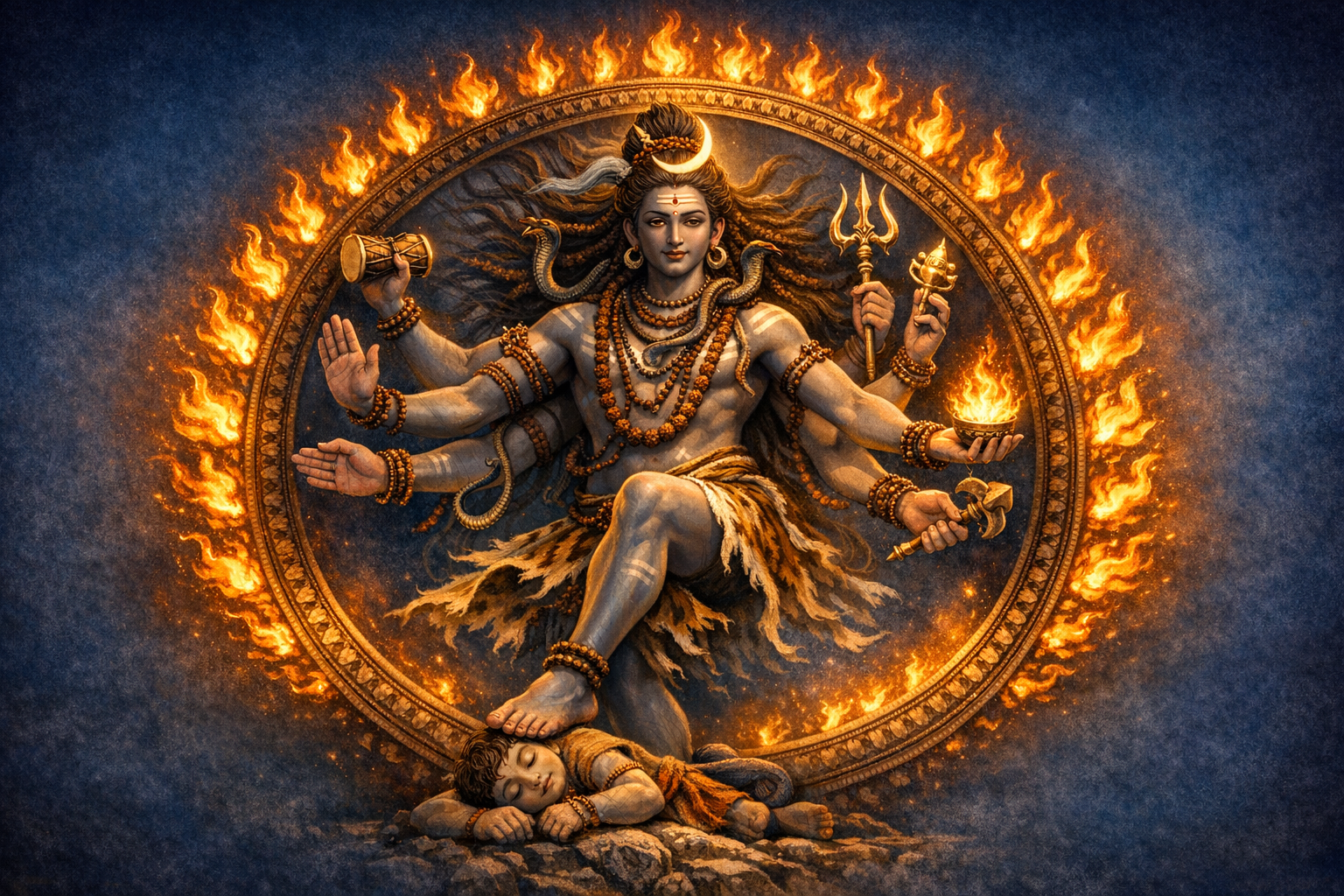
Kalika Tandava presents Shiva’s eight‑armed dance as a rigorous map of cosmic processes and inner transformation. The iconographyAbhaya and Varada mudras, damaru, agni, trishula, kapala, and moretranslates metaphysics into a readable visual grammar. Drawing on Shaiva Agamas, Shilpa‑Shastras, and the Natya Shastra, the form aligns creation and dissolution with a living rhythm practitioners can contemplate…
-
Laghu Shyamala: The Enigmatic Dark Goddess of Shakti, Speech, and Fertile Creation in Hinduism

Laghu Shyamala is honored as a dark-hued, esoteric form of the Divine Mother whose power concentrates knowledge, speech, creativity, and fertility. The name reveals an accessible pathway to Shakti, pairing the generative symbolism of “Shyamala” with the concise, practical emphasis of “Laghu.” Iconographyveena, parrot, book, and japa-malamaps a theology of cultured eloquence and compassionate learning.…
-
Shukla Devi Puja 2026 on Jyeshta Shukla Ashtami: Sacred Timings, Kheer Bhavani, Complete Vidhi
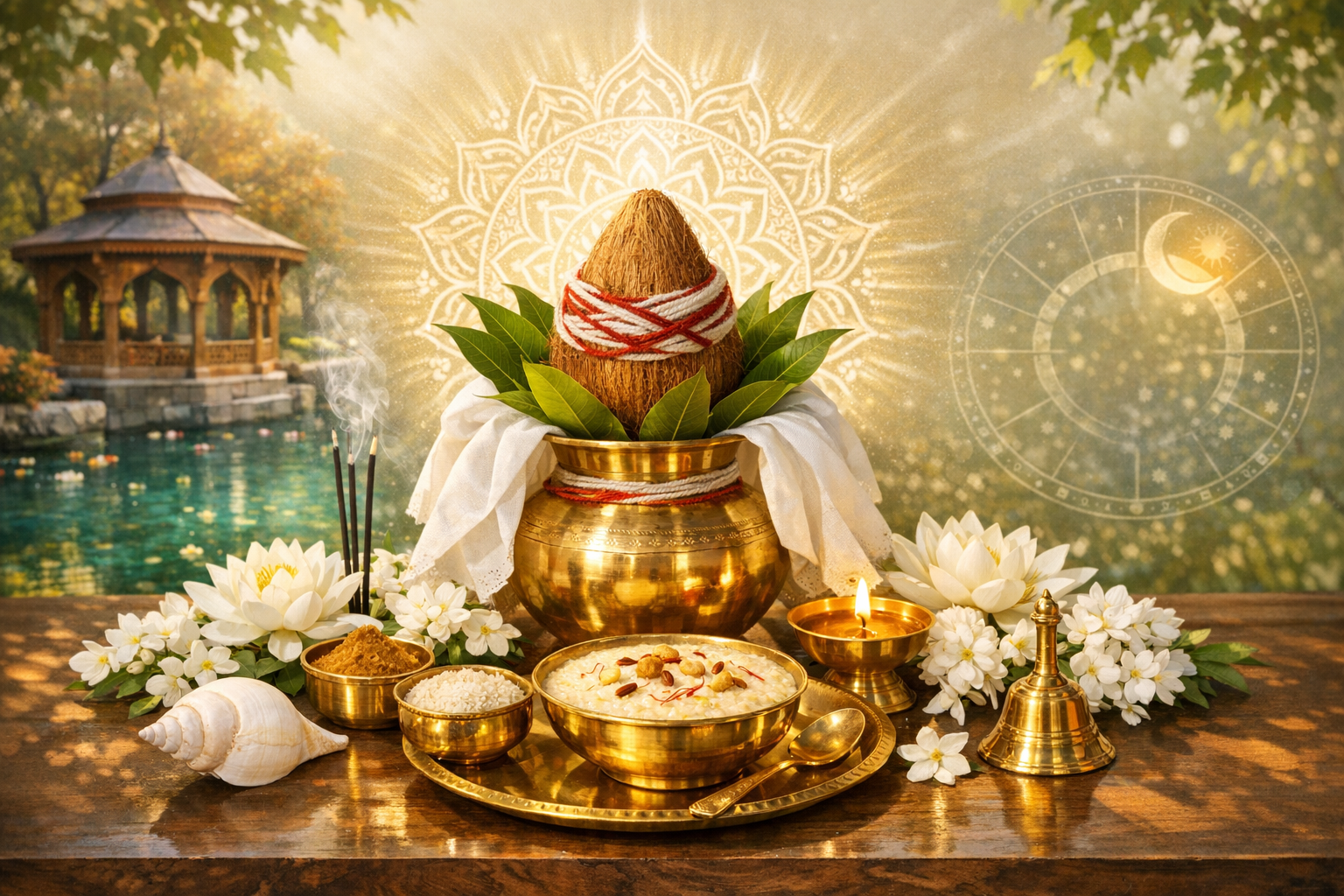
Shukla Devi Puja (Shukla Devi Aradhana) in 2026 falls on 22 June, coinciding with Jyeshta Shukla Ashtami in the Hindu calendar. The day venerates the luminous, sattvika dimension of the Divine Mother and aligns with the Khir Bhavani Mela in Kashmir, where devotees traditionally offer kheer. The article explains how Ashtami tithi is computed, why…
-
Bhairava Unveiled: Symbolism, Meaning, Kala-Time Mastery, and Fearless Liberation

Bhairava Roopayanamed first in the Bhairava Sahasranamapresents Bhairava as the omnipresent intelligence of Shiva that creates, sustains, dissolves, conceals, and liberates. This long-form exploration decodes the name’s etymology (bhaya + rava and Bha–Ra–Va), connects it to the Shaiva pañcakṛtya, and situates it within Kashmir Shaivism’s non-dual vision and Vijnana Bhairava Tantra’s contemplative methods. Readers gain…
-
Aparajita, the Invincible: Ancient Hindu War Rites, Dharma-Yuddha Ethics, and Strategy
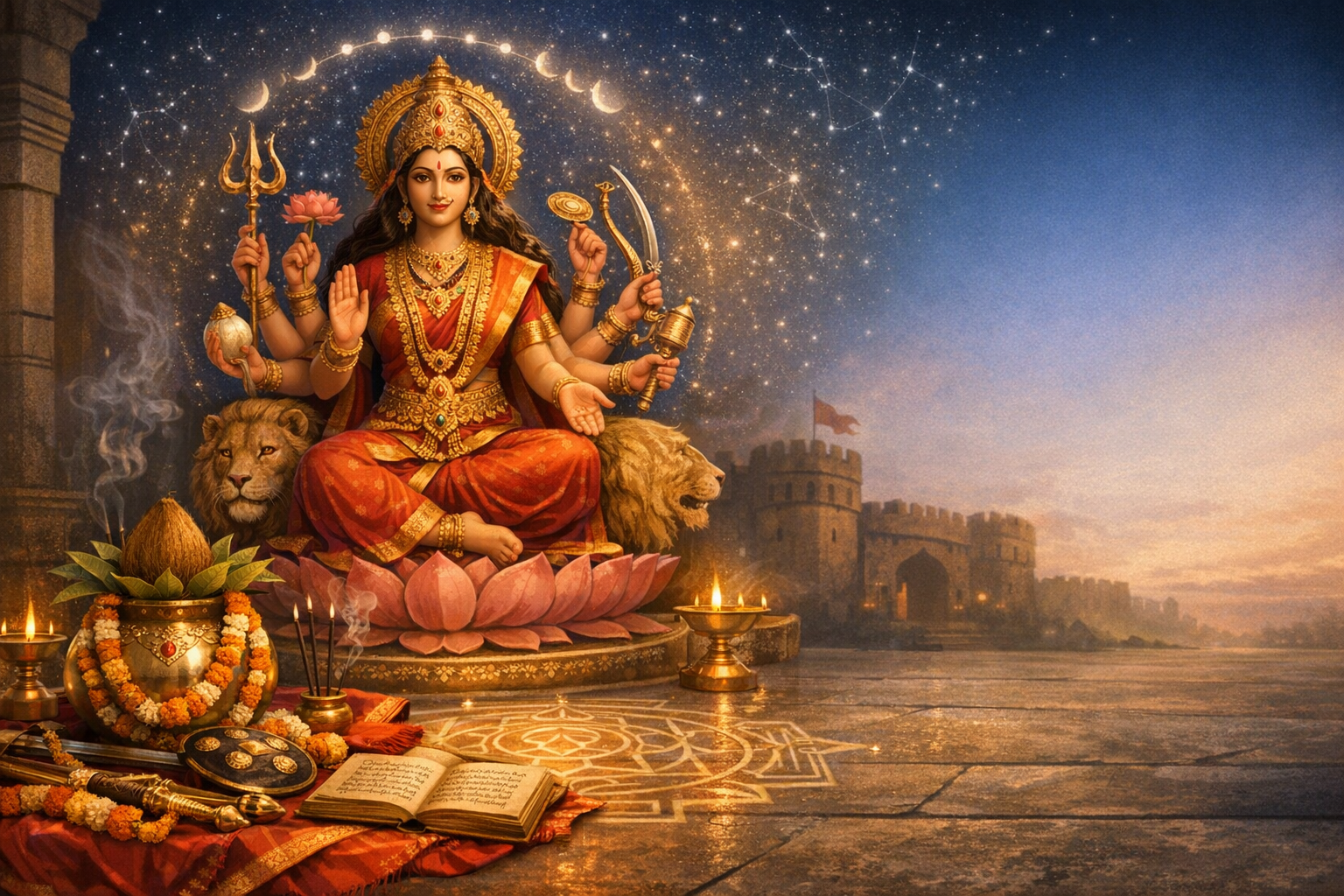
Aparajita“the unconquered”was venerated by kings, commanders, and communities as the victory-bestowing face of the Goddess in ancient India. The worship synchronized statecraft and spirituality, binding warfare to Dharma-Yuddha and Kshatra Dharma. Textual traditions linked Aparajita with Durga and embedded victory hymns from the Devi Mahatmya into pre-campaign rites. Rituals integrated muhurta selection, sankalpa, weapon consecration,…
-
Shoola vs Trishul: Decoding Sacred Weapons, Iconography, and the Timeless Power of Dharma
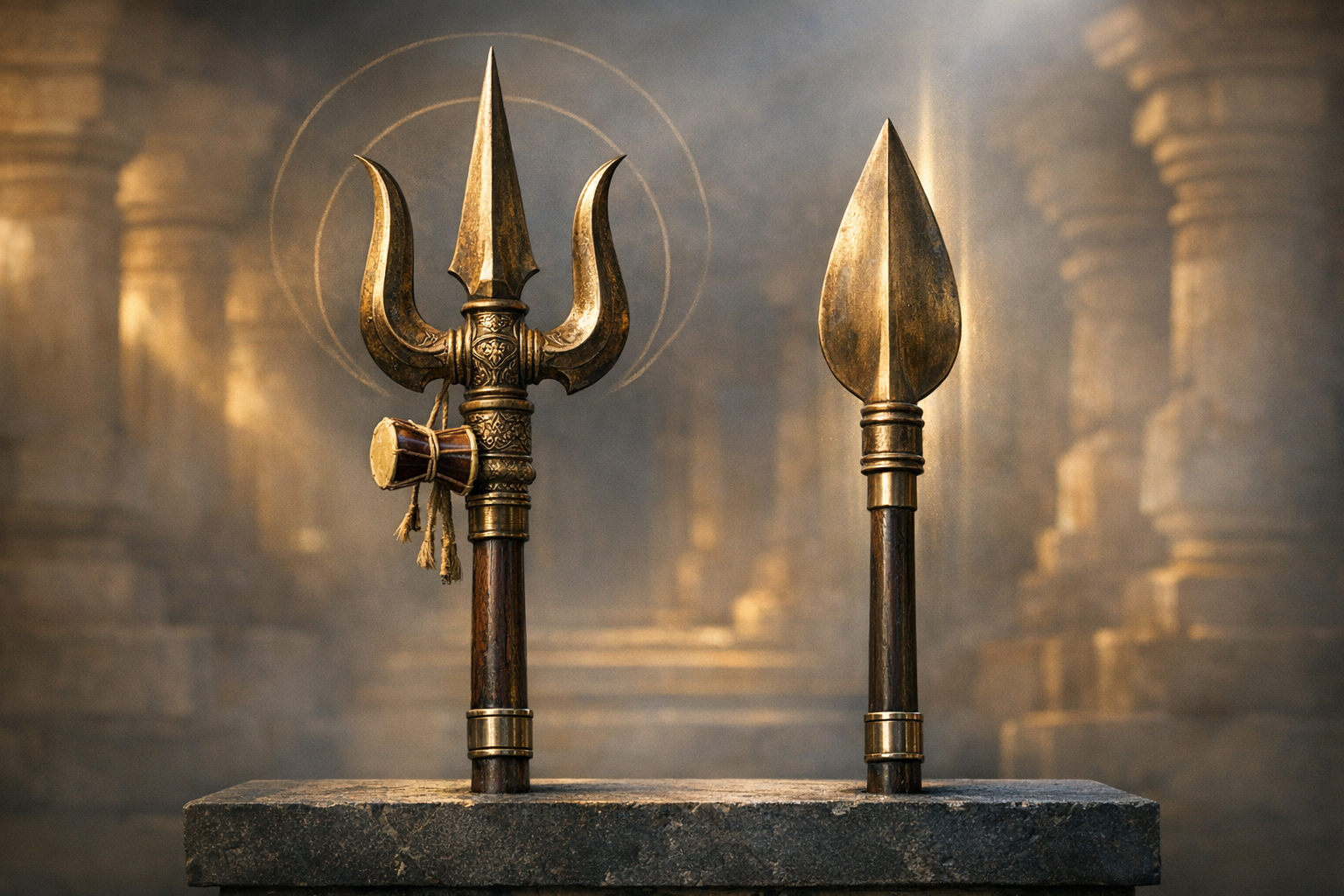
Shoola (single-pointed spear) and Trishul (three-pronged trident) are often confused, yet they carry distinct forms and meanings in Hindu iconography. This article clarifies how a spear encodes one-pointed discernment while a trident integrates triadic powersiccha, jnana, kriya; the gunas; and the three dimensions of time. Readers learn to identify each implement swiftly at temples and…
-
Dashamahavidya Jayanti 2026–2027: Accurate Tithi Guide, Deep Meanings, and Home Puja Methods
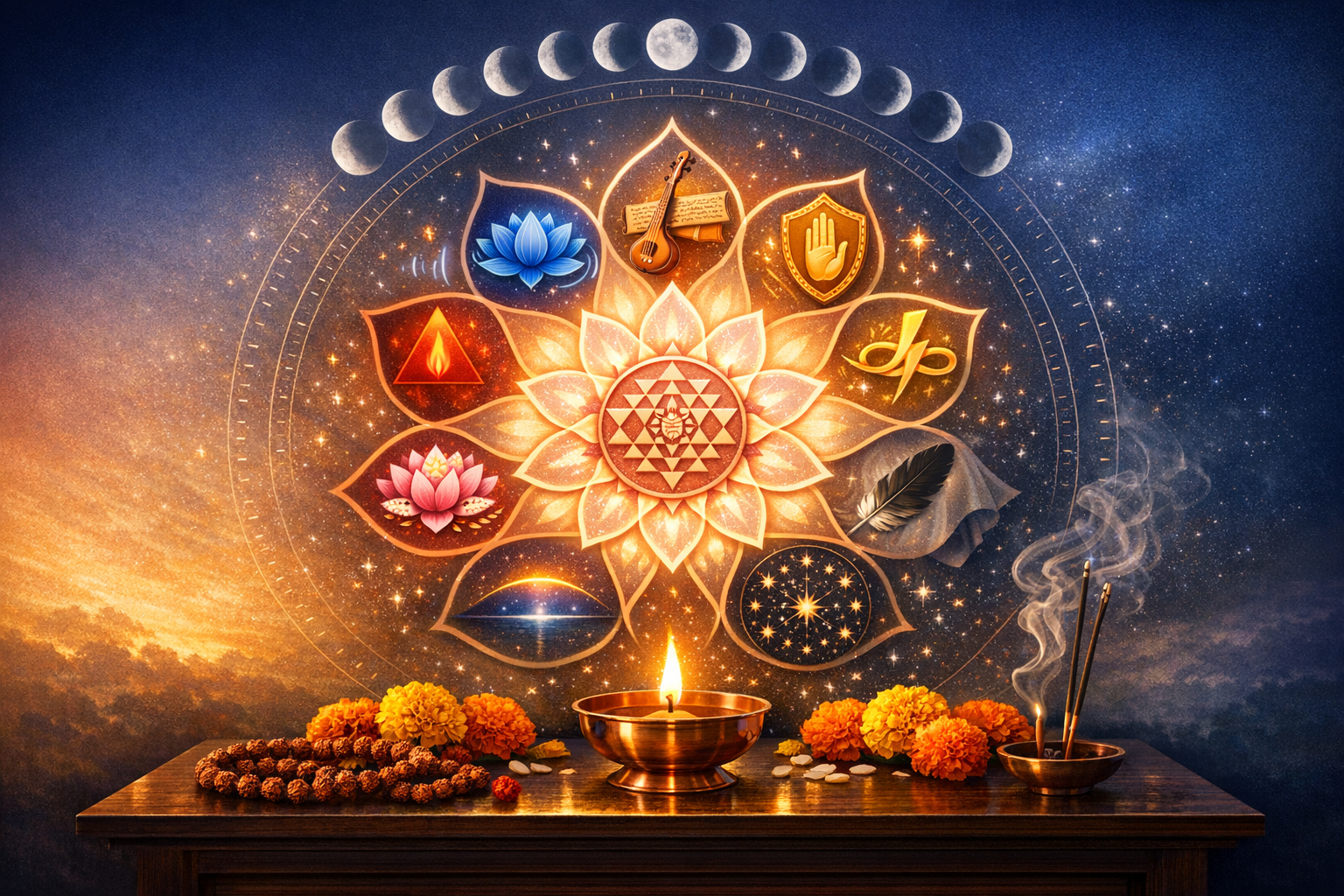
This comprehensive guide to Dashamahavidya Jayanti 2026–2027 explains how the ten Jayantis of Mahatara, Matangi, Bagalamukhi, Chinnamastika, Dhumavati, Mahakali, Bhuvaneshwari, Kamala, Tripurabhairavi & Lalita are determined by tithi, with clear notes on regional calendar differences. It summarises widely observed tithis for each Mahavidya, indicates likely 2026–2027 Gregorian windows, and offers practical home-puja methods aligned to…
-
Hargauri Durga in Bengal: Uma’s Tender Homecoming and Her Sacred Union with Shiva
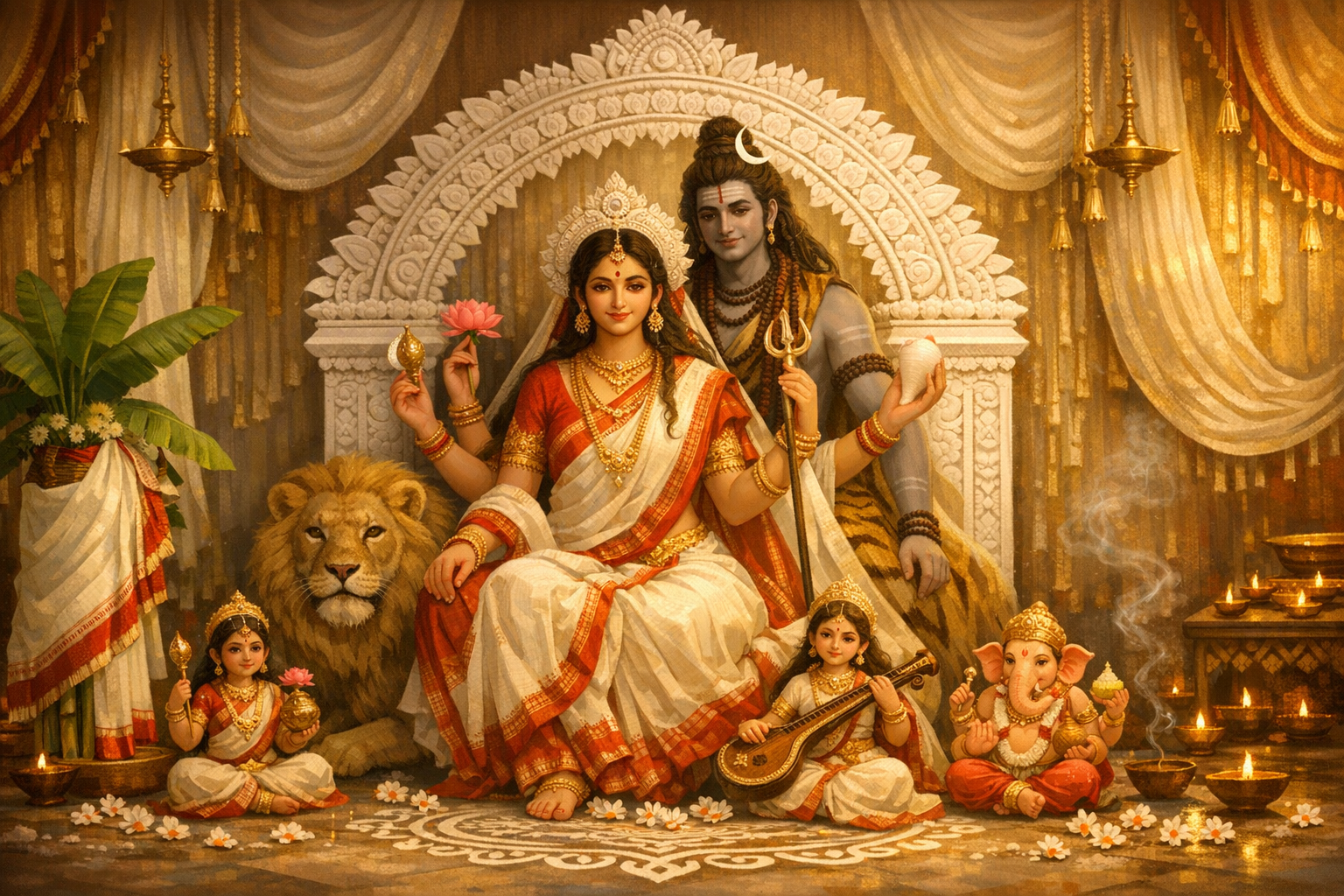
Hargauri Durga reframes Bengal’s Sharadiya devotion as Uma’s tender homecoming, with Shiva’s serene presence completing the sacred tableau. The piece decodes the Hara–Gauri archetype, clarifies its relationship to Mahishasura Mardini, and situates the tradition within Devi Paksha, from Mahalaya to Vijayadashami. It explains core ritesbodhana, nabapatrika, Sandhi Puja, Kumari Puja, and visarjanwhile interpreting how they…
-
Chinnamasta Jayanti 2026: Fierce Shakti AwakeningDate, Tithi, Rituals, Deep Meaning

Chinnamasta Jayanti 2026 falls on 29 April and is observed on Vaishakh Shukla Trayodashi according to the Hindu calendar. This comprehensive guide explains the festival’s date–tithi alignment, its profound Mahavidya symbolism, and how householders can perform a sattvic, family-friendly puja at home. It connects Chinnamasta’s fierce wisdom to yogic themes of manipura chakra, kundalini, and…
-
When She Leads, She Builds: Shakti Leadership Uniting Hindu, Buddhist, Jain, and Sikh Paths

This essay examines Shakti-centered leadership across Hinduism, Buddhism, Jainism, and Sikhism, showing how women-led initiatives have historically built enduring institutionstemples, viharas, basadis, and gurdwarasthat function as knowledge commons and care infrastructures. It maps Journey and Destination across traditionsmoksha, nirvana, kevala jñāna, and muktihighlighting how aligned methods shape aligned outcomes. Case studies from Gargi and Maitreyi…
-
Nāda in Shaivism and Tantra: Unstruck Sound, Creation’s Pulse, and the Path of Awakening
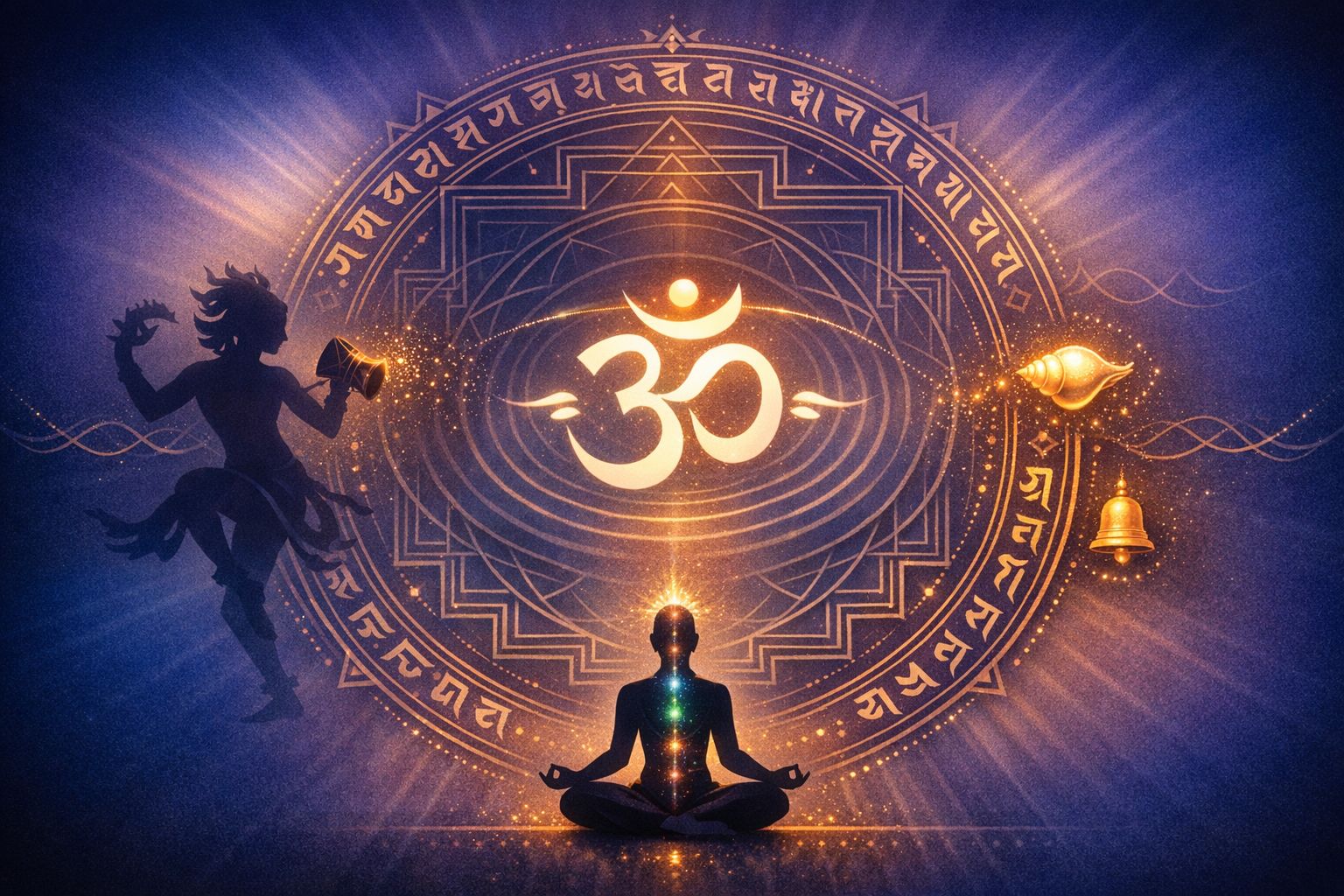
Nāda in Shaivism and the Śākta Tantras is more than audible sound; it is the unstruck vibration that initiates creation, structures language, and guides contemplative practice. This article clarifies nāda’s role in the Shaiva triad of nāda–bindu–kalā, the four levels of speech, and the 36-tattva cosmology. It explains how Oṁ, the Maheshvara Sūtras, and the…
-
Bhadrakali Amman Unveiled: Sacred Iconography, Rituals, and Time-Transcending Philosophy
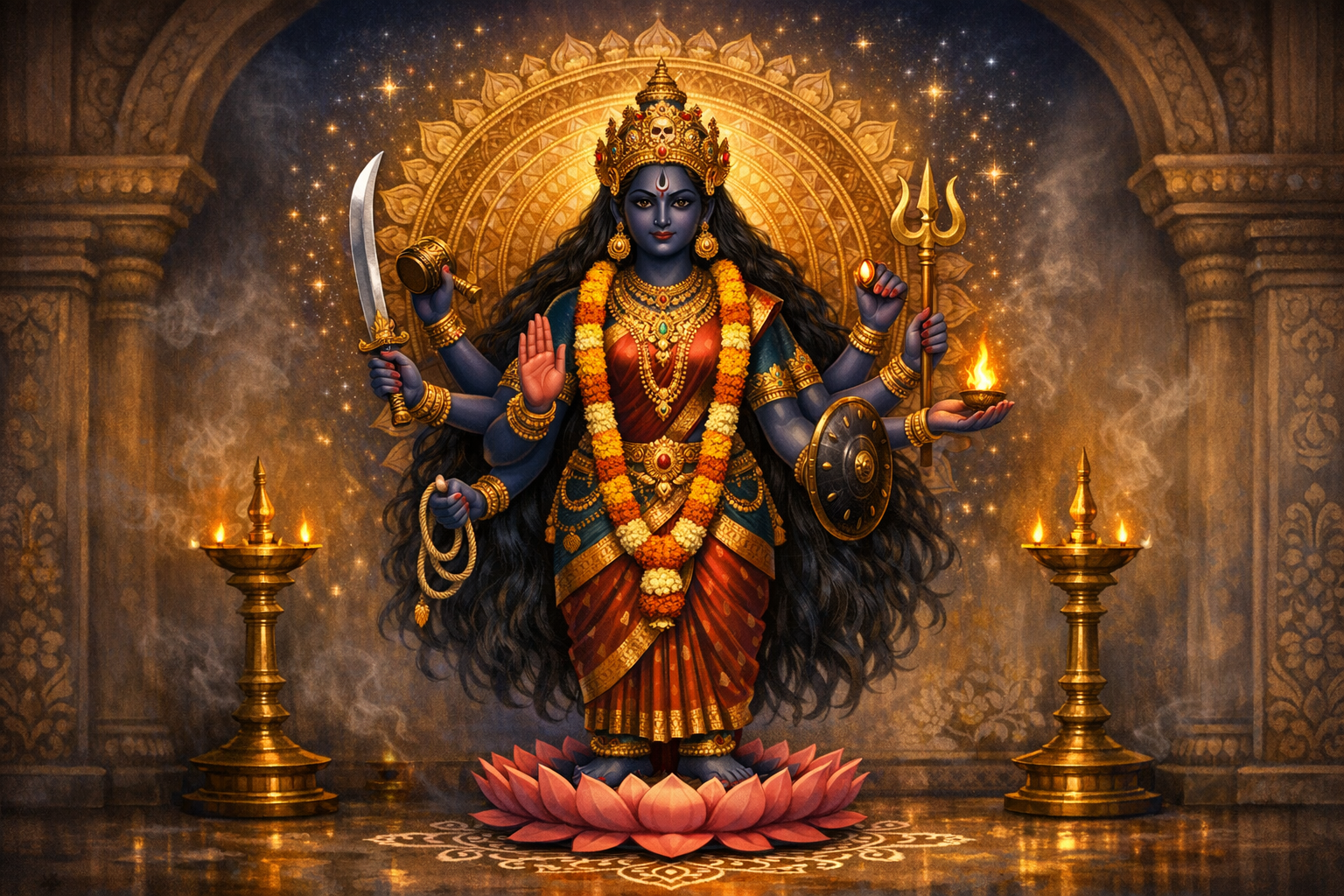
Bhadrakali Amman is presented as fierce grace: a guardian who unites auspiciousness with the transformative power of time. The analysis explains the etymology from Kala, the iconography of weapons and mudrās, and the ritual ecosystem of Amman worship in Tamil Nadu and Kerala. It highlights key festivals such as Attukal Pongala and the ethical turn…
-
Chinnamasta Jayanti 2026: Fierce Shakti AwakeningDate, Tithi, Rituals, Deep Meaning
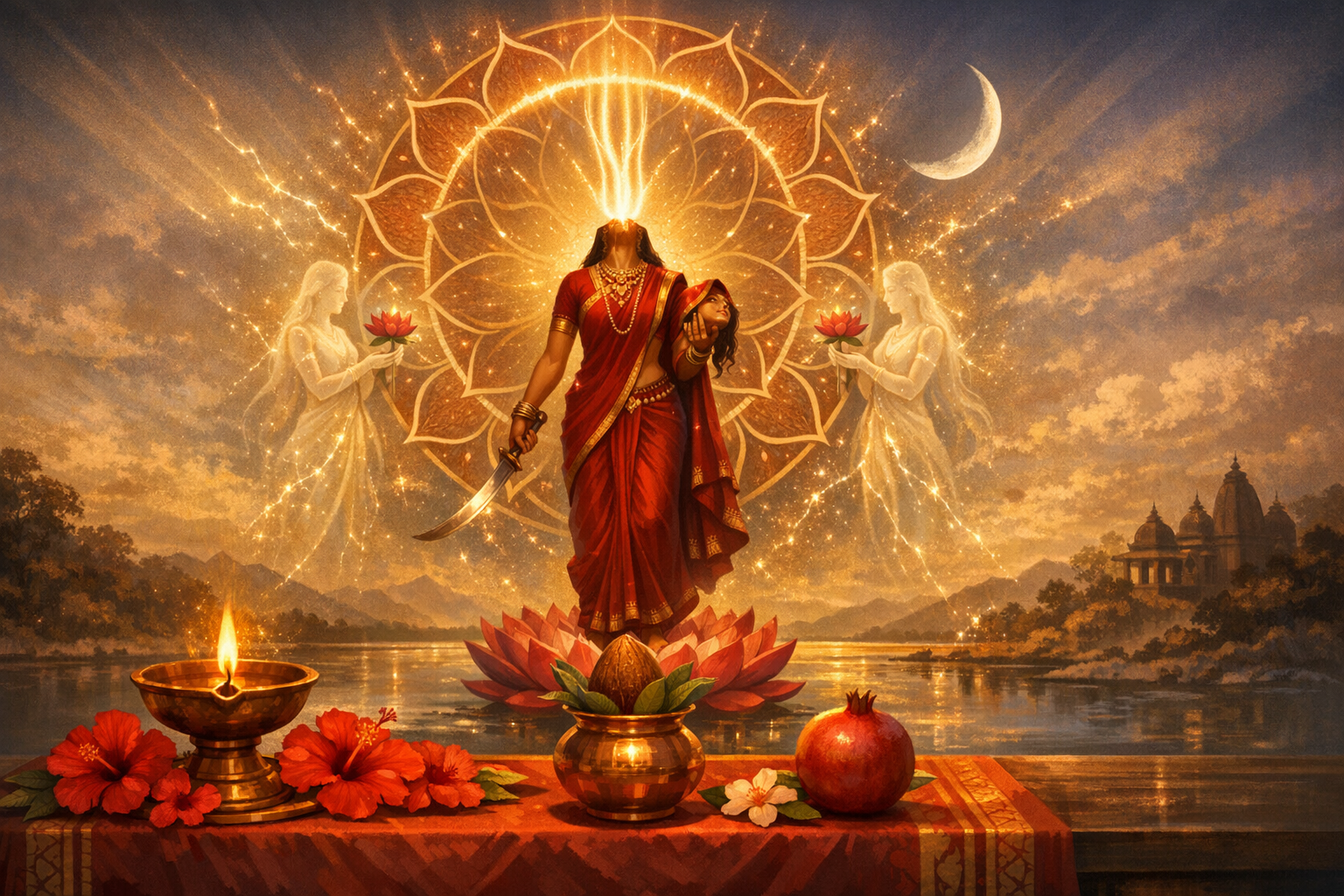
Chinnamasta Jayanti 2026 falls on 29 April and is observed on Vaishakh Shukla Trayodashi according to the Hindu calendar. This comprehensive guide explains the festival’s date–tithi alignment, its profound Mahavidya symbolism, and how householders can perform a sattvic, family-friendly puja at home. It connects Chinnamasta’s fierce wisdom to yogic themes of manipura chakra, kundalini, and…
-
Unveiling Maya Bhuvaneswari: The Blue-Hued Cosmic Mother in Odisha’s Shakta Tantra
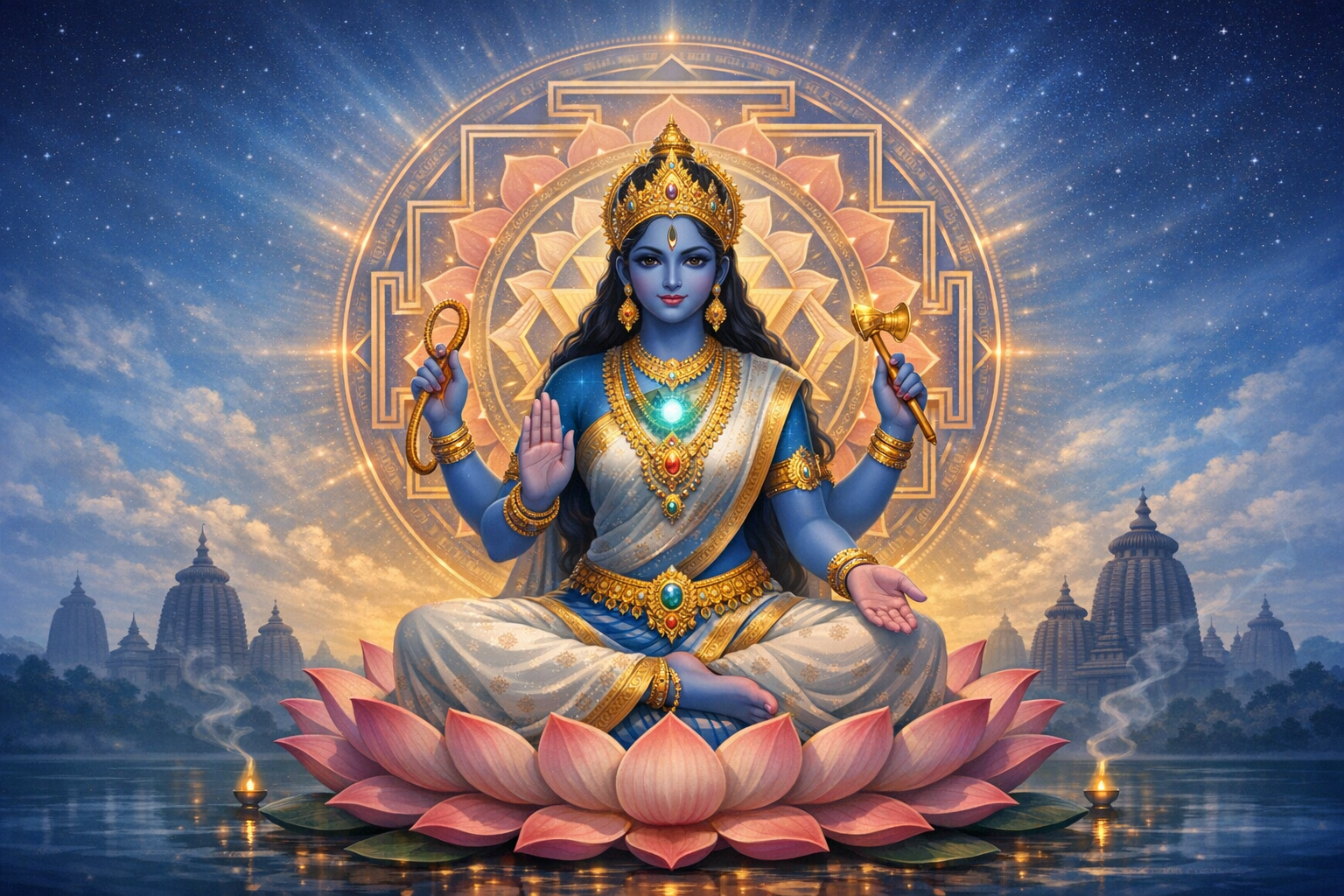
Maya Bhuvaneswari, a distinctive Odisha-centered manifestation of Bhuvaneshwari among the Mahavidyas, embodies Mahamayathe compassionate power through which consciousness appears as the universe. Rooted in Shakta Tantra, this blue-hued Hindu Goddess teaches discernment in the midst of life rather than rejection of it, aligning akasha tattva (space) with lived ethics. The article examines her iconography, mantra…
-
Shakti Peeth vs Siddha Peeth: Origins, Rituals, and the Power of India’s Sacred Seats

Shakti Peeth and Siddha Peeth occupy central yet distinct roles in Hindu sacred geography. Shakti Peeth are mythically anchored in the Sati narrative and emphasize Devi–Bhairava worship, major festivals like Navaratri, and communal pilgrimage. Siddha Peeth are experientially anchored in the attainments of siddhas and in anushthanas that reliably catalyze inner transformation. Many renowned shrines,…
-
Lambakarna Bhairava: Long-Eared Guardian of Avanti Shakti Peetha and Ujjain’s Sacred Power

Lambakarna Bhairava, the long-eared guardian of Ujjain’s Avanti Shakti Peetha, embodies a pan-dharmic symbolism of deep listening and compassionate protection. The name‘Lamba’ (long) and ‘Karna’ (ears)encodes a pedagogy of attentive hearing central to Hindu, Buddhist, Jain, and Sikh paths. Situated within Ujjain’s sacred network of Mahakaleshwar, Harsiddhi Mata, and Bhairava shrines, Lambakarna functions as kṣetrapāla,…
-
Forged in Faith: Weaponry in the Dasam Granth SahibHistory, Shastra-Vidya, and Symbolic Power
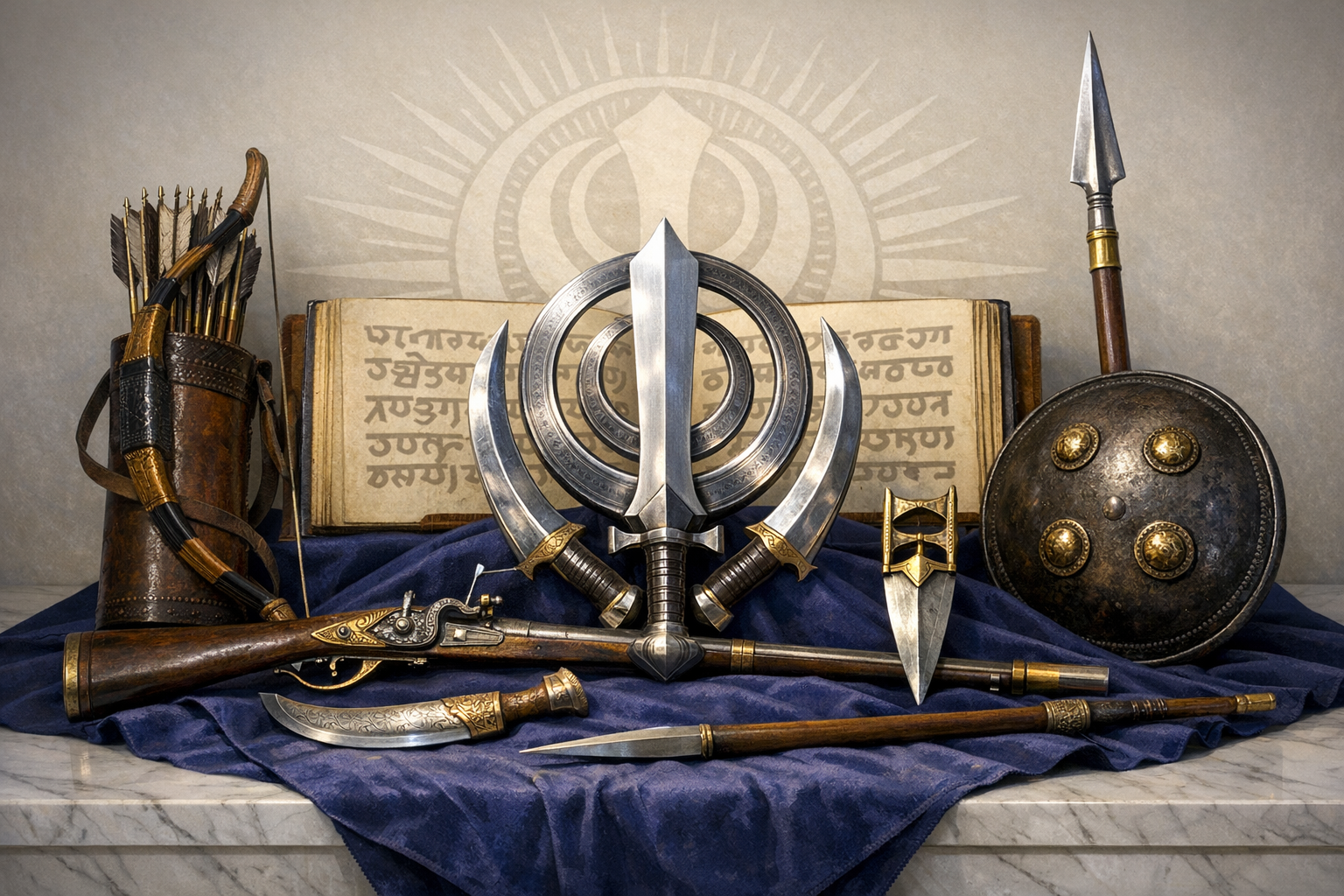
Weaponry in the Dasam Granth Sahib is presented as a disciplined convergence of steel and spirit, where shastra-vidya is sanctified by ethics and devotion. Set in the historical crucible of the Khalsa’s formation, these hymns catalog armsfrom khanda and kirpan to chakkar, banduq, and topwhile binding their use to Dharma-Yuddha principles. The text’s poetic multilingualism…
-
Sitalsasthi 2026: Sambalpur’s grand Shiva–Parvati wedding and Odisha’s living heritage

Sitalsasthi 2026, the ceremonial wedding of Lord Shiva and Goddess Pārvatī, will be celebrated on June 20 in Odisha, with Sambalpur hosting the most expansive and community-driven observances. Rooted in over four centuries of practice, the festival blends śāstra-guided rituals with a city-wide cultural carnival featuring processions, folk arts, and water-splashing motifs that welcome the…