
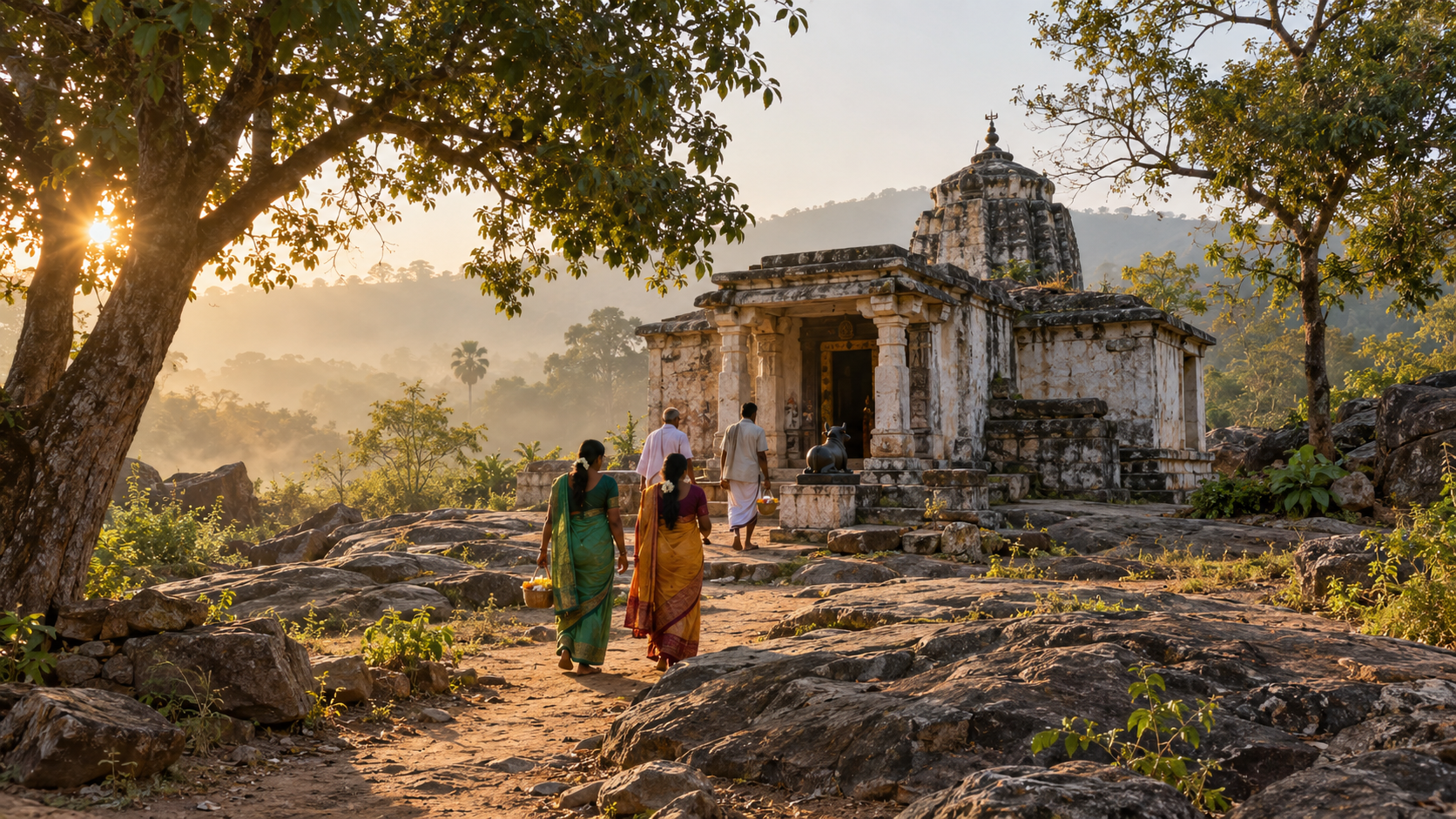
If you are planning darshan at Bugga Rameshwaram, the first task is surprisingly practical: make sure every map search, driver instruction, and travel plan points to the correct Shiva shrine near Vikarabad. The short name alone is too easy to misunderstand.
You can avoid most uncertainty by using the temple’s full name, treating Vikarabad as your route anchor, and confirming temple-specific arrangements before you set out. Once those details are settled, you can give the visit what it deserves: time for worship rather than a hurried stop between attractions.
Pin the correct temple before planning the journey
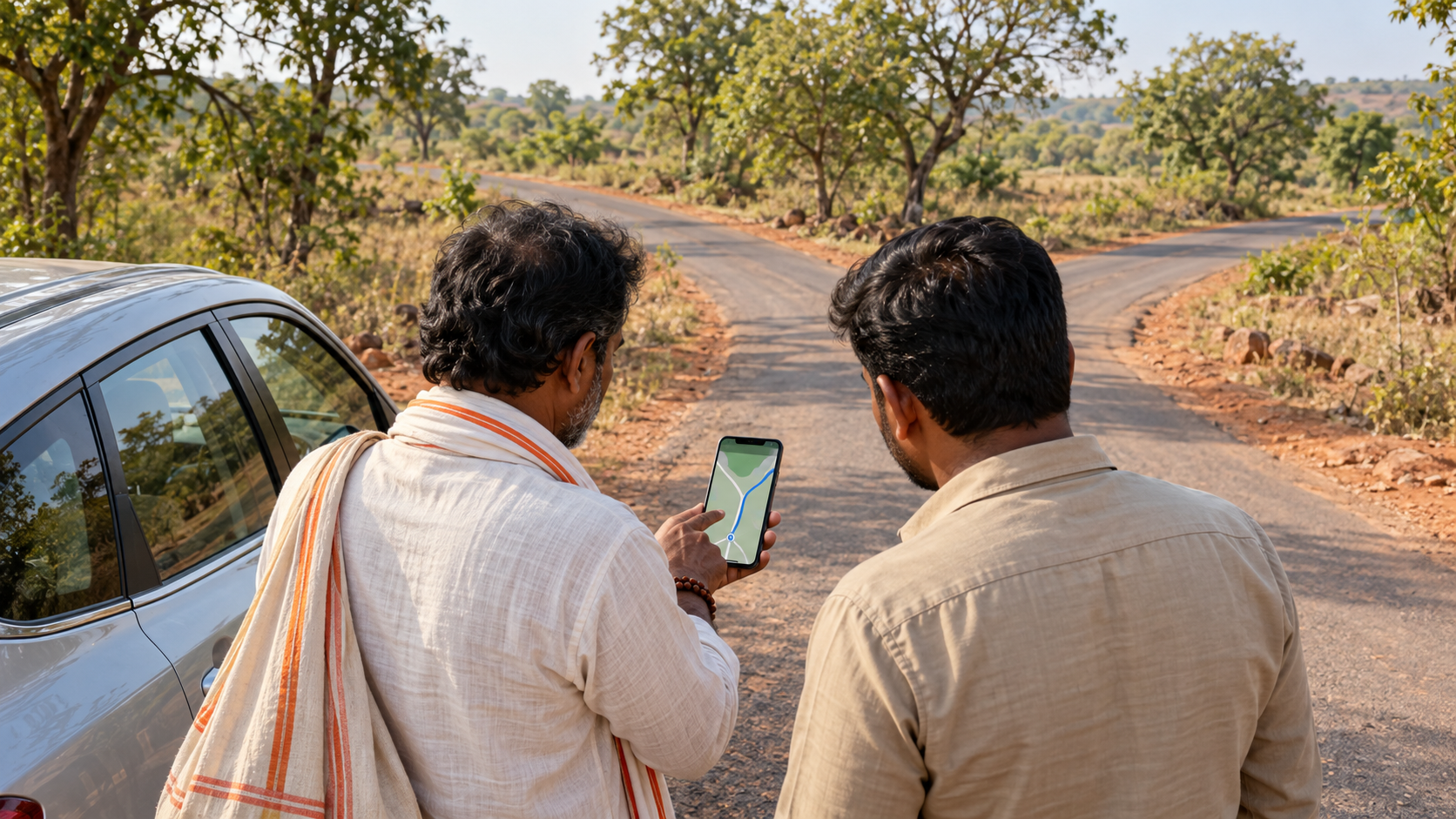
The shrine is known as Bugga Rameshwaram Temple and Sri Bugga Ramalingeshwara Swamy Temple. It stands in Bugga Rameshwaram village in Telangana’s Vikarabad district, approximately 6 km from Vikarabad and 7 km from Ananthagiri Hills.
Use the complete destination when searching or speaking to a driver: “Sri Bugga Ramalingeshwara Swamy Temple, Bugga Rameshwaram village, Vikarabad district, Telangana.” Do not rely on “Rameshwaram temple” or even “Shiva temple near Vikarabad.” The full string contains the deity’s name, village, district, and state, giving you several ways to catch a wrong result.
- Search both “Bugga Rameshwaram Temple” and “Sri Bugga Ramalingeshwara Swamy Temple.”
- Check that the result identifies Bugga Rameshwaram village and Vikarabad district.
- Compare the pin with the two useful reference points: Vikarabad is about 6 km away, while Ananthagiri Hills is about 7 km away.
- Save the pin or map area before departure instead of depending on a fresh search during the last part of the journey.
- Send the full destination and saved pin to your driver or companions before everyone starts travelling.
This identity check matters more than estimating the last few minutes of travel. A precise destination can be verified; a guessed journey time cannot.
Build the route around facts you can confirm
Vikarabad is the clearest planning anchor because the temple is about 6 km from it. That distance helps you organize the final leg, but it does not establish road condition, vehicle availability, or travel time. Confirm those details for the day of your visit rather than converting kilometres into a confident schedule.
Temple hours, puja timings, festival arrangements, and local transport can change. None should be inferred from the shrine’s location or antiquity. Before leaving, ask a current local contact, accommodation provider, or driver to confirm that the temple will be accessible at your intended time. If a particular seva or abhishekam is the reason for your journey, verify whether visitors may participate, what materials are accepted, and whether advance arrangements are required.
Keep the following questions on one message so that you receive useful answers rather than a vague “yes, it is open”:
- What are the opening and closing times on the date of the visit?
- Is the sanctum closed during any part of the day?
- Are there special queues, observances, or access restrictions that day?
- Can a vehicle reach the entrance, and where can it wait or park?
- Are drinking water, toilets, shaded seating, and footwear storage available?
- Are photography and personal offerings permitted?
If you are travelling with an older person, a small child, or someone with limited mobility, ask specifically about steps, walking surfaces, distance from vehicle drop-off, handrails, and places to sit. A temple’s natural setting may be spiritually inviting without being easy for every body to navigate.
Carry the basics whose absence can shorten the visit: drinking water, suitable sun or rain protection, necessary medicines, a charged phone, and the saved return route. These are preparations, not assumptions about what the temple does or does not provide.
Let darshan shape the visit, not the sightseeing schedule
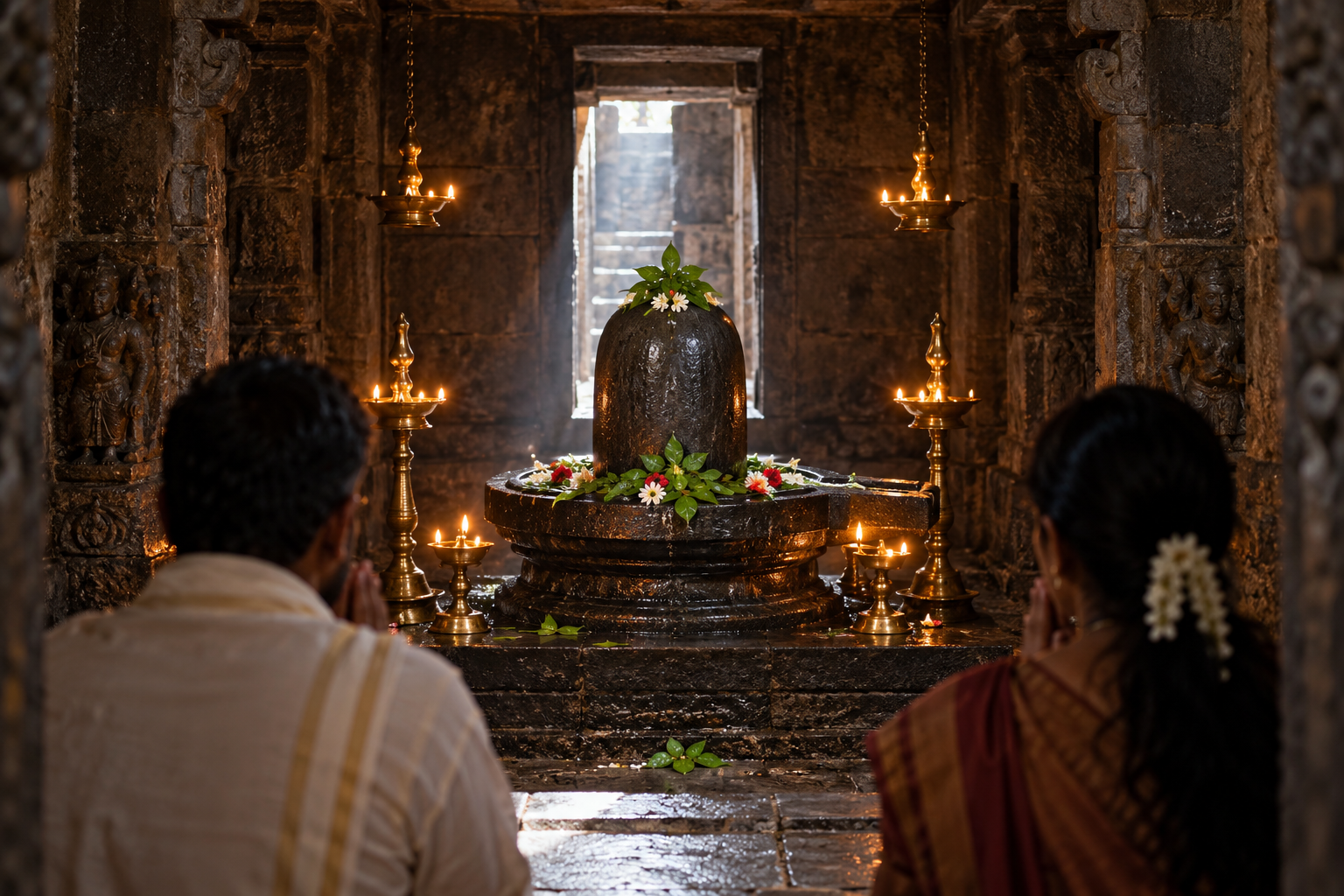
Bugga Ramalingeshwara Swamy is a Shiva shrine, so you do not need an elaborate personal ritual to make the visit meaningful. Arrive clean and in modest clothing, quiet your phone, observe where devotees leave footwear, and follow the directions given at the temple. Local practice has priority over habits you may know from another kshetra.
At the sanctum, do not assume that visitors may touch the deity, enter an inner area, pour water, or perform a personal abhishekam. Ask before presenting flowers, fruit, bilva leaves, oil, milk, or any other offering. This prevents waste and respects the temple’s own worship order.
A simple inward preparation is often enough. Decide what you are praying for before joining the queue. You might hold a sankalpa, repeat “Om Namah Shivaya” quietly, or remain silent. After darshan, step aside rather than leaving immediately. Even a few undistracted moments can keep the visit from becoming only a photograph and a location check.
The temple is revered for both its spiritual importance and its natural setting. Treat that setting as part of the sacred space. Keep voices low, avoid blocking worshippers for photographs, and carry back packaging or other waste you brought with you.
The shrine is also regarded as one of the region’s ancient temples, but “ancient” is not a substitute for a dated inscription or documented dynasty. Unless an inscription, temple notice, or responsible temple representative identifies a specific founding period, do not attach a century, ruler, architect, or Ramayana episode to the temple as settled history. You can honour a living kshetra without filling gaps in its record with an attractive legend.
Pair Ananthagiri Hills with the temple without rushing either
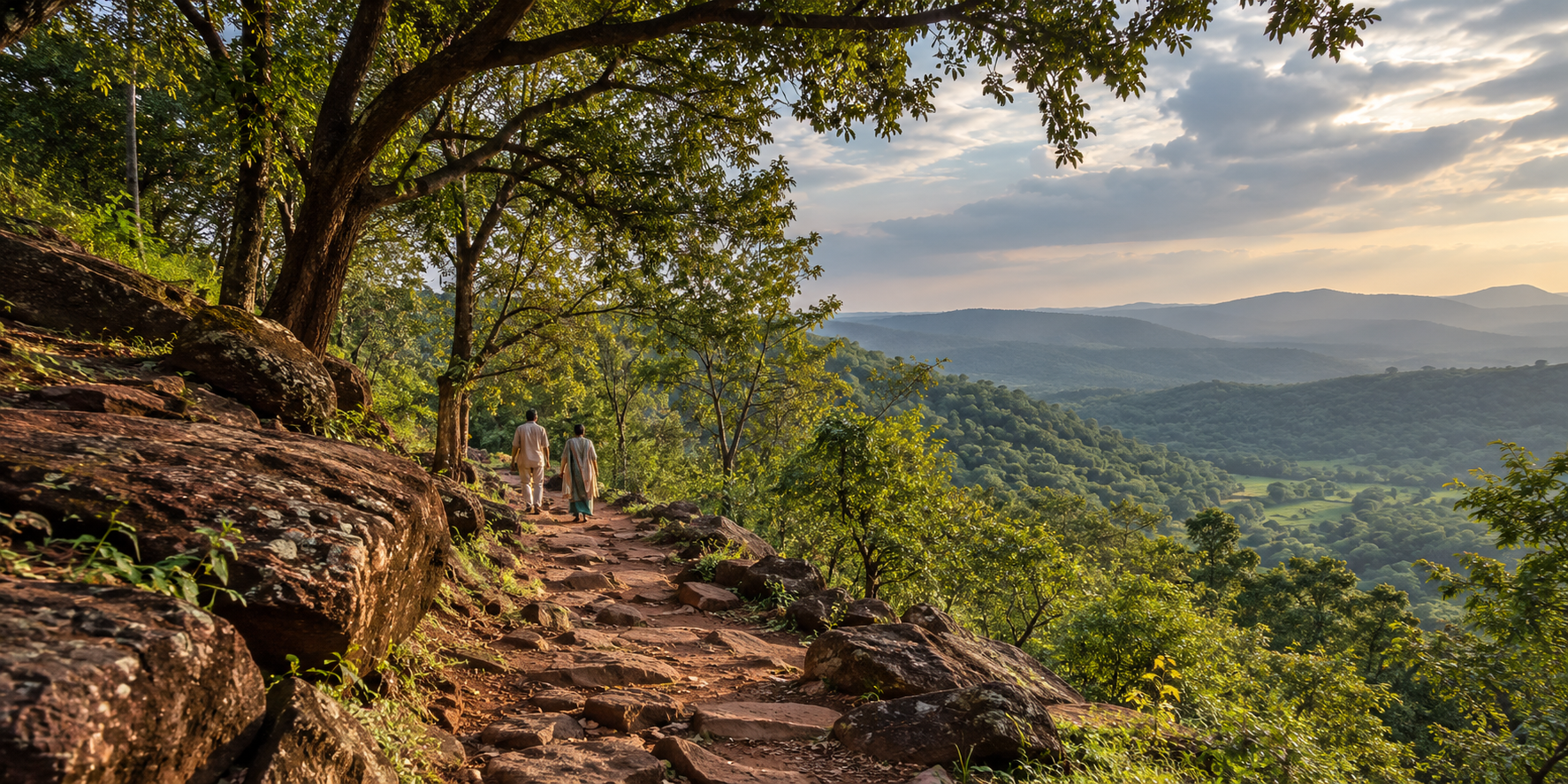
Ananthagiri Hills is about 7 km from the temple, making the two places natural candidates for the same outing. Proximity, however, should not turn darshan into a race. The temple’s confirmed opening and worship schedule should be the fixed point; fit the hills around it.
If pilgrimage is your main purpose, complete darshan first whenever the confirmed timings permit. This protects the visit from a common planning failure: spending an open-ended amount of time at the scenic stop and reaching the temple during a closure or after worship has concluded. If the hills are your main destination, decide in advance how much time you can give the temple and whether that still allows unhurried worship.
Leave a buffer between the two locations. The stated distances do not tell you the condition of the connecting route, the time needed to find the entrance, or how long a queue may take. Do not promise a return time based only on kilometre figures.
You should also keep the two experiences distinct. At the hills, you may be moving, talking, and looking outward. At the temple, slow down and turn inward. That change of pace is not lost time; it is what prevents a sacred site from becoming one more waypoint on a recreational circuit.
Key takeaways for your visit
- Use the full name “Sri Bugga Ramalingeshwara Swamy Temple” together with Bugga Rameshwaram village, Vikarabad district, and Telangana.
- Use Vikarabad as the main route anchor; the temple is approximately 6 km away.
- Treat the 7 km proximity to Ananthagiri Hills as a planning aid, not a guarantee of travel time.
- Confirm current opening hours, puja arrangements, access, and facilities before departure.
- Ask before offering materials, taking photographs, touching the deity, or attempting an abhishekam.
- Describe the shrine as ancient without inventing a founding date, dynasty, or legend that has not been established.
Before you leave, do three things: save the verified pin, confirm the day’s temple arrangements, and decide how much unhurried time you will reserve for darshan. With those choices made, Bugga Rameshwaram can remain the purpose of the journey rather than a rushed detour near Vikarabad.
References

Leave a Reply
You must be logged in to post a comment.