
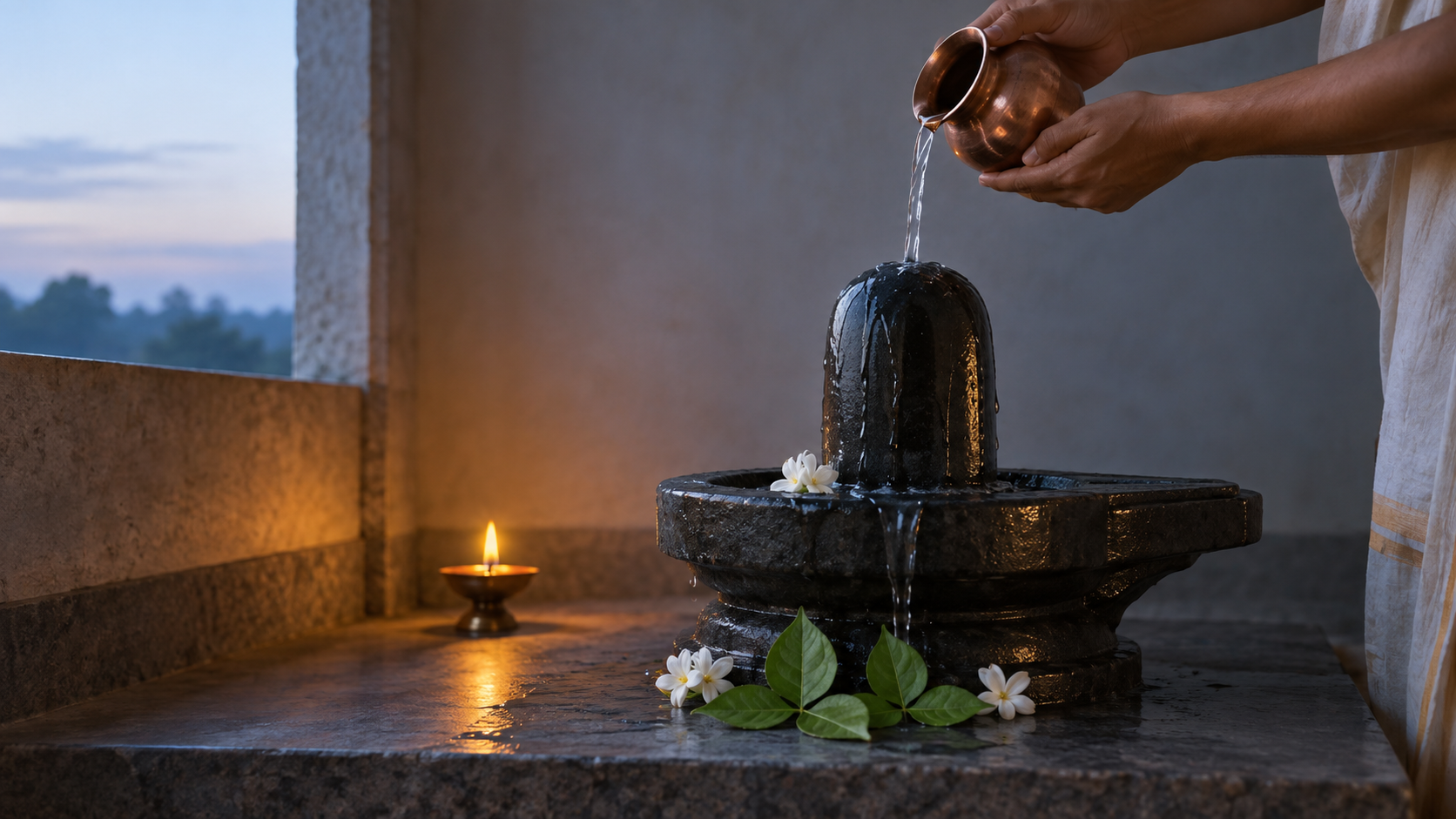
You may have only a clean vessel of water and a simple natural offering, while someone else’s puja seems full of cooked food, fragrance, decoration, and ceremony. Does your smaller offering show lesser devotion?
Not necessarily. Shiva worship makes room for a different devotional language: what reaches the altar without elaborate processing can express reverence precisely because it has not been made impressive. The important distinction is between simplicity and neglect.
Raw means unaltered, not unworthy
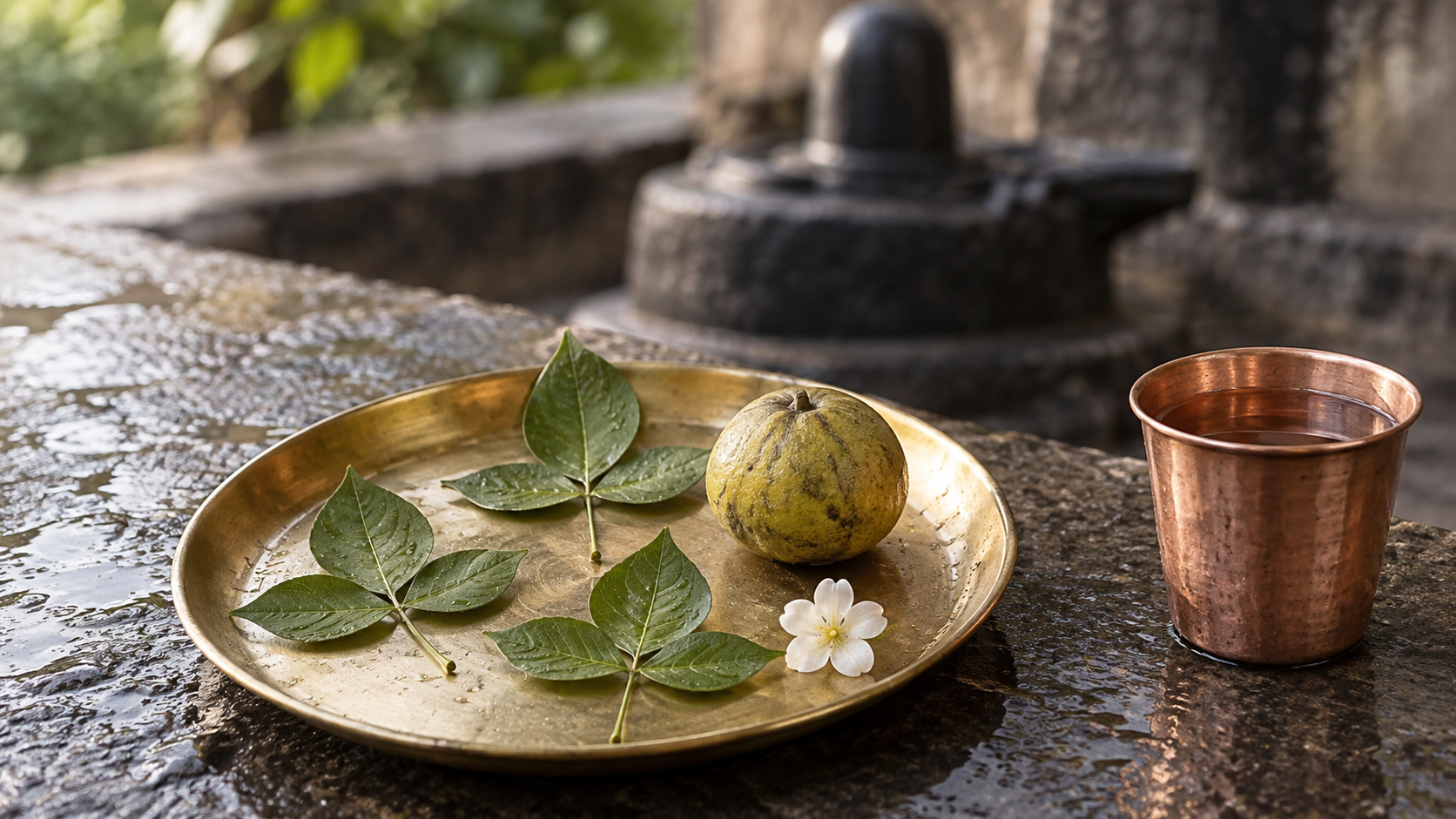
Many forms of Hindu worship honour the deity through preparation. Ingredients are combined, food is cooked, lamps are arranged, and the offering bears the devotee’s disciplined effort. Shiva can also be approached through offerings that remain close to their natural condition. This is not a rejection of skill or beauty. It is another way of recognizing the sacred.
Here, raw does not simply mean uncooked food. It points more broadly to something substantially unaltered: clean water, or another fresh natural offering already accepted in your family, sampradaya, or temple tradition. The devotee receives it from nature, handles it respectfully, and presents it without trying to increase its worth through display.
That definition sets clear boundaries. Spoiled material is not spiritually superior because it is untouched. An unidentified plant is not appropriate merely because it grew in the wild. An item forbidden by local practice does not become acceptable through good intentions. Naturalness never cancels cleanliness, discernment, or maryada.
Key takeaways
- A raw offering remains close to its natural state; it is not dirty, stale, damaged, or carelessly chosen.
- A simple offering still requires clean hands, a clean vessel, an orderly place, and attentive presentation.
- Shiva’s contentment with simplicity does not prohibit cooked naivedya, decoration, or elaborate puja.
- Your lineage, household custom, and temple rules determine which materials are appropriate.
- The outer offering has done its work when it helps you approach Shiva without pretence or bargaining.
Why simplicity belongs in Shiva worship
Preparation places the mark of human skill upon a substance. That can be devotional: time, labour, and attention are given to Bhagavan. An unaltered offering makes a complementary gesture. It acknowledges that a thing can be worthy before we improve, combine, decorate, price, or display it.
This is where the offering begins to work on the worshipper. We often assume that what is costly must be more valuable, what is elaborate must be more sincere, and what attracts attention must be more effective. A raw offering interrupts that habit. It asks you to distinguish devotion from presentation.
Calling Shiva Bholenath keeps the practical point before you: you do not need to impress him. You do need to arrive. A modest offering given with attention may expose more of the heart than an elaborate arrangement assembled chiefly to satisfy social expectation. Conversely, an elaborate puja performed with love is not inferior. The issue is not the number of materials but the truthfulness of the act.
The unaltered object also becomes a mirror. Before offering it, notice what you are trying to conceal or decorate within yourself. Perhaps you are distracted, grateful, resentful, ashamed, or quietly asking for strength. You do not have to dramatize that condition. Name it inwardly, stand before Shiva as you are, and let the simplicity of the offering prevent you from turning prayer into performance.
A simple home practice that preserves reverence
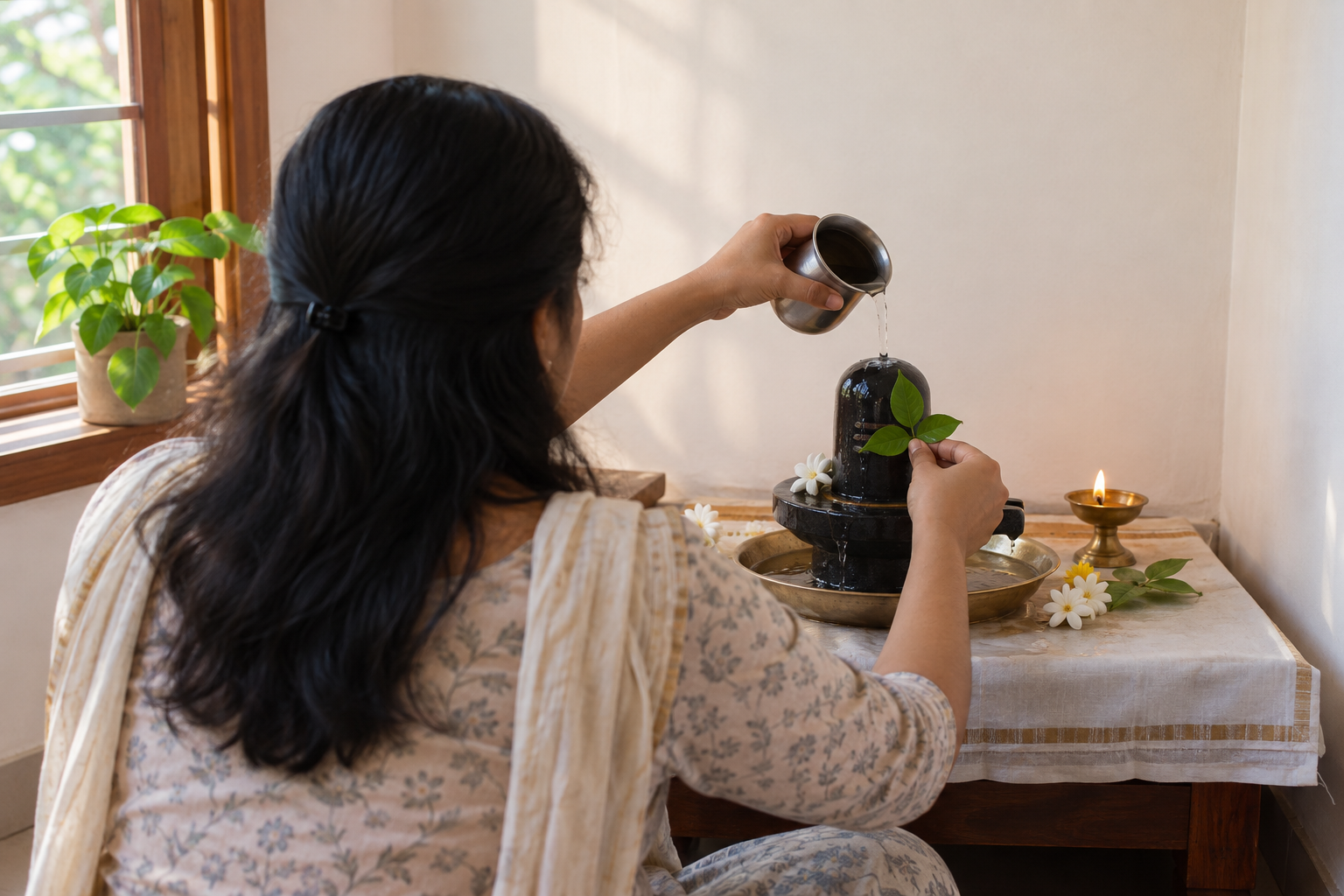
There is no single generic ritual that overrides Agama, initiation, regional custom, or instructions from a guru. If your household has an established procedure, follow it. If you are uncertain about a material, ask the priest or knowledgeable practitioner connected with the tradition you actually observe. Within those limits, the following sequence can help you keep a simple offering intentional.
- Confirm what is permitted. Choose clean water or another natural offering already recognized in your tradition. Do not assume that every leaf, flower, fruit, or wild substance belongs in Shiva puja.
- Examine the offering. It should be fresh, sound, and free from visible dirt or decay. Never taste unidentified plant material; ritual use does not imply that a substance is edible.
- Prepare yourself and the place. Wash your hands, clean the vessel, and clear the immediate worship area. Simplicity becomes reverence through attention to these small acts.
- Present it in the customary way. If your practice permits abhishekam, follow the method you have been taught. Otherwise, place the offering respectfully before the murti or Shiva-linga. Do not pour anything onto a temple image unless the temple explicitly allows you to do so.
- Pray without turning the act into a bargain. Use the mantra, name of Shiva, or prayer familiar to you. If you do not know a formal procedure, a quiet and truthful prayer is better than imitating rites you do not understand.
- Pause before ending. Give the act enough silence to affect your attention. Then handle prasada and remaining materials according to your household or temple custom, and leave the space clean.
The sequence is deliberately modest. Its purpose is not to manufacture a guaranteed result. It creates a clear movement from selection to purification, offering, stillness, and responsible completion. If any step turns into display, return to the basic question: what are you actually placing before Shiva?
What simplicity does not give you permission to do
A teaching about unaltered offerings is easy to romanticize. These common mistakes turn simplicity into carelessness or pride:
- Offering whatever happens to be nearby. Convenience is not the same as simplicity. Inspect and clean what you offer, and choose it deliberately.
- Competing over austerity. The smallest or cheapest puja is not automatically the purest. If simplicity becomes a claim of superiority, display has merely taken a new form.
- Damaging nature to obtain something natural. Do not strip a plant, trespass, take protected vegetation, or gather more than the ritual requires. An offering cannot honour the sacred by treating its living origin as expendable.
- Ignoring temple discipline. Public temples may restrict materials, quantities, timing, and direct contact with the murti. Their rules protect the sanctity and practical care of a shared place of worship.
- Assuming raw offerings are Shiva’s only acceptable offerings. Simplicity and elaboration can both carry devotion. Do not use one valid practice to belittle another devotee’s seva.
- Treating puja as a purchase. No material, raw or prepared, places Bhagavan under obligation. Offer your prayer clearly, but release the idea that an object compels a particular outcome.
These limits matter because the meaning of a raw offering lies in restraint. Taking too much, disregarding others, or using the ritual to prove your authenticity contradicts the very lesson the offering is meant to teach.
Carry the unaltered offering beyond the altar

If the practice ends when the vessel is put away, you have completed a ritual action but may have missed its sharper instruction. Shiva’s acceptance of the simple asks you to notice where you routinely confuse value with embellishment.
Choose one corresponding act after puja. State a motive without dressing it in a flattering explanation. Give someone the useful help they need without arranging to be noticed. Resist upgrading a devotional act merely for a photograph. Receive a moment in nature without immediately trying to collect, possess, or publish it. These are not replacements for worship; they are ways of letting worship correct conduct.
At your next Shiva puja, bring one accepted offering in its clean natural form. Give it without apology and without spiritual theatre. Then keep one part of the day equally honest.
References
