

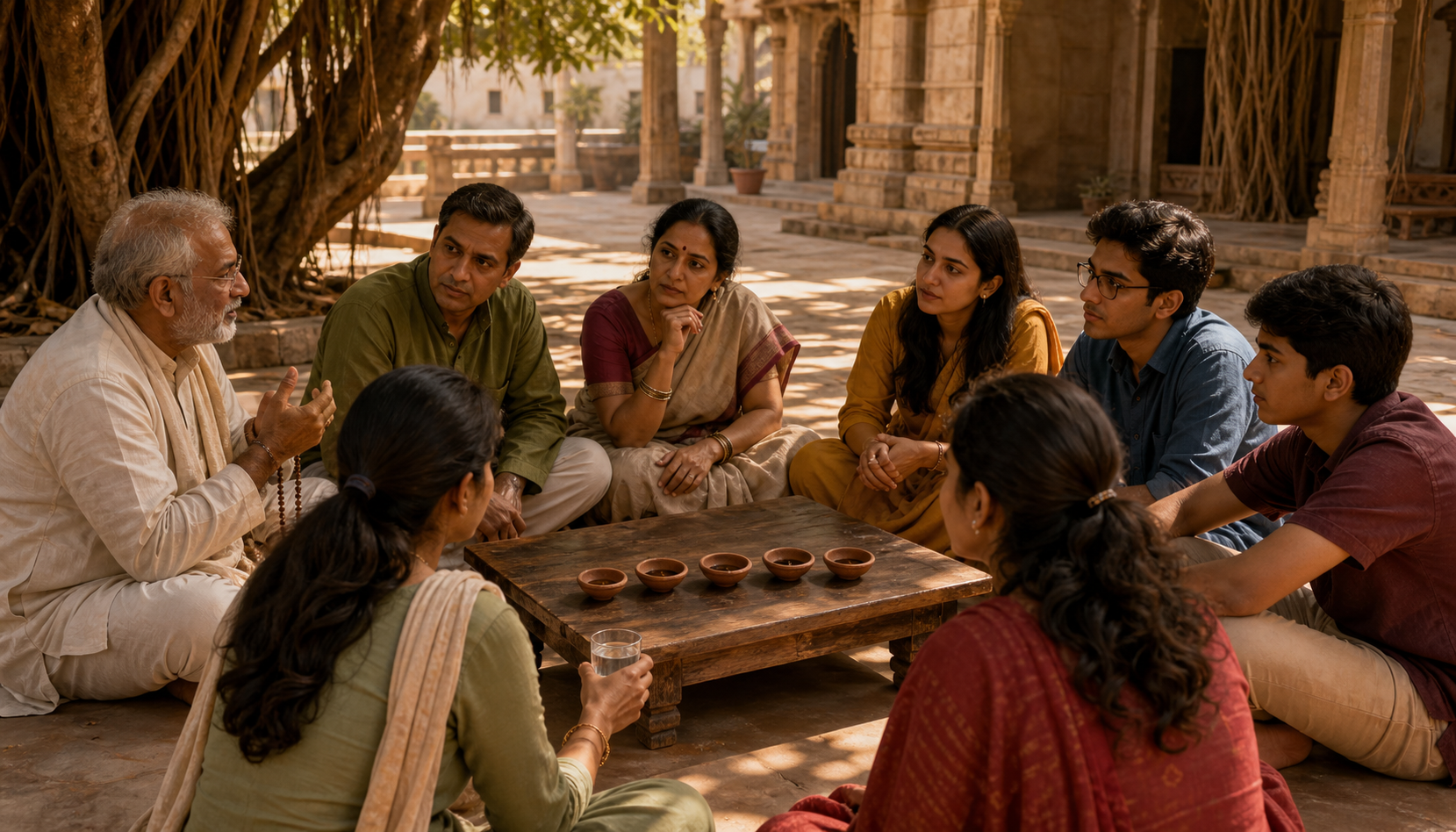
If you are choosing a cause for your family, youth group, temple circle, or campus network, do not ask only whether it can gather a crowd. Ask what the crowd will practise becoming. A collective vow survives the rally or yatra as habits of speech, sacrifice, loyalty, and belonging.
That is a generational sankalpa in the practical sense used here. It is not a claim about a separate scriptural category. It is a shared resolve that lasts long enough to shape younger people and the communities they will build. To judge one well, you must look beyond its stated cause and examine the kind of person its methods produce.
A generation inherits the direction of its effort
Young people are often willing to endure far more than adults expect. They will march towards political power for justice, walk towards a tirtha in devotion, or run while carrying sacred water for abhishekam. Recent Indian public life has placed thousands walking from Jantar Mantar towards Parliament alongside lakhs undertaking the Kanwar Yatra and Wari. The important fact is not merely that all of them accepted discomfort. It is that bodily commitment can direct collective energy towards very different ends.
Effort does not sanctify a cause by itself. A crowd can endure heat, fatigue, disruption, and risk while becoming more truthful or less truthful, more disciplined or more impulsive, more responsible or more dependent on hostility. The moral question is not simply, “How much did they sacrifice?” It is, “What did the sacrifice train them to love, reject, and repeat?”
You can read any collective sankalpa through four consequences:
- The consequence for attention: What is the group taught to notice every day – a sacred good, a genuine injustice, an enemy, a leader, or its own public image?
- The consequence for character: Does participation demand patience, restraint, truthfulness, seva, and self-command, or does it reward aggression and instant reaction?
- The consequence for community: Can members remain connected without a confrontation to sustain them? A community that needs a permanent enemy has not learned how to live after victory.
- The consequence for inheritance: What will a child or younger sibling imitate – the declared ideal, or the speech and conduct used to pursue it?
The last consequence is the generational one. Young people rarely inherit a resolution as a neat sentence. They inherit its emotional grammar: whom to trust, how to disagree, what counts as courage, which costs are honorable, and whether belonging requires contempt for someone else. A sankalpa therefore creates more than an outcome. It creates a type of participant.
Use five tests before asking people to commit
A worthy goal can be corrupted by careless methods, while a modest activity can form people deeply when its discipline is clear. Before you ask others to march, donate, chant, volunteer, post, or organize, put the proposed sankalpa through these five tests.
- Name the good, not merely the opponent. “Fair examinations” identifies a good that can be protected across governments and states. “Defeat this person” makes the target more important than the students. “Deepen devotion to Shiva” names a sacred orientation; “show everyone our strength” turns devotion into display.
- Identify who bears the cost. A Dharmic vow begins with a cost accepted by the participant: time, comfort, appetite, convenience, money, attention, or ego. Be cautious when the principal cost is imposed on bystanders while organizers praise themselves for sacrifice.
- Make the means answerable to the end. A movement for justice cannot treat unverified claims as useful weapons. A pilgrimage intended to cultivate devotion cannot excuse vanity or cruelty. If the method contradicts the stated good, repetition will form the contradiction rather than the ideal.
- Define success and a stopping condition. State what repair, decision, ritual completion, or service outcome would fulfil the immediate resolve. Without a stopping condition, organizers can keep escalating after the original beneficiary has disappeared from view.
- Plan the residue. Decide what participants will do after the march, yatra, campaign, or festival. If the answer is nothing, you are organizing an event. If the answer includes continuing study, seva, accountability, friendship, and practice, you may be building a community.
Turn those tests into a short charter before public mobilization: We seek this good. Members will accept this discipline. We will not use these means. These people should benefit. After the immediate action ends, we will continue through this practice. If organizers cannot complete those sentences without falling back on slogans, the sankalpa is not yet clear enough to hand to a generation.
There is also a revealing universality test. Ask whether you would uphold the same principle when a different party, institution, caste, sect, or region is responsible. If examination irregularities matter only when one government can be embarrassed, accountability has become instrumental. If respect for sacred practice matters only when your own sampradaya is involved, reverence has become tribal preference. A generational vow needs a principle that survives a change of target.
Justice does not require the surrender of Dharma
The choice is not between silent devotion and angry activism. Students affected by examination failures can legitimately demand answers and repair. Concern for knowledge, the country, and the suffering of others can itself motivate organized action for fairness and institutional responsibility. The real distinction is between action governed by Dharma and action that treats moral boundaries as obstacles.
A Dharmic campaign should retain four obligations even when pressure rises:
- Satya: Separate what is verified, what is alleged, and what remains unknown. Do not spread the most inflammatory version merely because it mobilizes faster.
- Maryada: Set boundaries for language and conduct before anger peaks. Abuse of Deities, communities, Bharat, or ordinary people does not become righteous because it appears beside a valid demand.
- Seva: Keep the affected person visible. Ask repeatedly whether the next tactic helps students, workers, devotees, or citizens, or merely increases the influence of intermediaries.
- Tapas: Let organizers bear discipline themselves. Verification, patient negotiation, transparent accounting, and restraint are harder than a viral insult. That difficulty is part of the moral work.
When a campaign begins to drift, return to a remedy ladder. Define the harm in plain language. State the correction being requested. Record what the responsible institution has acknowledged or changed. Explain why any further escalation is necessary. Finally, identify what would count as adequate repair. This prevents a means, such as removing an officeholder, from replacing the original goal. A personnel change may sometimes be justified, but it is not a substitute for fixing the examination, recruitment process, or institution that harmed people.
Speech is an especially useful diagnostic because it forms both the speaker and the listener. Before repeating a slogan, translate it into a proposition and a remedy. Can you state what happened, who was harmed, what evidence supports the claim, and what should now be done? If a slogan cannot survive that translation, it may be producing heat without responsibility. If it needs hatred to remain compelling, it is already teaching the next generation the wrong lesson.
The same scrutiny belongs inside devotional communities. A sacred destination does not automatically sanctify every action taken on the way. Pilgrims and organizers must also ask how they treat residents, fellow travellers, public space, and one another. The contrast that matters is not “protester bad, pilgrim good.” It is self-mastery versus domination, truthful responsibility versus manipulation, and service versus the inflation of ahankara.
Make the yatra the beginning of a durable community
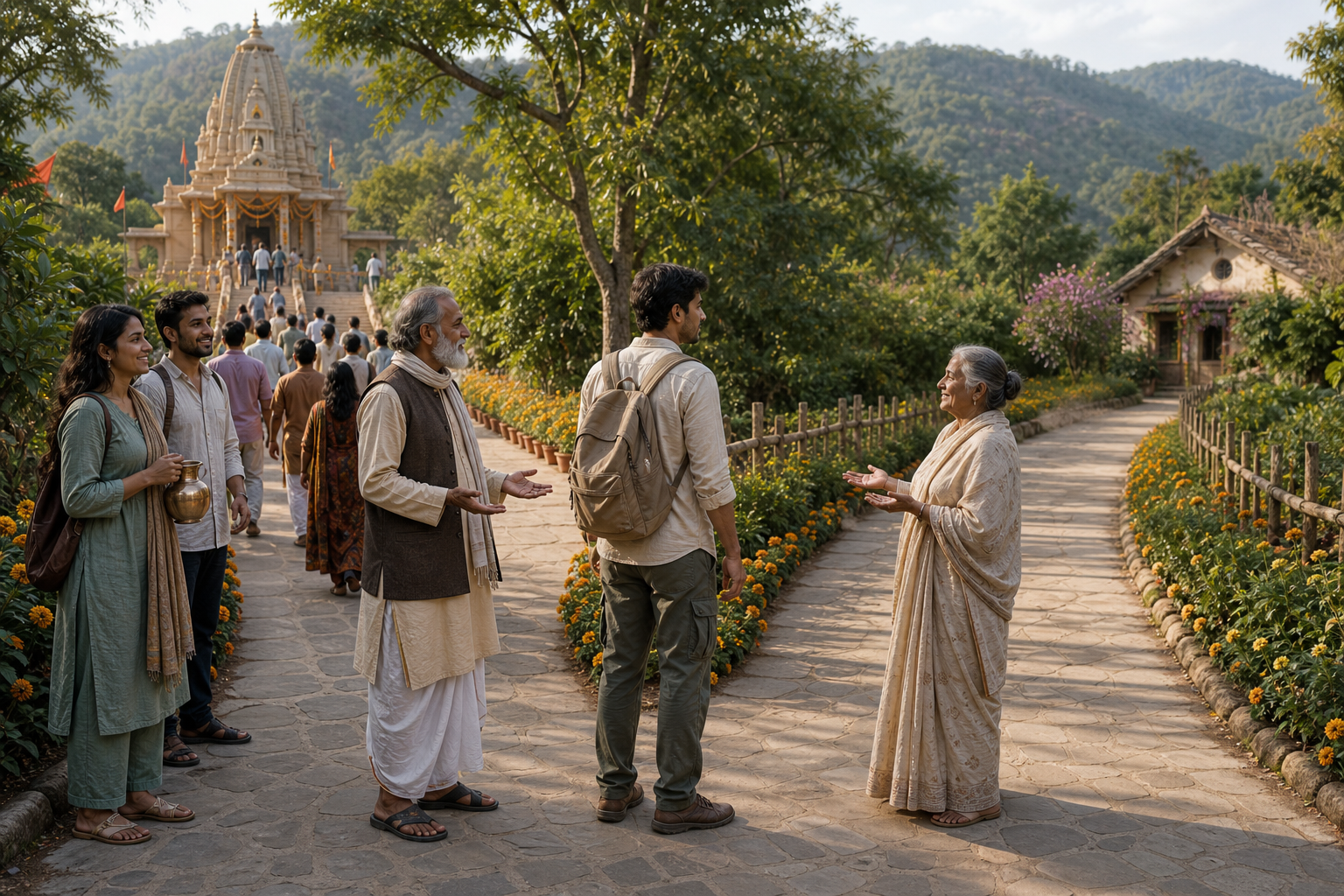
The Kanwariya carrying Ganga jal and the Warkari walking towards Pandharpur make sacred commitment physical. The journey costs comfort, time, and effort. In the Wari, lakhs walk, eat, rest, sing, and serve together while remembering Vitthal. People who might otherwise remain strangers acquire a shared rhythm and language.
That social bond is precious, but it is also perishable. If everyone disperses after jalabhishek or arrival at Pandharpur and no path back to one another exists, the pilgrimage may transform individuals without creating durable local capacity. The practical opportunity is to preserve the sweetness and discipline of the yatra without turning it into another agitated political bloc.
Build the return path before the group disperses
A return plan can be simple. It does not need a large organization, a charismatic leader, or constant online activity. It needs a next duty that is clear enough to perform.
- Ask permission to remain connected. Create an opt-in contact list for participants who want local satsang, study, seva, or help preparing for the next yatra. Do this before departure becomes a blur.
- Name the next gathering before the final farewell. Do not promise a vague future reunion. Fix the purpose first: bhajan, reflection on the discipline undertaken, planning a service activity, or helping newcomers understand the practice.
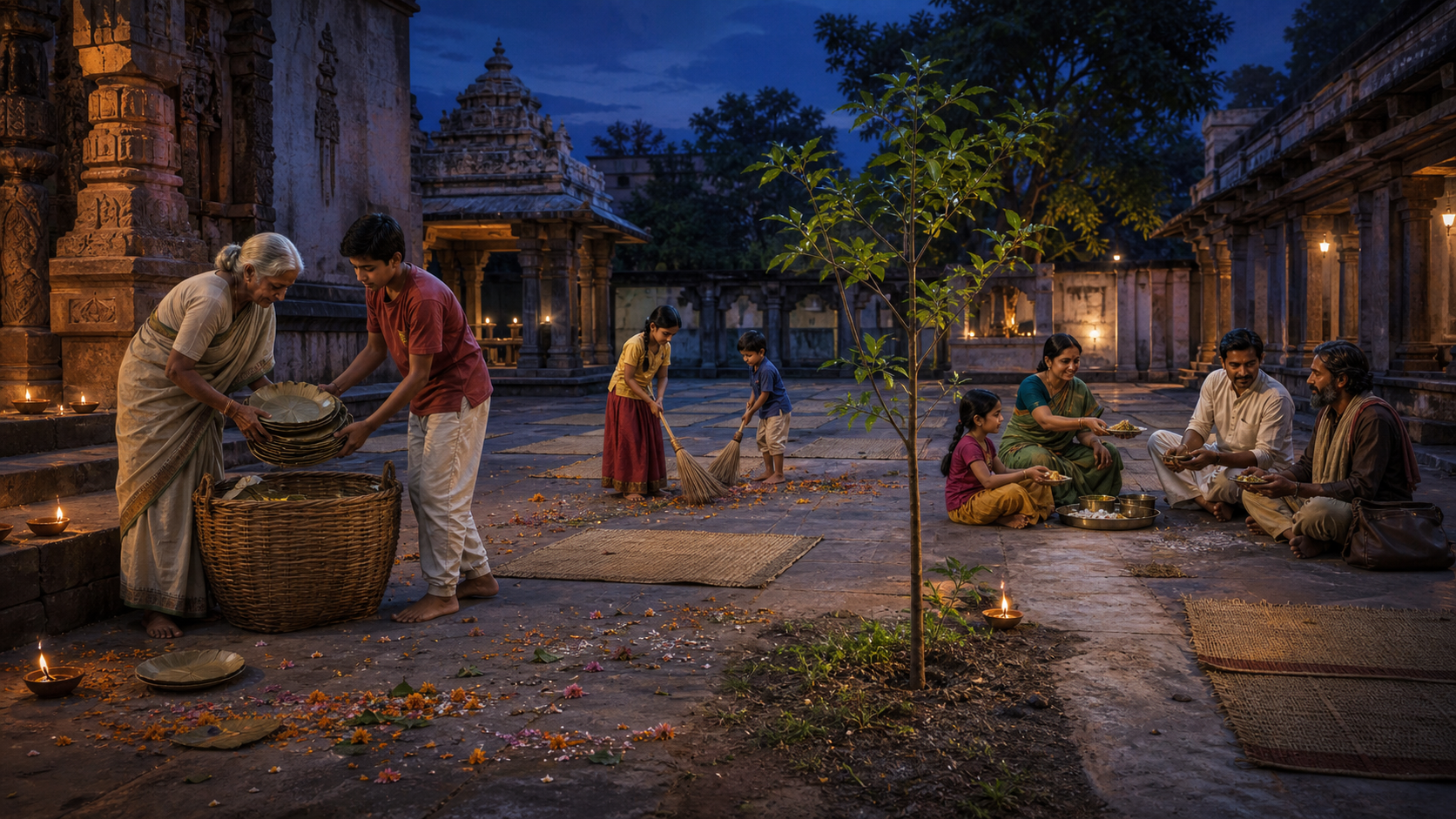
- Choose one visible act of seva. The group might mentor students, assist elderly devotees, support temple upkeep, care for a shared route, or help families undertake a pilgrimage responsibly. Choose work participants can actually complete, not a grand declaration designed for social media.
- Give younger members real responsibility. Let them coordinate a task, keep records, welcome newcomers, explain route discipline, or present what the group learned. Responsibility converts attendance into ownership.
- Protect the group from enemy dependence. A Dharmic community should be able to meet when there is no controversy to react to. Keep devotion, learning, and service at the center rather than allowing outrage to become the price of participation.
Transmit the discipline, not just the spectacle
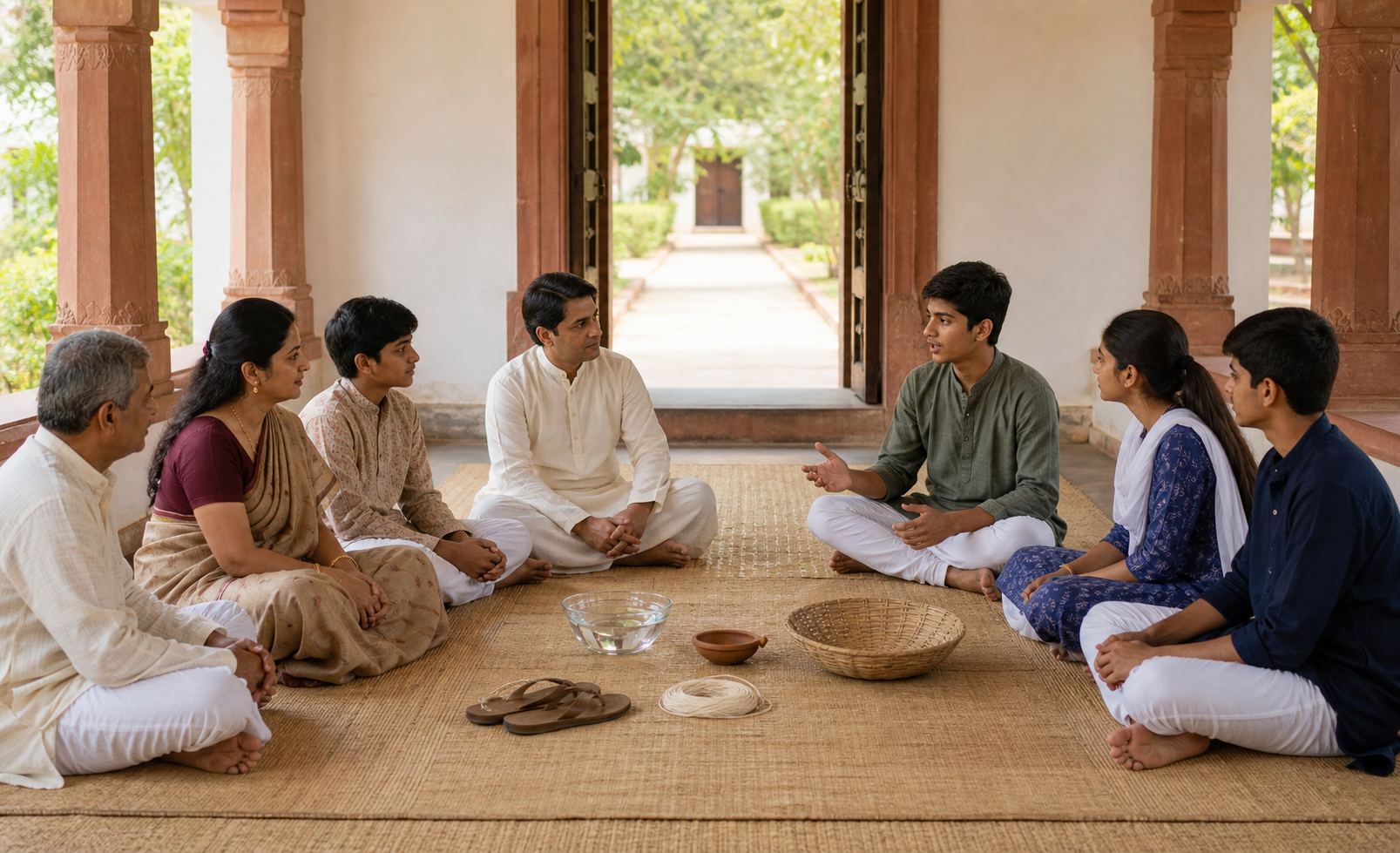
Families often pass on the visible shell of a vow more easily than its inner logic. A child sees the journey, dress, music, water, crowd, and final offering. An elder must also explain why comfort was renounced, why anger was restrained, why another pilgrim was served, and why the offering is not a performance of superiority.
Give children and first-time participants a manageable duty connected to the resolve. Let them prepare something, carry responsibility safely, serve food, learn a chant, help another person, or keep a commitment after returning home. Then praise reliability more than visibility. The person who quietly fulfils a duty should not become less valued than the person who produces the most dramatic image.
You can also preserve a local memory of the sankalpa. Record why the family or community undertook it, which discipline mattered most, where conduct fell short, and what continued afterwards. Do not turn the record into self-congratulation or a story about enemies. Its purpose is to help the next participant inherit tested practice instead of an empty slogan.
This is how a yatra becomes more than seasonal mobilization. Devotion generates relationships; relationships accept duties; duties become habits; and habits make seva and learning available throughout the year. The community remains capable of acting for justice, but it does so from an existing culture of discipline rather than assembling only when anger supplies the bond.
Key takeaways
- A generational sankalpa is revealed by the habits it transmits, not only by the cause it announces.
- Judge collective action by its object, self-imposed discipline, moral boundaries, beneficiary, stopping condition, and life after the event.
- Public action for justice can be Dharmic when truth, restraint, consistency, and repair remain more important than humiliating an opponent.
- Pilgrimage becomes durable community when relationships continue through seva, study, responsibility, and spiritual practice after the final ritual.
- Do not pass spectacle or grievance to the next generation without also passing the discipline needed to govern them.
Before you join or organize the next campaign, yatra, or community effort, write its short charter: the good sought, the discipline accepted, the means forbidden, the person served, and the practice that will remain. Then ask one final question: if a younger member of your family copied our speech, conduct, and priorities exactly, would that itself count as success? If the answer is no, change the sankalpa before it becomes an inheritance.
References
