

If you are arranging a Shravana vrata, temple visit, family puja or trip in 2026, copying the first date range you find can put you in the wrong lunar month. A Hyderabad temple calendar and a North Indian family calendar may use different Shravana boundaries without either being mistaken.
The practical answer is to identify your calendar convention before choosing dates. For Hyderabad and the Telugu amanta tradition, use August 13 to September 11 as the working Shravana window. For a North Indian observance, follow the local purnimanta panchang and the tithi governing that particular vrata.
Start with the calendar convention, not the month name

Shravana is a lunar month, but its boundaries are not named in the same way throughout Bharat. This is the main reason apparently conflicting 2026 calendars circulate.
An amanta calendar ends a lunar month at Amavasya. It is the convention relevant to the Telugu Sravana Masam dates used in Hyderabad. A purnimanta calendar ends the named month at Purnima and is widely used in North India. The two conventions overlap, but their month labels differ during part of the waning lunar fortnight.
This distinction matters more than spelling. “Shravan,” “Shravana” and “Sravana Masam” can all refer to the sacred month, yet a ritual described as occurring after Shravan Purnima may already fall in Bhadrapada under a North Indian calendar.
A tithi also does not wait for midnight. On Wednesday, July 29, 2026, Purnima continues until 7:26 p.m., after which Krishna Paksha Pratipada begins and lasts until 8:35 p.m. on July 30. That is a lunar boundary inside a Gregorian day, not a simple midnight change.
Do not turn that transition time into an observance date by arithmetic alone. A vrata may be assigned according to the tithi present at sunrise or another prescribed period. Your local panchang or temple should make that final assignment.
The 2026 dates you can put in your diary
| Calendar or observance | 2026 date or window | How to use it |
|---|---|---|
| Telugu amanta Shravana in Hyderabad | August 13 to September 11 | Use this as the working Sravana Masam window for Hyderabad household and temple planning. |
| Purnima-to-Pratipada transition | July 29: Purnima until 7:26 p.m.; Krishna Pratipada follows | Treat this as a purnimanta lunar boundary, not as a universal festival date. |
| Hal Sashti in North India | September 2 | Observe it as Bhadrapada Krishna Sashti in the North Indian calendar, although its count follows Shravan Purnima. |
The August 13 to September 11 window applies to Sravana Masam celebrations at Hyderabad’s Ashtalakshmi Temple. It is therefore a useful regional anchor for devotees following the Telugu amanta calendar. It should not be presented as the only valid Shravana range across India.
September 2 illustrates the other side of the distinction. Hal Sashti falls on that date as Bhadrapada Krishna Sashti in the North Indian calendar. It is counted as the sixth tithi after Shravan Purnima, the full moon associated with Raksha Bandhan. Calling September 2 “a Shravana date” without that explanation would blur the calendar transition.
Match each observance to the right regional window

A reliable Shravana plan begins with the observance you intend to keep. “What are the Shravana dates?” is too broad if your real question concerns a Monday Shiva vrata, a Lakshmi puja, a temple abhishekam or Hal Sashti.
Lakshmi worship in Hyderabad
Sravana Masam has particular importance for Lakshmi worship, and Hyderabad’s Ashtalakshmi Temple marks the month with an extended festival period. If this is your destination, block August 13 through September 11 as the relevant devotional window. Then obtain the temple’s individual service schedule before choosing a day; the month range alone does not identify which pujas require registration or which ceremonies occur on a particular weekday.
Shiva worship at Keesaragutta
Keesara Ramalingeshwara Swamy Temple treats Sravana Masam as a period for special poojas. Its Shravana program sits alongside observances such as Pradosham and Masa Shivaratri, which are governed by their own tithis. If you want one of those observances specifically, ask for its 2026 date rather than requesting a generic “Shravana puja.”
Weekday vratas at home
If your family keeps a weekday vrata, such as a Shravana Monday or a Friday Lakshmi observance, settle the masa convention first. Only then list the relevant weekdays inside that regional month. Taking the Mondays from a North Indian date range and combining them with a Telugu family’s amanta practice produces a hybrid calendar that may match neither tradition.
Hal Sashti in a North Indian family tradition
Put September 2 in the diary, but label it fully: “Hal Sashti — Bhadrapada Krishna Sashti.” The additional words preserve the ritual’s relationship to Shravan Purnima while preventing the mistaken impression that the North Indian month is still Shravana.
Build a Shravana plan that survives conflicting calendars
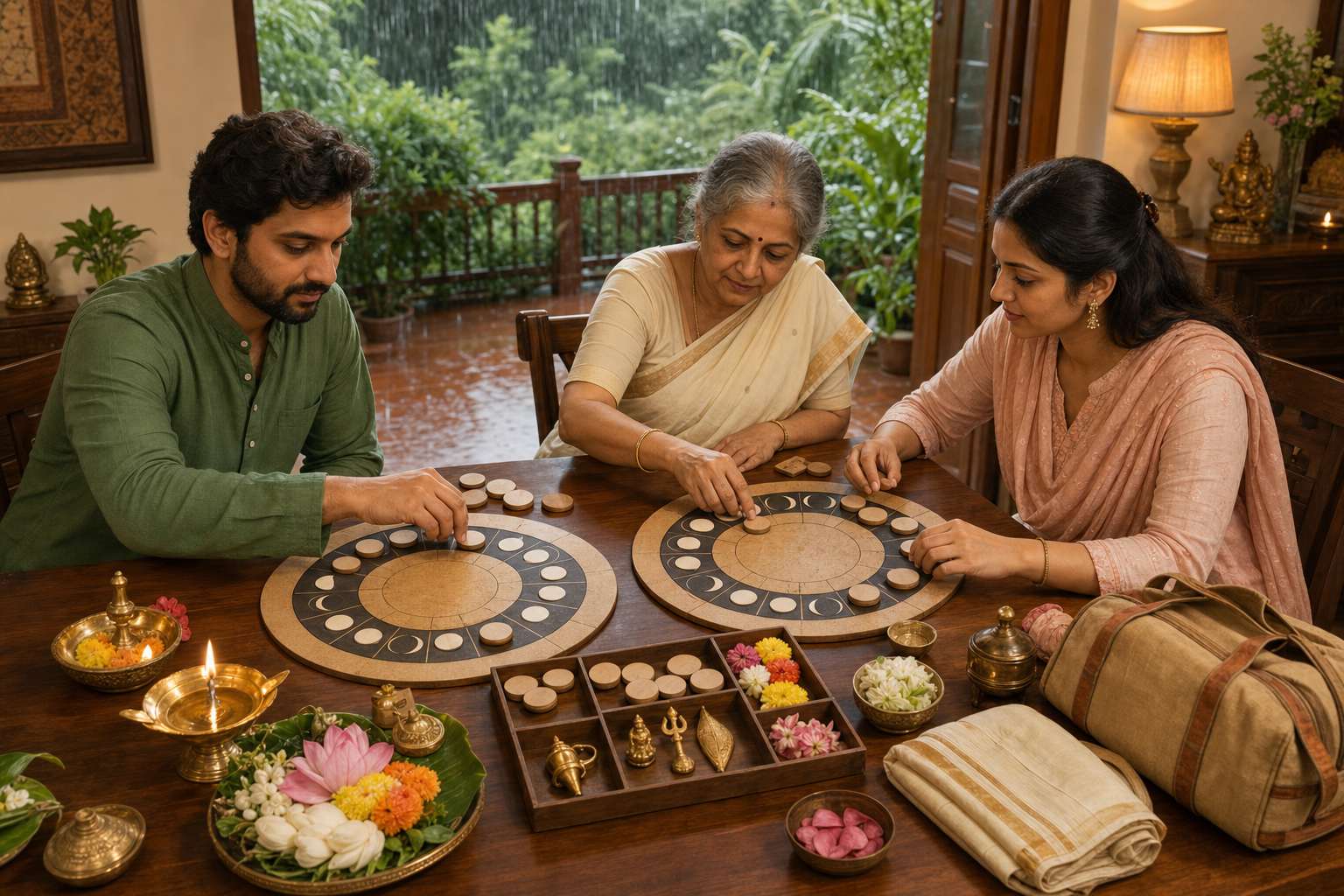
- Write down the tradition you are actually following: family sampradaya, local temple, regional panchang or a guru-given vrata procedure.
- Record the calendar convention beside it. For Hyderabad and Telugu Sravana Masam planning, mark “amanta.” For a North Indian vrata, confirm the local purnimanta calendar.
- Separate the masa window from the observance date. August 13 to September 11 is a month window in Hyderabad; September 2 is the date of one North Indian vrata in Bhadrapada.
- For every tithi-based observance, copy the tithi name as well as the Gregorian date. “Krishna Sashti” is more useful than “September 2” when you need to verify a calendar.
- Ask the temple for the individual event schedule. Special poojas, abhishekam, Pradosham and Masa Shivaratri should not be assumed to occur throughout the entire month.
- If you live outside India, use a panchang calculated for your city. A tithi transition expressed for India cannot simply be transferred to another time zone.
- Reconfirm the date shortly before making a non-refundable journey. What needs checking is not whether Shravana exists, but which local tithi rule and temple timetable govern your chosen observance.
When relatives send different dates, compare three labels before debating which one is “right”: region, calendar convention and tithi. Most disagreements become understandable as soon as those fields are visible.
A simple diary entry can prevent later confusion: “Telugu amanta; Sravana Masam; Hyderabad; August 13–September 11; temple program to be confirmed.” For a North Indian vrata, use the same format with the local masa and paksha. This records the reasoning behind the date instead of leaving a bare number that someone may later replace.
Key takeaways for your 2026 diary
- There is no single Shravana date range that should be copied into every regional Hindu calendar.
- For Hyderabad and the Telugu amanta tradition, use August 13 to September 11, 2026, as the working Sravana Masam window.
- July 29 contains a Purnima-to-Krishna-Pratipada transition, showing why a lunar boundary cannot be treated like a midnight calendar change.
- Hal Sashti falls on September 2, but its North Indian calendar designation is Bhadrapada Krishna Sashti.
- Choose dates in this order: tradition, regional calendar, tithi, local observance rule and temple timetable.
Begin by writing “amanta” or “purnimanta” at the top of your 2026 Shravana plan. Add the exact vrata or temple service underneath it, and confirm that one event locally. That small discipline will give you a coherent calendar without asking every Hindu household in Bharat to use the same regional reckoning.
References
- Hindu Pad — Sravana Masam Utsavalu in Ashtalakshmi Temple Hyderabad
- Hindu Blog — July 29 2026 Tithi – Panchang – Hindu Calendar – Good Time – Nakshatra – Rashi
- Hindu Pad — Hal Sashti Vrat 2026
- Hindu Pad — Keesaragutta Temple Sravana Masam Poojalu