
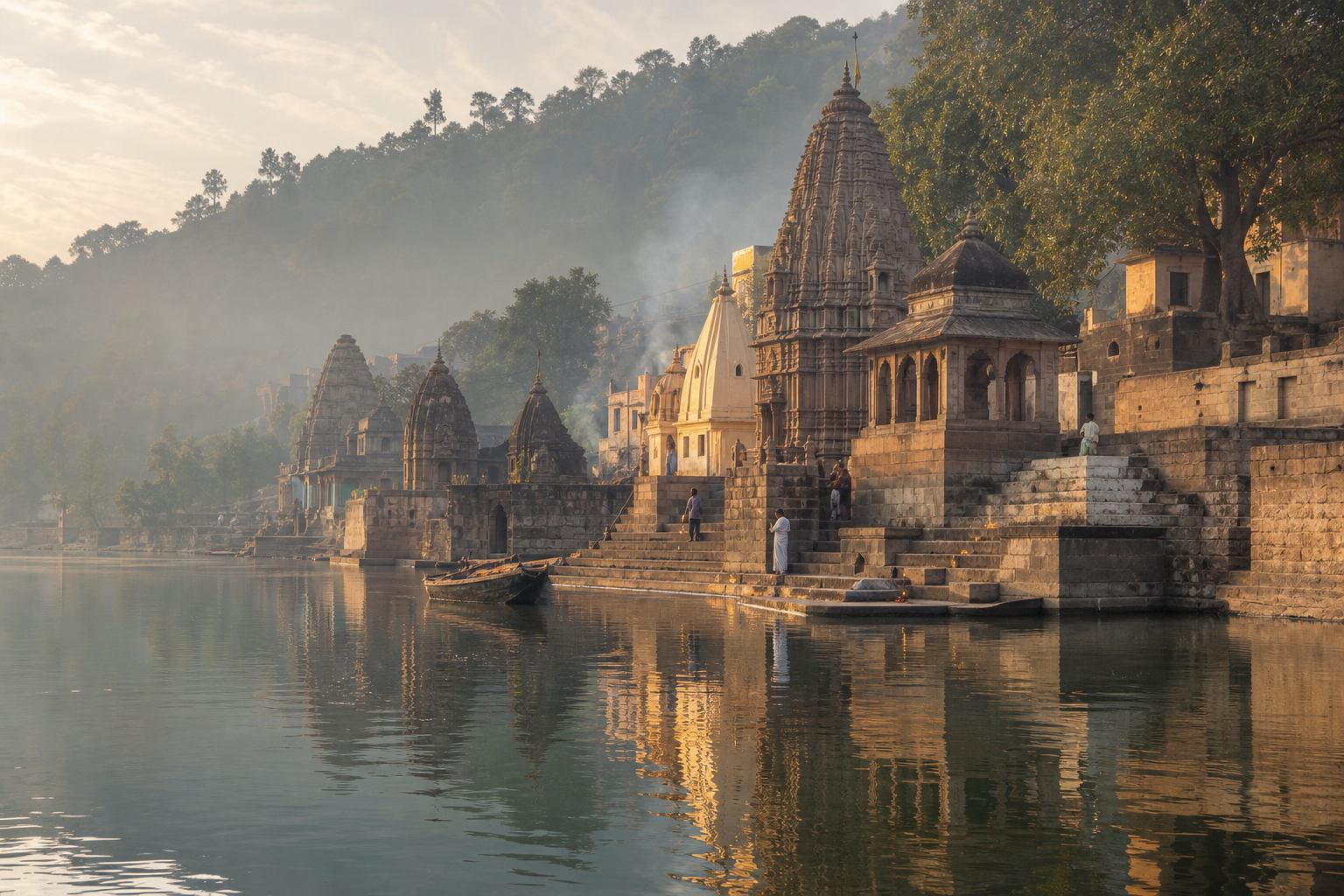
If you are deciding which Narmada temples to visit, do not begin by collecting the longest possible list. Begin by deciding what you want the pilgrimage to do to your attention. Along this river, the bank, the water, the shrine, and the act of darshan belong to one sacred setting.
A meaningful journey therefore needs more than transport between temples. The Narmada is revered in Hindu tradition as a life-giving mother, and pilgrims come to her shores to meditate, perform sacred rites, and worship at venerable temples. Your itinerary should preserve room for all three rather than reducing the journey to a sequence of hurried entrances and exits.
Choose your purpose before choosing your temple stops
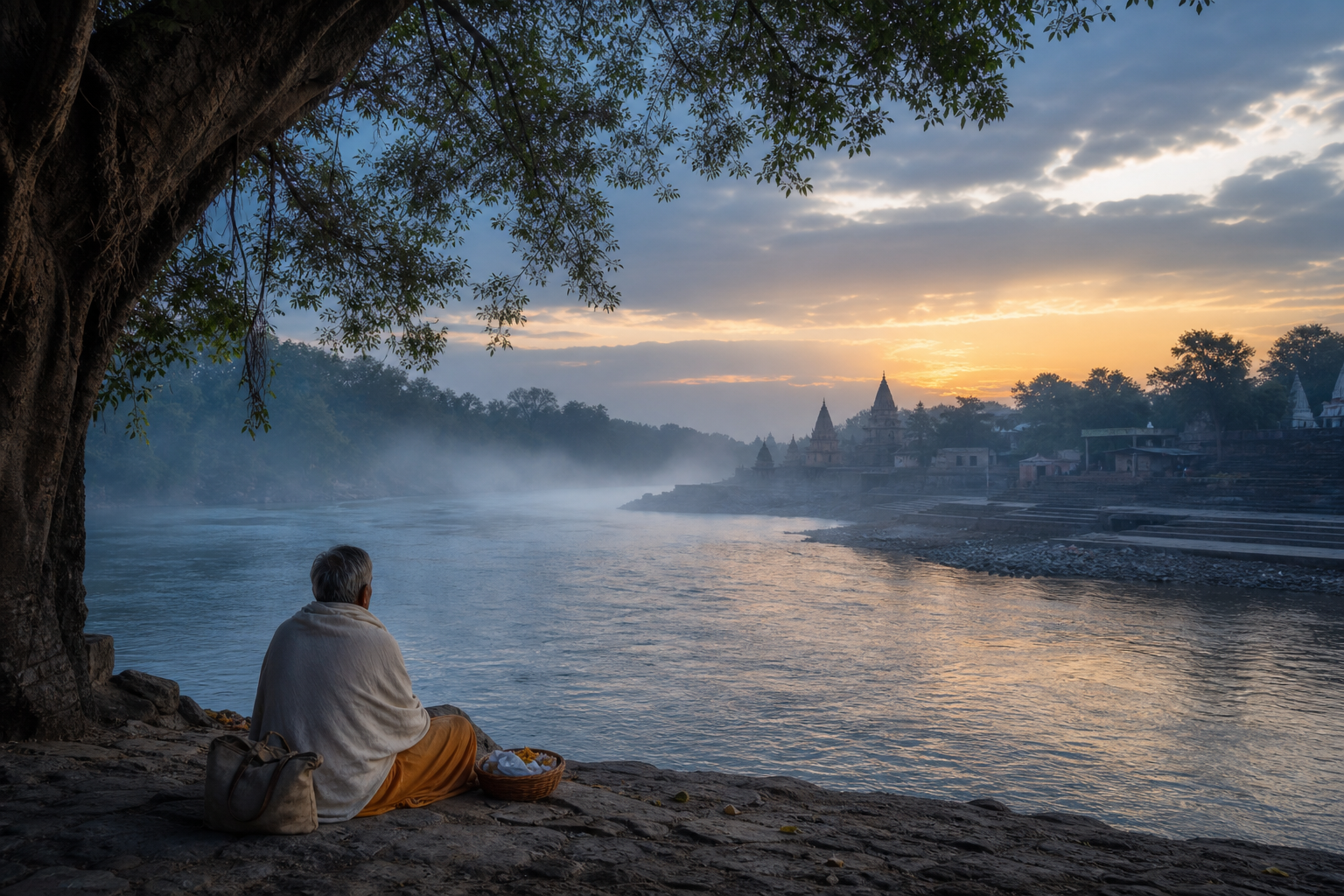
Two people can visit the same riverbank temple and undertake very different pilgrimages. One may be seeking darshan of a particular form of Bhagavan. Another may wish to offer a family prayer, join aarti, request an abhishekam, study sacred architecture, or sit beside the river in silence. None of these purposes requires you to imitate somebody else’s itinerary.
Write one sentence of intention before planning the route. Keep it concrete. You might decide that every principal stop will include unhurried darshan and a period of silence on the bank. You might instead make one particular worship practice the center of the journey. This sentence becomes your filter: a stop belongs on the route only if it supports the purpose or makes the journey practically possible.
Then divide possible stops into primary and optional places. A primary stop is one you would regret rushing or missing. An optional stop is welcome only if travel, opening hours, and your energy allow it. We would normally give each day one primary shrine rather than treating several temples as equally urgent. That leaves enough flexibility for queues, local observances, conversations with temple servants, or an unexpectedly quiet stretch of riverbank.
A named place such as Ahalyeshvara Mahadeva Temple in Maheshwar can serve as an anchor without turning the whole route into a race. Before adding further shrines, ask whether they deepen the pilgrimage or merely lengthen the list. Sacred abundance is not an instruction to hurry.
Let the river and the temple form one act of pilgrimage
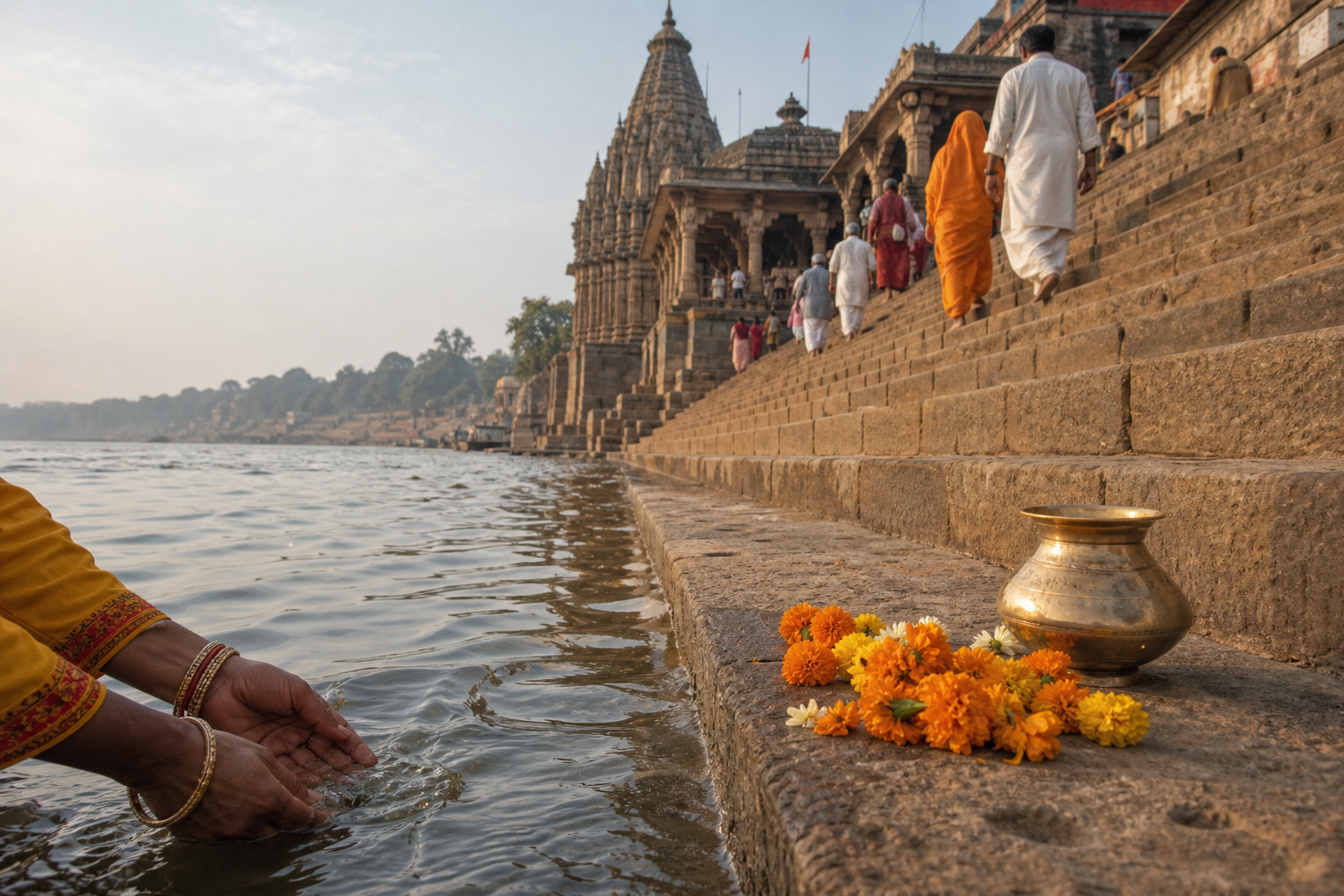
Darshan is not ordinary sightseeing. You are not simply inspecting an object or documenting a building. You are entering a living place of worship, approaching the deity with attention, and allowing yourself to be seen as well as to see. The Narmada adds another dimension: the sacred encounter begins before the sanctum and need not end when you leave it.
The following five-part rhythm is a practical discipline, not a universal ritual rule. Local temple custom always takes precedence.
- Arrive without immediately reaching for your phone. Notice the approach, the sound of worship, the movement of devotees, and any instructions at the entrance.
- Acknowledge the Narmada from a safe and permitted place. A simple pranam is sufficient; physical entry into the water is never required to prove devotion.
- Enter the temple according to local rules. Look for guidance on footwear, queues, offerings, photography, and access to particular spaces. When uncertain, ask rather than copying another visitor.
- Take darshan without trying to control every moment. If the sanctum is crowded, do not block the line in pursuit of a photograph or a longer view.
- After leaving, sit quietly if conditions permit. Record one observation or teaching before moving to the next destination.
This rhythm prevents a common failure: spending the whole visit managing logistics and remembering almost nothing of the worship. Even a short pause after darshan lets the experience settle before travel noise takes over again.
At a stop such as Ahalyeshvara Mahadeva Temple in Maheshwar, verify four practical matters locally: the appropriate entrance, current darshan access, whether you may approach the river at that location, and whether any intended ritual requires prior arrangement. Do not infer ritual permission from what another group is doing. They may have made arrangements that do not apply to general visitors.
Build the route around worship, local knowledge, and safety
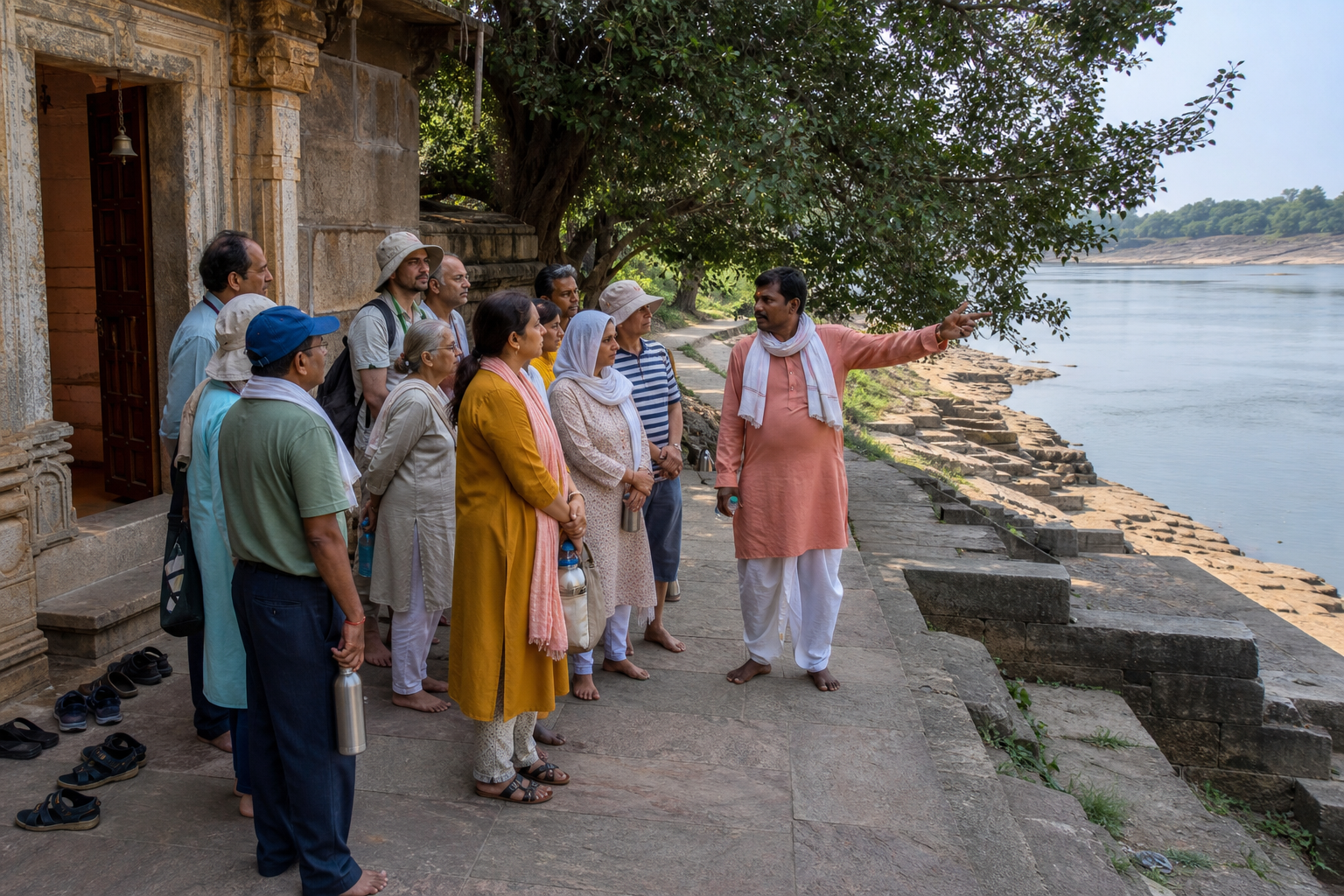
The Narmada winds through central India, but a map can show only physical proximity. It cannot tell you whether a temple’s current routine matches an old listing, whether a ritual is available to walk-in pilgrims, or whether river access is safe. Treat schedules found in advance as planning leads. Confirm important details with the temple or a reliable local contact before committing the day.
Opening hours and ritual access are operating details, not sacred constants. Aarti may occur at a particular time, while an abhishekam may require a different entrance, advance registration, specified offerings, or no visitor participation at all. Ask exactly what is permitted and what you need to bring. Buying ritual materials before confirming the procedure can leave you carrying offerings the temple cannot accept.
Keep travel and worship in separate blocks. If your arrival depends on several transfers, do not make the final connection coincide with the only darshan window you hope to attend. Put the most important shrine earlier in the usable part of the day and leave the optional stop for later. A delay should cost you an extra attraction, not the purpose of the pilgrimage.
River safety requires the same humility as temple etiquette. Sacredness does not make current, depth, wet steps, weather, or restricted access harmless. If local conditions are unclear, remain on the bank and offer pranam. Do not enter the water merely because other people have done so. Follow posted restrictions and the instructions of responsible local authorities or temple personnel.
Carry away packaging, bottles, and any item that local practice does not explicitly accept as an offering. Do not leave plastic beside the river or assume that devotional intent turns discarded material into something harmless. If you are unsure where flowers, lamps, or other ritual materials belong, ask the temple staff.
Photography also deserves a decision before you arrive. Temples are living places of worship, not content backdrops. Keep the phone away during darshan unless photography is clearly allowed, and never photograph another person’s prayer or rite without permission. One respectful image outside the worship area will often preserve more than dozens taken while your attention is elsewhere.
At the end of each principal stop, make a compact pilgrimage record: the temple name, the form worshipped, one feature of the riverbank setting, the rite you witnessed or joined, and one thought you want to carry forward. This keeps places from merging into an indistinct sequence after several days of travel.
Key takeaways for your Narmada temple journey
- Define one spiritual purpose before selecting stops; use it to distinguish primary shrines from optional visits.
- Plan one principal temple for a day when you want unhurried darshan, river time, and room for local changes.
- Treat the Narmada bank and the temple as one sacred setting rather than unrelated sightseeing locations.
- Confirm current darshan access, aarti, abhishekam, offerings, photography, and river access locally.
- Never enter the river when conditions or permission are unclear; pranam from a safe bank is a complete and respectful alternative.
- Leave each place with your waste, a brief written reflection, and enough attention to remember where you have been.
Your next step is simple: choose one anchor temple, write your intention for visiting it, and verify its practical arrangements. Build the rest of the route around that commitment. The Narmada does not need you to conquer a checklist; she asks you to arrive with enough time and discipline to pay attention.
References
