
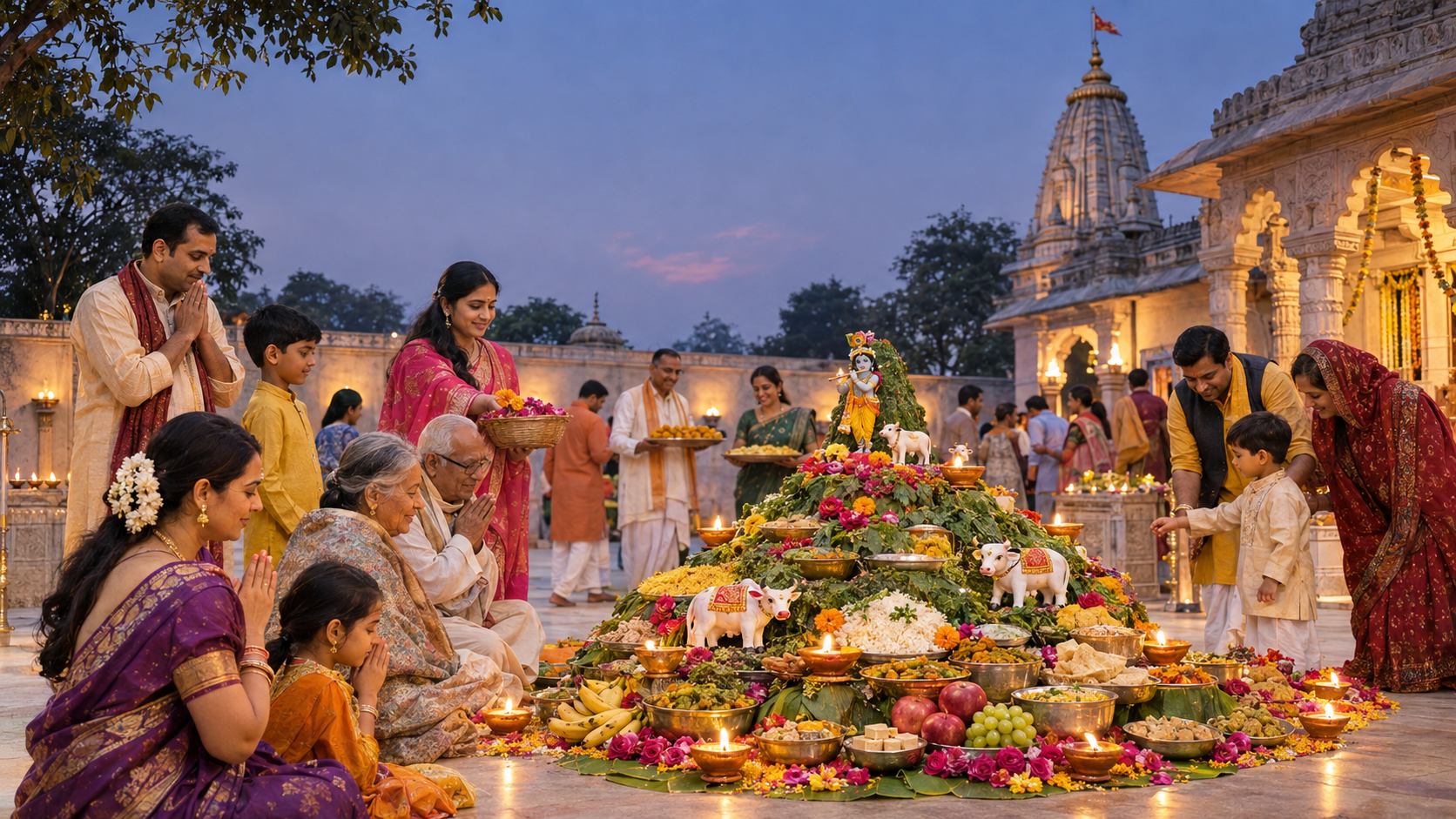
If you are arranging Govardhan Puja at home or helping with a temple celebration, the hardest question is not how high to build the food offering or how elaborate to make the altar. It is how to preserve the meaning of the festival while cooking, coordinating volunteers, receiving guests, and completing the ritual properly.
The answer is to let every outward act serve the same inward movement: from entitlement to gratitude, from display to shelter, and from personal importance to seva. A modest observance that changes how you treat people is closer to Govardhan Puja than an impressive event that leaves rivalry, waste, or exhaustion behind.
Read the ritual as a change in relationship
Govardhan Puja remembers Krishna, Govardhan, and the people of Vraja as parts of one sacred relationship. Krishna directs attention toward the hill, the cows, the land, the food it yields, and the community sustained by them. When danger follows, Govardhan becomes the place of collective shelter.
This gives the festival its practical shape. Food is prepared, but not merely displayed. Giriraj is honoured, sometimes through abhisheka and other acts of worship. Devotees gather, sing, offer, circumambulate, receive prasada, and serve one another. Each act expresses dependence on grace rather than ownership.
The story also corrects a common spiritual mistake. Pride can hide inside religious activity. You can prepare the most admired offering, lead the loudest kirtan, or control every detail and still miss the lesson. Indra’s pride is not there merely so that you can condemn Indra. It asks you to notice the part of yourself that expects recognition, resists correction, or treats service as a stage.
Use a simple test when making festival decisions: does this choice increase gratitude, protect the community, and honour Govardhan, or does it mainly advertise the organiser? That question can settle disputes about scale, decoration, speaking roles, menus, photographs, and spending more clearly than an appeal to prestige.
Build a home observance around reverence, not imitation
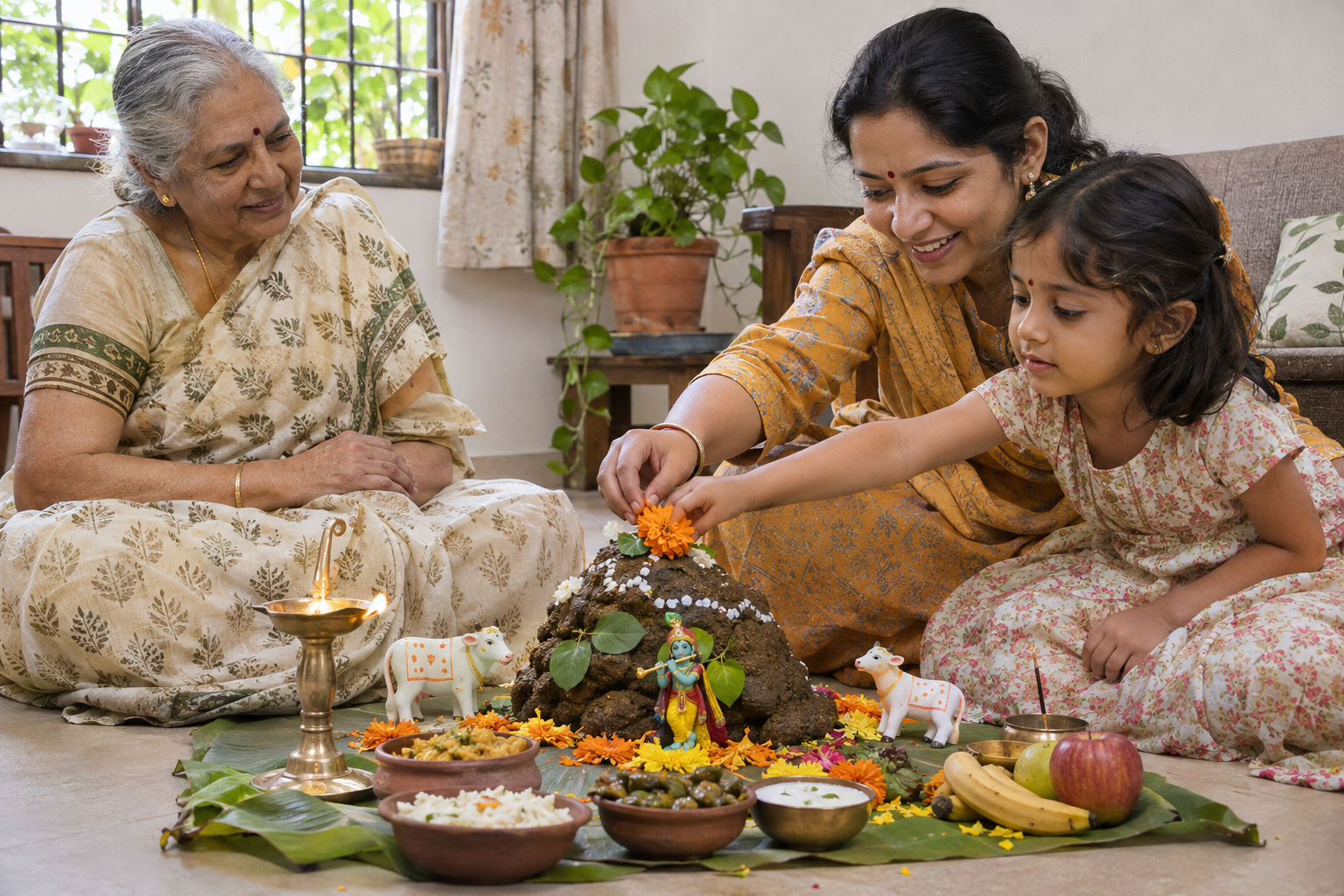
A home celebration does not need to reproduce a temple festival. Your family tradition, guru, or local temple should determine formal details. If you have not been taught a particular procedure, keep the observance sincere and manageable instead of copying an elaborate ceremony from a recording.
Begin by deciding what you can care for properly. Clean the worship space and kitchen. Choose food that your household can prepare reverently, offer, distribute, and consume without waste. If your tradition makes a symbolic Govardhan from food or another customary material, prepare it on a clean, stable surface. If a sacred form is already maintained in your home, follow its established standard of seva.
- Set the intention. Say plainly that the observance is an offering of gratitude to Krishna and Govardhan, not a performance or competition.
- Tell the essential katha. Explain why Govardhan is honoured and how Krishna gave shelter to the community. Keep the explanation clear enough for children and newcomers to understand what the ritual actions mean.
- Perform the worship you actually know. Offer prayer, flowers, food, kirtan, and aarti according to your practice. Conduct abhisheka only when you have a suitable sacred form and reliable guidance for its care.
- Offer food as seva. Arrange it attentively, but do not confuse visual abundance with devotion. A smaller offering made carefully and shared fully is not a lesser act.
- Make space for circumambulation or reverent remembrance. If your room cannot accommodate movement safely, remain in place and offer prayers rather than forcing a crowded procession.
- Distribute prasada before attention drifts elsewhere. Serve guests, elders, children, and anyone needing assistance with the same care given to the altar.
- Complete the service. Clean the vessels, store food safely, restore the room, and thank everyone who helped. Cleanup is part of the puja, not an inconvenience after it.
Abhisheka deserves particular care. Ritual bathing is not an opportunity to improvise with a sacred object or use ingredients simply because they look impressive. Different forms and lineages have different standards. If you do not maintain a form appropriate for bathing, offer water symbolically, recite a prayer, or ask your temple how your household should participate. Restraint can be more reverent than imitation.
Keep the same principle for food. Do not cook beyond your ability to offer, distribute, and store it responsibly. Plan the menu from the people who will eat it backward: consider dietary needs, serving utensils, containers for distribution, kitchen capacity, and the volunteers available for washing up. The point of abundance is generosity, not waste.
Make the community a participant, not an audience
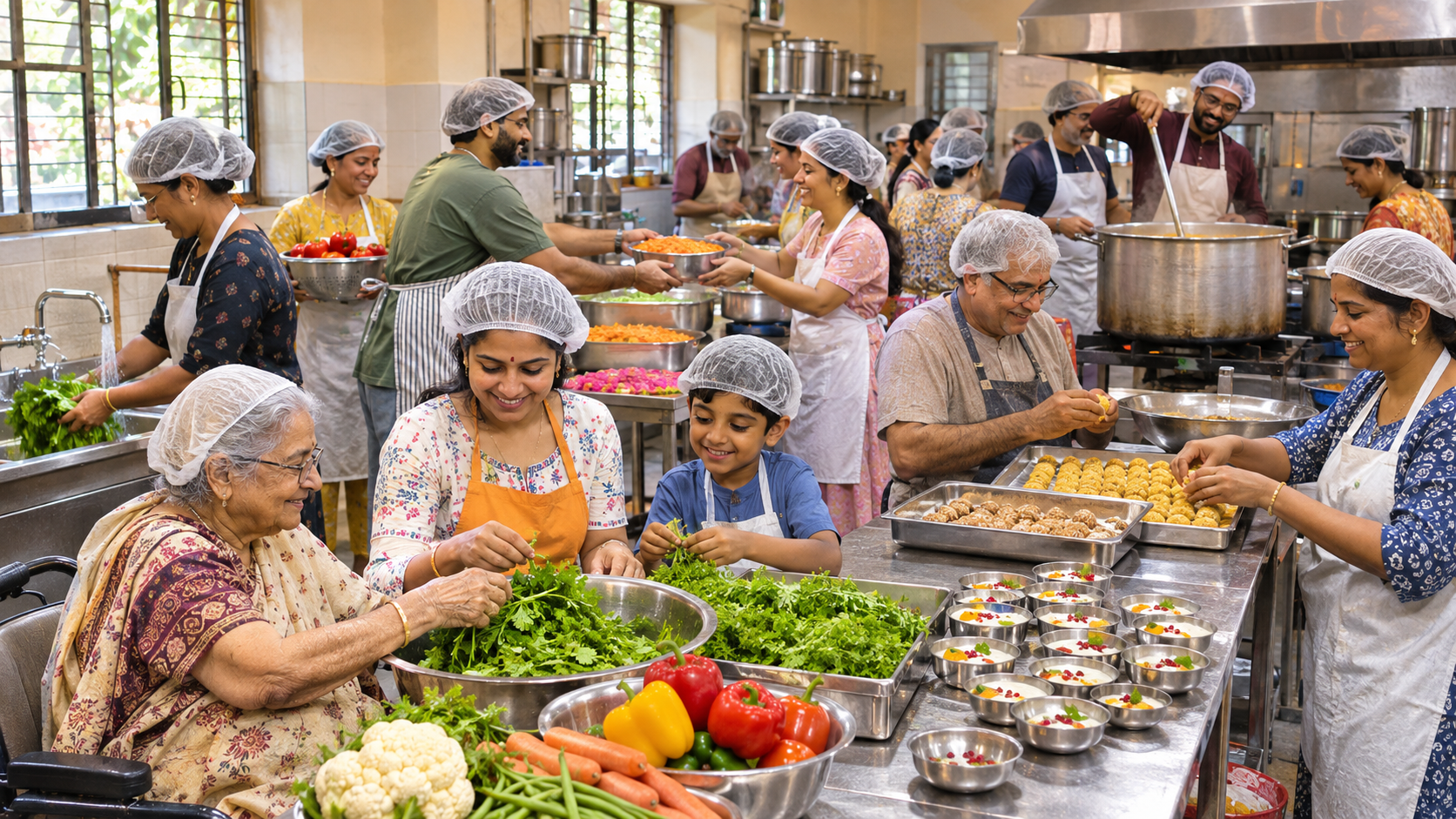
Govardhan Puja naturally belongs to community life because its central image is shared shelter. Its meaning can remain rooted even when the celebration takes place far from Vraja, as seen in a Govardhan Puja gathering in New York. Geography changes the logistics; it does not require the community to reduce the festival to a cultural show.
The organiser’s first task is therefore not to assemble spectators. It is to create meaningful forms of participation. Divide the work before the day of worship: altar preparation, cooking, welcoming, explaining the katha, guiding children, serving prasada, assisting people with mobility needs, managing shoes and coats, and cleaning. Give every team a clear person to contact, but do not turn coordination into a hierarchy of spiritual worth.
Newcomers need more than an invitation to watch. Briefly explain what Giriraj signifies, when to stand or sit, how to join the singing, whether circumambulation is planned, and how prasada will be served. Do this without testing their knowledge. A guest should not have to decode the room before feeling welcome in it.
Children also need a real place in the celebration. Give them age-appropriate service rather than asking them only to remain quiet through an adult programme. They might help arrange flowers, carry safe items, welcome families, join a response in kirtan, or assist with prasada under supervision. Explain the connection between Govardhan and protection so that the ritual becomes intelligible rather than merely decorative.
Food service reveals whether the community has understood the puja. Label dishes clearly when ingredients could matter to guests. Keep serving orderly without making people feel policed. Notice who has not received prasada, who cannot stand in a long queue, and who is working while everyone else eats. Feed the servers and cleanup team with the same attention given to honoured guests.
You can also connect the festival’s ethic of shelter to an appropriate local service. A community may support responsible cow care, share prasada beyond the immediate congregation, help a family in difficulty, or care for a neglected piece of land. Such service should grow naturally from the community’s capacity. It should not be attached merely to create publicity.
Let humility govern the visible and invisible work
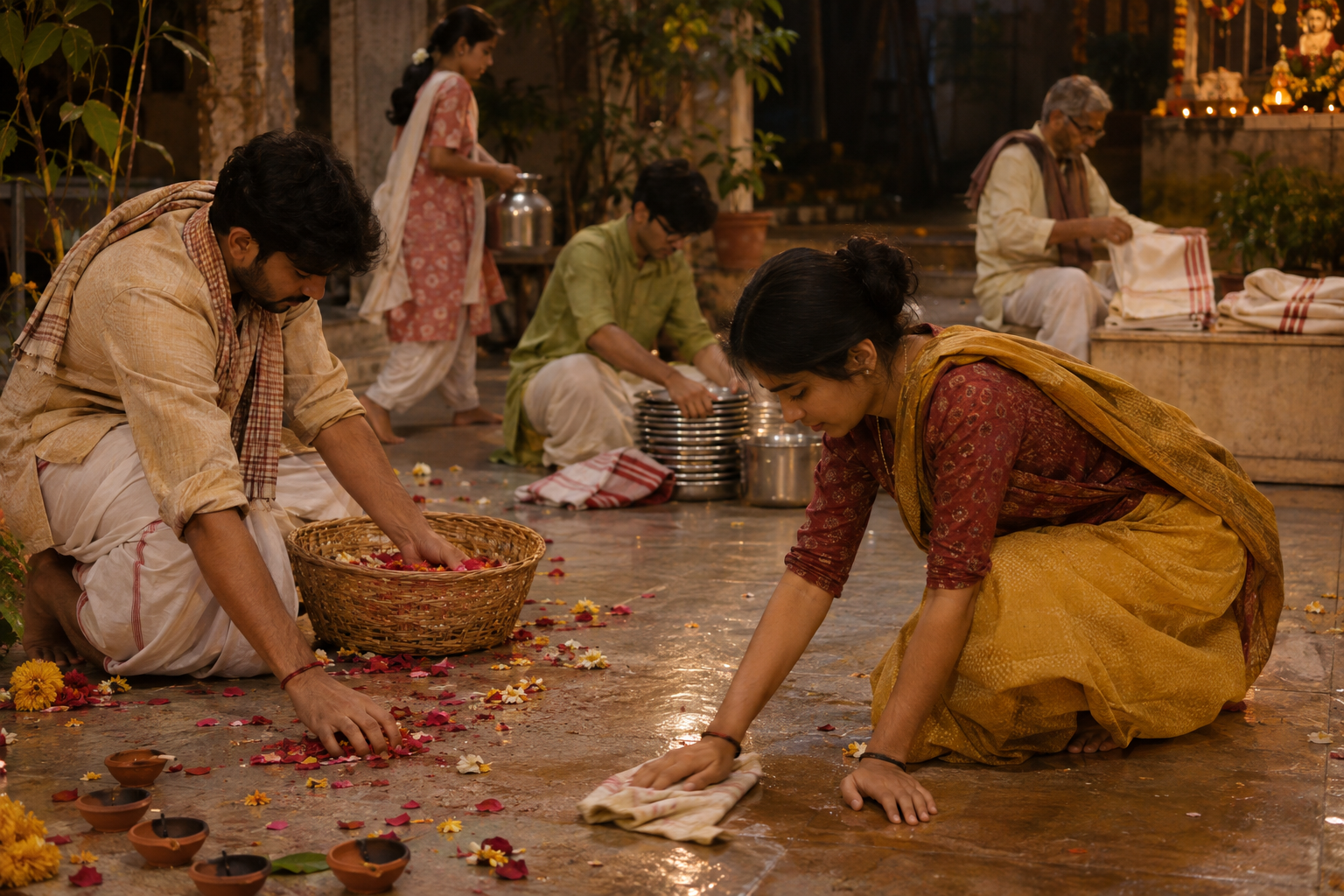
The most demanding Govardhan offering may be the surrender of status. The festival’s spiritual test is whether devotion displaces pride in the people performing it. This is not an abstract mood. It is visible in how decisions are made and how service is shared.
Pride appears when an organiser cannot accept correction, when a donor expects control, when a skilled devotee belittles a beginner, or when visible altar service is valued more highly than washing pots. It also appears when one group treats its customary form of observance as the only possible measure of sincerity, even within a community containing different family and lineage practices.
Humility does not mean poor preparation, silence in the face of a genuine problem, or pretending that every procedure is interchangeable. You can maintain standards firmly without humiliating anyone. State the requirement, explain the reason, offer a workable alternative, and correct privately when possible. Competence becomes seva when it protects worship and people without demanding admiration.
- Choose an unseen duty before choosing a public role.
- Accept a useful correction without turning it into a contest over authority.
- Credit cooks, cleaners, donors, musicians, teachers, and quiet helpers without ranking their devotion.
- Welcome a modest offering without comparing it with a larger contribution.
- If a disagreement does not affect safety, sanctity, or the established standard of worship, consider yielding.
- After the festival, ask which people were overlooked and which tasks fell repeatedly on the same volunteers.
Watch what happens when something goes wrong. A missing ingredient, late volunteer, uneven decoration, or changed programme can expose the real centre of the celebration. If preserving your personal plan becomes more important than protecting another person’s dignity, pause. Govardhan Puja is precisely the wrong occasion to sacrifice people to perfection.
Key takeaways
- Let your family, guru, or temple tradition determine formal ritual details; do not imitate an elaborate ceremony you have not been taught.
- If proper abhisheka is not established in your home, choose a simple, reverent offering rather than improvising with a sacred form.
- Plan prasada from actual distribution backward so that abundance becomes generosity instead of waste.
- Give newcomers, children, elders, servers, and cleanup volunteers meaningful places in the celebration.
- Measure success by gratitude, shared shelter, careful service, and reduced pride, not by spectacle.
- Take responsibility for an invisible task. It is one of the clearest ways to make humility practical.
Before your next Govardhan Puja, write down whom the celebration should shelter, what you can offer without waste, and which unnoticed duty you will personally carry. Let those answers shape the altar, the menu, and the volunteer plan. Then the ritual will not end when the lamps are lowered; it will continue in the community you have learned to serve.
References
- Dandavats – Abhishek of Giriraj || 10-11-2026
- Dandavats – ISKCON New York | Govardhan Puja 2026
- Dandavats – True Devotion Begins Where Pride Ends | Govardhana Puja | Class with Yasoda Dulal

Leave a Reply
You must be logged in to post a comment.