
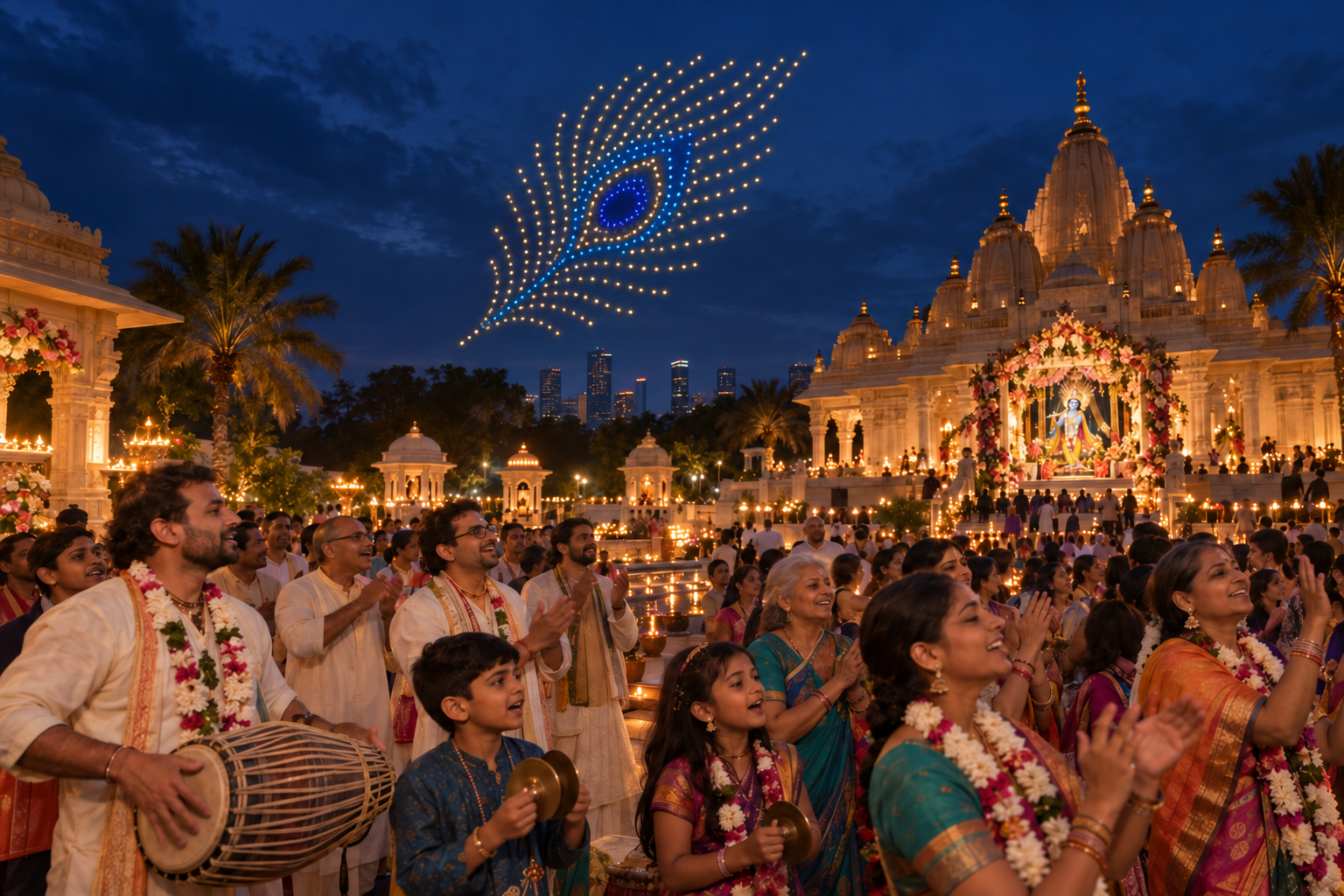
If the 200-drone display is the detail that brought you to ISKCON Houston’s 2026 Janmashtami, don’t stop at the spectacle. The more useful question is why the technology did not overwhelm the worship around it.
Houston offered a practical answer for devotees, parents and temple organizers. A large public celebration can use contemporary tools without becoming an entertainment event, but only when Krishna-katha, kirtan, darshan, prasada and seva determine the structure. The attraction may bring someone through the gate; the devotional journey must give that person a reason to remain.
Three anniversaries gave the festival a longer memory
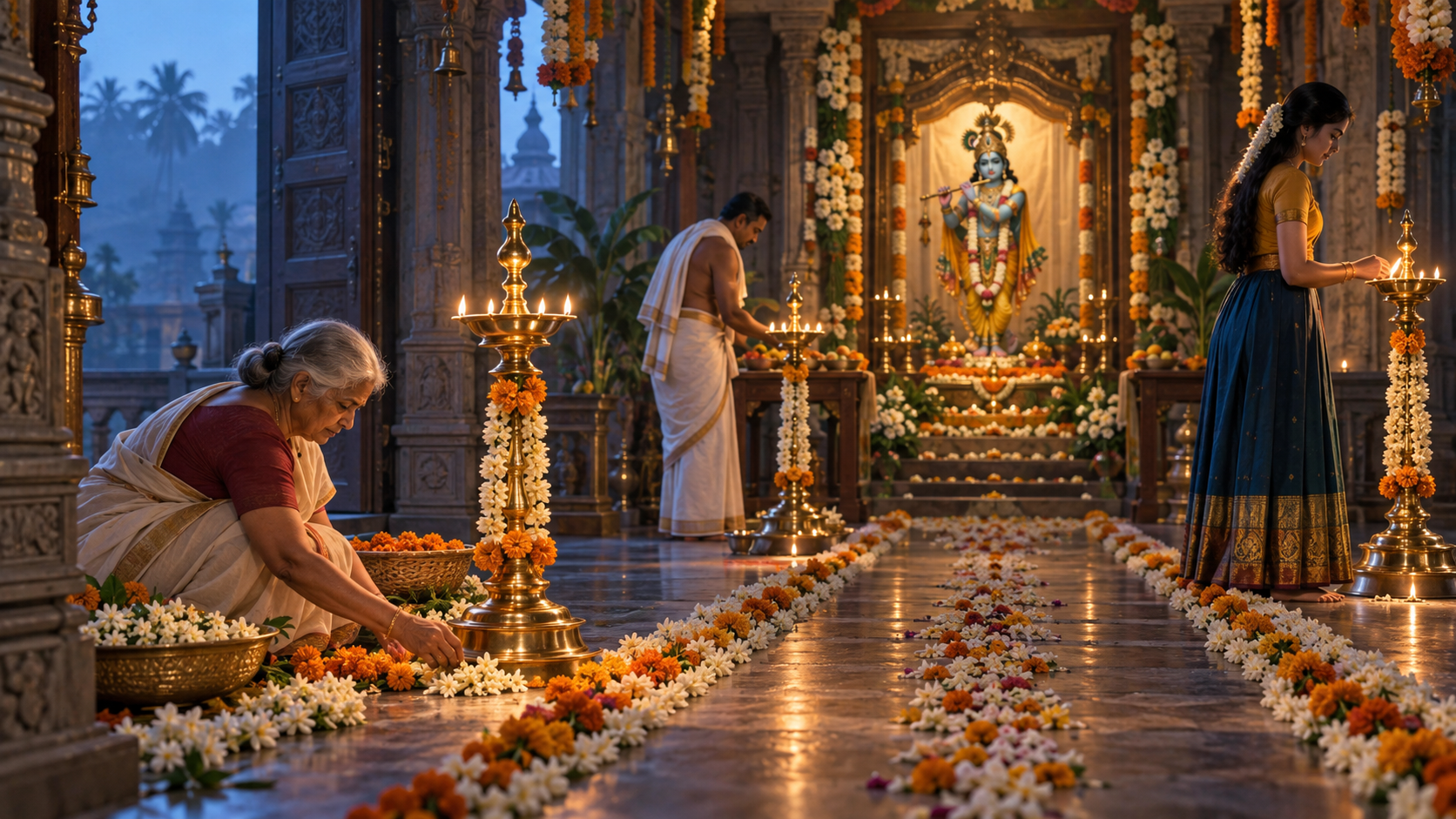
Held from September 4 to 7 as part of Kirtan Fest Houston, the celebration drew more than 12,000 devotees and visitors. Janmashtami stood at its center, but the gathering also marked ISKCON Houston’s 40th anniversary and 60 years of ISKCON in the United States.
Those anniversaries joined three levels of memory. Forty years represented a local congregation that had built a home for bhakti in Houston. Sixty years connected that community to ISKCON’s wider American history. The observance of Srila Prabhupada’s 130th Appearance Day, attended by more than 700 people on Saturday, brought the focus back to the acharya whose journey carried Krishna-bhakti to the West.
This is how an institutional anniversary becomes spiritually useful. It should not merely tell you how old an organization is. It should show what has been received, who carried it forward and what the present generation is now responsible for preserving.
If your temple is preparing for a major anniversary, resist the temptation to build the program around speeches and plaques. Identify one living expression of each part of its history: the founding sacrifice, the devotional practice that endured and the people being prepared to carry it next. Houston made those lines visible through remembrance of Srila Prabhupada, sustained congregational worship and youth leadership.
Why the drone show belonged at Janmashtami
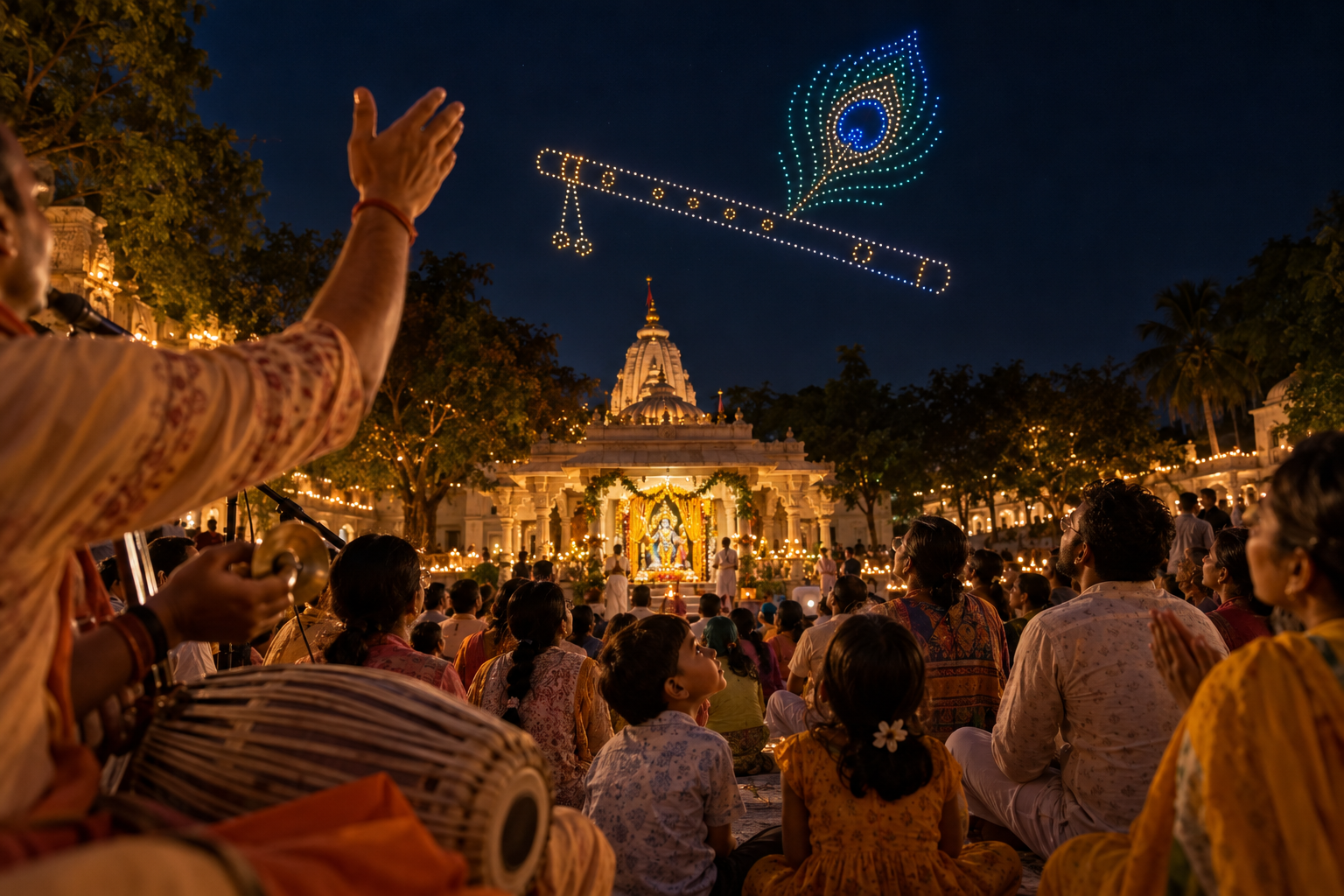
The decisive feature of the drone show was not its novelty. It was its narrative discipline. The 13-minute performance used 200 drones to form 19 scenes, primarily telling the story of Lord Krishna’s appearance from Krsna Book by A.C. Bhaktivedanta Swami Prabhupada. A separate segment honored ISKCON’s American anniversary and Srila Prabhupada’s journey to the West.
That choice placed technology in service to Krishna-katha. The sky was not treated as an empty screen for disconnected symbols. It became a storytelling space. Thousands could follow a recognizable sequence about Krishna and then carry that narrative into the worship taking place inside the temple.
The production also shows how much preparation a short public presentation can conceal. Planning began in June and the design and production process took about two and a half months. With only 200 points of light available, the team had to ensure that every image remained clear enough for the audience to recognize. The result was the first drone light show hosted by an ISKCON temple in North America.
You do not need a drone fleet to apply the same discipline. A children’s drama, projection sequence, rangoli installation or procession can follow four rules:
- Begin with the Krishna-katha you want a first-time visitor to understand. Do not begin with the available technology.
- Choose a small number of scenes that can be recognized immediately from the audience’s actual viewing distance.
- Give each visual a place in a narrative sequence rather than assembling a catalogue of religious imagery.
- Lead people from the presentation toward kirtan, darshan, hearing or seva. An attraction without that next step becomes a separate event competing with the festival.
Houston’s achievement therefore was not that drones are now necessary for a successful Janmashtami. It was that a new medium was given a clear devotional purpose.
The grounds offered more than one path into devotion
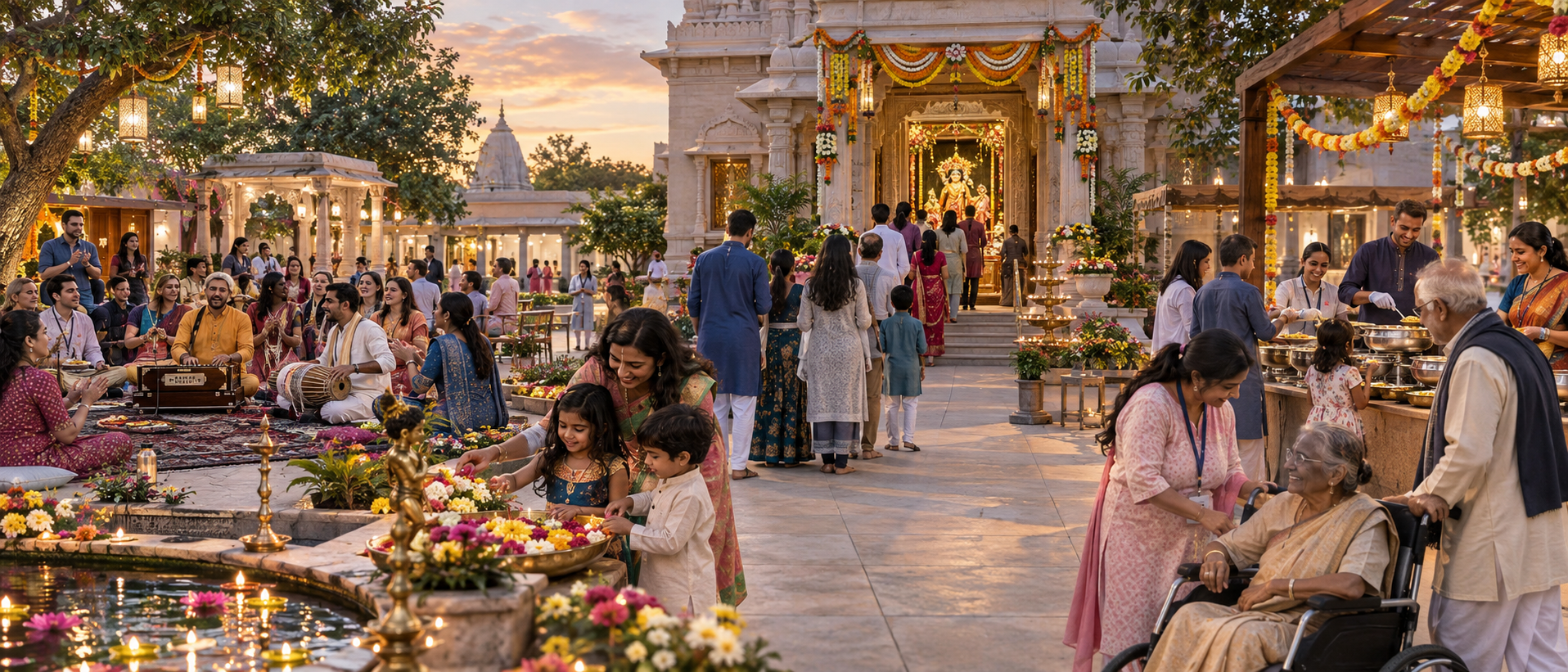
A festival of 12,000 people cannot assume that everyone arrives with the same knowledge or intention. Some come for darshan. Some bring children. Some hear about the gathering from a friend and know little about Krishna-bhakti. Good hospitality gives each person a natural first step without reducing the sacred center to something generic.
Beginning at 6 p.m., guests were welcomed with sandalwood tilak while continuous sankirtan filled the entrance grounds. Kartals, mrdanga and the Hare Krishna mantra established the spiritual character of the evening before visitors entered the temple room. Lassi, samosas and a continuous vegetarian prasada feast met practical needs, while book distribution offered newcomers a way to continue learning after the festival.
Inside, the Deities on the teakwood altar received offerings, kirtan, spiritual discussion and abhisheka. The Deities’ outfits, face decoration and handmade rose garlands made darshan itself the visual heart of the celebration. The public display outside and the worship inside therefore performed different functions rather than trying to imitate each other.
Families had a further point of participation. A children’s costume contest coordinated by Hindus of Greater Houston brought together 125 young participants dressed as Radha and Krishna. This was more than a way to occupy children while adults attended the program. When a child prepares a form, name or pastime of Krishna, the family has an opportunity to discuss what that representation means.
You can audit any large temple festival by tracing three visitor routes:
- The newcomer route should move gently from welcome to mantra, prasada, accessible Krishna-katha and a way to learn more.
- The family route should let children participate in a form connected to the sacred occasion, not merely consume unrelated entertainment.
- The devotee route should protect time and space for darshan, abhisheka, sustained kirtan, spiritual discussion and the principal arati.
These routes can overlap, but none should be accidental. At midnight, their shared destination became unmistakable. Nearly 1,500 people filled the dimly lit temple room. When the curtains opened, jubilant kirtan and the maha-arati welcomed Lord Krishna at the traditional hour of His appearance. The evening’s many activities had not replaced the midnight moment; they had prepared people to receive it.
Youth ownership and a four-day rhythm made the scale possible
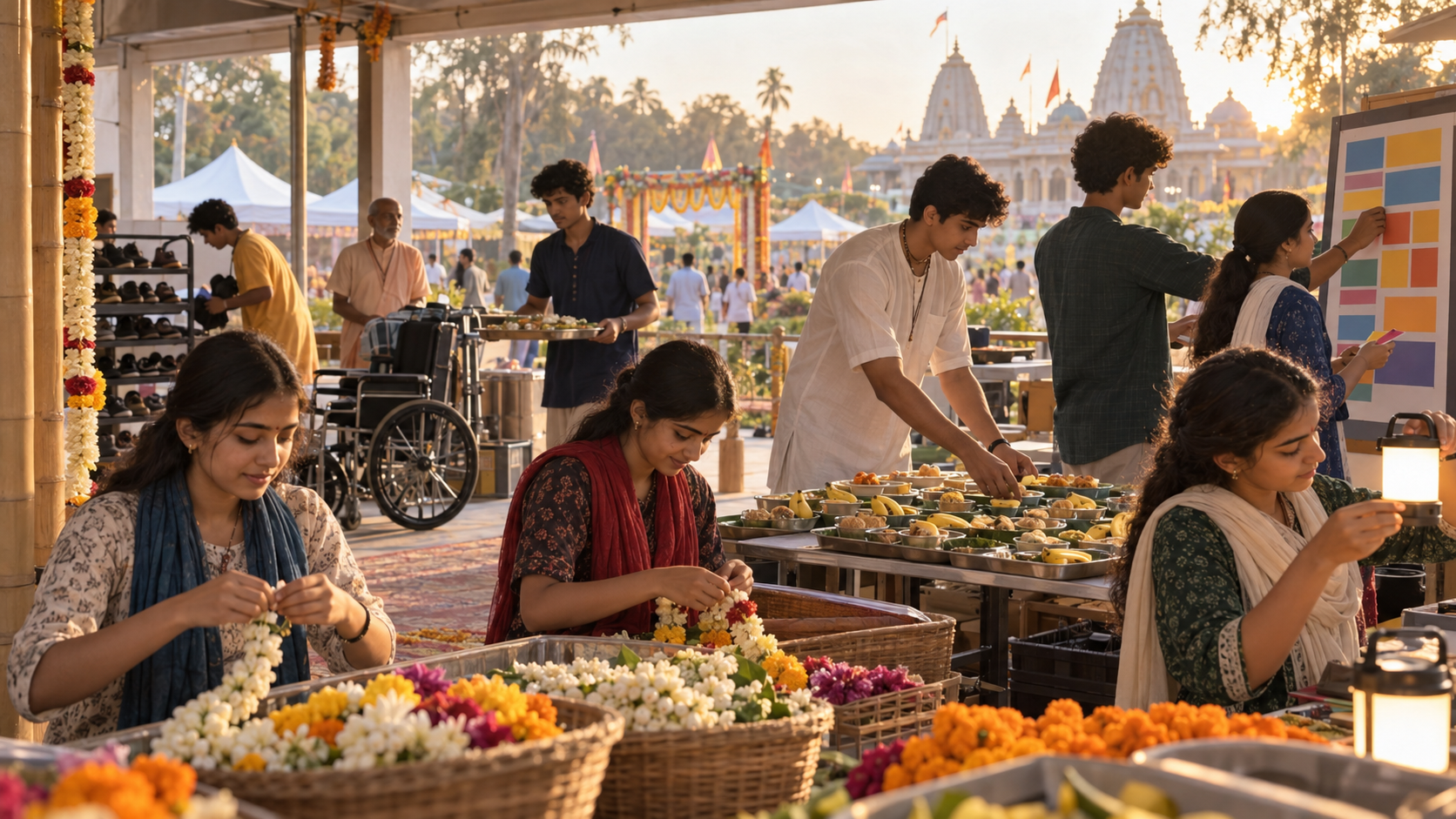
Large attendance can look effortless from the crowd. It never is. More than 300 volunteers contributed over 5,000 hours across decoration, cooking, welcoming guests and operating shuttle services. Those are not peripheral jobs. They determine whether a visitor encounters confusion or care before reaching the temple room.
The more consequential fact was who held responsibility. ISKCON Houston’s youth planned and executed the entire four-day festival after working on it for several months. They also developed the anniversary drone-show vision and carried it through technical constraints. Youth inclusion is often discussed as a program for young people; Houston demonstrated youth stewardship of a program for the whole community.
If you want that kind of continuity, give younger devotees ownership of defined workstreams, budgets, schedules and decisions. Pair them with experienced mentors, but do not reduce them to performers, social-media helpers or ceremonial representatives. Responsibility transmits a tradition differently from observation.
Partnership widened the circle without displacing the devotional center. Hindus of Greater Houston co-sponsored the celebration and worked with ISKCON Houston on the overall festival. India’s Consul General D. C. Manjunath attended, and representatives connected with Houston, Harris County and Fort Bend County delivered proclamations. Their presence placed the temple’s work visibly within the civic life of greater Houston, while the central acts remained kirtan, darshan, prasada and arati.
The multi-day format also prevented every purpose from being forced into one overcrowded night. Kirtan Fest brought singers from around the world, including Chile and Australia. Saturday continued with Bhajan Sandhya, sankirtan, an unlimited chaat station and dessert. On Sunday, more than 1,500 people attended a flower festival in which petals from 20,000 white, red, pink and yellow roses were offered to the Deities before the congregation celebrated with them.
That rhythm is worth copying even at a smaller scale. Keep the principal Janmashtami worship clear. Give congregational singing enough time to deepen on its own. Place a highly participatory celebration where people can join with their bodies and senses. A program becomes easier to enter when contemplation, narrative, ritual and communal joy are allowed to breathe instead of competing for the same hour.
Key takeaways for your next Janmashtami
- Set the devotional center first: Krishna-katha, kirtan, darshan, prasada and arati should determine where every attraction leads.
- Use technology to tell a specific sacred narrative. If the audience cannot recognize the story, more visual complexity will not solve the problem.
- Design separate entry routes for newcomers, families and regular devotees, then bring them together at the principal worship.
- Treat an anniversary as a transfer of responsibility. Connect founding memory to present practice and give the next generation real authority.
- Build a labor plan early. Hospitality, food, transport and welcome are part of the spiritual encounter, especially when attendance reaches the thousands.
- Spread distinct modes of participation across time rather than compressing spectacle, teaching, kirtan and ritual into a single crowded program.
If you are planning the next Janmashtami, begin with one sentence: what should a first-time visitor understand about Krishna before leaving? Build the story, worship path, volunteer roles and schedule around that answer. Only then choose the technology. Houston’s enduring contribution is not a record crowd or a first-of-its-kind display, but a workable example of scale being made to serve bhakti.
References
- Dandavats – ISKCON of Houston’s 2026 Janmashtami Festival draws over 12,000 with historic Drone Show
