Thursday, May 21, 2026, in the Hindu calendar (Panchang) begins in most regions with Shukla Paksha Panchami tithi, the fifth lunar day during the waxing phase of the Moon. As per the prevailing Indian regional Panchang computations, Shukla Paksha Panchami tithi remains in effect until 1:45 PM on May 21, after which it transitions to Shukla Paksha Sashti tithi, the sixth lunar day in the waxing fortnight.
This date unites two auspicious currents: the Shukla Pakshatraditionally associated with growth, clarity, and initiationand Thursday (Guruvara), a weekday dedicated to Guru/Brihaspati, the principle of wisdom, learning, and benevolence. Devotees commonly experience this alignment as supportive for study, teaching, counsel, and the steady launch of long-term undertakings, while maintaining reverence for local customs and regional Panchang specifics.
Technically, tithi is defined by the Moon–Sun angular separation. The lunar month is divided into 30 tithis, each spanning 12 degrees of elongation. Panchami corresponds to the interval when the Moon leads the Sun by 48° to 60° (traditional school) or, in many modern almanacs, by 72° to 84° depending on the adopted convention; the exact end time of a tithi is calculated when the Moon–Sun difference crosses the next 12° threshold. Because sunrise, longitude, and computational parameters vary by location and Panchang, practitioners should confirm local timing in their regional almanac even as the 1:45 PM transition is noted in most regions.
In practical observance, the tithi boundary matters for sankalpa (intention) and muhurta selection. Activities ideally begin and are anchored within the intended tithi, especially for vratas and homas. If a task begins in Shukla Paksha Panchami and continues into Shukla Paksha Sashti, tradition accepts the continuity when the sankalpa and the core rites are performed during the chosen tithi segment.
Shukla Paksha Panchami is generally favorable for starting studies, recitation routines (svadhyaya), and acts that nurture learning and refinement. Across the year, notable Panchamis include Vasant Panchami (Magha Shukla Panchami) and Naga Panchami (Shravana Shukla Panchami). While May 21, 2026 does not coincide with those festival dates, the intrinsic Panchami quality of cultivating knowledge and gentle progress remains pertinent.
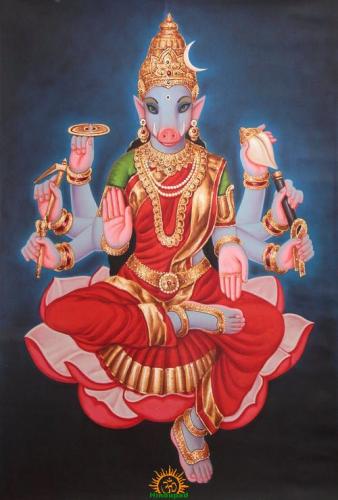
With the post-meridian shift to Shukla Paksha Sashti, traditions linked to Skanda/Devasena and Shashthi Devi (a guardian deity of children and family well-being) become relevant in some regions. Evening prayers that emphasize health, protection, and familial harmony are commonly observed, alongside simple observances such as lighting a lamp, offering seasonal fruits, and reciting protective hymns.
Nakshatra and Rashi for the day are computed from the Moon’s ecliptic longitude. The 27 nakshatras divide the zodiac into segments of 13°20′ each, and the Moon’s position at sunrise typically sets the day’s nakshatra for sankalpa. The Moon’s Rashi (zodiac sign) further refines the qualitative tone of the day’s activities. In late spring, the Moon often traverses the Taurus–Gemini belt (Vrishabha–Mithuna Rashi) during the Panchami–Sashti window in some years, but precise identification for May 21, 2026 must be verified from a trusted regional Panchang or astronomical ephemeris due to annual variability.
Beyond tithi and nakshatra, classical Panchang further considers Yoga and Karana for muhurta. Yoga is computed from the sum of the Sun’s and Moon’s longitudes and divided into 27 parts, each imparting a distinct qualitative flavor (e.g., Siddha, Shubha, Dhriti). Karana, a half-tithi, cycles through a set of movable and fixed segments (e.g., Bava, Balava, Kaulava, Taitila, Gara, Vanija, Vishti/Bhadra), offering granular guidance for starting specific tasks. When a personalized muhurta is required, all five limbsTithi, Vāra (weekday), Nakshatra, Yoga, and Karanaare synthesized with the native’s janma-nakshatra and Rashi.
Auspicious timing or Shubh Muhurat on May 21, 2026 can be identified using widely respected frameworks. Abhijit Muhurta centers around local solar noon and, in many traditions, is treated as a strong general-purpose window for work that demands clarity and resolve. However, regionally observed prohibitions such as Rahu Kalam, Yamaganda, and Gulika Kalam are avoided for fresh beginnings. On Thursdays, Rahu Kalam typically falls in an early–mid afternoon segment; as exact spans depend on dividing daylight into eight equal parts from local sunrise, practitioners should calculate these windows for their city and season before selecting a muhurta.
For day-to-day planning, Choghadiya offers a practical, sunrise-anchored method. Daylight is divided into eight equal choghadiyas and nighttime into another eight. The favorable segmentsAmrit, Shubh, Labh, and often Charare preferred for most undertakings, while Kal, Udveg, and Rog are generally avoided. Because these segments shift with changing sunrise and sunset, consulting a local Panchang or reliable calculator on the morning of May 21 ensures that tasks such as travel, meetings, and purchases align with supportive windows.
Considering the weekday’s Guru/Brihaspati association, devotees often focus on study, counsel, and acts of generosity on Thursdays. Simple observances might include offering yellow flowers, reciting Vishnu Sahasranama or select chapters from the Bhagavad Gita, or supporting educational causes. Many households report a sense of steadiness when morning japa, attention to satvik diet, and mindful speech are emphasized, especially while the day unfolds from Shukla Paksha Panchami into Shukla Paksha Sashti.
These temporal observances resonate across Dharmic traditions. Hindu Panchang practicethrough tithis, nakshatras, and muhurtashares an ethos with Buddhist Uposatha reflections on lunar days, Jain disciplines aligned with fortnightly cycles and special vratas, and Sikh commitments to simran and seva that honor sacred time through daily remembrance and ethical action. Respecting diverse calendars and observances while recognizing a shared reverence for time as a moral and spiritual teacher sustains unity among Hinduism, Buddhism, Jainism, and Sikhism.
For those integrating Panchang into professional and family life on May 21, 2026, a balanced approach serves best: set intentions in Shukla Paksha Panchami, prefer strong windows such as Abhijit Muhurta and favorable Choghadiyas, avoid Rahu Kalam–type intervals for fresh starts, and carry protective prayers into the Shukla Paksha Sashti evening if observing Shashthi-related practices. Major ceremoniesgriha-pravesh, weddings, or business inaugurationswarrant a personalized muhurta that accounts for the native’s horoscope alongside the day’s Panchang factors.
Finally, timing is inherently regional. Diaspora communities and travelers should adjust for time zones, latitude, and local sunrise/sunset while staying within the broad framework affirmed by most Indian Panchangs for May 21, 2026. Attuning to tithi, nakshatra, Rashi, and Shubh Muhurat not only improves planning but also nurtures inner alignmentjoining ancestral wisdom with contemporary life in a spirit of shared Dharmic harmony.
Inspired by this post on Hindu Blog.