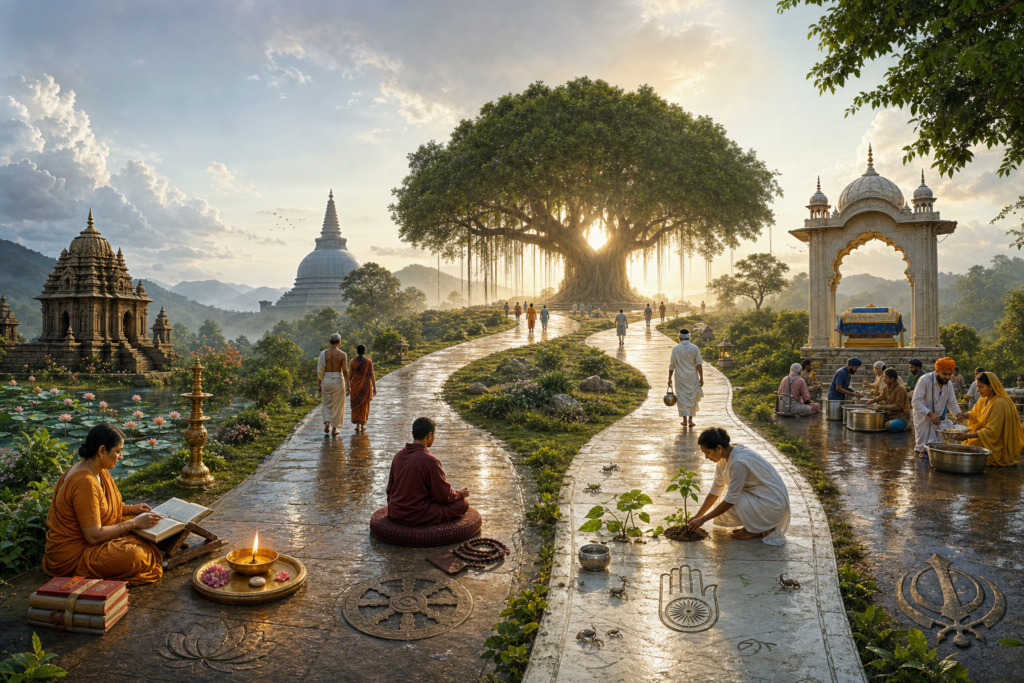
Touching a flame and learning not to repeat the mistake is a small episode that encodes a universal principle: experience shapes wisdom. The immediate sting becomes a durable guide, not to induce fear, but to cultivate intelligent caution. Extending that lesson beyond physical risk reveals a central dharmic insight shared across Hindu, Buddhist, Jain, and Sikh traditions: life is best lived in the present, while memory serves as a skilled advisor rather than a tyrannical master.
This orientation is neither amnesia nor indulgence. Living in the present does not mean discarding the past; it means converting memory into discernment (viveka) that informs right action (dharma) without flooding attention with anxiety, regret, or reactivity. In Sanskrit thought, experience (anubhava) matures into practical wisdom (prajñā) when filtered through clarity and ethical intention (sankalpa).
Classical Indian epistemology frames this as a disciplined relationship to knowledge. Perception (pratyakṣa), inference (anumāna), and trusted testimony (śabda) are coordinated with memory (smṛti) so that what is remembered is continuously evaluated by what is directly observed and understood. When the past is consulted through these pramāṇa, memory becomes a calibrated instrument rather than a cognitive echo chamber.
Hindu wisdom draws this arc from the Bhagavad Gita and the Yoga Sūtra. The Gita emphasizes steady presence in action, cautioning against fixation on outcomes and urging ethical clarity in the now (karmaṇy-evādhikāras te mā phaleṣu kadācana). Patanjali identifies sustained practice and dispassion (abhyāsa and vairāgya) as the twin levers that quieten habitual patterns, with śraddhā, vīrya, and smṛti supporting progress toward insight (samādhi-prajñā). Memory thus becomes a scaffold for stability rather than a trigger for compulsion.
Parallel insights appear across dharmic lineages. Buddhism trains attention through sati (mindfulness) and careful reflection (yoniso manasikāra), transforming recollection into present-moment clarity while acknowledging impermanence (anicca) and the constructed nature of self (anattā/anātma). Jain thought advances anekāntavāda and syādvāda, inviting multi-perspectival appraisal of events so that memory is reinterpreted through many lenses before it hardens into dogma. Sikh teachings encourage simran (remembrance of the Divine), alignment with hukam (cosmic order), and chardi kala (resilient optimism), converting life experiences into courageous, compassionate action here and now.
Modern cognitive science reinforces these contemplative intuitions. Episodic memory (specific experiences) and semantic memory (general knowledge) are supported by networks centered on the hippocampus and neocortex, with the amygdala prioritizing emotionally salient events. Strong affect magnifies retention, which is adaptive for safety but risky for bias. Crucially, memory reconsolidation research shows that each act of recall can update stored patterns in the presence of new information, meaning deliberate reflection can genuinely refine the lessons retained from past experience.
Common pitfallsrumination, catastrophizing, and overgeneralizationarise when memory is consulted without present-moment verification. The availability heuristic can mislead decisions by overweighting vivid past episodes, while negativity bias can amplify caution into paralysis. Dharmic disciplines answer this by coupling recollection with direct, current observation and ethical intent. The guidance is simple but demanding: verify what memory proposes against what the moment reveals, then act with compassion and clarity.
Indian psychological models describe how samskāra (imprint) and vāsanā (tendency) shape perception and behavior. The Yoga Sūtra characterizes transformation as the steady weakening of unhelpful grooves and reinforcement of skillful ones through nairantarya abhyaseunbroken, consistent practice. In this view, the past is not erased; it is metabolized. The present becomes a workshop where impressions are reworked into wisdom.
Across traditions, specific practices operationalize this science of memory. In Jainism, pratikraman integrates daily ethical review with forgiveness, preventing errors from calcifying into shame or denial. In Buddhism, vipassanā and mettā systematically observe sensations, thoughts, and emotions, dissolving reactivity while strengthening compassion. In Sikh praxis, simran and ardas ground memory in devotion and courage, while service (seva) channels recollection into constructive social action. In Hindu sādhanā, svādhyāya (self-study), japa (mantra repetition), and prāṇāyāma regulate attention and affect, allowing memory to inform rather than overwhelm.
Ethical decision-making in this framework follows a coherent arc. First, acknowledge the memory that arises and the emotion it evokes. Next, test its relevance against current facts and one’s dharmaroles, duties, and the commitment to non-harm (ahimsa). Then, set a clear, compassionate intention (sankalpa) and act decisively, releasing clinging to outcomes. Finally, review the results, learning precisely what the moment taught, and fold that learning back into practice.
Breath and body-based techniques serve as critical regulators of this cycle. Slow diaphragmatic breathing and lengthened exhalation increase vagal tone and heart-rate variability, stabilizing limbic arousal and enabling prefrontal oversightthe neural basis for wise, present-centered choices. This aligns with prāṇāyāma in yoga and the posture-breath-attention triad emphasized across dharmic contemplative systems.
Sleep and contemplative rest complete the loop. Memory consolidation preferentially strengthens patterns rehearsed with emotional salience; thus, evening review infused with calm clarity and compassion can bias consolidation toward constructive lessons. Contemplative traditions long intuited this; neuroscience now maps the substrates that make it reliable.
Consider an everyday conflict at work. Past episodes of escalation can suggest caution, but if they dominate unexamined, they can create avoidance or defensiveness. Dharmic pragmatics advises pausing to feel the body, steadying the breath, reviewing facts, and recalling a small, specific success in skillful dialogue. The past is consulted for strategy, filtered through present data, and enacted with care. The result is action neither naïve nor cynicalsimply appropriate.
Collective life benefits from the same principle. Civilizational memoryItihāsa, sūtras, gāthās, and gurbanioffers exemplars, not scripts. Celebrations such as Gita Jayanti, Vesak, Mahavir Jayanti, and Vaisakhi invite communities to renew timeless values in present conditions. When plural dharmic traditions engage one another with anekāntavāda’s humility and simran’s generosity, shared memory becomes a commons of wisdom rather than a marketplace of competing absolutes.
Technological life intensifies the stakes. Algorithms are optimized for novelty and outrage, overfeeding the brain’s salience networks and fragmenting attention. Dharmic disciplines counter this with pratyāhāra-like boundary setting: intentional media hygiene, mindful intervals between online tasks, and daily contemplative practice. These measures protect the present from being colonized by a perpetual past of recycled outrage and a fabricated future of speculative dread.
When memory stores pain, compassion is the necessary solvent. Dharmic traditions consistently pair insight with kindnesskaruṇā, maitri, dayāso that learning does not harden into self-judgment. Where trauma is involved, contemplative practices complement, not replace, evidence-based therapeutic care. The guiding aim remains the same: let the past inform safety and meaning without dictating identity or possibility.
Uniting these streams reveals a coherent dharmic science of living: remember carefully, observe freshly, and act courageously. In practice, this means training attention, refining emotion through ethical purpose, and updating memory through honest review. It is both ancient and contemporary, devotional and analytical, intimate and social.
In sum, the past is a map, not the terrain. The present is where dharma is enacted, karma is shaped, and wisdom grows. When Hindu, Buddhist, Jain, and Sikh teachings converge on this truth, they offer not rival paths but complementary methods for the same human task: transforming experience into freedom, moment by moment.
Inspired by this post on Hindu Blog.