Vat Purnima, also known as Vat Savitri Purnima, is a sacred observance dedicated to Savitri and Goddess Gauri (Pārvatī), centered on the life-affirming symbolism of the banyan tree (Vata/Vata Vriksha). In 2026, the vrat falls on 29 June, aligning with Jyeshtha Purnima as per many Hindu almanacs (Panchangs). Across Maharashtra, Goa, parts of Gujarat and Karnataka, and in significant pockets of Andhra Pradesh and Telangana, married women primarily undertake this vow for the well-being, longevity, and dharmic harmony of their spouses and families, while in several households couples now participate together to embody mutual care and spiritual partnership.
The vrata has two traditional calendrical streams: one observes on Jyeshtha Purnima (Vat Purnima) and the other on Jyeshtha Amavasya (Vat Savitri). In 2026, the Purnima tradition marks 29 June as the principal date. Communities typically follow their regional paramparā or family guru’s guidance, and practitioners are advised to confirm local muhurta with a trusted Panchang because tithi prevalence at sunrise (Udaya Tithi), Madhyahna duration, and local daylight conditions can vary by location and calendar school (Amanta/Purnimanta).
The theological heart of this vrat is Savitri’s steadfast devotion as narrated in the Mahabharata (Vana Parva). Savitri’s resolve, wisdom, and dialogue with Yama Dharmaraja restore Satyavan’s life, asserting an enduring message: dharma-aligned will, tapas, and grace can transmute even adverse fate. Vat Purnima honors this archetype of spiritual courage and unwavering companionship, and in contemporary observance it is increasingly framed as a vow for the well-being, longevity, and shared spiritual progress of both partners.
The banyan tree (Vata/Nyagrodha) embodies akshayaunfading vitality and continuity. In Hindu memory, the Vata is linked with the triune presence of Brahmā, Viṣṇu, and Śiva, and with the Akshaya Vata at Prayagraj. Kindred reverence for sacred trees traverses dharmic traditions: in Jainism, the Nyagrodha figures in the iconographic and sacred ecology of Tirthankara traditions; Buddhism venerates the Bodhi (Ficus religiosa) and esteems arboreal sanctity in Jātaka lore; Sikh teachings celebrate nature as a manifestation of the Divine hukam. This shared ecological reverence deepens the ethical frame of Vat Purnima as a vow entwined with gratitude to living landscapes.
Who observes and why: Customarily, married women (suhaagins) undertake the fast and puja for their spouse’s ayushya (longevity) and kshema (well-being). Today, many households include both partners, reinforcing equality and collective responsibility. The vrat also resonates for those seeking marital harmony, resilience through life transitions, or recommitment to dharmic ideals of seva, satya, and karuna within the family.
Date and muhurta guidance for 2026: Jyeshtha Purnima is on 29 June 2026. In most traditions, puja is performed during Pratahkaal or Madhyahna while the Purnima tithi prevails. Where there is a tithi overlap around sunrise or midday, many Panchangs prioritize observance based on the prevalence of Purnima during Madhyahna for festival-scale Purnima vrats. Because regional practices differ, devotees should verify local timings through their temple, family purohit, or a reliable Panchang.
Preparatory observances: The vrata is typically taken as upavāsa (fasting) with satvik discipline, simplicity of speech, and japa. Some follow nirjala (waterless) fasting; others observe phalahāra (fruits, milk) or light satvik meals subject to health and family guidance. Many wear auspicious attire and ornaments symbolic of marital vows. Those with medical conditions or pregnancy often adapt the regimen while retaining sankalpa.
Core materials (samagri) traditionally include: clean altar space or the base of a living banyan; a small kalasha; images or murti of Savitri and Satyavan or Goddess Gauri; water, turmeric, kumkum, akshata (unbroken rice), sandal paste, flowers (preferably red/yellow), durva or tulasi as available, incense, lamp, naivedya (seasonal fruits, satvik sweets), a cotton thread (often red-yellow or plain cotton), betel leaves and nuts, and panchamrita. Where a living banyan is unavailable, a banyan twig, an image, or a kalasha with Vata leaf symbolism may be respectfully used.
Puja Vidhi in steps (adhering to family sampradāya):
Step 1 Sankalpa: After a purificatory bath, sit facing east or north. Invoke place, date, and tithi, then resolve to observe “Vat Savitri Vratam” for dharma, artha, kāma in balance and the long life and well-being of one’s spouse and household. A concise mantra may be offered such as “ॐ सावित्र्यै नमः” and “ॐ गौर्यै नमः”.
Step 2 Kalasha and deity invocation: Prepare a kalasha (water filled, with mango leaves and coconut) or the altar, applying turmeric and kumkum. Invoke Savitri, Goddess Gauri, and the auspicious presence of the devas. Offer arghya and light a deepa.
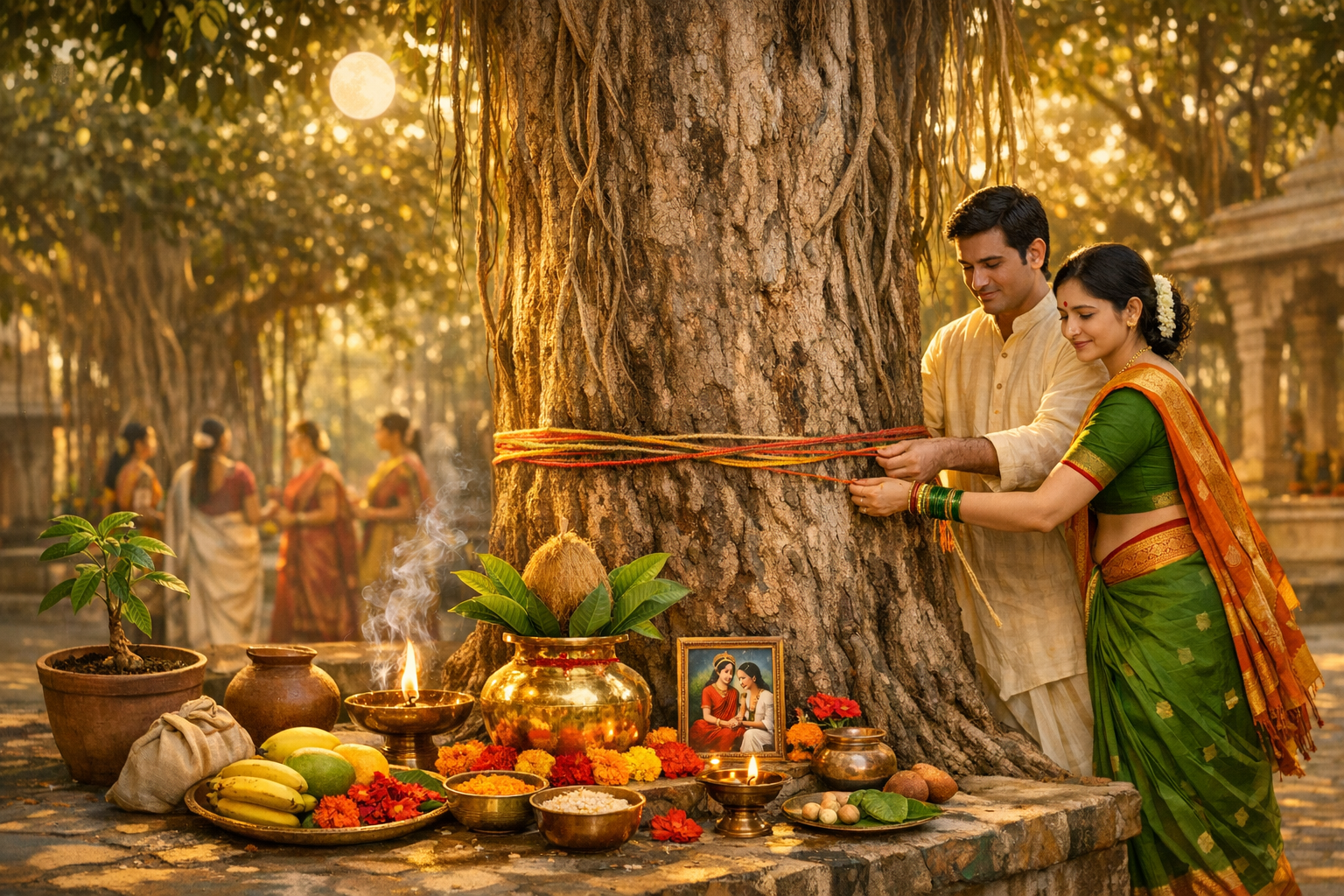
Step 3 Vata Vriksha worship: At the base of a living banyan (or its respectful substitute), offer water, akshata, flowers, and sandal paste. Recite “ॐ वटवृक्षाय नमः” while contemplating the tree’s sheltering, ever-regenerative nature. With devotion, circumambulate the trunk and tie a sacred cotton thread gently around it, traditionally performing three or seven pradakshinas (as per paramparā), each with silent prayer for akshaya-sukha and raksha.
Step 4 Savitri Katha: Read or listen to the Savitri–Satyavan episode, focusing on the dialogue with Yama and the restitution of Satyavan’s prāṇa. The narrative is integral to the vrata, transmitting the sankalpa of steadfastness under trial and the primacy of dharma.
Step 5 Naivedya, aarti, and blessings: Offer fruits, sweets, and panchamrita; perform aarti to Savitri and the Vata Vriksha. Seek blessings for the couple’s shared dharmic journey, extended family harmony, and the well-being of the community and environment.
Parana (breaking the fast): Family traditions vary. Some conclude the fast after the puja and katha; others wait for evening or moonrise on Purnima. In every case, parana is done with gratitude, distributing prasad and sharing satvik food. Those adapting the fast for health reasons may symbolically complete the vrata after the puja.
Regional practice notes: In Maharashtra, Goa, and parts of Karnataka (including coastal and northern districts), Vat Purnima on Jyeshtha Purnima is normative; households often assemble at dawn under community banyan groves. In many North Indian regions (e.g., Uttar Pradesh, Bihar) and in Odisha, a Vat Savitri Vrat on Jyeshtha Amavasya is common. In Andhra Pradesh and Telangana, “Vata Savitri Vratham” is widely observed on Jyeshtha Purnima, with puja procedures closely paralleling Maharashtrian practice. Communities outside India often gather around temple courtyards or respectfully use symbolic banyan representations at home.
Dharmic unity and shared values: While Vat Purnima is a Hindu vrata, its core idealsreverence for sacred trees, fidelity to vows, compassion, and family solidarityresonate across Buddhism, Jainism, and Sikhism. Jain communities in several regions keep variants of the Savitri-inspired fast; Buddhist and Sikh traditions honor nature’s sanctity and the ethic of seva and steadfastness in relationships. Emphasizing these shared values nurtures harmony among dharmic traditions and strengthens the cultural fabric of the subcontinent.
Eco-ethical guidance: The banyan is a living being; offerings should be minimal, natural, and non-injurious. Avoid driving nails or tight bindings into the bark; tie threads loosely and remove non-biodegradable items. Watering the roots, cleaning the site, and planting a sapling in the community are meaningful extensions of the vrat’s spirit. Such practices align with the dharmic principle of ahimsa and the vision of Vasudhaiva Kutumbakam.
Frequently asked questions (practical): If no banyan is accessible, worship may be performed before a banyan image or a sanctified kalasha with Vata symbolism, later completed by visiting a banyan when possible. The vrat is auspicious for newly married couples as a joint sankalpa of partnership and mutual protection. Those traveling can observe puja at a temple banyan or respectfully adapt at home. Men may participate by assisting with puja, reading the katha, and sharing sankalpa, reflecting the contemporary emphasis on reciprocity.
Scriptural and calendrical context: Jyeshtha Purnima falls when the lunar Purnima tithi completes the Jyeshtha month (Amanta/Purnimanta conventions differ across regions). Some calendar years include an Adhik (intercalary) month; when Adhik Jyeshtha appears in certain Panchangs, communities typically consult their paramparā to determine whether the vrata is kept in Nija Jyeshtha or Adhik Jyeshtha. Many authorities maintain that monthly Purnima fasting continues even in Adhik months, while festival-specific vrats may prefer the principal (Nija) month; local guidance should prevail.
Ritual focus and mantras: Practitioners often recite Savitri stuti and simple invocations such as “Om Savitryai Namah (ॐ सावित्र्यै नमः)”, “Om Gauryai Namah (ॐ गौर्यै नमः)”, and “Om Vata Vrikshaya Namah (ॐ वटवृक्षाय नमः)”. The emphasis remains on bhava (devotional intent), observance of the katha, and the ethic of inner tapasyakind speech, patience, and servicethroughout the day.
Lived experience and cultural ambiance: In many towns and villages, the day begins before sunrise with quiet preparation, the soft rustle of leaves under a venerable banyan, and the glow of lamps encircling the trunk as families offer flowers and tie cotton threads with silent prayers. That atmosphere, bridging antiquity and modernity, sustains an intimate assurancerelationships nurtured by dharma do not merely endure; they grow, like the banyan’s aerial roots, expanding shelter for future generations.
Key takeaways for 2026: the Vat Purnima vrat date is 29 June 2026 (Jyeshtha Purnima). Observe puja during Pratahkaal or Madhyahna while Purnima prevails, confirm local muhurta with a reliable Panchang, honor the Savitri–Satyavan katha, and adopt eco-conscious offerings. Where regional customs differ (Purnima vs Amavasya), follow family tradition or local temple instructions. The vrata’s essencedevotion, resilience, and unityremains constant across time and place.
Inspired by this post on Hindu Pad.