
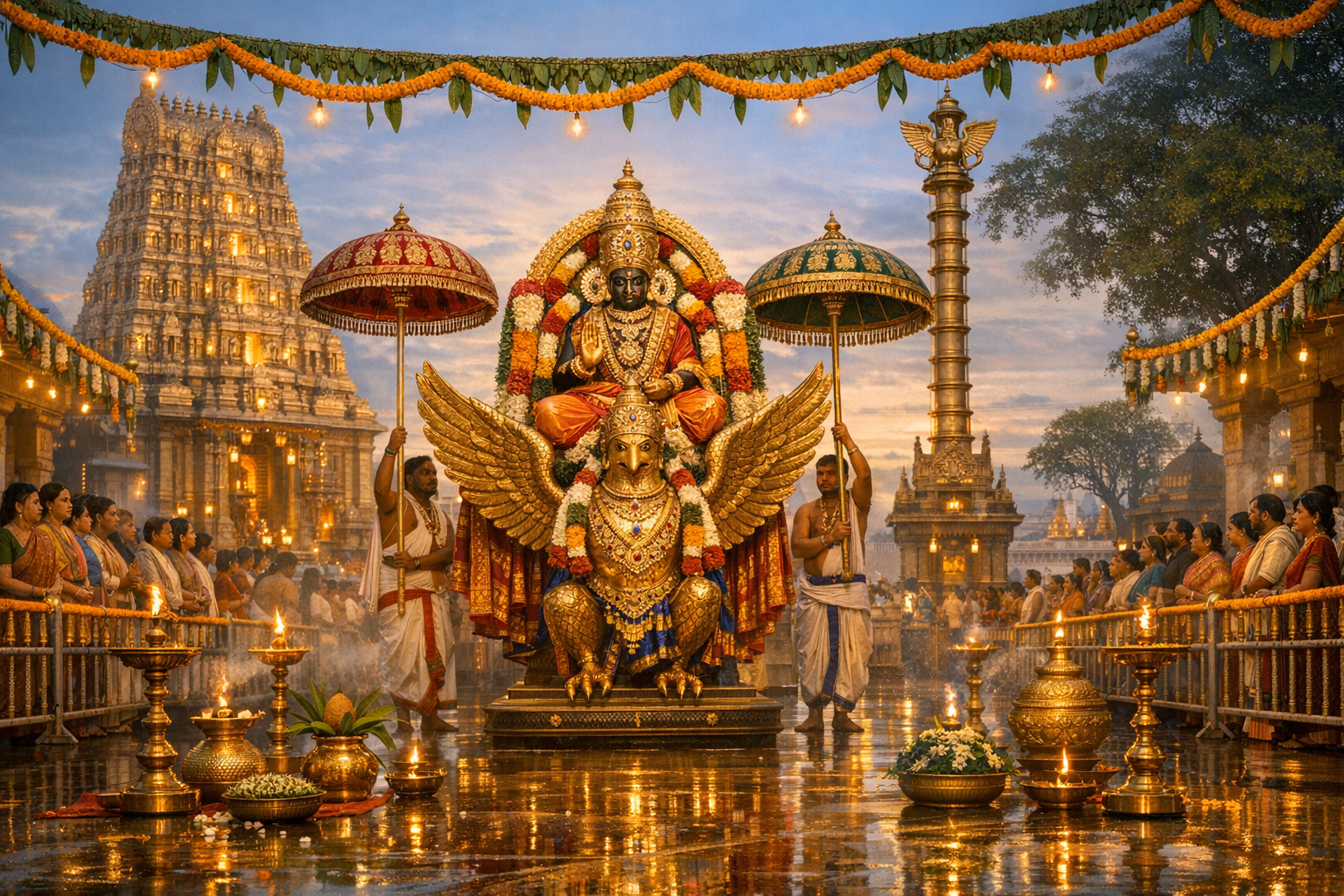
Kurukshetra TTD Temple Brahmotsavams 2026 will be celebrated at the Sri Venkateswara Swamy Temple in Kurukshetra, Haryana, from 25 June to 3 July 2026. As per TTD practice, Ankurarpanam (sacred seed-sowing) will take place on 24 June, and Koil Alwar Thirumanjanam (ritual temple cleansing) will precede the festivities on 19 June. This nine-day celebration draws together rigorous Vaishnava liturgy, processional splendor, and community participation.
Set in Kurukshetra—revered as Dharmakshetra—this Brahmotsavam situates the Sri Venkateswara tradition within one of India’s most storied sacred geographies. The festival underscores shared dharmic values such as seva, satya, and ahimsa, inviting respectful participation from Hindus, Buddhists, Jains, and Sikhs, and emphasizing unity of purpose through devotion, service, and ethical conduct.
Koil Alwar Thirumanjanam on 19 June is the temple’s comprehensive pre-festival purification. In TTD procedure, the sanctum, prakara, and utsava mandapas are ritually cleaned with aromatic, herbal preparations, symbolically restoring ritual purity (shuddhi) and readiness (samskara) for the deity’s elaborate alankarams and public processions. The rite also foregrounds an environmental ethic: cleansing, order, and care as prerequisites for worship.
Ankurarpanam on 24 June inaugurates the Brahmotsavam through the consecration of seeds (ankura) and the taking of sankalpa for the festival. The sowing of seeds signifies auspicious beginnings, fertility, and the unfolding of dharma through intentional action. In the TTD tradition, Ankurarpanam marks the subtle commencement of the festival’s merit (punya), even before the first public procession.
From 25 June to 3 July, the nine-day Brahmotsavam typically includes daily pujas, homas, and vahana sevas featuring the utsava murti of Sri Venkateswara. While day-wise details are announced closer to the event by temple authorities, the liturgical arc traditionally progresses from the royal proclamation of the festival to its climactic sacred bath (Chakrasnanam/Teerthavari), integrating theology, aesthetics, and community devotion.
Dwajarohanam (festival flag-hoisting) traditionally signals the formal commencement, raising Garuda’s emblem on the dhwajasthambha to invite the devatas and sanctify the kshetra for public worship. The rite asserts the temple’s ritual sovereignty during the festival period, aligning terrestrial space with a sacred, time-bound order.
Central to Brahmotsavam are the vahana sevas—morning and evening processions in which the utsava murti is borne on symbolic mounts. In the TTD liturgical ecosystem, common vahanams include Sesha, Hamsa, Simha, Gaja, Hanumantha, Surya Prabha, and Chandra Prabha. Each vahana encodes a theological attribute—serpentine infinity, purity, valor, royal power, devotion, radiance, and serenity—translating metaphysical ideals into lived ritual and visual culture.
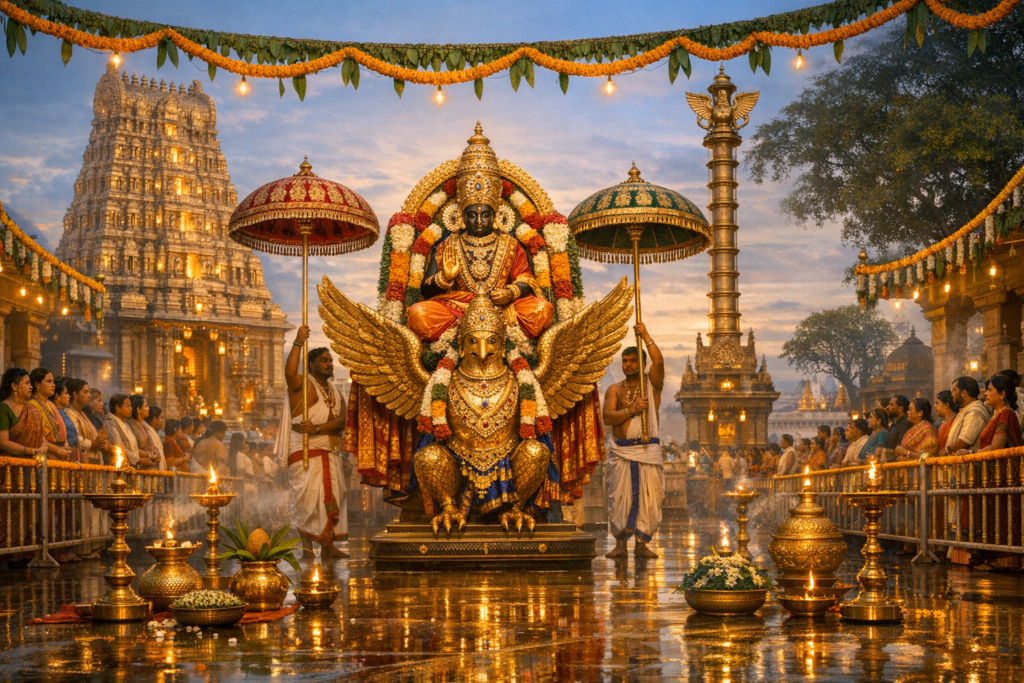
Garuda Seva is often the most anticipated public procession. Garuda, as Vishnu’s vahana and as the festival’s heraldic flag, embodies bhakti, protection, and steadfastness. Devotees traditionally regard Garuda Seva as a peak darshan moment, emphasizing the protective grace (raksha) of Sri Venkateswara over the city and its people.
Rathotsavam (chariot festival), when scheduled, extends the theology of movement and kingship into the civic sphere. The ratha symbolizes the cosmos in motion, with the deity presiding as dharma’s sovereign center. The collective act of drawing the chariot evokes shared responsibility for sustaining the moral order.
Chakrasnanam/Teerthavari often concludes the festival when the Sudarshana Chakra receives a sacred bath in a designated kshetra tirtha, signifying ritual consummation and purification of the wider community. This act reaffirms the cycle of consecration and release, marking a liturgical return to equilibrium.
Daily homas and archana during Brahmotsavam integrate mantra, mudra, and agni into a cohesive srauta–smarta spectrum. The offering of ghee, grains, and herbs into the fire aligns with Vaishnava cosmology: sacrifice as reciprocity between the human and the divine, sustaining cosmic rhythm (rita) and social harmony.
Alankaram, the artful adornment of the deity, communicates theological nuance through textiles, jewels, and flowers. In the TTD framework, alankarams are not merely aesthetic; they are an exegetical medium—each ornament and hue adding layers of meaning to the darshan experience.
Vedic recitations, sankeertana, and cultural presentations typically complement the rites, fostering devotion through sound (shabda) and performance. The acoustic environment—Vedic mantras in the morning, kirtans and bhajans in the evening—guides attention and cultivates contemplative interiority in public space.
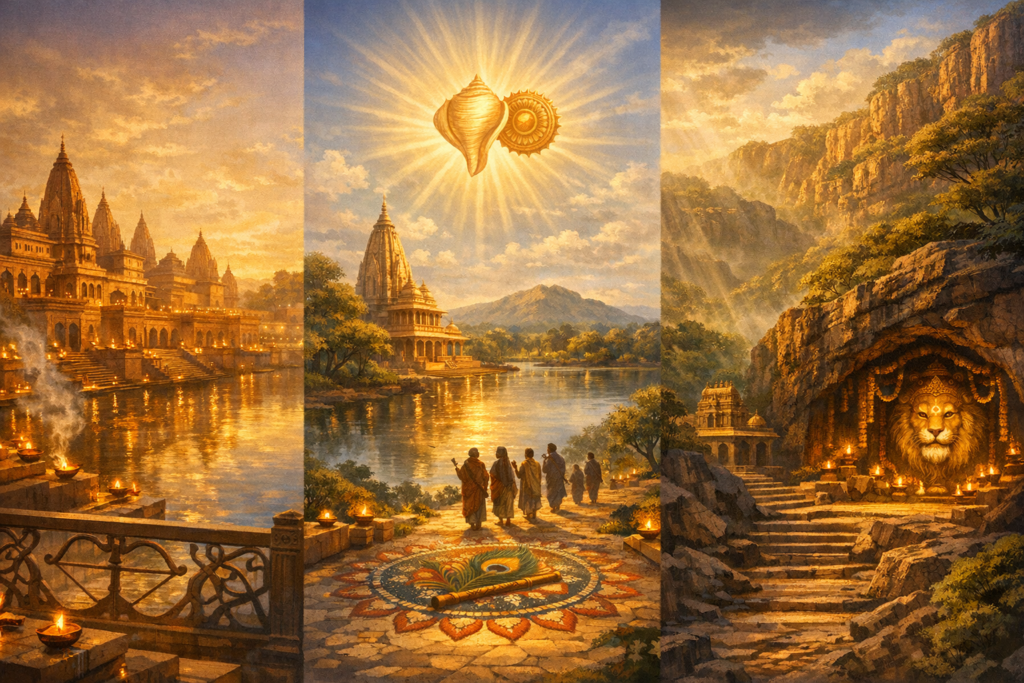
Kurukshetra’s sacred sites—such as Brahma Sarovar, Sannihit Sarovar, and Jyotisar—provide a resonant backdrop. Pilgrims often combine Brahmotsavam darshan with local tirtha snana and study of itihasa traditions, situating Sri Venkateswara bhakti within the broader moral imagination of the Mahabharata.
This festival advances dharmic unity by welcoming all seekers who honor the sanctity of the space. Shared practices—seva, dana, satvik food, and ethical conduct—bridge communities across Hindu, Buddhist, Jain, and Sikh lineages, affirming a civilizational ethos of mutual respect and spiritual plurality.
Darshan etiquette supports the devotional atmosphere: modest dress (shoulders and knees covered), silence in queues, minimal baggage, and adherence to security directions. Photography is typically restricted inside the sanctum; footwear must be deposited at designated counters.
Travel planning is straightforward. Kurukshetra Junction (KKDE) lies on major rail corridors; National Highway 44 connects Kurukshetra by road to Delhi (approximately 160 km) and Chandigarh (approximately 95 km). Nearby airports include Chandigarh and Delhi, offering ample domestic and international connectivity.
Accommodation spans dharamshalas, mid-range hotels, and local guest houses. Advance booking is advisable for 25 June to 3 July, particularly if attending Garuda Seva or Rathotsavam. Proximity to the temple aids early-morning darshan and evening vahana processions.
Monsoon conditions commonly emerge by late June in North India. Visitors should anticipate intermittent showers, carry light rain gear, and plan for humid conditions. Hydration, comfortable footwear, and basic first aid are practical essentials for long processions.
Crowd management norms typically include barricaded routes, separate entry–exit flows, and priority arrangements for the elderly and differently abled when available. Cooperating with volunteers and temple personnel ensures safety and timely darshan for all.
A sustainable pilgrimage ethic enhances the festival environment. Reusable water bottles, responsible waste disposal, and avoidance of single-use plastic align with the sacred duty (dharma) to protect shared spaces. Floral and organic offerings are best handled through temple-approved channels.
Families often plan interludes between morning and evening sevas for rest and prasad distribution. Children benefit from identifiable meeting points and wristband IDs in crowded areas. Quiet storytelling about the deity and vahana symbolism can help younger devotees engage meaningfully with the rites.
For elders, close-to-route viewing spots with shade and seating are advisable. Processions can be lengthy; planning shorter walking segments and timing arrivals before peak crowds contribute to a calmer experience.
Prasadam, when distributed, reinforces the sacramental economy of grace and gratitude. Observing a satvik diet during the festival days deepens alignment with the devotional mood and supports meditative steadiness.
Personal sadhana harmonizes the public spectacle with inward practice. Gentle japa, mindful breath, and reflective reading of Vishnu-sahasranama or extracts from the Bhagavata Purana cultivate contemplative awareness amid the pageantry.
What is Koil Alwar Thirumanjanam? It is the comprehensive ritual cleaning and aromatic sanctification of the temple, ensuring that both the sacred image and the worship space embody ritual purity before the influx of devotees.
What is Ankurarpanam? It is the seed-sowing rite that ritually “plants” the festival’s intent. The gesture makes visible a theological axiom: noble outcomes arise from conscious, dharmic beginnings.
What does Brahmotsavam signify? The term evokes a primordial consecration—tradition holds that Brahma himself conducted the first celebration for Vishnu—re-enacted through vahana sevas, homas, and communal participation. The festival thus becomes a living archive of Vaishnava theology and aesthetics.
Program specifics, including the day-wise order of vahana sevas and concluding rites, are typically published by temple authorities closer to the dates. Devotees are encouraged to verify final schedules, darshan arrangements, and any special sevas through official channels before travel.
Kurukshetra TTD Temple Brahmotsavams 2026 offers a rare convergence of dates, rituals, and place: sacred time aligned with sacred space, embodied through the meticulous procedures of the TTD tradition. The result is a luminous public theology of devotion and service, inviting all who seek darshan to participate with reverence, discipline, and a spirit of unity across dharmic paths.
Inspired by this post on Hindu Pad.








Leave a Reply
You must be logged in to post a comment.