Category: Spirituality

  • Shani Sade Sati for Tula Rashi: Viraya (Vyaya) Shani Effects, Timing, Remedies—A Deep-Dive Guide

    Shani Sade Sati for Tula Rashi: Viraya (Vyaya) Shani Effects, Timing, Remedies—A Deep-Dive Guide

    Shani Sade Sati for Tula Rashi begins when Saturn enters Virgo, launching the first 2½-year phase known as Viraya (Vyaya) Shani. This period emphasizes 12th-house matters—expenditure, seclusion, sleep, and the dissolution of attachments—framed by Saturn’s discipline and Virgo’s analytic rigor. The analysis explains how Saturn’s special aspects from Virgo shape communication, partnerships, and career through…

  • Shani Sade Sati for Tula Rashi: Master the Exalted Janma Shani Phase—Effects, Risks, Remedies

    Shani Sade Sati for Tula Rashi: Master the Exalted Janma Shani Phase—Effects, Risks, Remedies

    Shani Sade Sati for Tula Rashi enters its decisive second 2.5 years when Saturn transits Libra, delivering an exalted Janma Shani that combines pressure with profound potential. This analysis explains the mechanics of Sade Sati, the nakshatra-level nuances of Chitra, Swati, and Vishakha, and the practical significance of Saturn’s aspects to the 3rd, 7th, and…

  • Shani Sade Sati for Tula Rashi: Navigate the Final 2.5 Years (Paada Shani) with Wisdom

    Shani Sade Sati for Tula Rashi: Navigate the Final 2.5 Years (Paada Shani) with Wisdom

    Shani Sade Sati for Tula Rashi culminates with Paada Shani, the 2nd-house transit of Saturn through Scorpio. Classical Vedic astrology frames this final 2.5-year phase as an audit of finances, family bonds, speech ethics, and personal values. With Shani in a Mars-ruled sign, results arrive through steady, disciplined effort rather than speed. Outcomes vary by…

  • Success Sadhana, Dwindling Intent: Evidence-Based Protocols to Reignite Devotional Focus

    Success Sadhana, Dwindling Intent: Evidence-Based Protocols to Reignite Devotional Focus

    Dwindling intent in sādhana is common and correctable. This analysis integrates Dharma teachings and behavioral science to convert wavering motivation into a structured, resilient practice. It maps classical obstacles from Patañjali and the Buddhist hindrances to modern psychology, then offers specific breath, mantra, mindfulness, and seva protocols to regulate state and rebuild momentum. Practical routines…

  • May 23, 2026 Panchang: Shukla Saptami to Ashtami, Auspicious Muhurat, Nakshatra & Rashi Guide

    May 23, 2026 Panchang: Shukla Saptami to Ashtami, Auspicious Muhurat, Nakshatra & Rashi Guide

    Saturday, May 23, 2026, transitions from Shukla Paksha Saptami to Shukla Paksha Ashtami at 10:08 AM, shaping the day’s devotional and practical rhythm in the Daily Hindu Calendar. This comprehensive Panchang guide explains how Tithi is computed, outlines the qualities associated with Saptami and Ashtami, and shows how to select Shubh Muhurat using Abhijit, Rahu…

  • Decoding Aghora Shiva: The Non‑Terrible Power Transforming Fear, Ignorance, and Karma

    Decoding Aghora Shiva: The Non‑Terrible Power Transforming Fear, Ignorance, and Karma

    Aghora Shiva, the a-ghora or “non-terrible” aspect of Shiva, transforms fear into clarity by revealing the compassionate core behind seemingly fierce symbols. Rooted in the pañcabrahma framework, Aghora aligns with the southern face, the fire principle, and the function of transformative dissolution (saṁhāra). Iconography—triśūla, ḍamaru, khaṭvāṅga, kapāla, vibhūti, tiger skin, and cremation-ground motifs—forms a coherent…

  • Memento Mori as Dharmic Practice: Urgent Living, Clear Priorities, and Courageous Leadership

    Memento Mori as Dharmic Practice: Urgent Living, Clear Priorities, and Courageous Leadership

    This article presents a disciplined, Dharmic approach to mortality contemplation as a practical technology for urgent living and ethical leadership. It synthesizes insights from Hinduism, Buddhism, Jainism, and Sikhism—maranasati, pratikraman, simran, and dharma—to convert awareness of impermanence into decisive action. A step-by-step protocol guides breath awareness, a regrets inventory, value-based reprioritization, and execution of one…

  • Bliss, Boredom, and Breakthroughs: An Evidence-Based Guide to Japa Practice

    Bliss, Boredom, and Breakthroughs: An Evidence-Based Guide to Japa Practice

    Japa often swings between luminous connection and dutiful repetition. This guide explains why that fluctuation is normal and how to stabilize practice using classical modes (vācika, upāṁśu, mānasa), breath entrainment, and ergonomic cues. It reframes “bad days” into actionable categories—physiological, environmental, cognitive-emotional, and social—so adjustments become precise rather than punitive. Practical protocols cover time-of-day strategy,…

  • Aim Hrim Klim: Unlock the Sacred Triad of Shakti and the Three States of Consciousness

    Aim Hrim Klim: Unlock the Sacred Triad of Shakti and the Three States of Consciousness

    Aim Hrim Klim – the revered triad of bīja mantras – unites knowledge, compassionate power, and loving attraction into a single, practical discipline in Hindu spirituality. Drawing on classical mantra-śāstra and living lineages, the article explains how Aim clarifies cognition, Hrīṁ integrates heart-intelligence, and Klīṁ refines desire into dharmic will. It maps the triad to…

  • From Sadhana to Etiquette: Angas of Bhakti for Daily Practice and Interfaith Dharmic Harmony

    From Sadhana to Etiquette: Angas of Bhakti for Daily Practice and Interfaith Dharmic Harmony

    This in-depth reflection on a Sat Sanga with HH Krishna Kshetra Swami (09.05.2026) unpacks the Angas of Bhakti—how sadhana (disciplined daily practice) and Vaishnava etiquette (sadachara) jointly mature devotional life. Readers gain a clear map of foundational and potent practices from the Gaudiya tradition, learn practical routines for japa, kirtana, and study, and see how…

  • Hare Kṛṣṇa as a Heartfelt Cry: Surrender, Bhakti, and Dharmic Unity in Practice

    Hare Kṛṣṇa as a Heartfelt Cry: Surrender, Bhakti, and Dharmic Unity in Practice

    The mantra Hare Kṛṣṇa, Hare Kṛṣṇa can be read as a concise theology of surrender: “O the energy of the Lord, O the Lord, please accept me.” Situated within the bhakti tradition, this cry for acceptance aligns with Lord Caitanya’s emphasis on humility and constant kīrtana. The piece explores how śaraṇāgati in the Bhagavad Gītā,…

  • Calm Your Nervous System, Deepen Connection: Two Open-Access Events for Love and Resilience

    Calm Your Nervous System, Deepen Connection: Two Open-Access Events for Love and Resilience

    Widespread feelings of loneliness and overwhelm make evidence-based, heart-centered resources especially valuable right now. Two open-access programs—the Power of Love Summit and The Seven Strengths—combine contemplative wisdom with psychological science to reduce stress and deepen connection. Participants can expect practices such as breathwork, mindfulness, journaling, and movement, all aimed at autonomic regulation, emotional clarity, and…

  • Chanting with Feeling: How Remembrance of Hari Dissolves Fear and Calms the Mind

    Chanting with Feeling: How Remembrance of Hari Dissolves Fear and Calms the Mind

    This article explains how chanting with genuine feeling dissolves fear by uniting scriptural insight and modern psychophysiology. It outlines why Hari—“the one who takes away”—removes anxiety rooted in uncertainty through heartfelt remembrance (smaraṇa) and steady mantra meditation. Readers learn practical, evidence-aligned methods for pacing breath, engaging emotion (bhāva), and consolidating calm after practice. Everyday scenarios…

  • Best Days for Hanuman Puja: Auspicious Nakshatras, Tithis, and a Practical Muhurta Blueprint

    Best Days for Hanuman Puja: Auspicious Nakshatras, Tithis, and a Practical Muhurta Blueprint

    This in-depth guide presents a practical, evidence-informed blueprint for choosing the best days for Hanuman Puja using Nakshatras, Tithis, and classical Panchanga logic. It explains why Tuesday and Saturday are reliable pillars, how to use the Nanda–Bhadra–Jaya–Rikta–Purna Tithi cycle for devotional timing, and why Pushya Nakshatra—especially noted in Chaitra Month—is universally auspicious. It outlines how…

  • Inside ISKCON Birmingham’s 24‑Hour Kirtan 2026: Sonic Devotion, Bhakti Science, and Unity

    Inside ISKCON Birmingham’s 24‑Hour Kirtan 2026: Sonic Devotion, Bhakti Science, and Unity

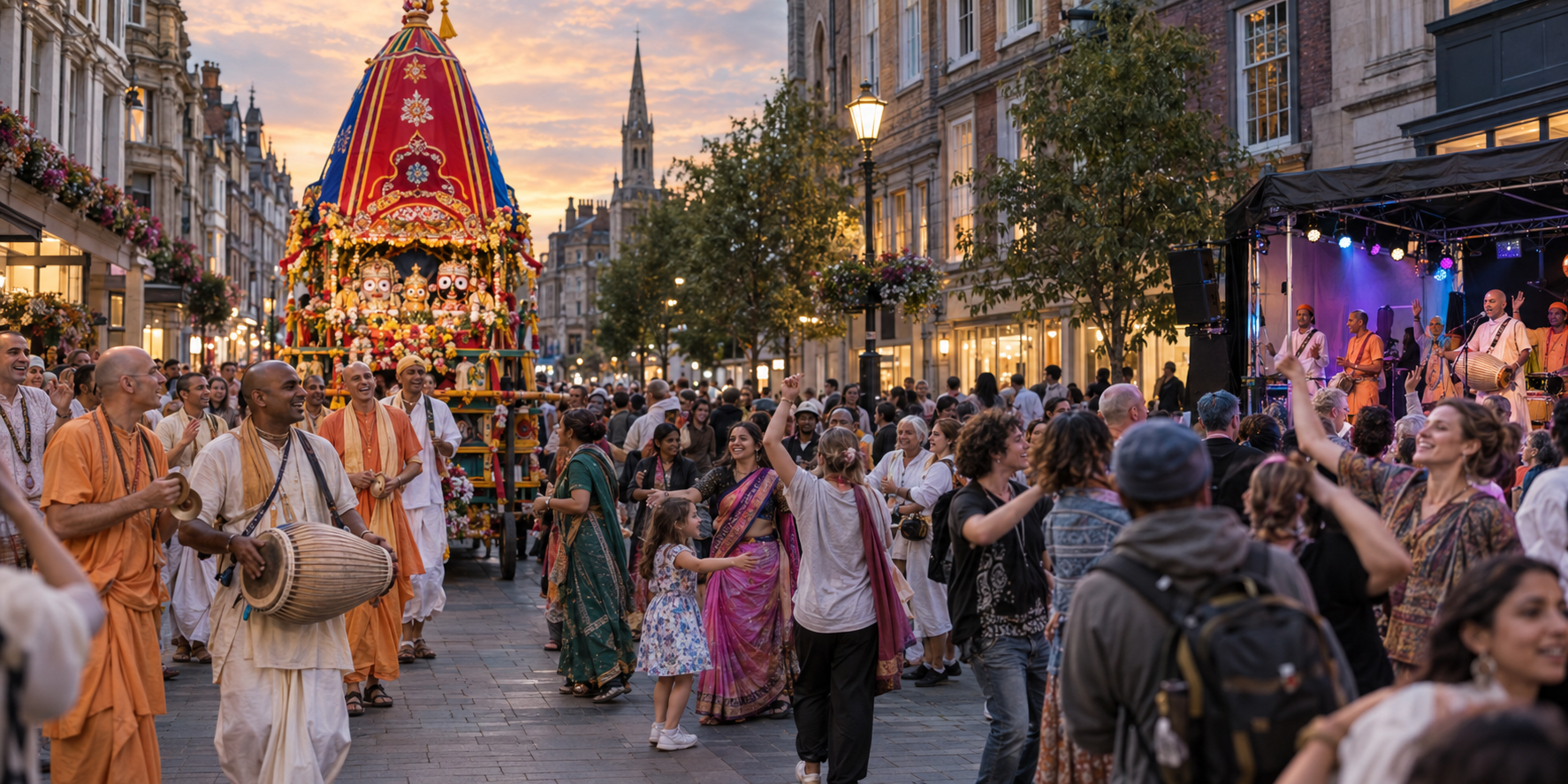
    ISKCON Birmingham’s 24 Hour Kirtan 2026 – Day 1 (Part 1) highlights how the maha‑mantra and Gaudiya Vaishnava bhakti‑yoga converge in a continuous, accessible practice of sacred sound. The analysis explains the musicology of kirtan—melodic contours, tala choices, and ensemble roles—so participation remains inviting and sustainable over extended hours. It outlines event operations, acoustic design,…

  • May 17, 2026 Panchang: Precise Tithi Timings, Auspicious Muhurat Guide, and Ritual Insights

    May 17, 2026 Panchang: Precise Tithi Timings, Auspicious Muhurat Guide, and Ritual Insights

    On Sunday, May 17, 2026, the Panchang marks Amavasya tithi until 1:37 AM and Shukla Paksha Pratipada from 1:37 AM to 11:14 PM, after which Dwitiya begins. The day’s civil hours largely align with the auspicious, initiating quality of Pratipada, making it suitable for sankalpa, study, and constructive beginnings. For sensitive undertakings, refine planning with…

  • Honoring Her Grace Krishna Kirtan devi dasi (ACBSP): Sankirtan Heroine of France’s ISKCON Legacy

    Honoring Her Grace Krishna Kirtan devi dasi (ACBSP): Sankirtan Heroine of France’s ISKCON Legacy

    Her Grace Krishna Kirtan devi dasi (ACBSP), a first-generation disciple of Srila Prabhupada and a distinguished member of the French ISKCON yatra, passed away today. This tribute situates her legacy within the theology and practice of sankirtan in Gaudiya Vaishnavism and the growth of ISKCON France. It explains the meaning of ACBSP, outlines the modalities…

  • The Sacred Power of One’s Word: Dharmic Vows, Truth, and Reunion with Krsna at Goloka

    The Sacred Power of One’s Word: Dharmic Vows, Truth, and Reunion with Krsna at Goloka

    A vivid return-to-Goloka meditation becomes a precise inquiry into how a kept promise transforms the practitioner across Hinduism, Buddhism, Jainism, and Sikhism. The analysis maps satya, vrata, sankalpa, sīla, anuvrata, samaya, and rehat into a shared grammar of integrity that links devotion to Krsna with truthful living. Drawing on Bhagavad Gita themes and contemporary behavioral…

  • Ganga Dussehra 2026: Sacred Dates, Shukla Dashami Significance, Puja Vidhi, and Eco‑Seva

    Ganga Dussehra 2026: Sacred Dates, Shukla Dashami Significance, Puja Vidhi, and Eco‑Seva

    Ganga Dussehra 2026 spans 15–24 June and culminates on Jyeshta Shukla Dashami, observed on 24 June, with morning snana, puja, and dana as core practices. Rooted in the Purāṇic descent of Ganga and the ideal of tenfold purification, the festival blends inner discipline with outward charity. Panchang guidance suggests observing the day when Dashami prevails…

  • Trust in Krishna’s Protection and the Dharma of Duty: Srila Prabhupada on Nrsimhadeva

    Trust in Krishna’s Protection and the Dharma of Duty: Srila Prabhupada on Nrsimhadeva

    This article analyzes the Vaishnava synthesis of divine protection and human duty through Srila Prabhupada’s assurance regarding prayers to Nrsimhadeva. It explains how confidence in Krishna’s guardianship aligns with the Bhagavad Gita’s ethics of disciplined action without attachment to results. It clarifies that surrender is not fatalism but a stance that deepens responsibility, courage, and…