
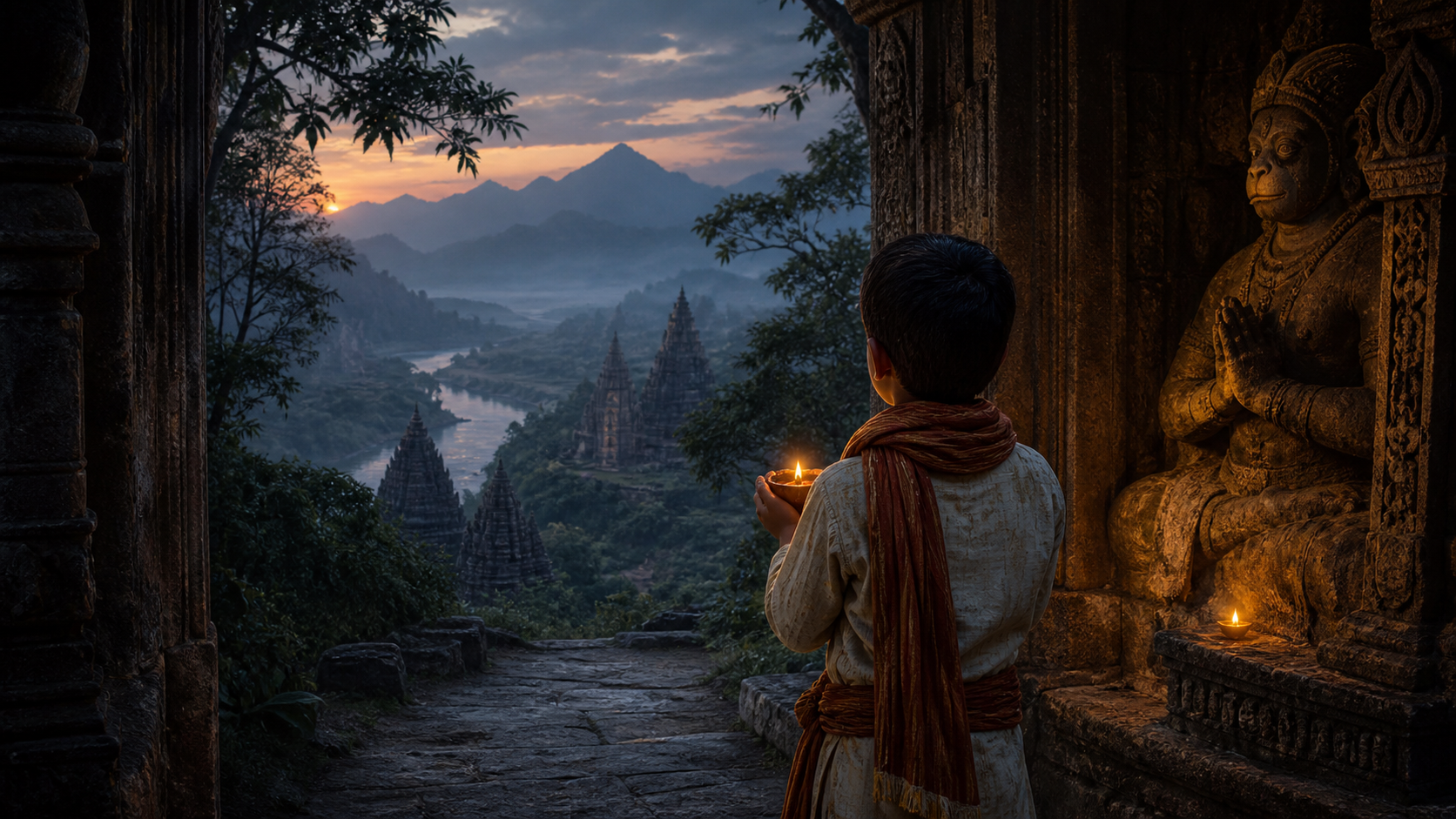
You may leave a devotional film emotionally stirred yet still wonder whether it actually told a Dharmic story. Sacred names, temple bells and impressive visions can create a religious atmosphere, but atmosphere alone does not reveal what a story believes about human life.
Hanuman Ansh gives you a more demanding way to judge such cinema. Its central question is not whether the screen looks sacred. It is whether grief, renunciation, tapasya, bhakti and the search for truth determine the character’s choices. That distinction matters whenever you decide which films to recommend to your family, support as a viewer or learn from as a storyteller.
The sacred must govern the story, not decorate it
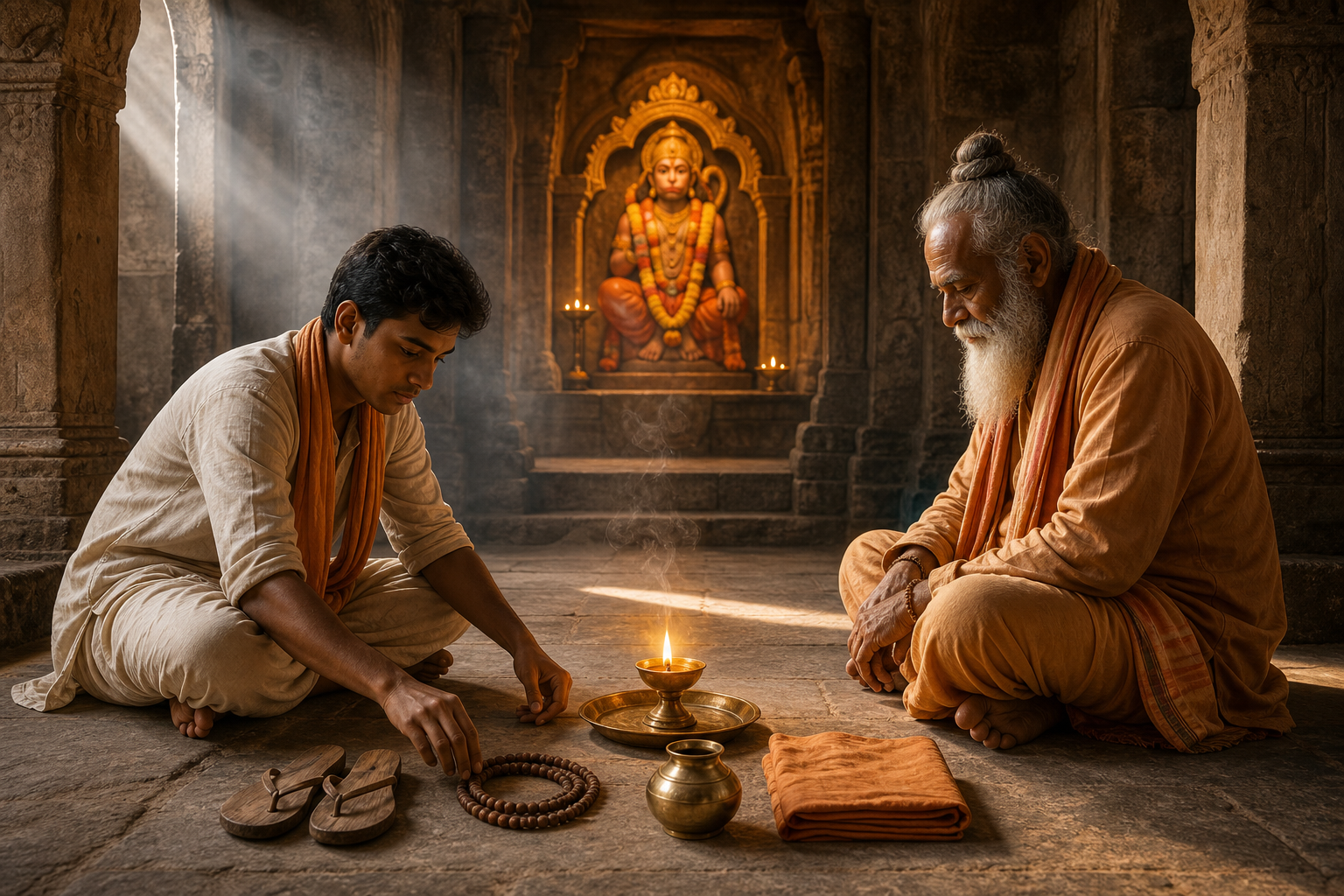
A simple test separates Dharmic storytelling from religious packaging: mentally remove the visible symbols. If the protagonist would still make the same choices for the same reasons, the symbols may be ornamental. If removing Dharma would collapse the character’s motivation, journey and transformation, Dharma belongs to the story’s structure.
Hanuman Ansh traces Laxmi Narayan Sharma’s movement from an inwardly restless child to Neem Karoli Baba, also rendered Neeb Karori Baba. The decisive movement is not a change of name or social status. It is the reorientation of a life through contemplation, wandering, tapasya and devotion to Hanuman ji.
This is spiritual causality. An ordinary plot asks what happened next. A Dharmic plot must also ask what samskara, attachment, discipline or insight made the next choice possible. External events matter, but their meaning comes from the inner movement they expose.
When you watch a scene of worship, therefore, don’t judge it only by its visual beauty. Ask three concrete questions: What has changed in the character’s understanding? What attachment is being confronted? What action follows from the prayer? A ritual that changes nothing can become set dressing. A quiet moment of dhyana that alters the direction of a life can carry the plot.
This standard is useful for creators as well. Write the spiritual cause before designing the spectacle. If a vision, miracle or temple sequence can be removed without affecting the next moral decision, the sequence needs a clearer dramatic purpose.
A child’s grief becomes a genuine spiritual question
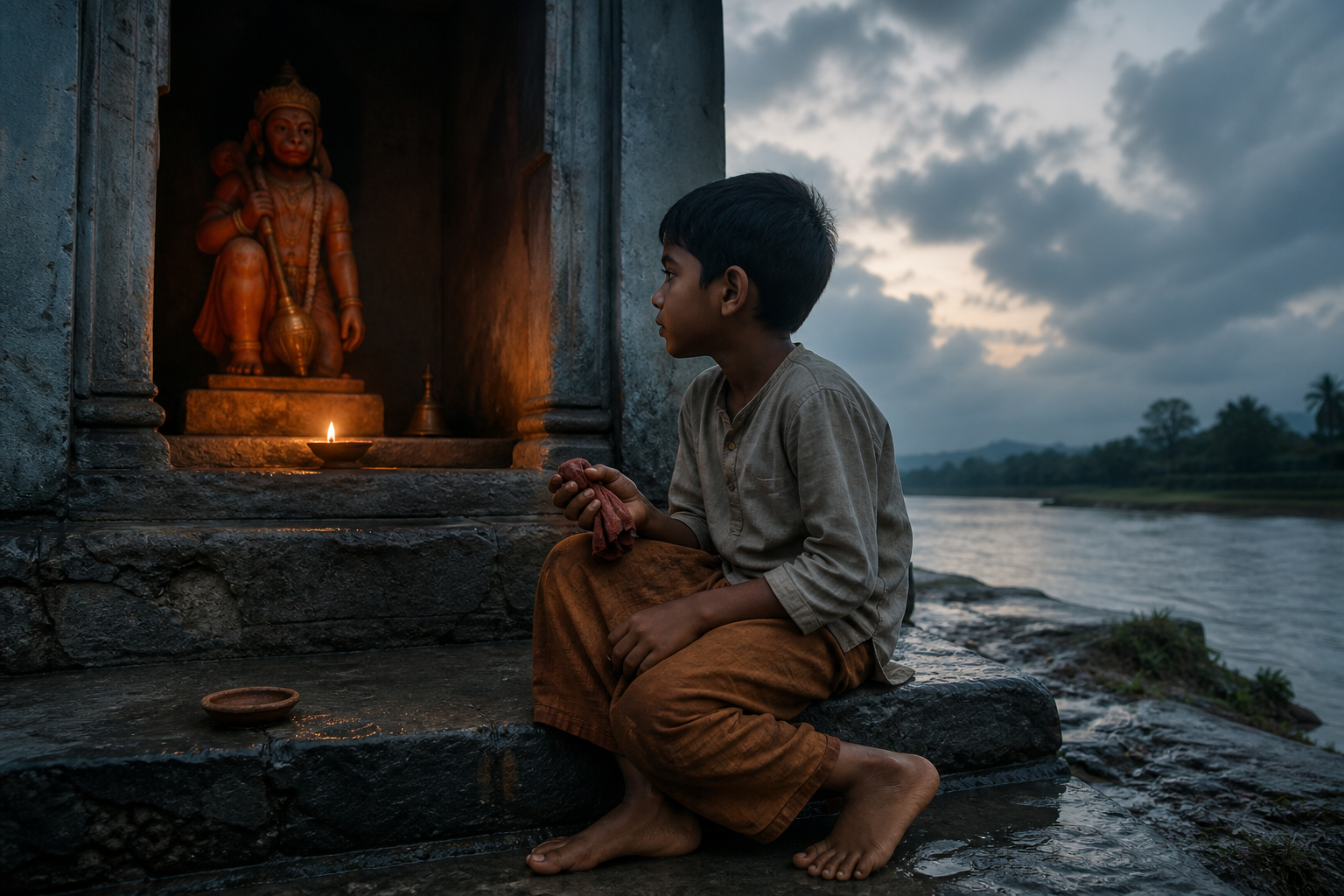
The young Laxmi Narayan’s search begins in bereavement. He wants to reach Bhagwan Ram because he associates Ram with his departed mother. His words compress grief, innocence and metaphysical longing into one desire:
मुझे राम जी के पास जाना है, मुझे मेरी माँ के पास जाना है
Hanuman Ansh
The line means, in substance, that he wants to go to Ram ji and to his mother. It should not be reduced to a precocious slogan. A child who cannot accept the finality of loss is reaching for a reality in which love, death and the divine can be understood together. The story’s Dharmic character emerges because that longing is allowed to become a serious quest.
That does not mean every rejection of ordinary life is automatically wisdom. Restlessness can be impulsive, and sorrow can distort judgement. A responsible spiritual narrative has to show what tests the impulse. Here, dhyana, reflection and introspection precede the decision to leave home. The movement from pain to renunciation is therefore presented as an inward process, not merely an act of rebellion.
The child’s question to his teacher sharpens the conflict: why attend school when he has no interest in samsara, the realm of worldly entanglement? You need not accept the question as a universal instruction to see its dramatic force. It establishes that the character and the surrounding world value life differently. School prepares him for participation in society; his attention is already directed toward ultimate knowledge.
When discussing this part with a child or teenager, avoid turning it into either a command to renounce worldly duties or a joke about disliking school. Ask instead: What was Laxmi Narayan truly seeking? What is the difference between escaping an obligation and outgrowing an attachment? What discipline would distinguish a durable calling from a passing emotion? Those questions preserve the scene’s spiritual seriousness without imitating its outward action.
Sadhana and the geography of Bharat make transformation credible
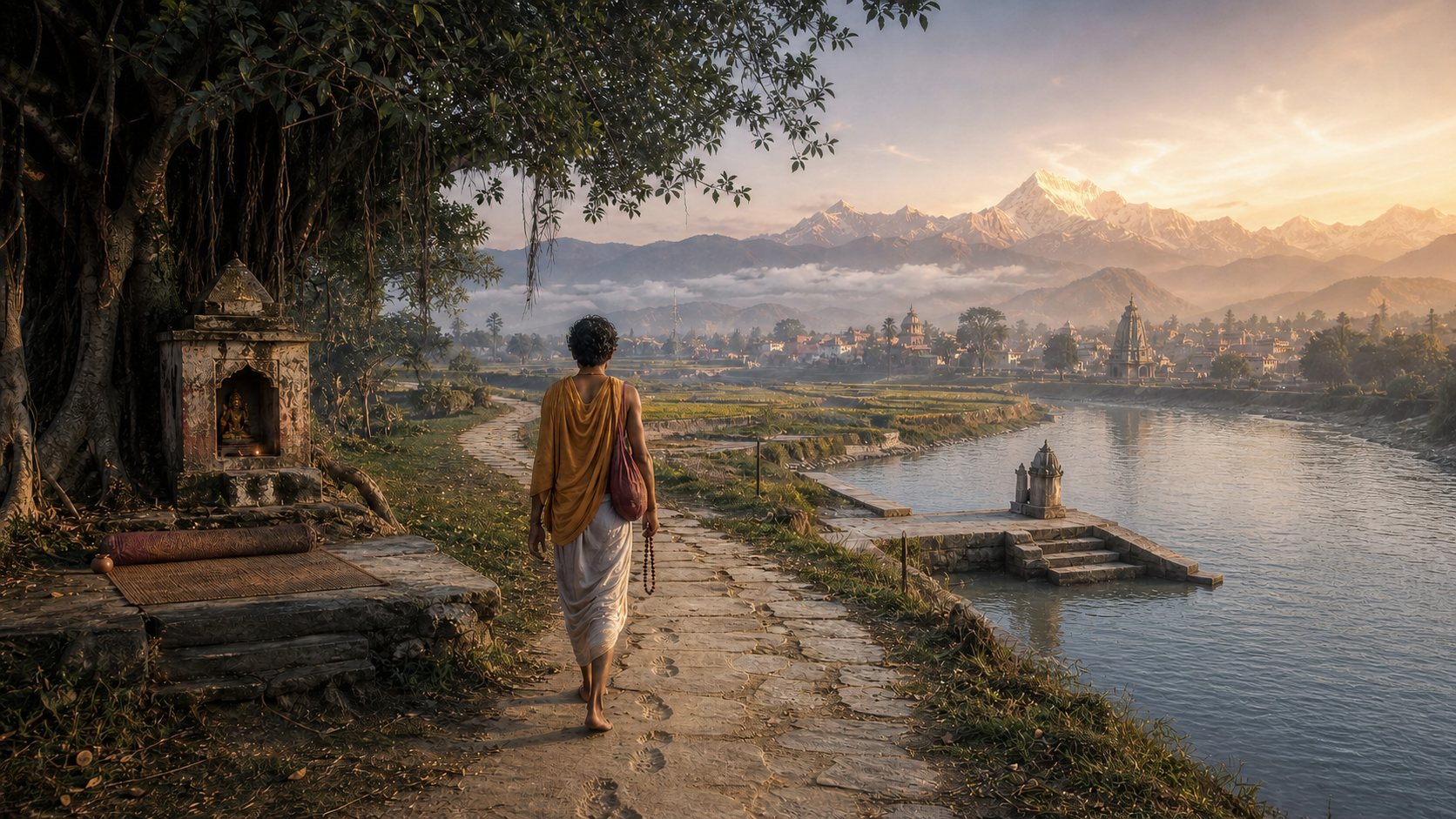
Transformation becomes unconvincing when cinema treats enlightenment as an instant reward for intense emotion. A Dharmic journey needs a mechanism. In this story, that mechanism is sadhana: sustained spiritual effort expressed through tapasya, meditation, reflection and bhakti.
The distinction is practical. Tapasya is not simply suffering, and dhyana is not a cinematic pause while music plays. Each represents a way of disciplining attention and desire. Bhakti is not passive admiration either; it reorganizes what the devotee loves, serves and considers worthy of a life.
You can test the credibility of any spiritual transformation by tracing its sequence. Identify the original wound or question. Notice the discipline undertaken in response. Look for the attachments that weaken, the devotion that deepens and the later conduct that demonstrates change. If the final saintly identity appears without those links, the narrative has announced transformation rather than dramatized it.
Hanuman Ansh also gives that process a civilizational landscape. Laxmi Narayan’s journey passes through forests and river belts, through Mewar, Gujarat, central and southern Bharat, before returning to Braj. These places should not be read as pins on a tourist itinerary. Together they make Bharat a field of spiritual encounter.
This use of geography carries an important idea: diverse regions and paramparas need not be flattened to belong to one civilizational world. Unity does not require every community to use the same language, ritual or local form. It can arise from shared recognition of pilgrimage, tapasya, gurus, sacred landscapes and the pursuit of liberation.
When you encounter a journey across Bharat in Dharmic cinema, watch how locations function. Does each place merely provide a new background, or does travel widen the seeker’s understanding? Does the route acknowledge regional distinctiveness while revealing continuity? Does returning to a place such as Braj complete an inner movement as well as a physical one? A meaningful sacred geography changes the pilgrim; a montage merely changes the scenery.
Miracles must disclose bhakti rather than replace it

Stories about Neem Karoli Baba naturally attract interest in miracles and in the well-known people associated with him. That interest is not inherently shallow. Adbhuta, the experience of wonder, can loosen the assumption that material explanation exhausts reality. But wonder becomes spiritually thin when the audience is trained only to wait for the next impossible event.
The better question is not, “How astonishing was the miracle?” It is, “What does this event reveal about faith, compassion, surrender or service?” If a miracle merely proves that the saint is powerful, it risks turning sanctity into supernatural celebrity. If it redirects attention from power to devotion, it can serve the story’s Dharmic core.
This is also where careful language matters. Neem Karoli Baba is regarded by devotees as an ansh, or manifestation, of Hanuman ji. That is a devotional conviction. A biographical statement and a theological affirmation do different kinds of work, and neither should be disguised as the other. The life can be narrated through places, choices and practices; the meaning of ansh belongs to the community’s understanding of who the saint was.
You do not have to flatten that conviction into a laboratory claim to discuss it responsibly. Ask what qualities make devotees perceive Hanuman’s presence: unwavering bhakti, strength placed in service, humility, remembrance of Ram or protection of others. This shifts the conversation from demanding spectacle to recognizing the form of life that the belief honors.
Filmmakers face the same choice. Visual effects can render an extraordinary event, but they cannot create reverence by themselves. Reverence grows when the audience understands the seeker’s discipline, the devotee’s surrender and the ethical consequence of grace. Spectacle should arrive after that foundation, not stand in for it.
Key takeaways: a practical test for Dharmic cinema
Before you recommend a devotional film, use this checklist. It helps distinguish a story shaped by Dharma from one that has only borrowed its visual vocabulary.
- Find the governing question. In Hanuman Ansh, grief opens into a search for Ram, truth and a life beyond ordinary attachment. A strong Dharmic story gives the protagonist a spiritual problem, not just a worldly objective surrounded by sacred imagery.
- Trace the cause of transformation. Look for sadhana, reflection, sacrifice and changed conduct. A costume, title or miraculous encounter cannot substitute for an intelligible inner journey.
- Separate renunciation from escape. Ask what discipline tests the character’s rejection of samsara. Discomfort with responsibility is not the same as vairagya, or freedom from attachment.
- Read geography as meaning. When the seeker crosses regions of Bharat, notice whether the route reveals civilizational continuity and encounter with living paramparas, rather than functioning as attractive scenery.
- Judge miracles by their fruit. The important result is not astonishment alone but a deeper orientation toward bhakti, humility, seva or remembrance of the divine.
- Keep devotional and historical claims distinct without treating either with contempt. State what devotees believe as belief, and discuss the documented journey on its own terms.
- Look at what the story asks of you. Dharmic storytelling should leave more than admiration for a remarkable person; it should sharpen your understanding of practice, duty, devotion or cultural responsibility.
Then act in proportion to your judgement. If a film genuinely carries Dharma through character and consequence, watch it through authorized channels, bring a thoughtful family member or friend, and discuss one spiritual choice rather than only the most spectacular scene. If you create stories, begin with the seeker’s inner conflict and map every sacred image to a decision it changes.
Our Rishis, gurus and sants should not survive in public memory merely as names, slogans or content franchises. The next time you encounter their lives on screen, ask whether the telling preserves the path from longing to sadhana and from grace to responsibility. Support the work when it does, and let the encounter deepen something in your own practice.
References
