
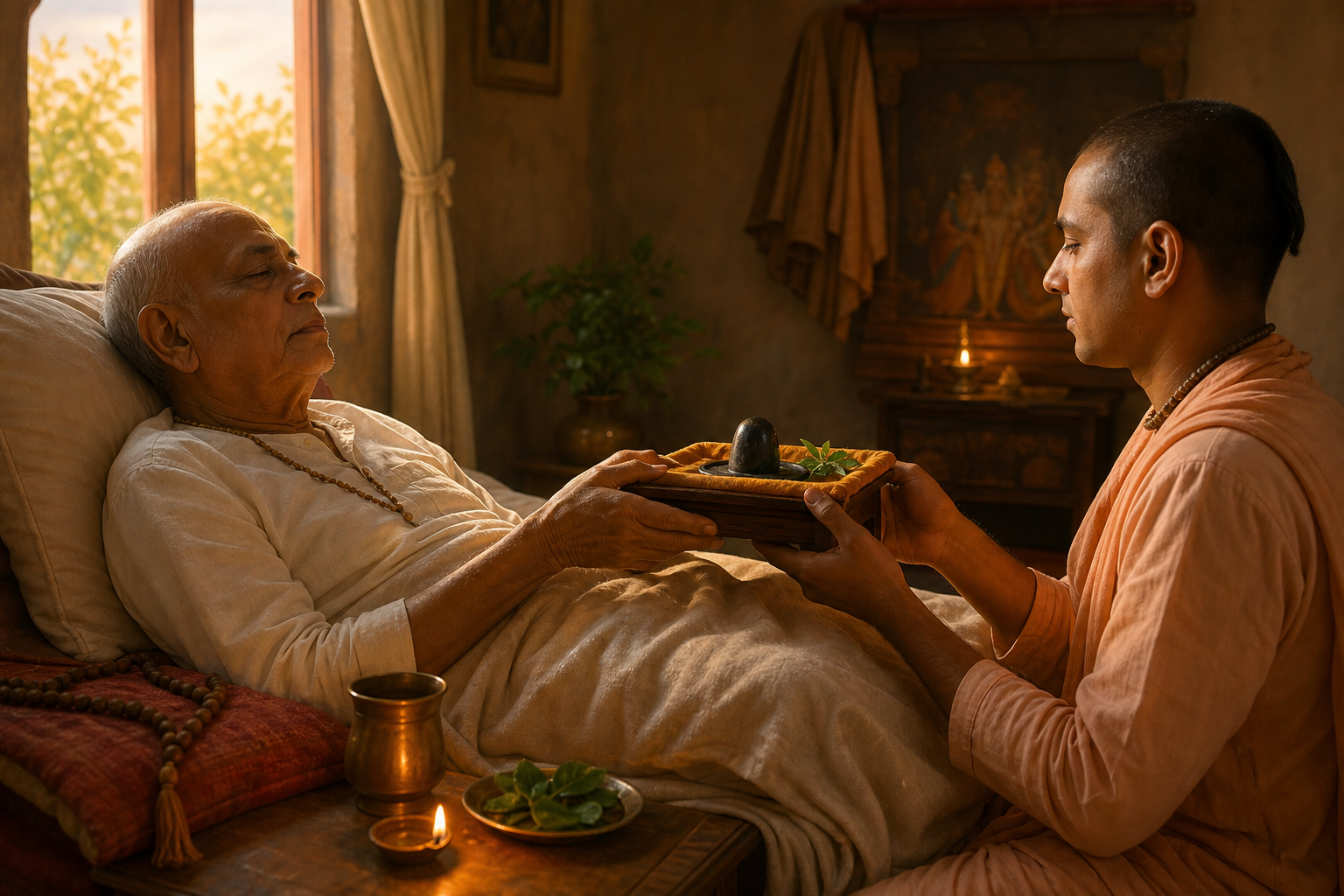
If you have come to understand who Gopal Prabhu was, begin with the devotional relationships visible at the end of his life. His identity remained tied to Srila Prabhupada, his worship of Giriraj was entrusted to another devotee rather than simply abandoned, and his community carried both the sacred and administrative burdens of his departure.
That gives you more than a memorial sketch. It shows which arrangements can sustain a Vaishnava when physical independence recedes, what faithful companionship looks like in practice, and which responsibilities a devotee community should settle before a crisis.
Key takeaways
- His Grace Gopal Prabhu belonged to Srila Prabhupada’s generation of disciples; fidelity to that relationship is the central fact of his remembered life.
- His final two years were difficult, yet his determination continued to inspire the devotees around him.
- Near the end, he allowed responsibility for his Giriraj to pass to Madhavi Marjan, who came from Mayapur. The handover shows why sacred worship should have a planned succession.
- His departure joined chanting, personal care, community presence and legal work. A spiritually serious end-of-life plan must account for all four.
A life disclosed through discipleship and endurance
The secure biographical anchor is simple: Gopal Prabhu was a disciple of A.C. Bhaktivedanta Swami Prabhupada. That is not merely an institutional label. In the Gaudiya Vaishnava understanding, discipleship is a continuing orientation of one’s service, hearing and remembrance toward the spiritual master’s instruction.
Beyond that central bond, reverence should not tempt us to manufacture a seamless chronology. A birth date, initiation account, itinerary or list of official positions requires primary records. Where such details have not been established, an honest blank serves Gopal Prabhu better than a plausible but unsupported story. A tribute becomes weaker, not stronger, when affection is used to excuse invention.
What does emerge clearly is the character of his final season. A devotee who lived near him remembered that the last two years were especially difficult. The quality that impressed those around him was perseverance. As strength and independence diminished, he continued to be seen as a determined servant rather than merely as a person overtaken by hardship.
That distinction must not be turned into a romance of suffering. Pain is not proof of spiritual attainment, and devotional praise is not a substitute for competent medical or personal care. The useful lesson is continuity: when circumstances narrow your choices, the practices and relationships already built into daily life are the ones most likely to remain available.
You can prepare for that continuity without trying to imitate another person’s final days. Keep the spiritual practice authorized for you by your guru and tradition steady now. Make essential items portable and easy to reach. Clearly identify the recordings, prayers or kirtans you would want played if you could no longer lead them yourself. Name at least one devotee who understands your wishes. Do this while you can explain your choices; a hospital admission or sudden decline is a poor time for companions to discover that everyone made different assumptions.
Giriraj and the responsibility to pass worship onward
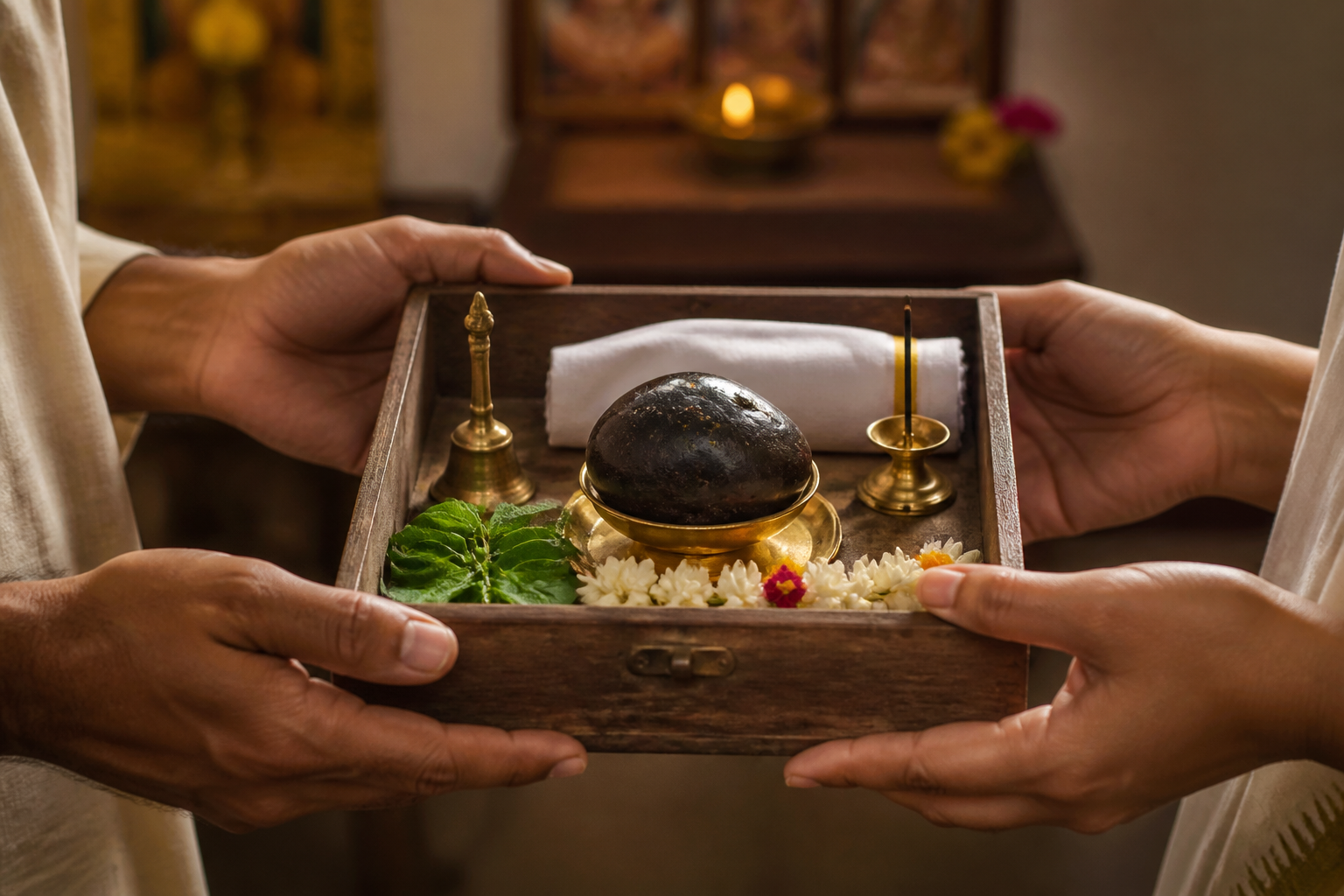
One of the most revealing moments came when Madhavi Marjan travelled from Mayapur to receive Gopal Prabhu’s Giriraj. Those close to him understood the transfer as a sign that his remaining time in the body might be short.
Giriraj, a sacred Govardhana sila worshipped as Krishna, cannot be treated as an ordinary possession or a sentimental keepsake. When a worshipper becomes unable to continue seva, transferring responsibility is itself an act of care. Clinging to the role without arranging competent service would place personal attachment above the needs of the worship.
If you worship a sila or personally served Deities, prepare a brief succession note now. It should do five things:
- Identify each sacred form clearly and record the present standard of worship.
- Confirm the appropriate procedure with the guru, pujari or temple authority responsible for your tradition; local practices are not interchangeable.
- Name a willing and qualified custodian, plus a backup. Never assume that a relative or executor can accept this seva.
- Record whom to contact, where the necessary items are kept and how a transfer should be coordinated.
- Review the arrangement after a move, a major health change or a change in the proposed custodian’s circumstances.
Give a copy to the proposed custodian and place another with your important personal instructions. A secular will may determine who controls property, but it does not teach an executor how sacred worship should continue. The spiritual and legal arrangements should point in the same direction.
A Vaishnava departure is sacred and administrative
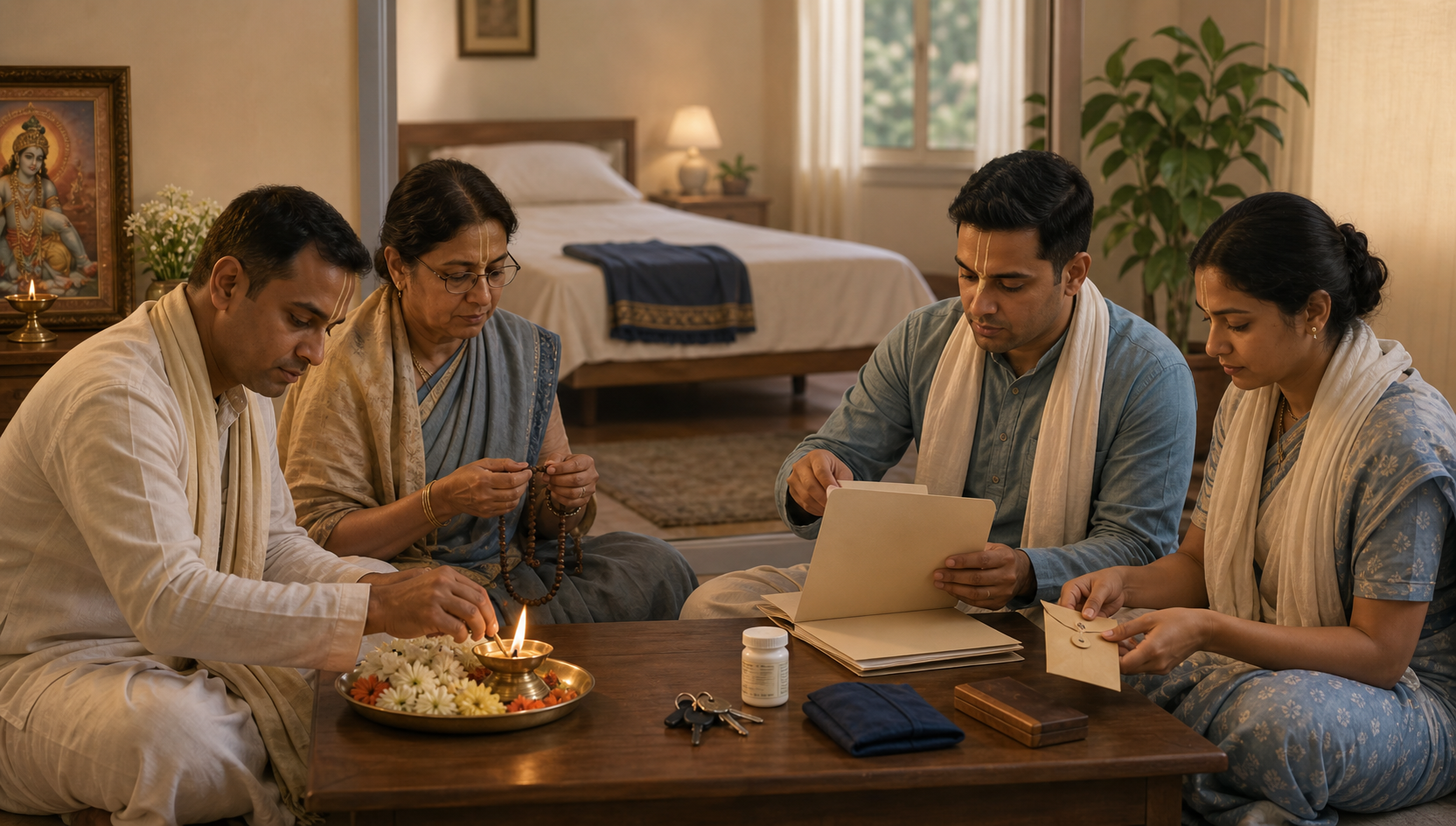
Gopal Prabhu’s final hours were not carried by one person alone. His caregiver, Jagan Nivas Prabhu, was with him. Temple president Panchagauda Prabhu joined through a video call. Srila Prabhupada’s chanting of Hare Krishna accompanied his peaceful departure. Physical distance did not prevent an important devotional relationship from being present at the bedside.
The care continued after death. His body was bathed and dressed in a fresh lungi and matching chadar. Tilaka bearing Krishna’s names was applied, and maha-Tulasi leaves were placed on his eyelids. These details matter because they show remembrance taking the form of service: someone obtained what was needed, performed each duty and treated the body of a departed Vaishnava with dignity.
There was also demanding paperwork. Police and embassy requirements had to be addressed and a No Objection Certificate secured before the cremation at the Yamuna could proceed. The devotees’ reverence did not remove those obligations. It gave them a reason to complete the obligations carefully.
Do not copy any sequence of bodily preparation or cremation without first checking the law where the death occurs. Medical, coroner, police and consular rules can determine when a body may be moved, washed, dressed or cremated. Wait for formal release from the responsible authority, then coordinate the rites with the family and the appropriate Vaishnava authority. A well-meant ritual performed too soon can create legal trouble and disrupt the very departure arrangements devotees are trying to protect.
A workable end-of-life plan therefore needs more than a statement such as “chant for me.” Prepare a small service circle with distinct responsibilities:
- Bedside contact: one person who can communicate with medical staff and keep family members informed.
- Spiritual contact: one person who knows the requested mantra, prayers, recordings and sacred items, and who can coordinate remote participation when travel is impossible.
- Legal contact: one person who can locate identification, medical and funeral instructions, release documents, and consular information when nationality or place of death makes that relevant.
- Ritual contact: one person authorized to arrange the body’s preparation and final rites after legal clearance.
Put names and current telephone numbers beside each role. Ask each person before listing them. If video participation may be used, record the dying person’s privacy wishes as well. Technology can extend association, as it did during Gopal Prabhu’s departure, but access to a vulnerable person’s final moments should never be presumed.
Preserve Gopal Prabhu’s memory without manufacturing a legend
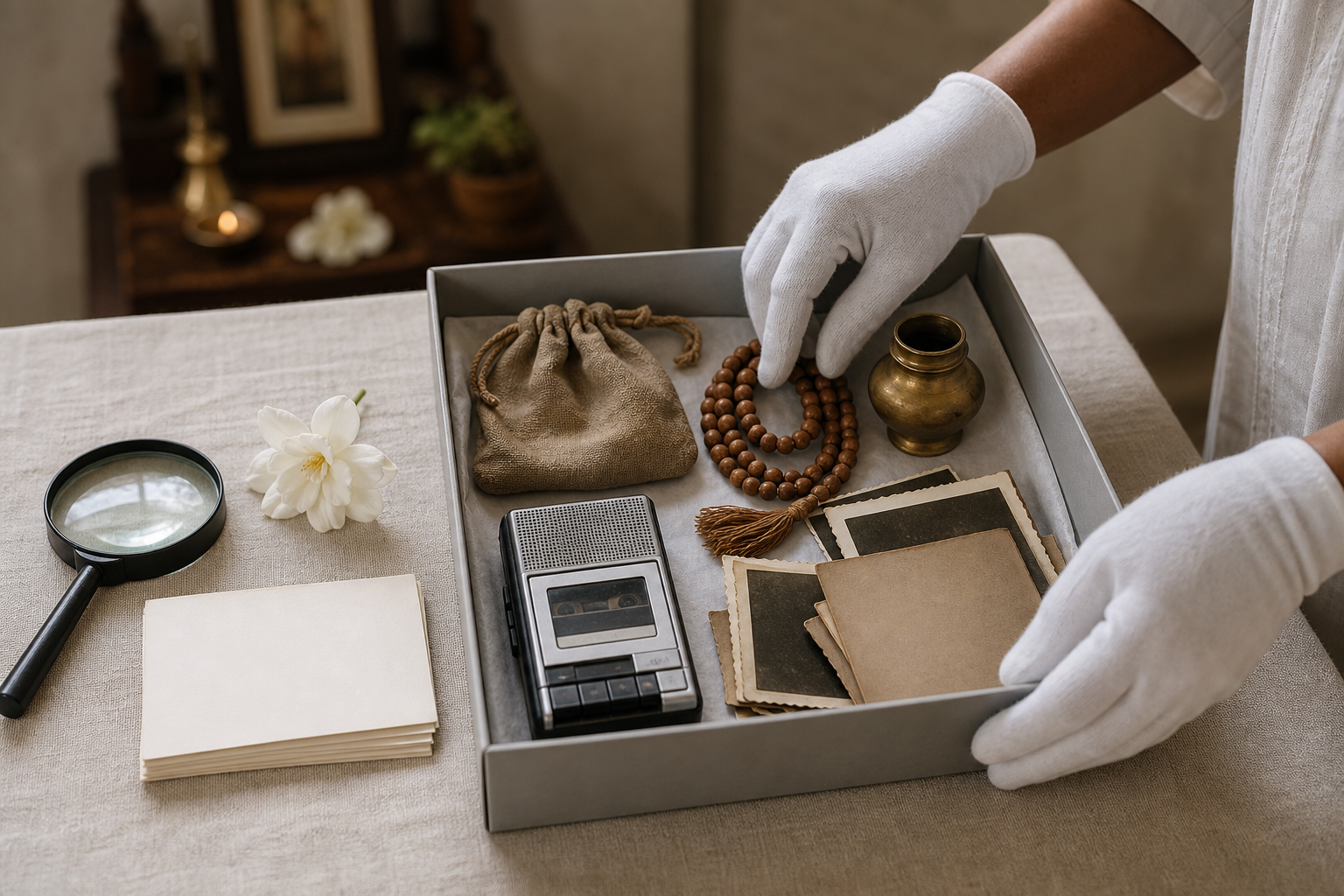
The remaining task belongs especially to devotees who knew him before his final illness. Memories disappear when communities assume that someone else has recorded them. The remedy is not a grand commemorative project at some indefinite future date. It is one careful interview, properly identified and archived, followed by another.
Use a method that keeps testimony useful:
- Begin with the witness’s full name, relationship to Gopal Prabhu, and the places and periods in which they knew him.
- Ask for one scene at a time: where it happened, who else was present, what Gopal Prabhu did, and what words the witness remembers. Do not supply the desired answer inside the question.
- Label the basis of every recollection. “I saw this” is different from “he told me this,” and both differ from a story heard from a third person.
- Confirm spellings, dates and institutional roles against letters, photographs, diaries or temple records whenever those materials exist. Preserve uncertainty when they do not.
- Obtain permission before publishing personal, medical or family details. Keep the original recording with an unedited transcript so later editors can check the context.
Contradictory memories should not be blended into artificial agreement. Keep each testimony attached to its witness and let later primary evidence resolve what it can. The purpose is not to produce a flawless hero. It is to preserve how a disciple served, struggled, depended on other devotees and remained oriented toward guru and Krishna.
If you knew Gopal Prabhu, record one exact memory now: a seva you saw him perform, a response he gave when service became difficult, or a habit that showed his attachment to Srila Prabhupada. Deposit it with a temple or community archive where others can find it. If you did not know him, act on what his final chapter makes plain: arrange the continuity of your worship, spiritual companionship and practical affairs while you are still able to guide them. That is how remembrance becomes seva.
References
