-
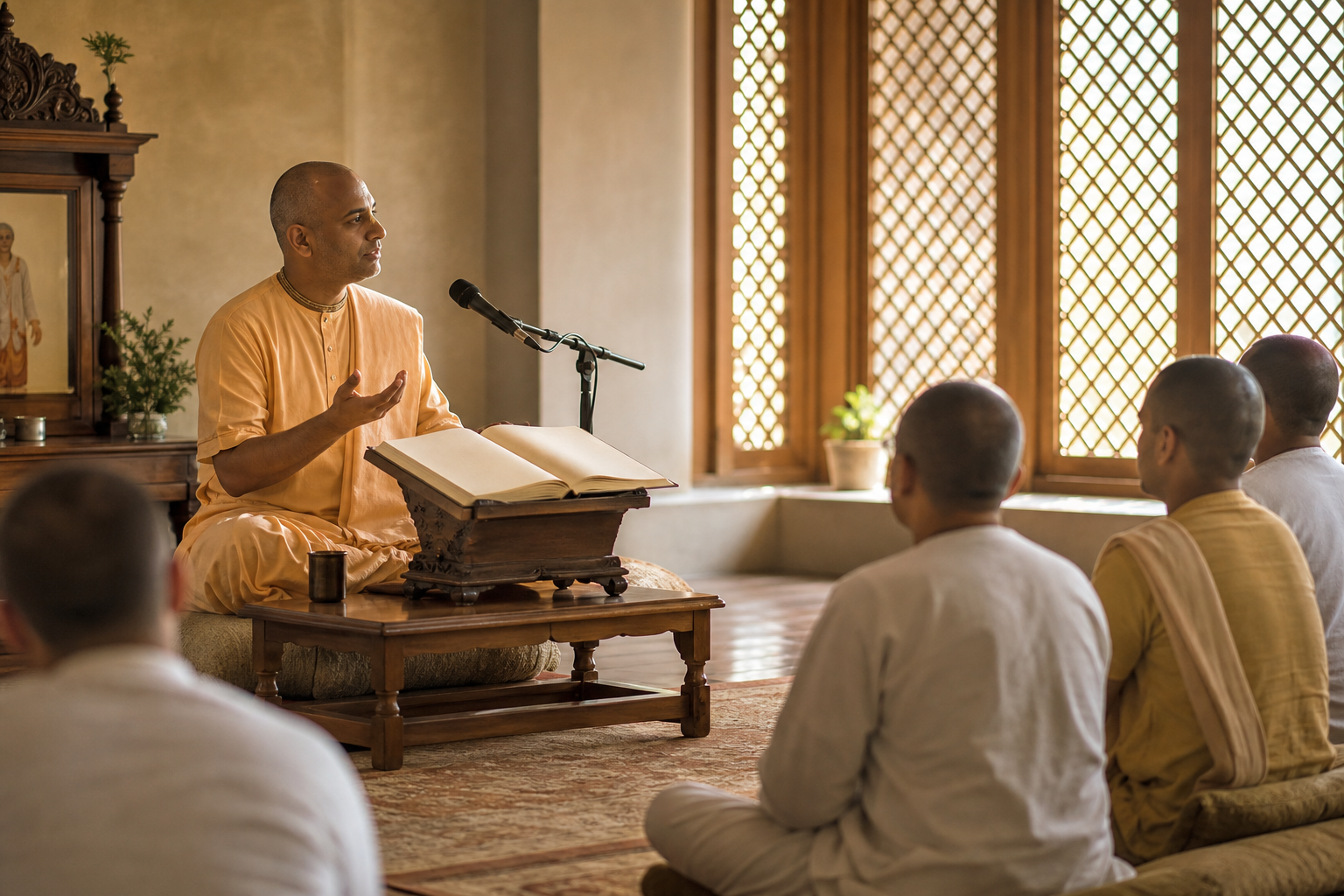
The Charismatic Harinama: ‘Jai Shri Rama’, Ram Setu, and the Dharmic Science of Naam

Harinama, the sacred practice of chanting the Divine Name, is explored through the Ramayana’s setu narrative, where ‘Jai Shri Rama’ symbolizes devotion’s power to bridge the impossible. The discussion grounds Harinama in scripture, citing the Bṛhan-nāradīya Purāṇa and the Kali-santarana Upaniṣad, and explains nāma-tattva—the non-difference of Name and Named. It highlights inter-dharmic resonances with Sikh…
-
Kapalini: Shakti’s Terrifying Grace and the Awe-Filled Storm that Seeds Creation Cycles

Kapalini, the skull-bearing form of Goddess Shakti, stands at the threshold where dissolution gives birth to creation. Set against the awe-filled storm of pralaya, Kapalini carries the Brahma-substance—the causal seed from which new worlds emerge—offering a precise map of Hindu cosmology. The narrative clarifies the five cosmic acts, types of pralaya, and the role of…
-
Suchimukham Unveiled: The Chilling Karmic Price of Hoarded Wealth in Hindu Dharma

Suchimukham, the needle-mouthed hell in Hinduism, powerfully encodes the karmic consequences of hoarding wealth and neglecting compassion. Drawing on the Vishnu Purana, Devi Bhagavata Purana, and Garuda Purana, this analysis situates Suchimukham within a reformative, not eternal, Puranic model of Naraka. It clarifies the difference between prudent stewardship and miserliness, showing how dharma guides artha…
-
Decoding Nidhana in Somayaga: The Timeless Musical Finale and Ritual Precision of Agnistoma

Nidhana in Somayaga—especially within Agnistoma—holds a precise dual meaning: it is both the final, crafted cadence of Sama Veda chanting and a procedural marker that closes a ritual segment. This exploration clarifies how the five-part saman structure (prastava, udgitha, pratihara, upadrava, nidhana) coordinates priests, offerings, and timing across the three Soma pressings. Readers learn why…
-
Navaratri Vrata Mahatmyam: Scriptural Roots and Seasonal Science Behind Chaitra & Ashwin Fasts

Navaratri Vrata Mahatmyam explains why the sacred nine-night fast centers on Chaitra and Ashwin: both occur at powerful seasonal junctions near the equinoxes, making them ideal for renewal and inner rebalancing. Scriptural foundations in the Devi Mahatmya and traditions attributed to Veda Vyasa affirm the efficacy of the vow when aligned with Shukla Pratipada to…
-
Agamas in Hinduism: A Definitive Guide to Temple Science across Shaiva, Vaishnava, Shakta Paths

Agamas in Hinduism are authoritative temple sciences that unite theology, meditation, ritual, architecture, and iconography into a single living system. This article clarifies what “Āgama” means, how it relates to Veda and Smṛti, and why Shaiva, Vaishnava (Pañcarātra and Vaikhānasa), and Shakta lineages each preserve distinct yet harmonious Agamic corpora. Readers gain a technical overview…
-
Varuna in the Vedas: Majestic Sovereign of rta, Waters, and Nature’s Vital Powers

Varuna, among the oldest deities in the Rigveda, stands as sovereign of rta (cosmic order), guardian of the waters, and witness to truth. The Vedic hymns credit him with distributing nature’s vital powers—strength in horses, milk in cows, vitality in the heart, and even fire concealed within the waters—expressing a grand ecology of interdependence. His…
-
Navya Nyaya’s New Logic: Precision Tools for Knowledge across Dharmic Traditions

Navya Nyaya, the “New Logic” within the Nyaya tradition, emerged in 13th-century Mithila with Gangesha Upadhyaya’s Tattva-Chintamani and transformed Indian epistemology through unmatched analytic precision. It refines the four pramanas—pratyaksha, anumana, upamana, and shabda—using a technical idiom that specifies locus, qualifier, and delimitor to prevent ambiguity. Later masters such as Raghunatha Siromani and Gadadhara Bhattacharya…
-
Indra and Varuna’s Celestial Rivalry: Vedic Kingship, Cosmic Law, and the Battle for Order

Indra and Varuna frame a profound Vedic conversation about power, law, and legitimacy. Indra’s thunderous decisiveness (kṣatra) complements Varuna’s guardianship of ṛta, revealing why force must be answerable to truth and why law must be capable of protection. Rigvedic hymns, especially RV 1.32 and RV 7.86–7.89, ground this dialectic, while Brāhmaṇa and Upaniṣadic texts transform…
-
Kokamukha Unveiled: The Jackal-Faced Mahakali in Texts, Temple Inscriptions, and Tantra

Kokamukha, remembered as the jackal-faced manifestation of Mahakali, emerges in the Shakta landscape at the intersection of Hindu scriptures, temple traditions, and Tantric iconography. The article clarifies the name’s philological roots and situates the form within cremation-ground theology, where fierce imagery communicates protection, fearlessness, and ethical clarity. It connects Kokamukha with Yogini traditions and early-medieval…
-
Srimad Bhagavatam 11.5.32 Decoded: Chaitanya’s Sankirtana as Kali Yuga’s Transformative Path

Srimad Bhagavatam 11.5.32 presents congregational chanting of the divine Name as Kali Yuga’s most intelligent path, a vision Gaudiya Vaishnavism reads as pointing to Sri Chaitanya Mahaprabhu. Drawing on classical commentaries by Jiva Goswami and Krishnadasa Kaviraja, and on expositions by H.H. Jayapataka Swami Maharaj, this analysis unpacks the verse’s grammar, theology, and praxis. The…
-
Laghu Vishnumurti Decoded: A Compact Dharmashastra Masterpiece Shaping Ancient Society

Laghu Vishnumurti (Laghu Vishnu Murti) condenses the dharmashastra tradition into five chapters and 114 verses, offering a precise window into ancient India’s social organization, legal procedure, and restorative ethics. The text’s laghu format enables quick consultation while preserving doctrinal depth, making it ideal for students of Hindu legal history. It balances universal norms with deference…
-
Shravana Kumara’s Devotion in the Ramayana: Enduring Lessons in Matru Pitru Bhakti and Dharma

Shravana Kumara’s story in the Ramayana is a powerful testament to Matru Pitru Bhakti—devotion to parents—embodied through a son’s tireless care for his blind, elderly parents during their sacred tīrtha-yātra. The episode, culminating in King Daśaratha’s tragic mistake and subsequent curse, provides the narrative key to understanding his later death from separation from Rāma. Vālmīki’s…
-
Why Arjuna’s Grief Is Called Yoga: The Transformative Power of Viṣāda in the Bhagavad Gita

Why is Arjuna’s grief in the Bhagavad Gita called “yoga”? The first chapter, Arjuna Viṣāda Yoga, frames sorrow as a disciplined gateway to discernment and ethical clarity. By exposing attachment, catalyzing viveka–vairāgya, and inspiring surrender—“śiṣyas te ’ham”—grief becomes the very condition for transformative instruction. The Gita’s own colophon names it a yoga-śāstra, indicating that each…
-
Arjuna’s Grief as Yoga: The Transformative Power of Vishada in Bhagavad Gita Chapter 1

The Bhagavad Gita calls its opening chapter Arjuna-Vishada-Yoga to teach that honest suffering can initiate authentic spiritual discipline. Arjuna’s despondency exposes moha, leads to surrender (śiṣyas te ’haṁ), and prepares the ground for buddhi-yoga, samatva, and Karma Yoga. By defining yoga as equanimity and skill in action, the Gita frames grief as a catalyst that…
-
Apsaras and Oleander in Hindu Symbolism: Beauty, Peril, and the Dharma of Self‑Mastery

Apsaras carrying oleander (Karavīra) illuminate a core Hindu symbol where beauty both refines and tests. Drawn from Puranic literature and temple iconography, the motif highlights how allure becomes ethical instruction when guided by discernment, dispassion, and sustained practice. Oleander’s evergreen brilliance and toxicity sharpen the lesson: what delights can also endanger without inner alignment. Episodes…
-
Pancha Tattva Unveiled: Radiant Mercy of Lord Nityananda before Gaura Purnima 2026

This study series introduces Pancha Tattva as a precise, fivefold revelation of the Absolute that powers the Gaudiya Vaishnava sankirtana movement. The opening focus on Lord Nityananda explains His identity with Balaram and His earlier manifestation as Lakshman, situating Him as guru-tattva and the wellspring of compassion. Drawing on Chaitanya Charitamrita and allied scriptures, the…