-
From Brahman to Cosmos: Decoding Hindu Cosmology, Cyclic Time, and Dharmic Unity

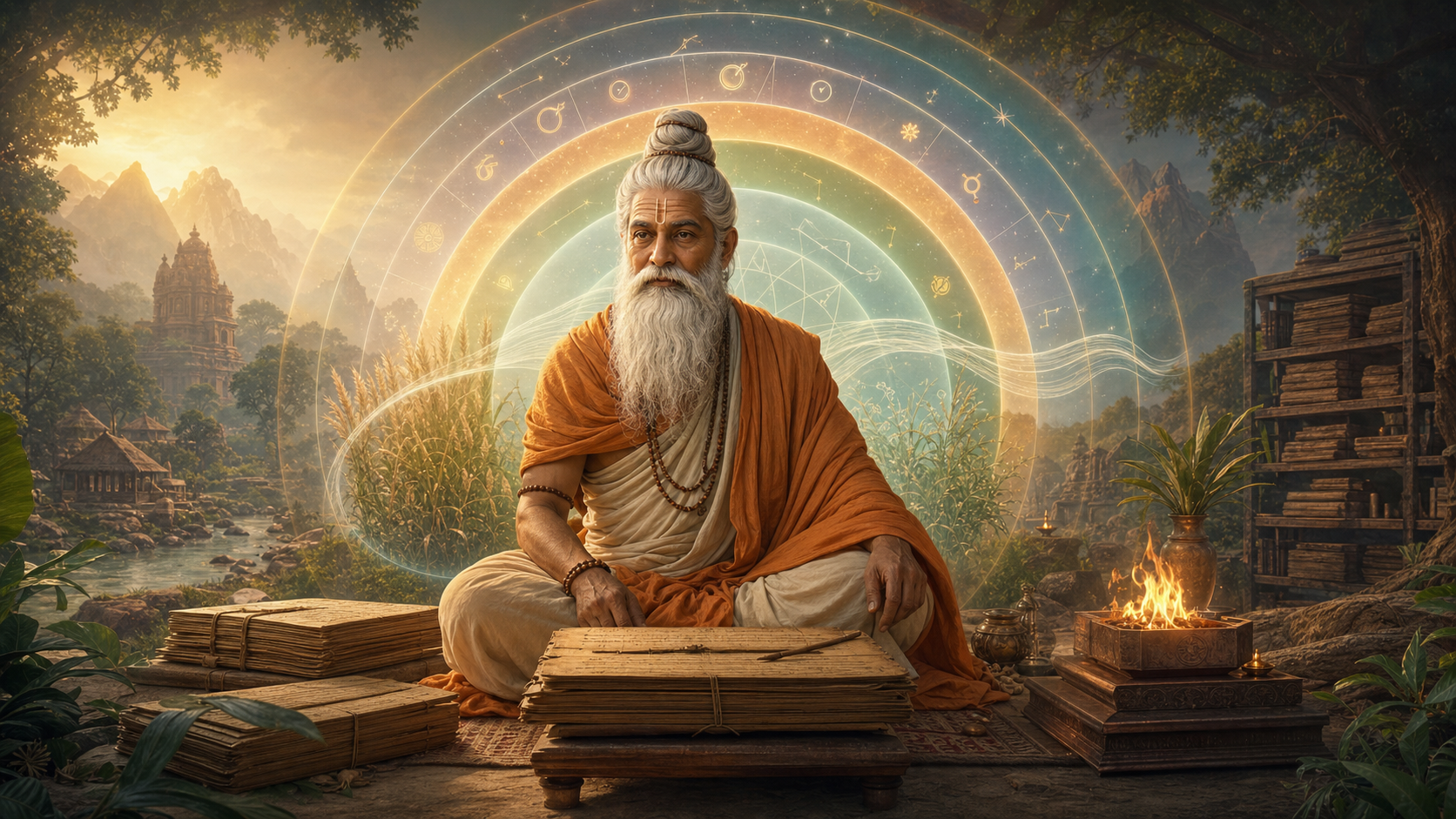
Hindu cosmology portrays creation as emergence from an undivided reality, Brahman, rather than a one-time act ex nihilo. Drawing on the Upanishads, Sāṅkhya, Vedānta, and the Puranas, it explains how the subtle becomes gross through ordered stages, from mahat and ahaṅkāra to the five elements. Cyclic time—yugas, manvantaras, and kalpas—replaces linear beginnings with rhythmic manifestation…
-
Kricchratikricchra Penance: A Rigorous Hindu Path to Heal Harm and Restore Dharma

This in-depth guide explains Kricchratikricchra—an austere Hindu prāyaścitta prescribed for injuring others—within the broader Dharmashastra tradition. It clarifies when and why this penance is used, how it integrates fasting, restitution, and service, and why proportionality and compassion are essential. The article offers a practical, textually grounded 12-day framework adaptable to modern health needs while preserving…
-
Kalki’s White Horse Devadatta: Profound Symbolism, Dharmic Unity, and Timeless Renewal

This article unpacks the symbolism of the Kalki Avatar’s white horse, Devadatta, drawing on the Vishnu Purana and the Bhagavata Purana to show how the motif encodes sattva, disciplined energy, and dharma-restoration at the end of Kali Yuga. It connects Vedic horse imagery (aśva) to prāṇa, time, and ethical action, and clarifies the distinction between…
-
Lunar Eclipse 3 March 2026: Definitive Chandra Grahana Sankalpa, Pitru Tarpana & Dāna Mantras Guide

A shastra-aligned, long-form guide to the 3 March 2026 lunar eclipse (Chandra Grahana), this article provides precise Sankalpa templates that can be filled with local panchanga details, complete Pitru Tarpana ślokas for tilodaka offerings, and Thila Tarpana Anantara Vidhi (Samarpana) mantras. It explains sūtaka observance, outlines pre/during/post-eclipse practice flow, and presents widely recited Chandra mantras…
-
Why Sanskrit Calls Humans “Nara”: Deep Origins, Dharma, and the Power of Karma

The Sanskrit term “nara” does more than denote a human being; it encodes a civilizational understanding of agency, ethics, and liberation. Its deep Indo-European etymology, rich scriptural presence, and philosophical nuance explain why Hinduism treats human life as uniquely suited to dharma and karma. Classical distinctions—sañcita, prārabdha, and kriyamāṇa karma—show how present choices reshape experience.…
-
Bali’s Mercy Toward Ravana: A Ramayana Lesson on Dharma, Restraint, and Modern Leadership

The Bali–Ravana encounter in the Ramayana tradition yields a precise ethic for modern life: power must be governed by restraint. Later tellings and purāṇic echoes preserve the episode of Bali subduing yet sparing Ravana, illustrating kṣātra-dharma, proportionality, and the protection owed to a suppliant. The narrative anticipates principles of international humanitarian law while aligning with…
-
Satyakama Jabala: A Timeless Upanishadic Tale of Truth, Inclusion, and Vedic Learning

Satyakama Jabala, celebrated in the Chandogya Upanishad, embodies the Upanishadic conviction that truthfulness, not lineage, determines eligibility for the highest learning. His candid admission of uncertain ancestry and his acceptance by the sage Haridrumata Gautama have long been read as a scriptural affirmation of inclusion grounded in dharma. Through years of disciplined service in the…
-
Agastya as Asura Samhara Moorthy: Outwitting Ilvala–Vatapi with Spiritual Fire

Rishi Agastya’s epithet Asura Samhara Moorthy comes alive in the famed Ilvala–Vatapi episode, where deception is neutralized by yogic insight rather than spectacle. The story upholds Dharma by safeguarding hospitality, demonstrating how spiritual fire (tapas) transmutes harm without amplifying violence. Yogic and Ayurvedic lenses deepen the teaching: jatharagni and disciplined breath digest not only food…
-
Hanuman and the Five Elements in Kamba Ramayanam: Transformative Symbolism and Yogic Science

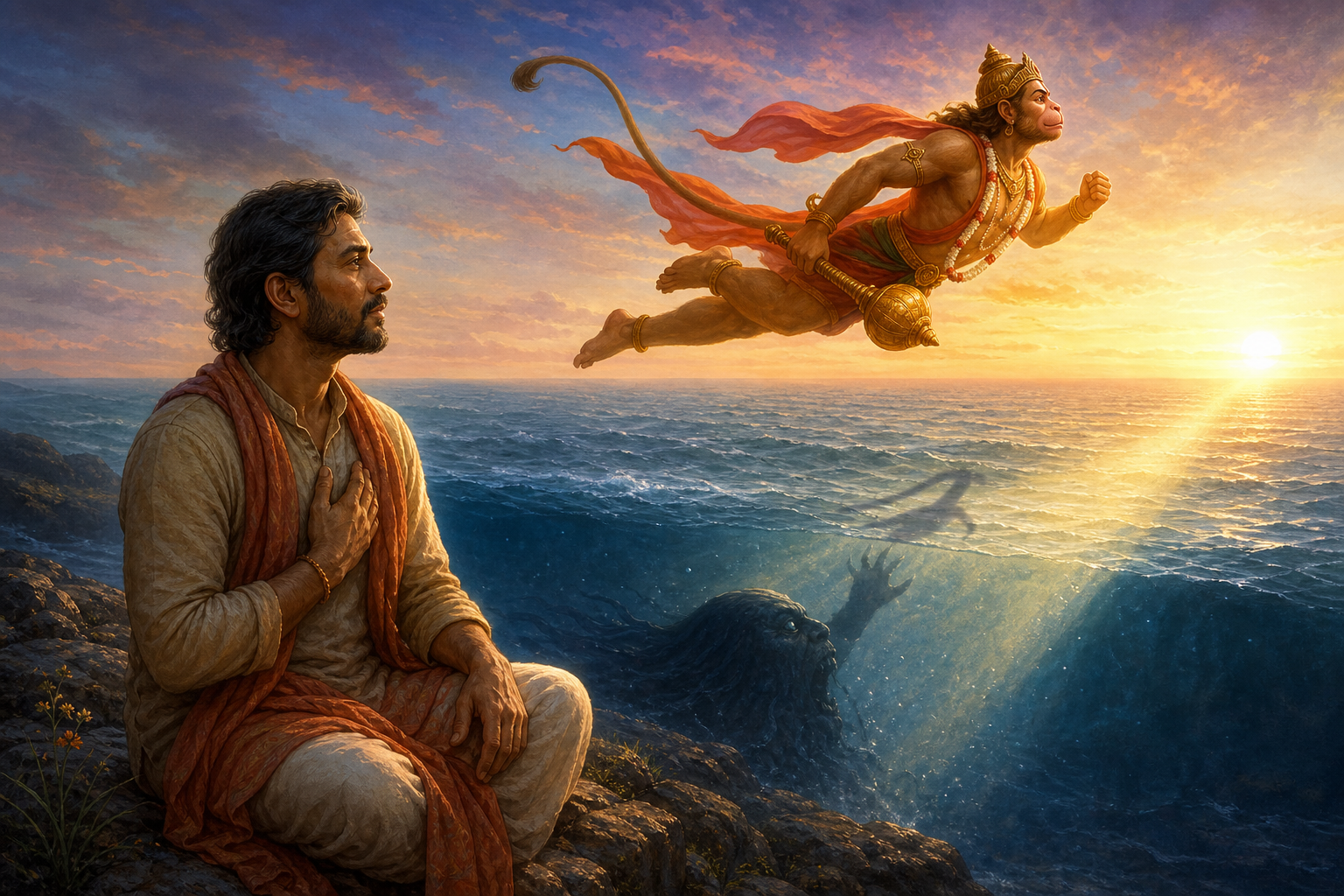
The Kamba Ramayanam presents Hanuman as an embodied map of the five great elements—Vayu, Jala, Akasha, Agni, and Bhoomi—transforming epic episodes into a precise guide for ethical action and inner balance. Vayu becomes pranic mastery and courage, Jala becomes adaptable resolve, Akasha becomes the clarity of spacious awareness, Agni becomes purifying discernment, and Bhoomi becomes…
-
Forgotten Guardian: Riksharajas, the Androgynous Vanara Who Shaped Kings Bali and Sugriva

This long-form exploration brings to light Riksharajas—also known as Riksharaja and sometimes rendered as Vriksharajas—the often-overlooked guardian in the Ramayana who raised Bali (Vali) and Sugriva. Drawing on Valmiki’s Kishkindha Kanda, Kamba Ramayanam, Krittivasi traditions, and Puranic echoes (Skanda Purana, Padma Purana), it explains how and why different recensions describe divine paternity while preserving Riksharajas’s…
-
From Mortal Hero to Sacred Ideal: Rama’s Journey from Valmiki to the Bhakti Age

Rama’s image evolves from Valmiki’s ethically tested human king to the Bhakti movement’s compassionate divine, illuminating how dharma and devotion converge rather than compete. Valmiki Ramayana presents Maryada Purushottama as a ruler who chooses justice amid painful dilemmas; Bhakti-era Ramayanas—Kamba Ramayanam, Adhyatma Ramayana, and Tulsidas’s Ramcharitmanas—reframe those dilemmas through grace, interior devotion, and inclusive accessibility.…
-
Why Madhya-līlā Reveals Antya-līlā: Hidden Logic of Chaitanya’s Transformative Final Years

This analysis explores why the Second Chapter of the Madhya-līlā previews pastimes from the Lord’s final twelve years, conventionally associated with the antya-līlā. It shows how this narrative choice aligns with classical Indian aesthetics and Gauḍīya theology to prepare readers for the culmination of bhakti-rasa. The piece highlights how early glimpses of the antya-līlā function…
-
Profound Prophecy and Transformative Vision: SB 3.14.50 at Bhaktivedanta Manor (20.02.26)

A scripture class at Bhaktivedanta Manor (20.02.26) explored Srimad-Bhagavatam 3.14.50—a prophecy that Prahlāda Mahārāja would perceive the Supreme within and without. The verse integrates ontology and practice, depicting the Lord as simultaneously indwelling (Paramatma) and personally relational (Bhagavan), inseparable from the goddess of fortune. It affirms that the Lord reveals Himself in forms desired by…
-
Srimad-Bhagavatam 11.2.50: Conquer Desire and Ego—Insights from H.G. Dinabandhu Prabhu

This analysis of Srimad-Bhagavatam 11.2.50 distills H.G. Dinabandhu Prabhu’s core insight: material desire and ego trap the mind in self-centric pursuit and conflict. It charts how deep vāsanā and samskāra patterns create chronic reactivity, then presents bhakti as the structured remedy that reorients consciousness toward service. Readers gain a practical blueprint—sravana, kirtana, japa, mindful regulation,…
-
Why Devotees Offer 21 Durva Blades to Ganesha: Analasura Legend, Ayurveda, and Ritual Science

Offering 21 durva blades to Ganesha unites Puranic legend, Vedic symbolism, and Ayurvedic wisdom into a single, elegant practice. Rooted in the Analasura episode, the ritual uses the cooling properties of durva to signify pacifying inner heat and restoring balance. The number 21 encodes a yogic vow to harmonize the 10 senses, the 10 pranas,…