-
Gopal Ganapati Temple, Farmagudi: Tracing a Timeless Maratha-Era Legacy in Goa

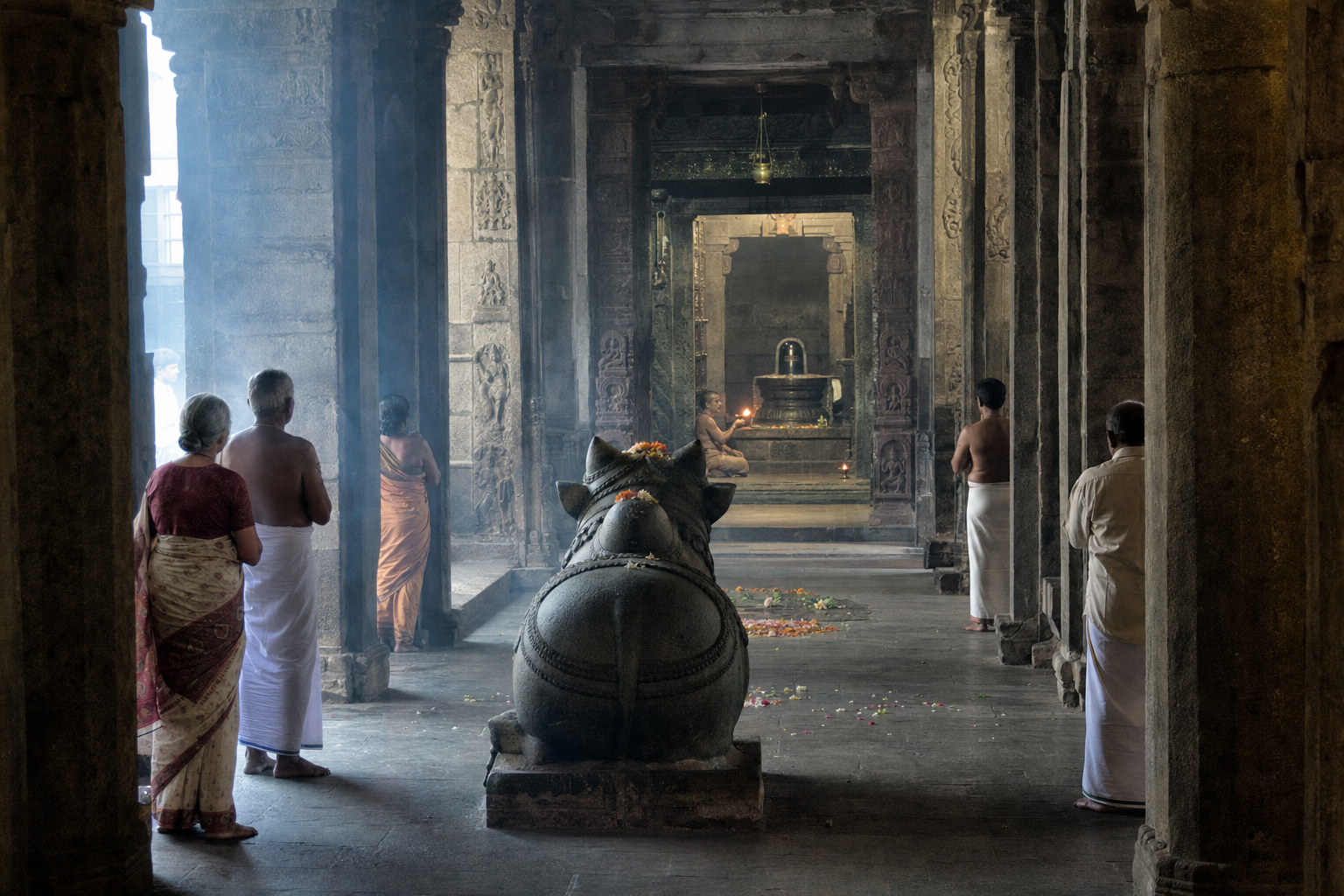
Gopal Ganapati Temple in Bandivade (Bandiwade), Ponda, Goa, preserves a serene devotional atmosphere while carrying a distinctive seventeenth-century Maratha-era legacy. Historical references link the site to Chhatrapati Sambhaji, whose forces camped nearby and erected a Gudi on a hill, shaping the area’s sacred identity. The temple’s setting illustrates how political history and sacred geography intersect…
-
Ghanapatha: The Brilliant Oral Science That Preserved the Vedas with Unmatched Precision

Ghanapatha is an advanced Vedic recitation method that preserved the Vedas with exceptional precision through patterned repetition and reversal. Situated within the Shiksha Vedanga, it crowns a structured pedagogy—Samhita, Pada, Krama, Jata, and Ghana—that builds redundancy and error-checking into every line. By guarding phonetics and pitch accents (udātta, anudātta, svarita), it retains exact meaning and…
-
Six-Armed Dhanalakshmi Decoded: Powerful Symbols of Fearlessness, Prosperity, and Dharma

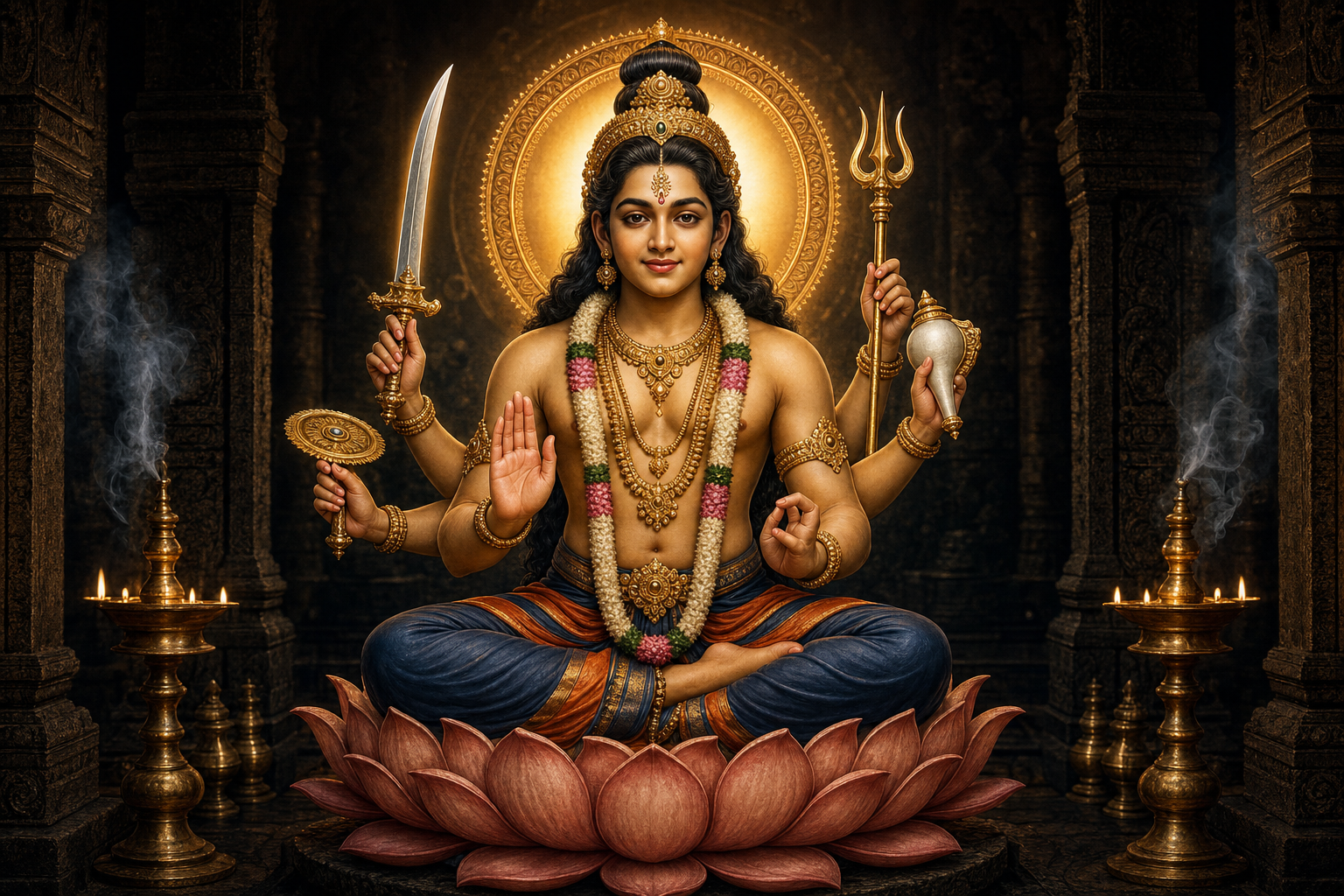
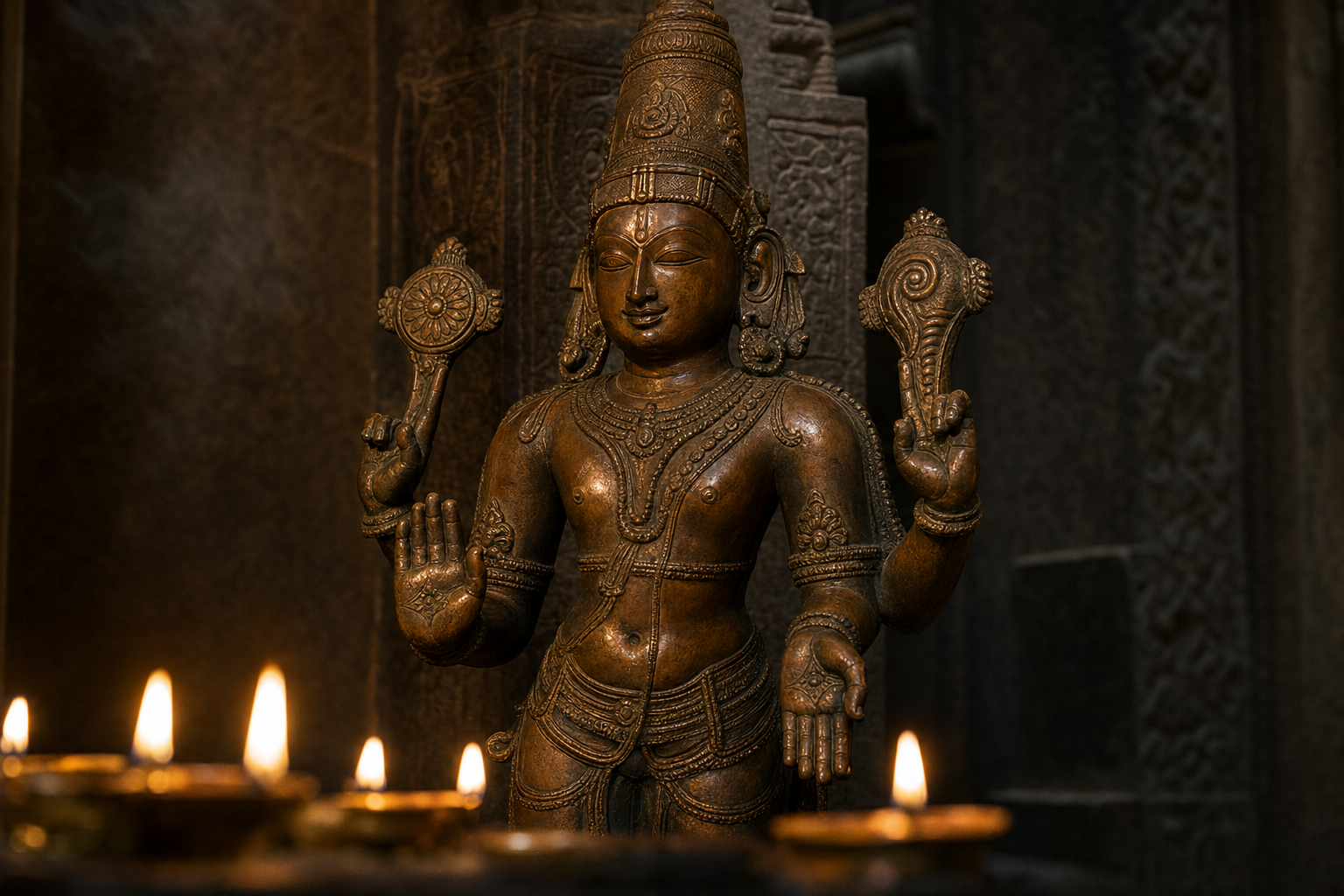
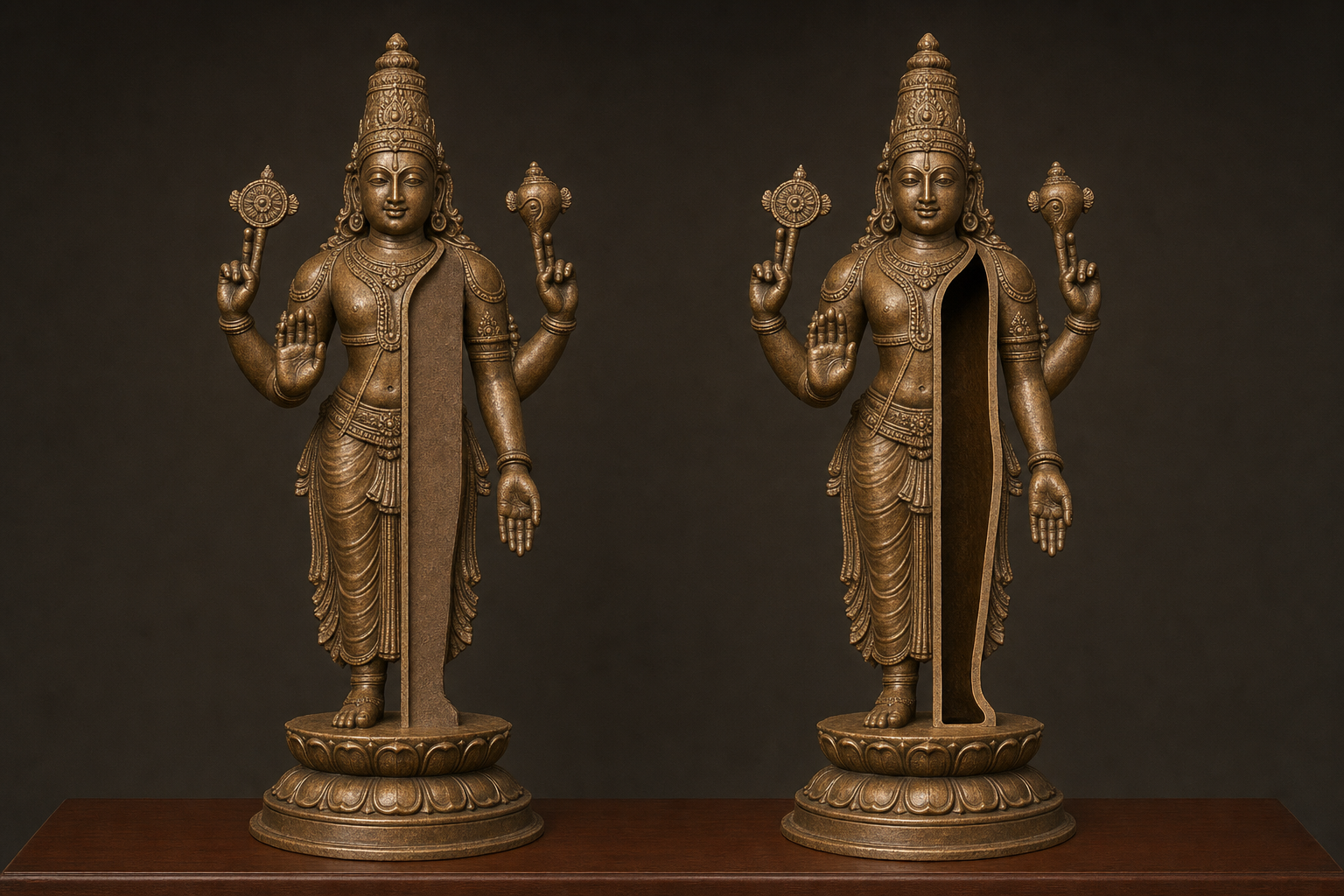
This article clarifies the two principal iconographic forms of Dhanalakshmi—four-armed and six-armed—and decodes the meaning of each sacred attribute. Readers learn how the chakra, padma, shankha, kalasha, bow and arrow, and abhaya mudra together convey prosperity grounded in dharma. The discussion highlights practical applications: ethical earning, mindful use of resources, and generosity. It also connects…
-
Angaraka Loka Unveiled: Mangala’s Sacred Realm and the Red Planet in Hindu Cosmology

Angaraka, also known as Mangala and identified with the Red Planet Mars, is honored in Hindu cosmology as a graha of disciplined courage and ethical action. Legends connect him with Lord Varaha and Ma Bhudevi, or with Bhudevi through Shiva’s grace, highlighting strength anchored in compassion. Angaraka Loka is approached through Navagraha worship and vivid…
-
How Kali Kalkattewali Became Kolkata’s Soul: History, Symbolism, and Sacred Identity

“Jai Kali Kalkattewali!” captures Kolkata’s enduring bond with Goddess Kali, uniting history, symbolism, and civic life. This article traces how Kalighat and Dakshineswar shaped the city’s sacred geography and how Ramakrishna and Vivekananda deepened its Shakti-centered identity. Readers learn the meaning of Kali’s iconography, the social significance of Kali Puja and Durga Puja, and the…
-
Shaheedi Asthan of Baba Banda Singh Bahadur: A Moving Tribute to Courage and Dharma
The Shaheedi Asthan of Baba Banda Singh Bahadur offers a powerful encounter with Indian history and Sikh heritage. It commemorates a principled leader whose life exemplified dharma, courage, and service. The memorial contextualizes Mughal–Sikh interactions while honoring Indian martyrs. Visitors experience a contemplative environment shaped by shabad kirtan, ardas, and living heritage. The site models…
-
Karanda Mukuta: The Basket-Shaped Crown of Divine Authority, Grace, and Unity

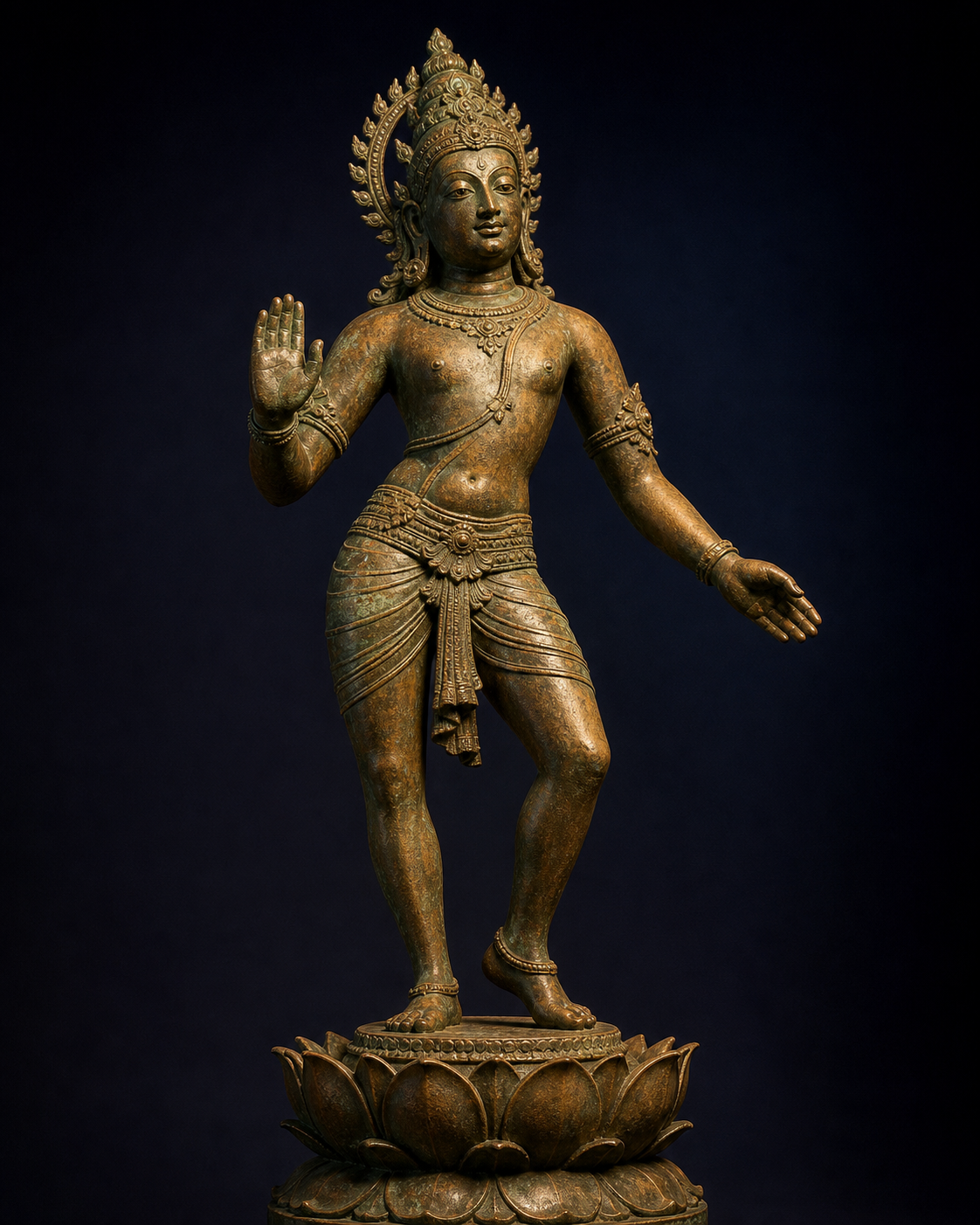
The Karanda Mukuta (karaṇḍa-mukuṭa) is a basket-shaped, tiered crown central to Hindu iconography and visible across dharmic arts. Its conical tiers and auspicious finial symbolize divine authority blended with nurturing abundance and spiritual ascent. Commonly adorning goddesses like Lakshmi and Parvati, and appearing in select regional depictions of Vishnu and Skanda, it also has parallels…
-
Ramayana’s Defining Episodes: Dharma, Devotion, and the Journey Uniting Dharmic Traditions

This structured overview of the Valmiki Ramayana highlights the epic’s defining episodes—from Ahalya’s redemption and Sita’s swayamvara to the exile, Sundara Kanda, and the battle of Lanka—explaining how each advances dharma, devotion, and ethical leadership. Readers gain a clear framework for understanding the narrative arc and its moral significance. The account emphasizes unity across dharmic…
-
Vrndavana’s Timeless Radiance: An Awe-Inspiring Exploration of Krishna’s Spiritual Abode

Vrndavana is portrayed as a transcendental, self-luminous realm where devotion to Krsna unfolds beyond the limits of time. The gopis, goddesses of fortune, embody pure love, while kalpa-vrksa trees, touchstone earth, and nectar waters express effortless spiritual abundance. Speech becomes song, walking becomes dance, and the flute symbolizes the musicality of devotion. Surabhi cows signify…
-
Nari Semari Temple, Mathura: Timeless Devi Peeth Where Krishna Revealed His Narayan Form to Radha

Nari Semari Temple near Chhata in Mathura, Uttar Pradesh, is a revered Devi Peeth dedicated to Brij Rakshika Mata and regarded as the Kuldevi shrine for many families across Mathura and Agra. Temple lore holds that Sri Krishna revealed His Narayan form to Radha here, deepening the site’s devotional resonance within Braj. The sanctum features…
-
Manikarnika Ghat Demolition in Varanasi: Outcry, Accountability, and Heritage Restoration

The reported demolition at Manikarnika Ghat in Varanasi has sparked national concern over heritage safeguards and due process. This analysis outlines why the ghat’s ritual and historical significance requires heightened conservation rigor and transparent decision-making. It recommends an independent, time-bound inquiry with conservation architects, engineers, dharmic representatives, and local stakeholders. Publishing tenders, permissions, and structural…
-
Kudal’s Hindu Rashtra–Jagruti Sabha: Powerful Call to Strengthen Dharma, Unity, and Education

A Hindu Rashtra–Jagruti Sabha in Kudal, Maharashtra, emphasized strengthening Hindu Dharma through sustained awareness and community education. The gathering framed Dharma as an inclusive, ethical foundation supporting unity among Hinduism, Buddhism, Jainism, and Sikhism. Speakers stressed that cultural preservation depends on informed understanding, compassionate service, and youth engagement. Local participants pledged regular Dharma-related activities—study circles,…
-
Reclaiming Goa as Parshuram Bhoomi: A Sacred, Inclusive Vision Beyond Indulgence

At Shri Ram Temple in Vasco, Anand Jakhotia urged a shift in how Goa is understood—away from material indulgence and toward its civilizational identity as Parshuram Bhoomi. The address presented “Hindu Rashtra” as a dharmic, ethical-cultural horizon centered on unity and lawful pluralism, not exclusion. It connected Goa’s sacred geography, linked to Bhagwan Parshuram, with…
-
Safeguard Goa’s Heritage: Complaint Flags Illegal Build Near Sancoale Protected Site

A complaint submitted to the administration alleges illegal construction within the restricted zone of a protected heritage site at Sancoale, including an unauthorised pandal and religious programmes. The matter underscores why heritage laws regulate temporary structures and events near fragile sites. Residents and visitors alike value Goa’s cultural legacy and recognize that permissions protect both…
-
California Highway 54’s Mastodon Mystery: Evidence That Could Reframe Early North American Humans

In 1992–1993, monitoring of State Highway 54 construction in San Diego County revealed mastodon remains that some interpret as evidence of early human activity. Subsequent analyses linked the Cerutti Mastodon site to a late Pleistocene age, igniting robust scholarly debate. Critics point to natural breakage or construction damage, underscoring the need for multiple, independent lines…
-
Alopi Devi Temple, Prayagraj: Sacred Shakti Peeth Where a Cradle Becomes the Deity

Alopi Devi Temple in Prayagraj, a revered Shakti Peeth, is renowned for an aniconic sanctum where a red-draped cradle is worshipped instead of an idol. The shrine’s symbolism emphasizes the formless presence of the Divine Mother while honoring maternal tenderness, protection, and renewal. Local lore links the name “Alopi” to disappearance, suggesting a sacred presence…